Resort vs Liveaboard vs Homestay Diving in Raja Ampat: Choosing the Right Experience
Raja Ampat is one of my favourite diving destinations in Indonesia. In fact, that’s probably an understatement. Raja is one of my favourite places to dive anywhere in the world.
The underwater experiences I’ve had here are nothing short of extraordinary…and that’s not taking into account the incredible above-water scenery. It really does feel like you’re a million miles away from the stresses of the modern world.
The first time I visited was in the early 2000s as a (relatively) broke backpacker, island-hopping my way through Indonesia as far as I could make my money stretch. I returned again in 2023 to stay at Papua Explorers – an exceptional dive resort that has become my benchmark for responsible travel.
There’s something about Raja Ampat that keeps drawing me back and I’ve got a liveaboard trip through the archipelago on my scuba bucket list. (Fingers crossed that 2027 is the year!)
After countless hours spent researching trips, I know from first-hand experience that one of the hardest parts of planning a dive trip to Raja Ampat is choosing how to experience the archipelago.
Unlike some dive destinations where most visitors stay in dedicated resorts and others where a liveboard is the only option, Raja Ampat offers three distinct styles of dive travel: liveaboards, dive resorts and locally-owned homestays.
Each option provides access to Papua’s incredible marine environments, but the experience is very different. Liveaboards offer maximum dive opportunities and access to remote reefs, resorts provide comfort and flexibility, while homestays offer a more authentic and community-focused way to experience the islands.
Honestly, there is no “best choice” – the one that’s right for you depends on your diving experience, budget and travel style. It also depends on whether you want your trip to focus mainly on underwater exploration or a broader cultural experience…and that’s what this article is all about helping you determine.
This article may contain affiliate links, which means when you make a purchase through that link, we earn a small commission. Affiliate links come at no cost to you and ensure our content remains free!
Resort Diving in Raja Ampat
Staying at a dive resort is the classic way to do a scuba vacation and Raja Ampat offers some fantastic options.
My stay at Papua Explorers back in 2023 was honestly one of the best dive resort experiences I’ve had – the tourism model here is all about low-impact, responsible stays that benefit local communities and marine life. It’s regenerative tourism at its best!
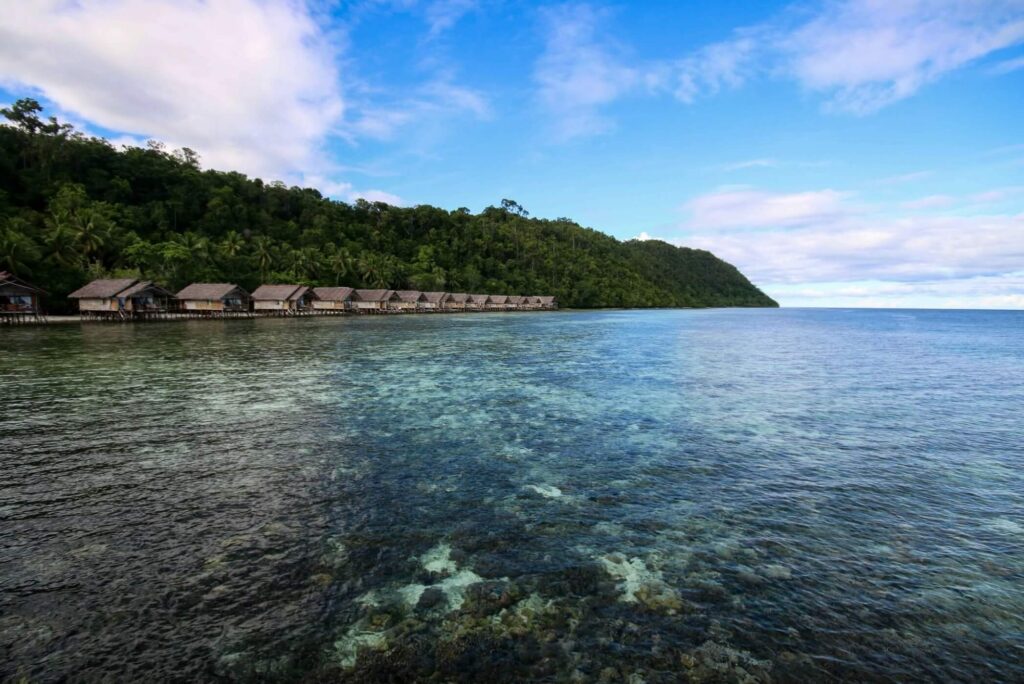
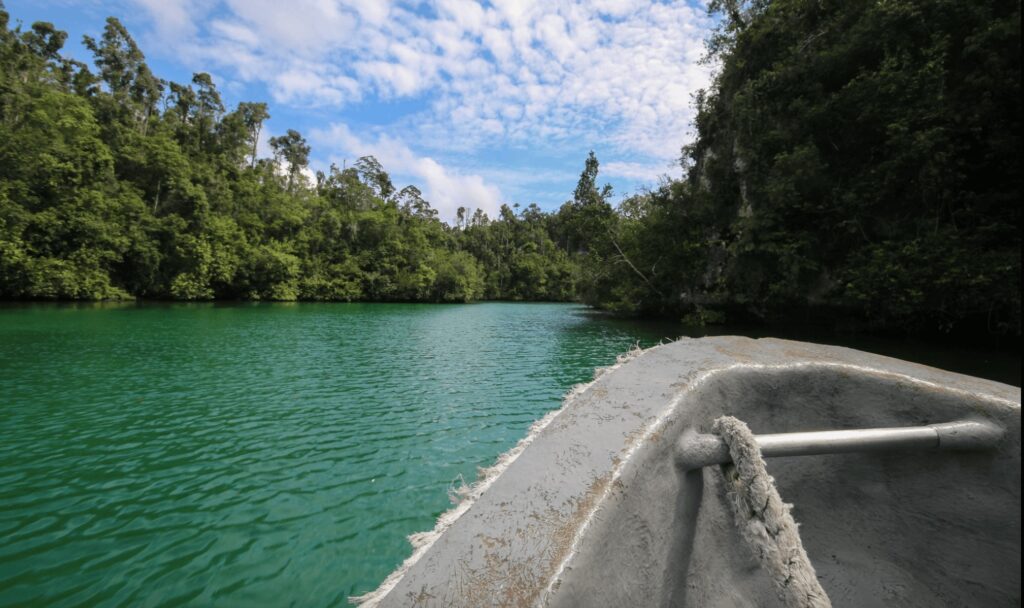
If you opt for a resort-based dive trip to Raja Ampat, chances are you’ll be staying in a stunning natural setting. Most resorts are perched above healthy house reefs below and surrounded by dense rainforest and mangrove forests that support juvenile species.
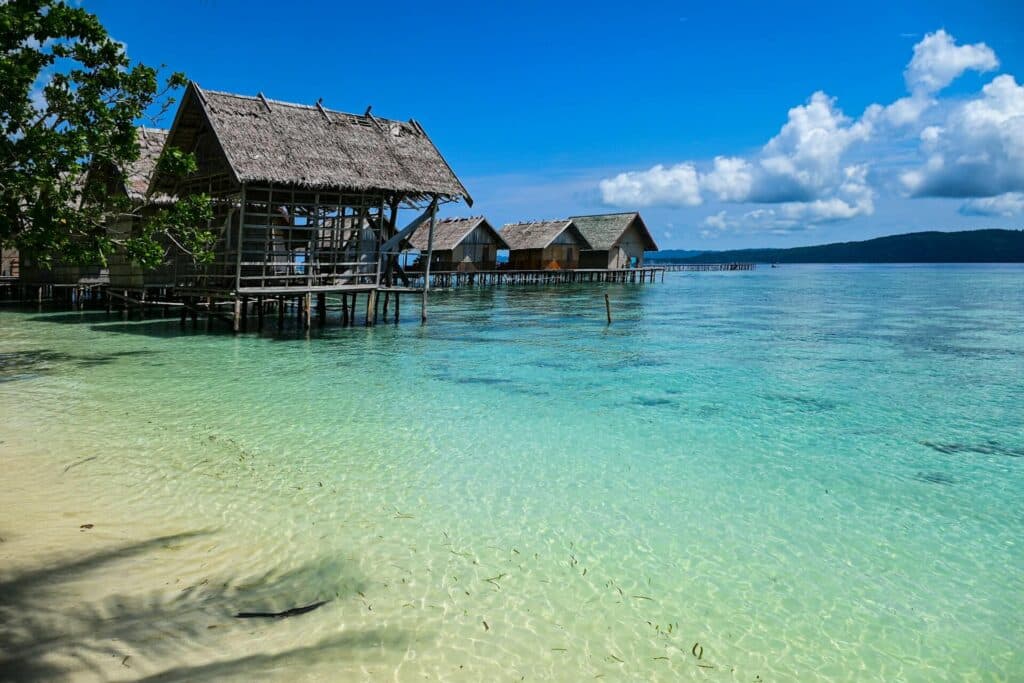
Many feature overwater bungalows, so you can watch fish and other marine life carry out their daily routines from the comfort of your balcony. Essentially, you are immersed in the underwater world – it’s paradise for ocean lovers!
Advantages of Resort Diving in Raja Ampat
What I personally love about staying at dive resorts is the comfort, space and flexibility they offer, all while providing an experience that is geared towards dedicated divers.
As a bit of an introvert, I’m someone who enjoys the camaraderie of liveaboard diving, but also likes to escape to my private space when my social battery inevitably dies. Unless you’re staying in a cabin with a balcony, it’s hard to find space on a liveaboard to be alone while also enjoying the surrounding scenery.
When you stay at a dive resort in Raja Ampat, there’s the option to take a walk along the beach or to a nearby village. You can also just relax in solitude on your bungalow balcony while watching the world go by.
In between dives, you can opt to snorkel the house reef, grab a kayak to explore the surrounding coastline or embark on a birdwatching excursion to spot one of Papua’s many birds-of-paradise species.
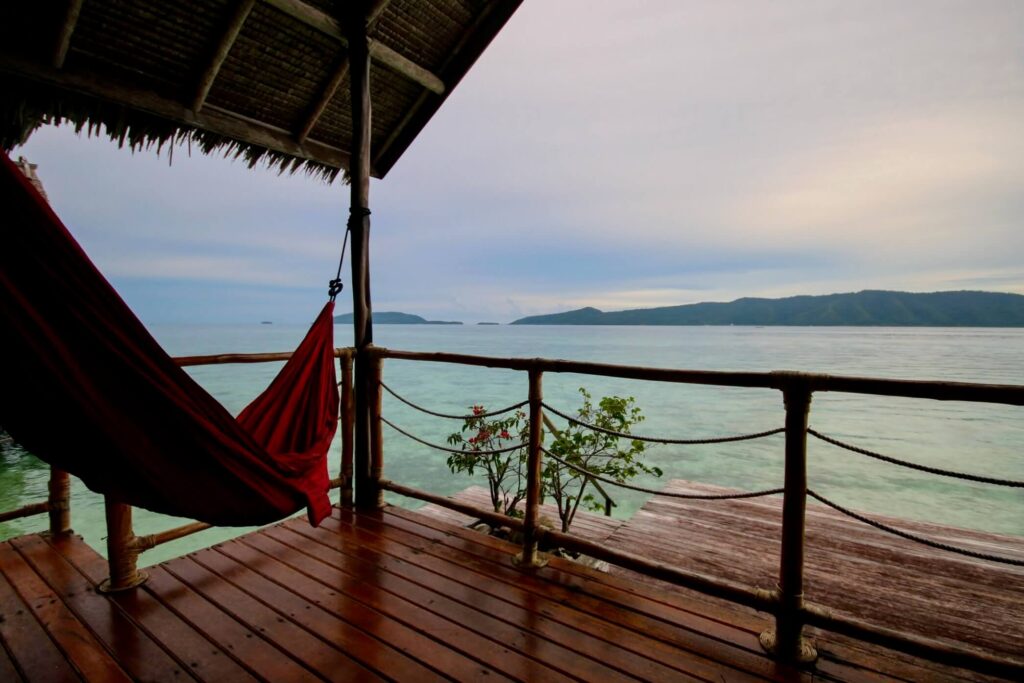
Disadvantages of Resort Diving in Raja Ampat
One of the main disadvantages of a resort-based dive trip to Indonesia is that the dive sites you can access is limited. Most Raja Ampat dive resorts only offer trips to dive sites that are within an hour or so of the property, although some schedule extended day trips to destinations further afield.
For example, when we stayed at Papua Explorers, most of the dive sites we explored were within a 40-minute boat trip of the resort. However, we did do a full day trip to Pianemo to dive a couple of more remote sites and take in the views across the mushroom islands.
Top tip:
Before booking a Raja Ampat dive resort, it’s a good idea to check which dive sites are included in package rates and any extended day trips on offer (usually for a surcharge). Keep in mind that most extended day trips are scheduled on demand and they’ll need a certain number of divers signed up before they go ahead.
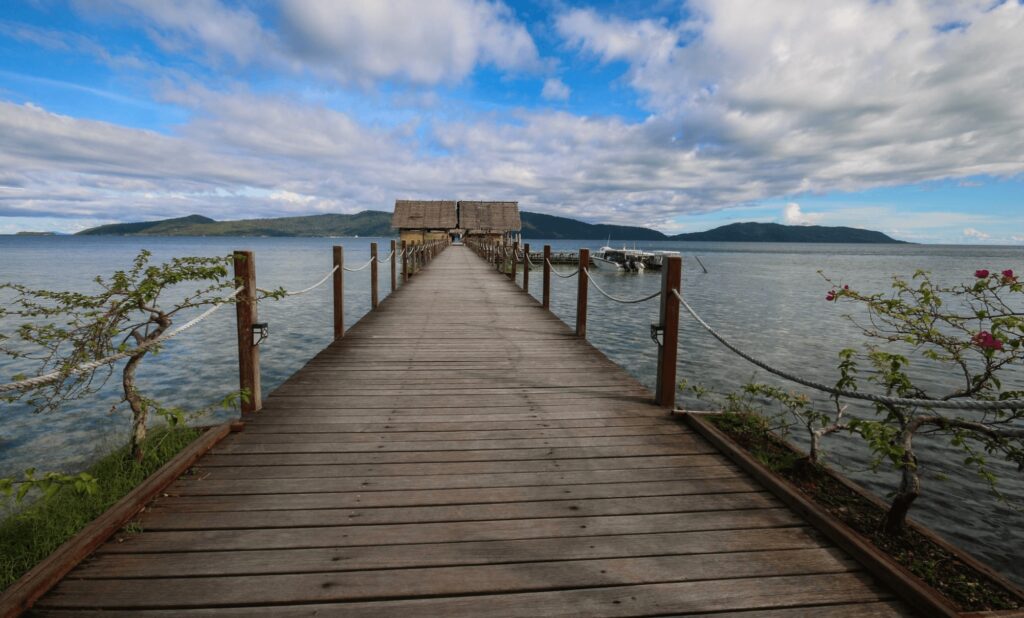
Who Resort-Based Diving in Raja Ampat is Best For
Personally, we think resort-based diving in Indonesia is best for people who like their own space and a balance between diving and other activities. It’s also perfect if you’re travelling with a non-diving family member as there are several other activities on offer.
Daily itineraries at a dive resort tend to be more flexible, with the option to do other things aside from diving. For example, you could do a 3-tank dive trip some days and a 2-day morning trip on others, freeing up the afternoon for wildlife experiences, cultural activities and snoozing on your overwater bungalow balcony.
I also think a Raja Ampat dive resort is a good option for divers with less experience who are worried about being “thrown in the deep end” on a liveaboard. On a dive liveaboard, everyone (usually) dives the same sites and the priority is to experience the best the region has to offer. In Raja Ampat, that means currents!
At dive resorts, different boats can visit different sites, with experienced divers on one and newbies on the other. The guides and instructors will tailor the experience to your level, so if you don’t like strong currents, they won’t take you to those sites.
At a dive resort, you’re more likely to get options that are within your comfort zone…and there’s less sense of FOMO that you’re missing out if everyone else is going in!
Planning a longer dive trip through Indonesia? Check out some of our favourite eco-dive resorts in the nation.
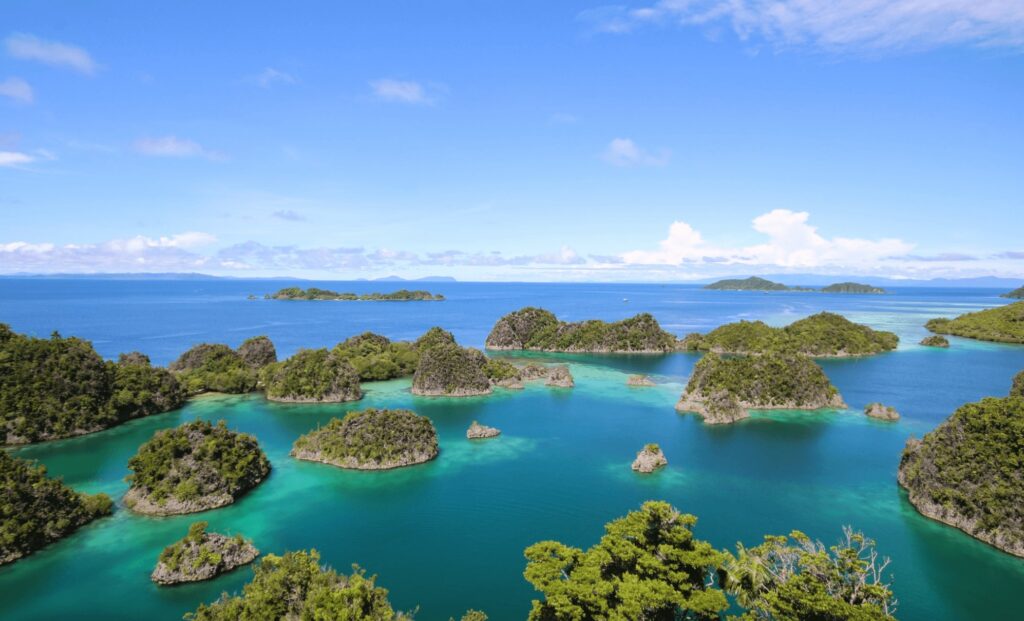
Liveaboard Diving in Raja Ampat
A liveaboard is a dedicated dive vessel that combines accommodation, dining and dive facilities all in one. It’s completely geared towards diving (eat, sleep, dive, repeat), although most welcome non-diving family members and snorkellers.
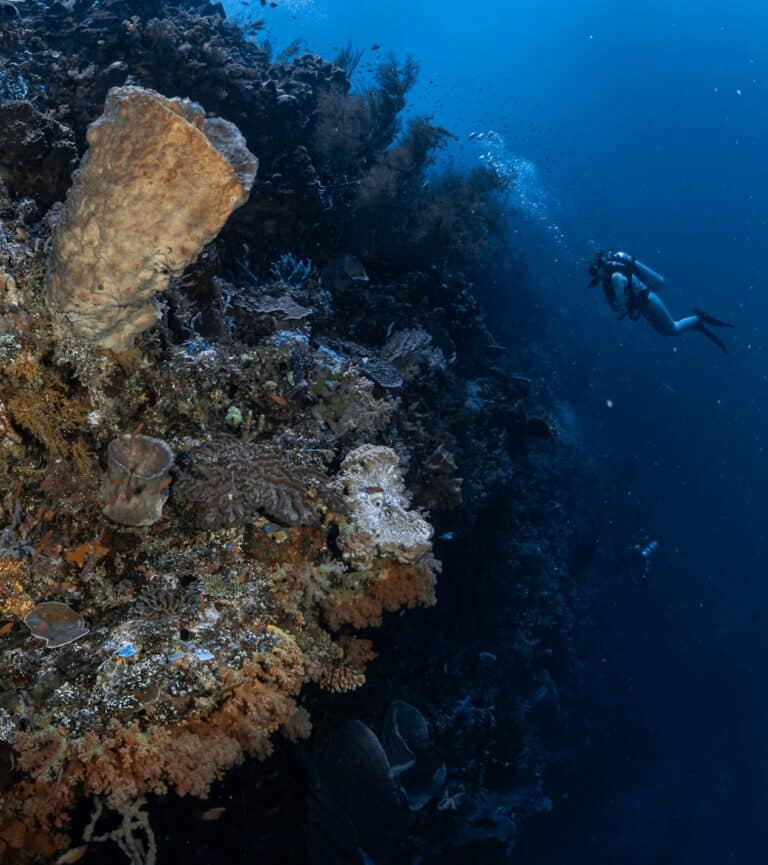
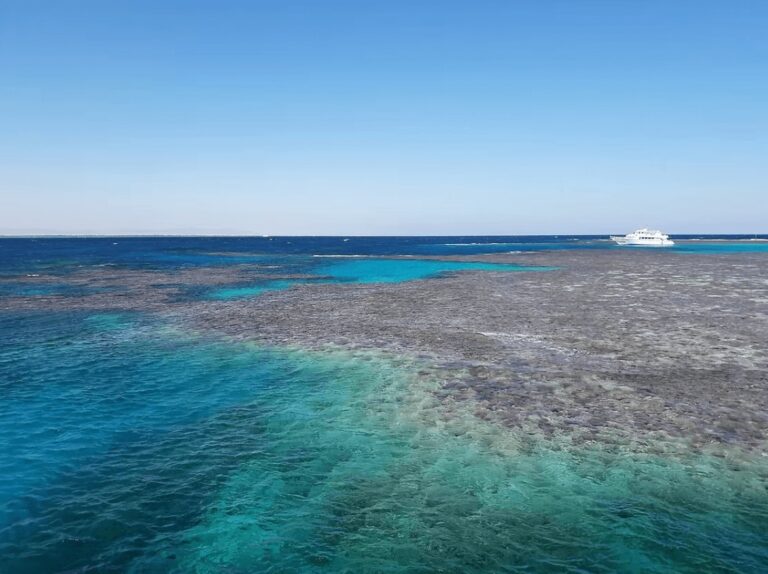
Because Raja Ampat covers such a vast area, liveaboards are really popular and it’s one of the best ways to reach remote dive sites that are impossible (or impractical) to visit from a resort. A liveaboard is a great way to cover multiple dive areas in the one trip, such as Misool, Dampier Strait and Wayag.
Essentially, a liveaboard allows you to experience the full scale of Raja Ampat’s underwater diversity, particularly if you select a longer itinerary (12-14 days). For a 7-day itinerary, you’ll only cover one or two areas, so keep that in mind when planning.
While I haven’t yet had the opportunity to do a liveaboard in Raja Ampat, I have done liveaboards in several other Indonesian destinations, including Alor and Komodo. They’re great for immersive diving and there’s something about being stuck on a boat surrounded by passionate divers that makes you…well…a more passionate diver!

Advantages of Liveaboard Diving in Raja Ampat
The biggest advantage of being on a dive liveaboard in Raja Ampat is the access it offers to remote dive sites.
Instead of being limited to sites near a dive resort, liveaboards can reach less-visited reefs (with fewer divers). They can also be at popular dive sites early in the morning before resort-based divers arrive.
This is something that’s worth keeping in mind during Raja Ampat’s peak season (December through March). Each time I’ve returned, the islands are getting busier and busier…and this does mean that being the only dive group at a site is becoming a rarity.
The other great thing about a liveaboard is that you’re not spending time in a small boat getting to and from dive sites.
Usually, a liveaboard will move while you’re having breakfast (or just before you wake up). It might move again during lunch for the afternoon dive, so you’re at the dive site when the bell rings and ready to go.
Over a seven- to ten-night trip, you can often complete 20–30 dives, making it ideal if you’re in Raja Ampat to dive, dive, dive. Most liveaboards will offer two morning dives and one in the afternoon, as well as a night dive (if there are suitable sites nearby).
Disadvantages of Liveaboard Diving in Raja Ampat
Liveaboards are primarily focused on diving. For some people, that’s their appeal, while for others it can be a detraction, particularly if they want to experience a destination beyond diving.
That said, some liveaboard itineraries will include island exploration (the elevated viewpoints around Raja Ampat are amazing) and village visits during surface intervals are common at jetty dives. But most of your schedule revolves around being underwater.
At the end of the day, a liveaboard follows a set itinerary. The crew will adjust plans based on weather and conditions, but guests generally cannot choose their own schedule (unless you’ve chartered the boat). This is something to keep in mind if you don’t want a rigid itinerary and little say in where you go.
On a liveaboard, there’s also less opportunity to “escape” people who ruffle your feathers (if you know what I mean). You’re living in close confines for multiple days – diving together, eating together and hanging out onboard together. This is not for everyone, especially if you are easily irritated by potentially irritating people.
Who Liveaboard Diving in Raja Ampat is Best For
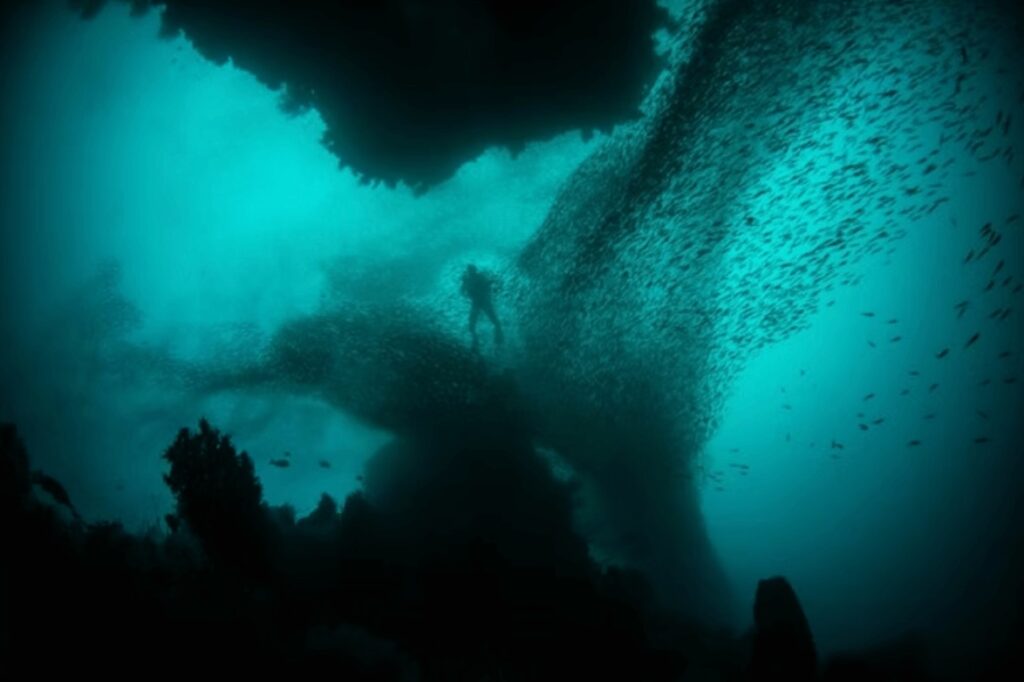
Because many of Raja Ampat’s most famous sites involve currents, drift diving and open-water conditions, liveaboards are generally best suited to confident, experienced divers.
In fact, many dive liveaboards want you to have an Advanced scuba certification or have completed at least 50 dives before diving with them.
As mentioned above, beginner divers may feel that some dive sites are out of their depth (excuse the pun). At the same time, they may feel compelled to descend because the FOMO on a dive liveaboard is real!
If everyone else is going, you want to go too! But it’s important to dive within your limits, because the consequences of not doing so can be severe.
If you’re someone who wants to spend time hiking, kayaking, birdwatching or exploring local communities, a liveaboard might not be for you.
And if you’re travelling with a non-diving family member, remember that for them, watching everyone go off exploring while they’re stuck on the boat might become tiring. Consider a land-based option instead.
Homestay Diving in Raja Ampat
Community-run homestays offer a completely different experience, and while they’re not unique to Raja Ampat, I think the homestays here are something special.
The first time I visited Raja Ampat, way back in the early 2000s, I stayed at a homestay and it was a magical experience, despite the relatively basic conditions. A mattress on the floor with a mosquito net was more than made up for by a paradisiacal beachfront setting and a house reef to die for!
Often owned and operated by local families, homestays provide a more affordable (dare we say “authentic”) way to explore Raja Ampat. Most are quite rustic but with the same dreamy settings that far more expensive dive resorts in the area offer.
Homestays are particularly popular among independent travellers, backpackers and divers who want to experience Raja Ampat on a budget. They’re also great for anyone who wants a taste of local island life while supporting community-based tourism.
Check out some of our favourite homestays in Raja Ampat.
Advantages of Homestay Diving in Raja Ampat
One of the biggest benefits of staying at a homestay is that tourism income goes directly to local families. Most (not all) are owned by Papuan locals, so the income generated isn’t going through the hands of international companies or foreign investors.
Many homestays are also involved in community-led conservation efforts, helping create incentives to protect coral reefs and marine wildlife. As locals, they understand the issues being faced, and as stakeholders, these issues directly impact their lives.
While this is also the case with many Raja Ampat dive resorts that employ local staff (such as Papua Explorers), the price tag is in a different category. Homestays are generally the most budget-friendly accommodation option in Raja Ampat and make the archipelago’s underwater world accessible to more travellers.
I also love the cultural experience of staying at a Raja Ampat homestay – you get a taste of daily life beyond diving. Sometimes, you’ll be sharing meals with the family and there are kids running around, plus there’s the option to learn about traditional fishing practices, artisan crafts and Papuan hospitality.

Disadvantages of Homestay Diving in Raja Ampat
While many homestays in Raja Ampat are located alongside amazing house reefs, the options to dive further afield are sometimes limited. For the record, not all homestays have dive facilities and, if they do, they are often simpler or limited to a local dive master who can be called on request.
This was the case when I stayed at a homestay in Raja Ampat back in the early 2000s. I expressed that I wanted to dive and they called a local divemaster who arranged a boat and gear for the day. There was no on-site dive operation, although I know that other homestays do have dive facilities.
Usually, the dive operation at homestays is far more basic than at a resort or on a liveaboard. So much so that you may be the only person(s) diving. Because of this, the cost of the boat, fuel and dive guide will all land on your shoulders, rather than being shared between guests.
Accommodation at homestays in Raja Ampat is also more basic than at resorts, and for some people, this is part of the charm. Expect simple rooms or bungalows on the beach (some have overwater bungalows), perhaps shared bathrooms (these may be cold water-only) and limited electricity.
Air-conditioning is unlikely, although this is also the case at many eco-dive resorts in Raja Ampat due to the environmental footprint.
Insight:
Homestay accommodation in Raja Ampat varies widely, with super basic options at the budget end of the spectrum and properties that are on-par with dive resorts at the upper end. If you’re serious about diving, I recommend you spend a little more to stay at a homestay with on-site dive facilities – it will be logistically easier and you’ll get to experience a lot more.
Who Homestay Diving in Raja Ampat is Best For
A homestay is great if diving is just one of several activities you want to do in Raja Ampat and/or you’ve got a limited budget. It’s easy enough to spend a couple of days underwater with a local divemaster and the rest of your time snorkelling the house reef or kayaking to untouched coves.
I wouldn’t suggest a homestay for an intensive dive vacation involving multiple dives a day across the course of a week or more. That is, unless, the homestay has a well-established dive operation (there are a handful that do).
If you’re travelling solo, diving Raja Ampat from a homestay could end up being quite expensive, particularly if you’re the only diver staying that week. Usually, there will be a minimum number of divers required to make a trip happen…and you’ll be left paying for all those “ghost divers” if you’re the only one!
Dive resorts, on the other hand, usually sell all-inclusive packages, so you won’t be lumped with a surcharge if you are the only one.
Discover some of our favourite destinations where tourism is actively helping to support coral reefs.
Liveaboard vs Resort vs Homestay Comparison
| Liveaboard | Resort | Homestay | |
| Best for | Dedicated divers | Comfort seekers | Independent travellers |
| Budget | $$$ | $$–$$$ | $ |
| Number of dives | Highest | Moderate | Flexible |
| Dive access | Widest range | Nearby sites | Local sites |
| Comfort | Medium | Highest | Basic |
| Cultural interaction | Limited | Moderate | Highest |
| Non-diver friendly | Less suitable | Excellent | Excellent |
| Sustainability impact | Depends on operator | Depends on operator | Strong community benefits |

PLAN YOUR TRIP WITH OUR FAVOURITE RESOURCES:
Find hotels and resorts via Booking or Agoda
Book tours and experiences via Viator or GetYourGuide
Find a rental car via Discover Cars
Book flights via Kiwi or Booking
Search for buses and trains via 12Go or Omio
Get travel insurance via SafetyWing
Buy a digital eSIM with Airalo
By purchasing through our links, you’ll be supporting our website at no additional cost to you





We are a team of passionate divers and surfers with decades of combined experience in the water and travelling to all corners of the globe.
After years of chasing waves and descending into the deep blue, we’ve created this resource to highlight sustainable surf camps, eco-dive resorts and conservation-focused ocean trips to help inspire your next adventure.
Eco Ocean Escapes was born out of a love of the ocean, an obsession with travel and a concern about the impacts of our adventures on the environments we explore.