
How Sunscreen Affects Coral Reefs + Marine Life
If you’re anything like us, applying sunscreen is second nature before heading out to surf or spending a day on a dive boat. In fact, our skin type means we need to apply sunscreen before we step outdoors…full stop!
Since we were little, it’s been drummed into us that sunscreen protects our skin from harmful UV rays and helps reduce the risk of skin cancer. Strong arguments for using sunscreen.
But while sunscreen is important for stopping us from getting burned, some of the chemicals it contains can have unintended consequences for our marine environment. And that’s what we want to address in this article.
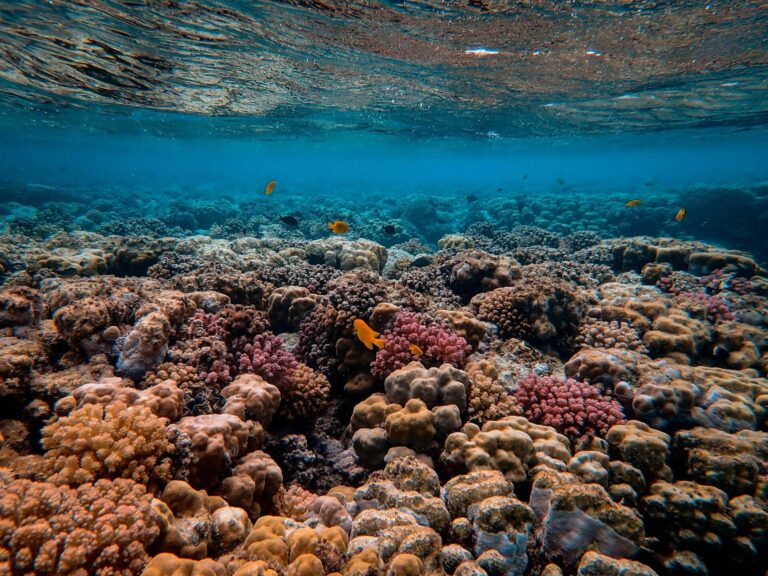
Every year, millions of people swim, snorkel and dive in tropical waters. Tropical waters that are home to coral reefs.
And many of those people apply sunscreen before making the splash…then reapply again and again. In the process, small amounts of sunscreen wash off our skin and enter the ocean.
Although it may seem insignificant, the cumulative effect is substantial, particularly in popular coastal destinations where thousands of visitors enter the water every day.
Research over the past two decades has raised concerns about the impact of certain sunscreen ingredients on coral reefs and other marine life. That’s important to highlight – it’s not sunscreen itself, but certain ingredients found within certain sunscreens.
And while sunscreen is only one of many threats facing our oceans and coral ecosystems, it’s one that travellers can do something about.

How Does Sunscreen End Up on Coral Reefs?
The answer is surprisingly simple. It washes off!
As soon as you enter the ocean (whether you’re swimming, snorkelling, diving or surfing), some of the sunscreen you’ve applied begins to wash off. In areas with heavy tourism, these compounds can accumulate, particularly around coral reefs, lagoons and sheltered bays.
Sunscreen also enters the marine environment through wastewater. After showering, washing your face or doing laundry, trace amounts of sunscreen ingredients can make their way into rivers and coastal waters. It reminds us a little of the issue with microbeads and microplastics.
In many parts of the world, wastewater treatment systems aren’t designed to remove these chemicals completely before the water is released back into the environment.
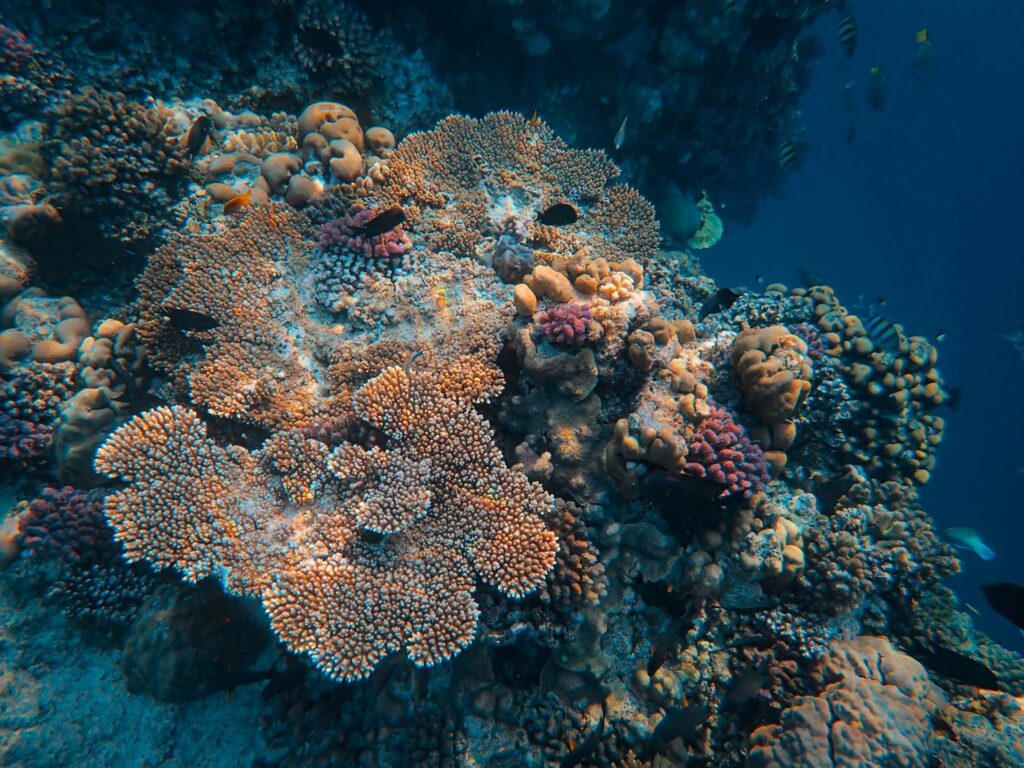
Which Sunscreen Ingredients Are the Biggest Concern?
Not all sunscreens affect the environment in the same way and that’s because it’s more about the ingredients in the sunscreen than the sunscreen itself.
After reading up on this, we’ve discovered that most of the concern centres around certain chemical UV filters, including:
- Oxybenzone (benzophenone-3)
- Octinoxate
- Octocrylene
- Homosalate
- 4-Methylbenzylidene Camphor (4-MBC)
Among these, oxybenzone seems to receive the most attention. Laboratory studies have suggested that it can interfere with coral development, damage coral DNA, increase bleaching (under stressful conditions) and reduce the ability of young corals to grow.
Octinoxate has also been linked to impaired coral growth and reproduction in experimental studies.
It’s important to remember that coral reefs face many pressures simultaneously, including rising sea temperatures, ocean acidification and pollution. So it’s difficult to blame sunscreen chemicals alone.
But it’s thought that they may be adding further stress, particularly in heavily visited locations where significant amounts of sunscreen chemicals are entering the marine environment.
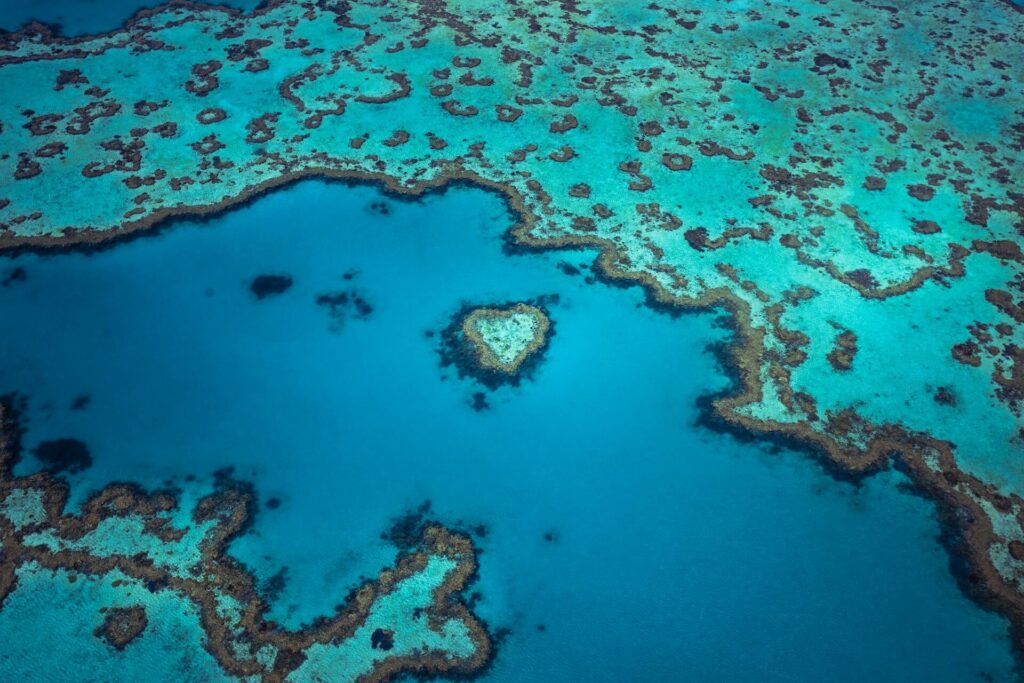
How Sunscreen Can Affect Coral Reefs
Scientists are still learning about the complex ways sunscreen ingredients interact with marine ecosystems and this is research we’re keenly following. But several potential impacts have been identified:
Reduced Coral Growth
Young corals (larvae) are particularly vulnerable to the chemicals present in some sunscreens.
Some studies suggest that exposure to certain sunscreen chemicals can reduce their ability to settle onto reefs and develop into healthy coral colonies.
Since coral reefs rely on new generations of corals to replace those damaged by storms, bleaching or disease, anything that affects recruitment can slow reef recovery.
Increased Bleaching
Coral bleaching occurs when corals become stressed and expel the microscopic algae living within their tissues. We’ve written a full article about it here if you want to learn more.
The leading cause of mass bleaching is elevated ocean temperatures associated with climate change. However, laboratory research suggests that some sunscreen ingredients may increase stress in corals or make them more susceptible to bleaching under certain conditions.
It’s important to note that sunscreen alone isn’t responsible for bleaching events. But it’s an additional stressor that can decrease a reef’s ability to cope with changing environmental conditions.

Damage to Marine Life
Unfortunately, corals aren’t the only organisms potentially affected by sunscreen chemicals.
Some of the research we’ve read has found that some sunscreen chemicals may impact fish, sea urchins, algae, molluscs and a variety of other marine species.
Following lab studies, scientists have reported effects on growth, reproduction, hormone function and development, although the extent of these impacts in natural environments is still under investigation.
How does this relate to coral reefs?
Healthy coral reefs depend on complex relationships between hundreds of different species. So protecting the wider ecosystem (including mangroves and seagrass meadows) is just as important as protecting the corals themselves.
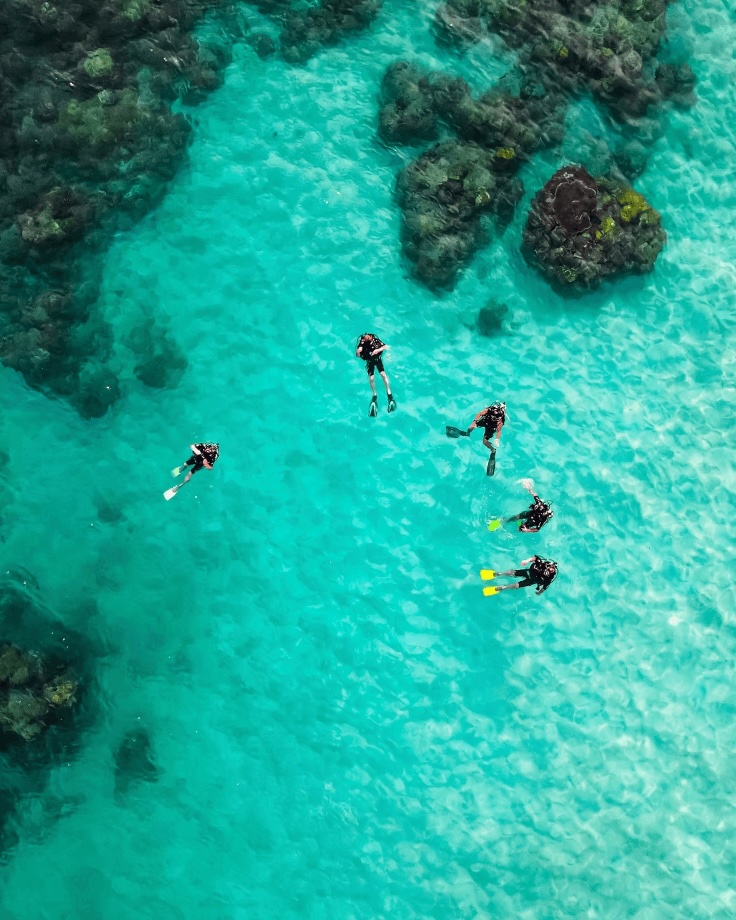
Is Reef-Safe Sunscreen Really Reef-Safe?
Now this is an interesting question! You’ve probably seen sunscreen products labelled as “reef-safe” or “reef-friendly.” We’ve personally sought out reef-safe sunscreens thinking they were the better option.
But in reality, there is currently no universally recognised definition or certification for these terms. In many countries, manufacturers can use them without meeting a single global standard. It’s kind of like “greenwashing”…but in the sunscreen world.
That doesn’t necessarily mean these products are misleading. In fact, some of them are genuinely “reef-safe”. But it does mean it’s worth reading the ingredient list when purchasing sunscreen rather than relying solely on the “claims” being made by the brand.
Many marine scientists recommend choosing mineral-based sunscreens that use non-nano zinc oxide as the active ingredient. These products are generally considered a better option for marine environments than sunscreens containing oxybenzone or octinoxate.
It’s also worth avoiding aerosol sprays. These can release sunscreen into the surrounding environment before it even reaches your skin.

Destinations Taking Action
We’re happy to see that several destinations with sensitive reef ecosystems have taken action and introduced restrictions on sunscreens containing certain chemicals.
Places like Hawaii and Palau have implemented laws limiting the sale or use of sunscreens containing ingredients such as oxybenzone and octinoxate. These measures are designed to reduce chemical pollution and protect their valuable coral reef ecosystems.
In fact, Palau was the first country in the world to implement a national ban on “reef-toxic” sunscreens, prohibiting the import, sale and use of 10 specific chemical ingredients. But having travelled to this Micronesian island nation earlier in the year, nobody actually checked our luggage for sunscreen on arrival.
It suggests that it’s up to individuals to do the right thing, so we hope you’ll get on board. Not just in Palau and Hawaii, but no matter where in the world your ocean adventures take you.
Over the coming years, it will be interesting to see the effectiveness of these bans on coral reef health. But one thing’s for sure – they reflect growing recognition that ocean tourism has a role to play in protecting marine environments.

How Divers, Surfers and Ocean Travellers Can Help
Choosing a more environmentally conscious sunscreen is one of the simplest changes you can make as an ocean lover. And when we say “environmentally conscious”, we mean a sunscreen that is mineral-based and uses non-nano zinc oxide as the active ingredient.
Rather than just picking up the first sunscreen labelled “reef-safe” or “reef-friendly”, try to delve a little deeper to see what’s really going on behind the marketing speak. At a minimum, actively avoid products containing oxybenzone and octinoxate, as these are two of the most harmful chemicals (that we currently know about).
There are also others ways you can help to reduce the impact of your sun protection choices while enjoying the ocean:
- Wear UV-protective clothing such as rash guards or long-sleeved swimwear to reduce the amount of sunscreen you need.
- Apply sunscreen at least 15–20 minutes before entering the water to allow more of it to absorb into your skin.
- Avoid spraying sunscreen directly on the beach or near the ocean.
- Follow local recommendations when visiting marine protected areas.
Protecting Yourself and the Ocean
We’re not trying to suggest you shouldn’t use sunscreen or that you should compromise your skin’s health in any way. At the end of the day, protecting your skin and protecting coral reefs don’t have to be competing priorities. It’s entirely possible to do both.
It starts with being aware of the dangers sunscreen chemicals pose to coral reefs and being mindful of what enters the ocean during your recreational pursuits. Simple changes can make a meaningful difference, particularly if they are widely adopted (hint: spread the word).
So the next time you’re shopping for sunscreen that’s going to be used while surfing, diving or any other ocean activity, take a moment to check what chemicals you’ll be contributing. And if there’s the option to wear a rashie or dive skin instead of slathering on half a tube of lotion, it’s one less thing putting stress on our coral reefs.
PLAN YOUR TRIP WITH OUR FAVOURITE RESOURCES:
Find hotels and resorts via Booking or Agoda
Book tours and experiences via Viator or GetYourGuide
Find a rental car via Discover Cars
Book flights via Kiwi or Booking
Search for buses and trains via 12Go or Omio
Get travel insurance via SafetyWing
Buy a digital eSIM with Airalo
By purchasing through our links, you’ll be supporting our website at no additional cost to you





We are a team of passionate divers and surfers with decades of combined experience in the water and travelling to all corners of the globe.
After years of chasing waves and descending into the deep blue, we’ve created this resource to highlight sustainable surf camps, eco-dive resorts and conservation-focused ocean trips to help inspire your next adventure.
Eco Ocean Escapes was born out of a love of the ocean, an obsession with travel and a concern about the impacts of our adventures on the environments we explore.