Should Some Ocean Destinations Be Off-Limits to Tourists?
As people who love exploring ocean destinations (and love encouraging others to do the same), this is a topic that’s hard to address.
But it’s something we regularly think about, particularly when we’re travelling to far-flung reefs, islands and marine sanctuaries to dive and surf.
There is an irony at the heart of surf and dive travel: the more we value untouched places, the more determined we (often) become to reach them.
Even if you’re only an occasional visitor to surf and dive travel forums, you’ll have read reports of heaving lineups and hordes of divers at global hotspots.
In response, the idea of stepping onto an uninhabited atoll, diving a reef few have seen or anchoring alongside an undocumented break feels like the last frontier of travel.
But as global tourism expands and more of these once-isolated places become “bucket list” destinations, we can’t ignore the uncomfortable question that arises: should some of them remain off-limits?
This article may contain affiliate links, which means when you make a purchase through that link, we earn a small commission. Affiliate links come at no cost to you and ensure our content remains free!
Paradise Under Pressure
There’s no denying that many of the destinations travellers label as “paradise” are under significant pressure.
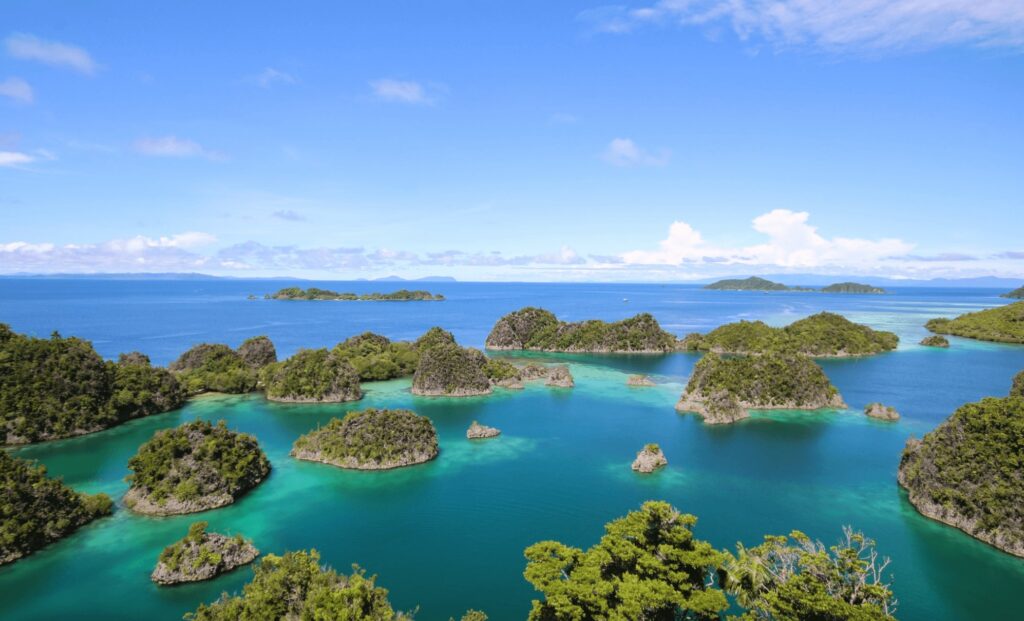
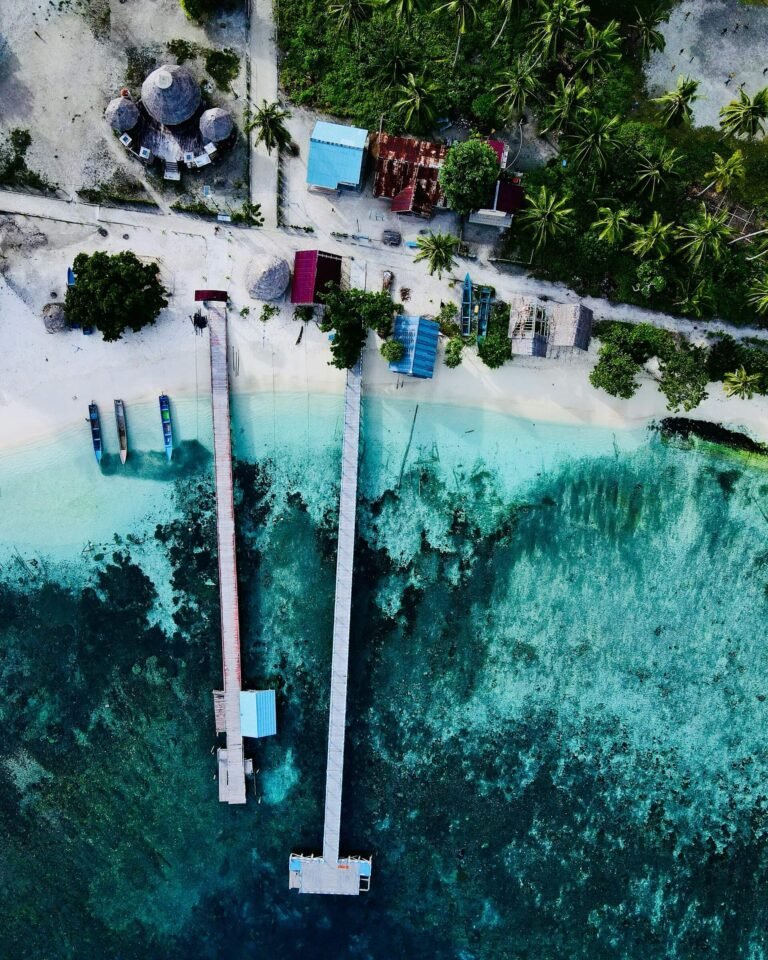
Take places like Palau or Raja Ampat – marine environments so rich in biodiversity that they are often described as the “Amazon of the Seas.” It’s these superlatives (and the testimonies of other travellers) that make us want to experience them ourselves.
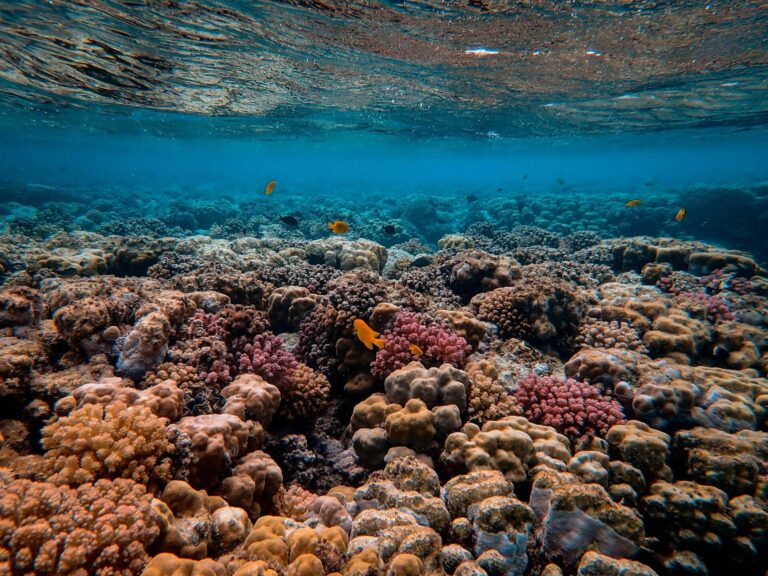
But they’re also incredibly fragile. Already under stress from climate change, coral reefs can be damaged by something as simple as a careless fin kick or a dropped anchor. So should we not visit?
Tourism, even when well-intentioned and framed as “eco-tourism”, introduces pressure. And it has a way of scaling faster than environmental protection.
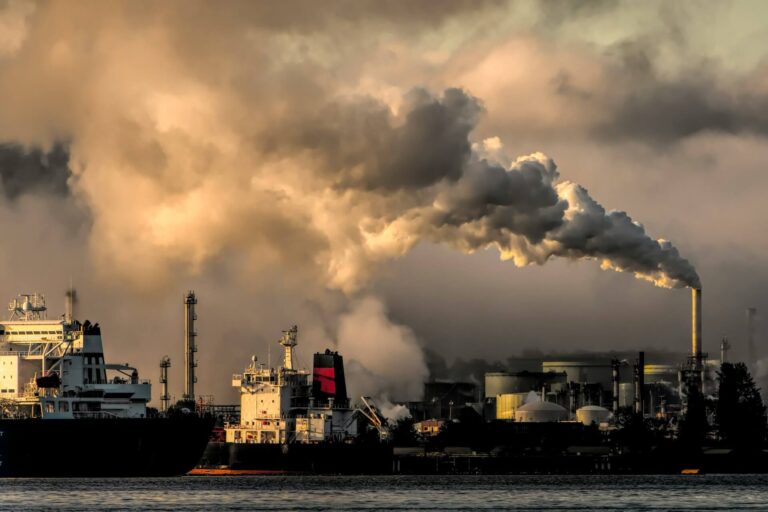
Infrastructure is built in the form of resorts and jetties, and with it comes waste, energy use and the reshaping of local environments.
With the proliferation of “travel influencers”, what begins as a trickle of adventurous, in-the-know visitors can quickly become a steady flow (then a flood) of people wanting their very own picture in paradise.
And we don’t think anyone is here to argue that mass tourism is good for ocean environments!
You can learn more about overtourism in dive destinations here.
The Argument for Access
Having said all that, the argument for access is also compelling. In many places (including Raja Ampat and Palau), tourism is an economic backbone.
In the Great Barrier Reef, tourism generates billions of dollars and supports tens of thousands of jobs. It also plays a crucial role in funding conservation efforts, scientific research and public awareness.
Without tourism, there is a risk that these marine ecosystems become “out of sight, out of mind.” And without attention, they might end up losing the funding needed to protect them.
The truth is, people protect what they love, and they are more likely to love what they have experienced.
A diver who has seen a reef firsthand may become an advocate for its survival. A surfer who has witnessed marine life in its natural habitat may think differently about consumption, climate and conservation.
The reason we are so passionate about marine conservation is because of our exposure to incredible ocean environments around the globe.
In this sense, access to largely untouched surf and dive travel destinations can be transformative.
But the very act of visiting can alter the environment being visited. This is the paradox at the heart of ocean tourism: exposure creates awareness, but also risk. And in some cases, the risk may simply be too great.
The Ethics of Banning Tourists
Some destinations have already drawn hard lines. North Sentinel in the Andaman Islands is strictly off-limits to tourists. This is not for environmental reasons alone, but to protect the isolated Sentinelese people.
Northwest of Hawaii, the Papahānaumokuākea Marine National Monument is one of the largest protected marine areas on Earth. Access is heavily restricted to preserve its ecosystems, with exclusions for cultural practices, habitat restoration and scientific work.
In some places, exclusion may be the most effective form of protection. But banning tourists entirely raises ethical and economic questions.
Who gets to decide that a place should be off-limits? Governments? Scientists? Indigenous communities? And what happens to local communities that depend on tourism for their livelihoods when such decisions are made?
In many cases, we think local and Indigenous communities are central to the answer and their knowledge should be key to decision-making. Not only are their lives intricately entwined with these ecosystems in the modern day, but they have often been custodians for generations.
You can learn more about how Indigenous knowledge is being used to protect the Great Barrier Reef here.
For small island nations and coastal regions, tourism can provide essential income, infrastructure and opportunity for these groups.
Removing that income without alternatives risks replacing environmental harm with social and financial hardship.
So the challenge is not simply to protect ocean ecosystems, but to do so in a way that supports the people who depend on them.
Managing Access in Practice
Perhaps the issue is not whether places should be off-limits, but how access is managed. Limited permits, strict visitor caps, higher fees tied directly to conservation and enforced eco-guidelines can shift tourism from a mass activity to a controlled privilege.
We’ve had these discussions in lineups on numerous occasions. Some people believe that ocean destinations should be accessible to all travellers and high permits/conservation fees price out budget travellers.
Others argue that it’s the only way of reducing visitor numbers and avoiding the unsustainable development that has impacted places like southern Bali and many Thai islands.
The Galapagos Islands is one example of how some of these measures have been implemented in an attempt to balance access with protection.
Visitors must follow designated routes, adhere to strict guidelines and be accompanied by licensed guides. But even there, tourism is taking its toll and the tension is ongoing.
As global demand for travel grows, pressure mounts to expand access, increase capacity and reduce restrictions. What begins as a carefully managed system can gradually loosen, especially when economic incentives come into play.
Climate change adds another layer of urgency. Ocean ecosystems are already under immense stress from rising temperatures, acidification and extreme weather events. In this context, the additional burden of tourism can tip the balance.
Restraint and Responsibility in Ocean Travel
Obviously, we don’t have all the answers…and we acknowledge that as surf and dive travellers, we are part of the problem. But with a shift in mindset and behaviour, can we also be part of the solution?
Protecting these environments may require more than just careful management from governments and local authorities. It may require restraint from individuals like us on a scale that challenges the very idea of travel as a universal right.
Perhaps that is the deeper question this issue raises. Is ocean travel an entitlement or a privilege?
In an age where almost anywhere can be reached with enough time and money, the idea of “off-limits” feels almost radical. But it may be necessary, as an acknowledgment that some places have value precisely because they are not easily accessed.
There is a certain humility in accepting that not every place is meant to be experienced firsthand. Some landscapes, especially in the ocean’s most fragile and remote regions, might be better protected from humans altogether.
Ultimately, the question forces us to reconsider what travel is for. If it is about surfing every “undiscovered” break or diving every remote reef (then posting about it online), then few places will remain untouched.
But if it is about recognising the impacts of our travel choices and taking responsibility, then restraint becomes part of the journey.
PLAN YOUR TRIP WITH OUR FAVOURITE RESOURCES:
Find hotels and resorts via Booking or Agoda
Book tours and experiences via Viator or GetYourGuide
Find a rental car via Discover Cars
Book flights via Kiwi or Booking
Search for buses and trains via 12Go or Omio
Get travel insurance via SafetyWing
Buy a digital eSIM with Airalo
By purchasing through our links, you’ll be supporting our website at no additional cost to you
-
Kelp Forests: The Underwater Jungles We Can’t Afford to Lose
In the corner of the world where we live, diving is less about exploring colourful coral reefs and more about navigating enigmatic kelp forests. Places where long golden-brown fronds sway with the currents and sunlight filters through, illuminating fish as they dart between the stems and the occasional seal gliding by. Kelp forests are among…
-
7 Inspiring Coral Reef Conservation Projects Around the World
It might surprise you to learn that coral reefs cover less than 1% of the ocean floor, but provide habitat for an estimated quarter of all marine species. It’s mind-blowing! Not only that, but they support the livelihoods of millions living in coastal communities around the globe and help to protect shorelines from wave and…
-
Plan a Surf + Yoga Retreat at Rascals: An Adults-Only Hotel in Kuta, Lombok
Tucked away on a quiet street off Kuta’s main drag, Rascals was our stay of choice on our last visit to Lombok. It had been on our radar for many years, but we’d always returned to Mana Eco Retreat – a place we’d fallen in love with for its tranquil cabanas, vegetarian-friendly restaurant and incredible…
-
The Blue Revolution: How Ocean Conservation Is Changing Travel
If you’re anything like us, the ocean is what fuels your travel adventures. Over the last 20+ years, we’ve flown across the globe to dive with manta rays, kayak above coral reefs and surf legendary waves. But there is an uncomfortable contradiction at the heart of ocean tourism: the healthier the marine environment, the more…
-
Climate Change in the Ocean: A Guide for Surfers + Divers
When we think about climate change, our attention naturally turns to what we can see on land or are experiencing first hand: rising temperatures, melting glaciers, wildfires and more intense weather events. Many of these are well-reported on the nightly news and it’s devastating to see intense wildfires ripping across landscapes and floods wreaking havoc…
-
Resort vs Liveaboard vs Homestay Diving in Raja Ampat: Choosing the Right Experience
Raja Ampat is one of my favourite diving destinations in Indonesia. In fact, that’s probably an understatement. Raja is one of my favourite places to dive anywhere in the world. The underwater experiences I’ve had here are nothing short of extraordinary…and that’s not taking into account the incredible above-water scenery. It really does feel like…
We are a team of passionate divers and surfers with decades of combined experience in the water and travelling to all corners of the globe.
After years of chasing waves and descending into the deep blue, we’ve created this resource to highlight sustainable surf camps, eco-dive resorts and conservation-focused ocean trips to help inspire your next adventure.
Eco Ocean Escapes was born out of a love of the ocean, an obsession with travel and a concern about the impacts of our adventures on the environments we explore.