Renting a Car and Driving in Palau: Babeldaob Road Trip
If you’re planning a dive trip to Palau (either land-based or on a liveaboard), you’re probably looking for something to do on your “no-dive day”, before you fly home.
One of the best ways to explore the main island, Babeldaob, is by renting a car and driving between its natural waterfalls, ancient stone monoliths and World War II-era remains. And this is exactly what we did on our final day in this spectacular island nation.
Honestly, we were a little hesitant at first about self-driving in Palau and had initially approached the reception desk at Palau Central Hotel (where we were staying) to ask about land-based tours. She provided us with a couple of options and then said: “But most people just rent a car and drive themselves – it’s really easy!”
By this stage of the trip, we had spent every day in Palau on a guided experience of some sort, mostly diving and kayaking (which is amazing – you can read all about it here!) So the idea of exploring independently (and saving a bit of money) was appealing.
And the receptionist was right, driving in Palau was incredibly easy, particularly once we got out of Koror. Even the traffic in the middle of town was simple to negotiate – people drive slowly and they give way to let you turn and pull out.
The only tricky part? Driving a right-hand-drive vehicle on the right-hand side of the road. That was a first for me! Also, driving in a sudden downpour of rain was a little challenging, but this is the tropics after all!
If you’re thinking about doing a road trip in Palau or renting a car at the end of your dive trip, this article is for you. In it, we’ll share our Babeldaob self-driving itinerary, together with tips and entrance fees for cultural/natural attractions around the island.
For more information about diving in Palau, check out our detailed scuba guide here. We’ve documented our experience kayaking in the Rock Islands with Paddling Palau here.
This article may contain affiliate links, which means when you make a purchase through that link, we earn a small commission. Affiliate links come at no cost to you and ensure our content remains free!
How to rent a car in Palau
If you’re someone who likes to plan ahead or you want to secure the best deal, I’d recommend booking your rental car in Palau ahead of time.
Online platforms like Discover Cars show available deals from multiple providers, with Alamo and National the main options in Palau. Both have good reviews on Discover Cars and you can opt to pick the vehicle up either at Koror Airport (ROR) or from a downtown location.
In our experience, most car hire companies in Palau will bring the vehicle to your hotel, saving you the hassle of trying to find an office.
That’s exactly what ours did, although we booked it last minute through the reception desk at Palau Central Hotel.
We only decided to rent a car in Palau two days ahead of time, so we probably didn’t get the best deal. But in the end, it was only 70 USD for the day and they allowed us to return it to Koror Airport on the day of our flight for no extra charge.
If you’re picking your vehicle up at the airport, there are rental company booths in the arrivals area.
It’s at this point that I should say the car rental process in Palau is extremely relaxed! They didn’t want any form of deposit payment when we booked and when the car was delivered, the associate said we could leave cash at the hotel reception later in the day because their card payment facility was broken.
Essentially, they let us rent the vehicle without any credit card details or financial security in case we completely wrote it off! But I guess Palau is a small place and it wouldn’t be hard for them to find you if you tried to run away from any damage.
I also think it’s just a trusting society – Palau is the kind of place where people probably don’t worry about locking their doors at night.
When we asked to return the vehicle to the airport, they told us to just park it outside the terminal, leave the keys under the driver’s mat and not lock the vehicle. So easy!
Based on this information, you might think that the vehicle was in poor condition. But that couldn’t have been further from the truth. It was a late-model X-Trail and had no dents, although there were a few cosmetic scratches.
While it was bigger than we would have opted for initially (all of the smaller vehicles were gone), it was actually a blessing to have a 4WD on some of the rougher roads we encountered around the island.
What is it like driving in Palau?
Speaking of road conditions in Palau, they’re mostly very good, particularly on the highway that loops around Babeldaob. When you take into consideration the tropical weather and just how demanding it is on roads, we were really surprised by how intact the tarmac was.
The dirt roads leading to some of the cultural and natural attractions, however, are NOT in such great condition, particularly the route that leads to the Japanese Lighthouse Ruins. Expect lots of potholes and ruts gouged out by the heavy rainfall – this is where having a 4WD is a blessing!
As mentioned earlier, Palau drives on the right-hand side of the road. But many of the imported vehicles are right-hand-drive. This means that, as a driver, you will be on the outside line, rather than overlooking the middle line that runs down the centre of the road.
Our vehicle had a small mirror mounted on the left-hand side of the bonnet, and I think it was to assist the driver with alignment. But if you have a passenger, they can also keep an eye on where you are positioned relative to the central line.
Considering traffic was so minimal (we passed hardly any cars while circling Babeldaob), it almost doesn’t matter. Driving in Palau is incredibly relaxed and most people are driving under 80km/h, even on open stretches of road.
If you do get stuck behind a slow driver or a loaded ute/pickup truck, overtaking can be tricky due to the winding nature of the roads. Be sure to wait until you have a broken line and clear vision that no one is coming towards you in the opposite direction before overtaking.
Road trip itinerary around Palau
Initially, we didn’t have a clear idea about what we wanted to see while driving around Palau. But when we booked our rental car, the hotel receptionist gave us a map with some of the natural and cultural highlights. Using this, we went off to do our own research.
We also bought a more detailed map (it was less than 2 USD) that we stumbled across in the gift shop attached to our hotel. It had more detailed information about each of the attractions that we thought would be useful when we were on our road trip, without an internet connection.
During our week spent snorkelling, diving and kayaking in Palau, we’d also met several people who had spent a day driving around Babeldaob. Each had given us their take on what was worth seeing and what they would skip if they were to do it again.
Armed with all of that information, we came up with the following itinerary:
- Capitol of Palau
- Surf Break at Melekeok
- Badrulchau Stone Monoliths
- Todai Lighthouse Ruins
- Ngardmau Waterfall
- World War II Truck Ruins
When planning your Palau road trip, keep in mind that several of the attractions have an entrance fee (we’ll let you know which ones and how much below). They only take cash, so come prepared with USD!
Capitol of Palau
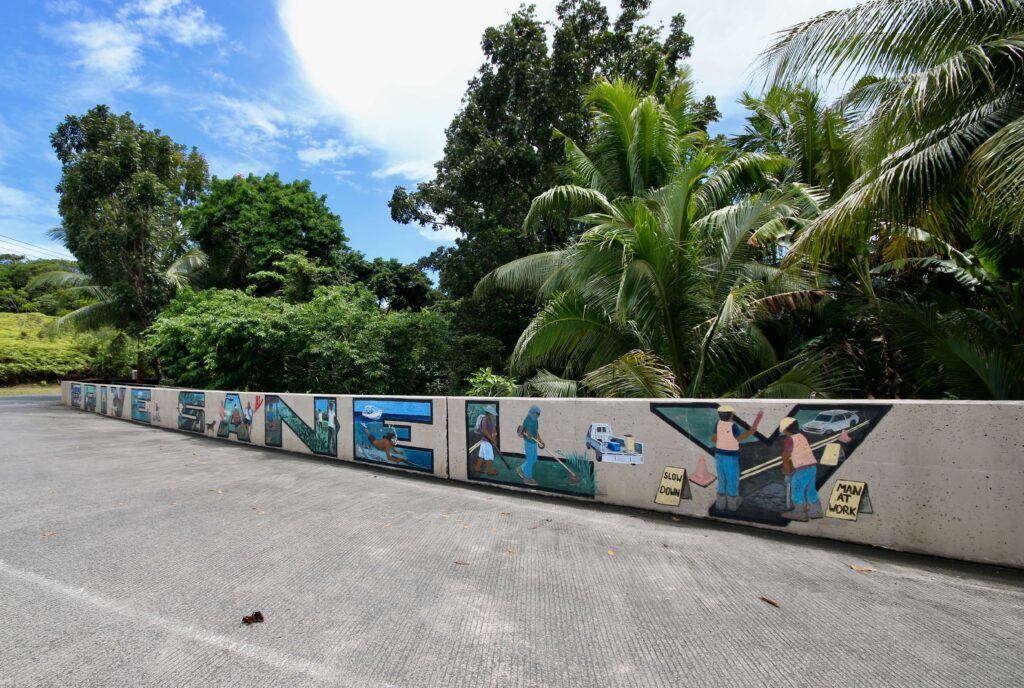
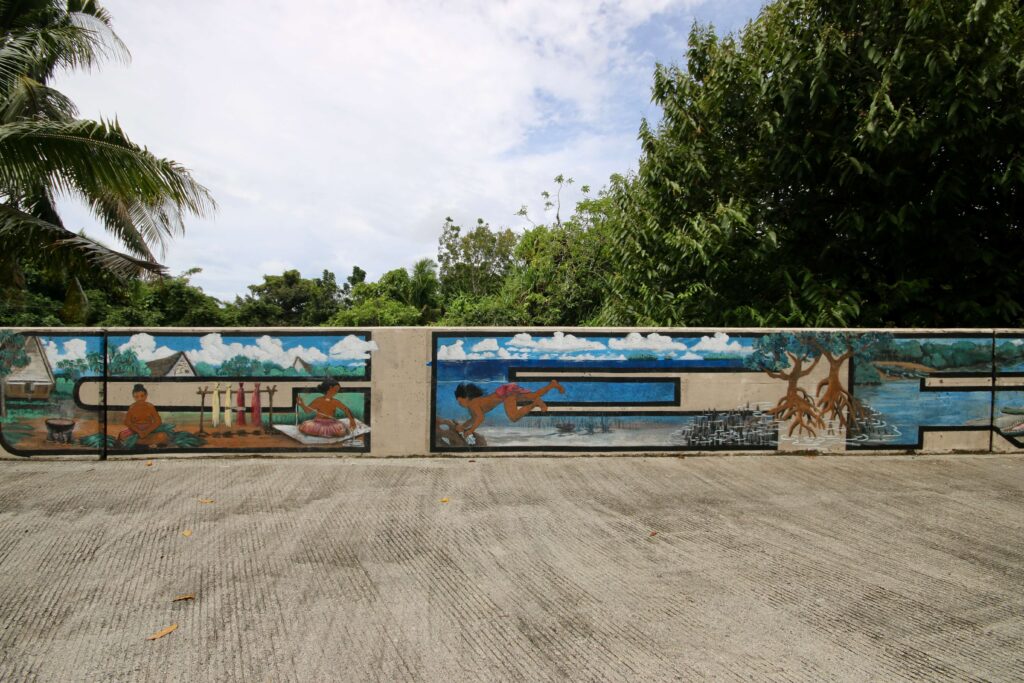
After leaving Koror, our first intended stop was the Capitol of Palau. But in reality, we made a quick stop to photograph this incredible mural we saw on the side of the road.
It depicts scenes from everyday Palauan life with the words “Drive Sanely”. Such wise advice! There are kids riding bikes, women weaving and a man operating a drone with a virtual reality headset on.
Eventually we arrived in Ngerulmud, which became the capital of Palau in 2006 when it replaced Koror.
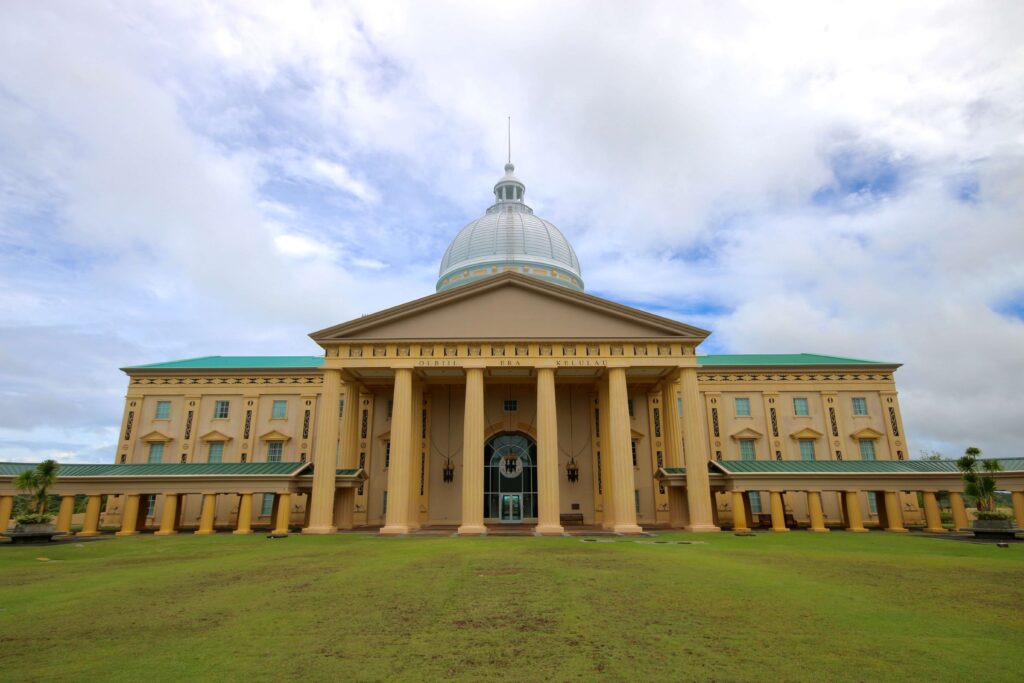
The city was purpose-built to house the national government, including the parliament and administrative offices, which are monumental, to say the least.
While they’re designed in a Neoclassical style (the central dome is inspired by the United States Capitol), they are painted with motifs that are distinctly Palauan.
Although it is the official capital, Ngerulmud has a very small population and when we visited on a Saturday, there was hardly anyone else around. We wandered freely around the buildings and soaked up the incredible views across the east coast of Babeldaob.
In our opinion, the Capitol of Palau is definitely worth a visit!
Melekeok Surf Break
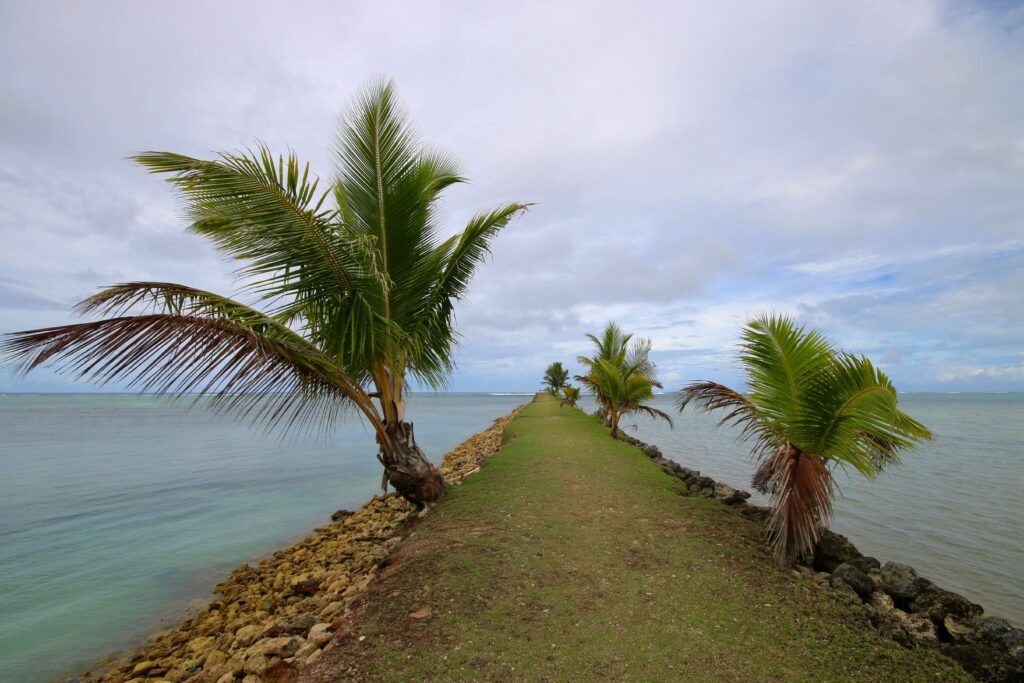
From here, we followed the road that leads down to Melekeok – it was only five minutes’ drive to the coast. Our main objective was to check out the surf break, which our kayaking guide (who was also a surfer) had told us about.
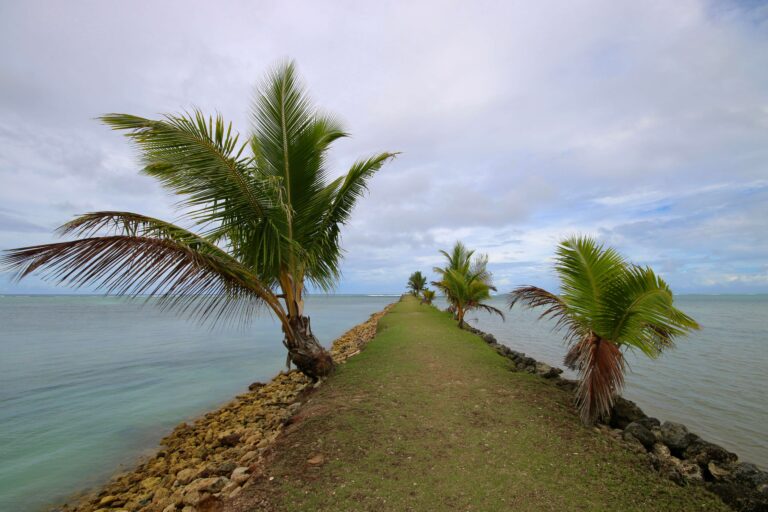
A breakwater leads out to the reef – it’s well signposted and there’s a carpark with picnic tables and toilets. On the day we were there, the waves were pretty solid…but completely empty!
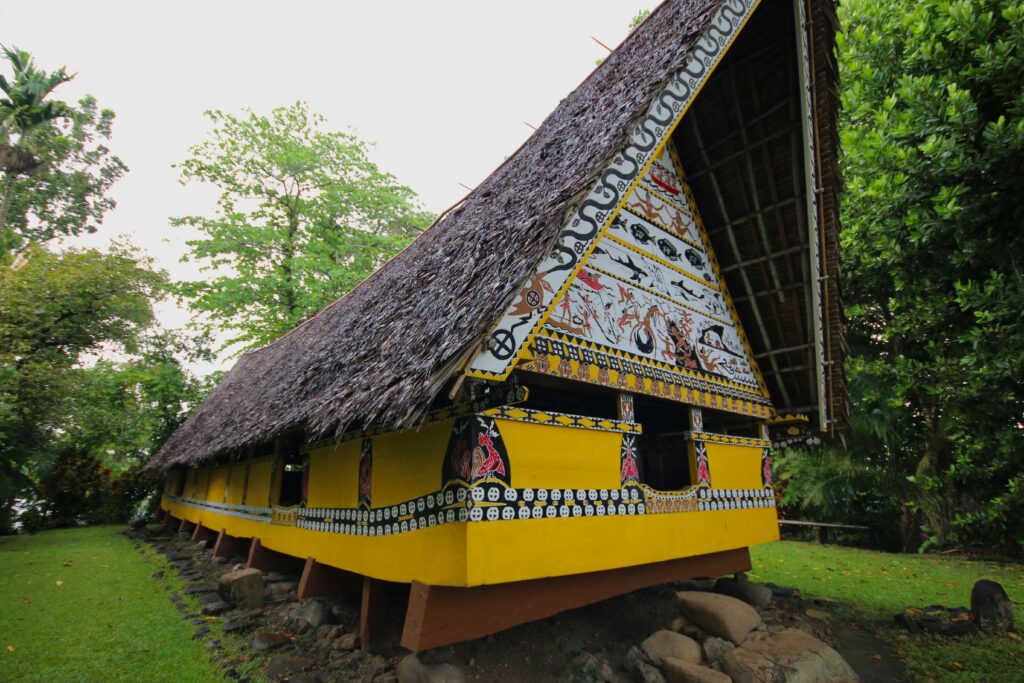
Just inland is a traditional bai (men’s meeting house) that you can also visit. But when doing our research, we discovered it was only accessible on weekdays.
If you want to visit, you need to pick up a permit (10 USD) from the Melekeok State Office, which is on the opposite side of the road from the surf break.
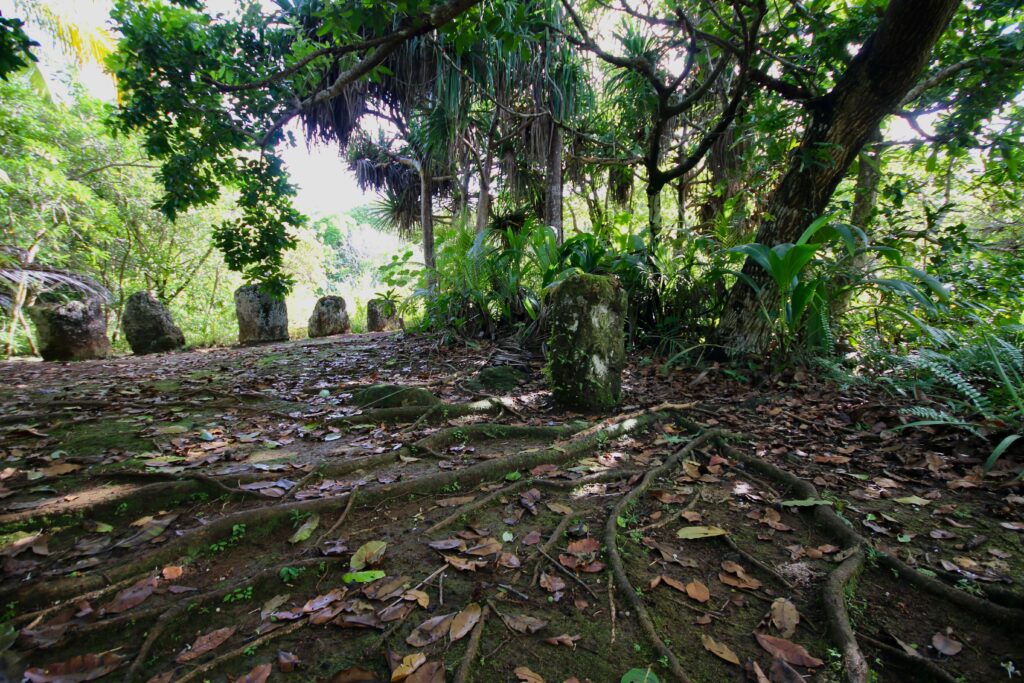
Badrulchau Stone Monoliths
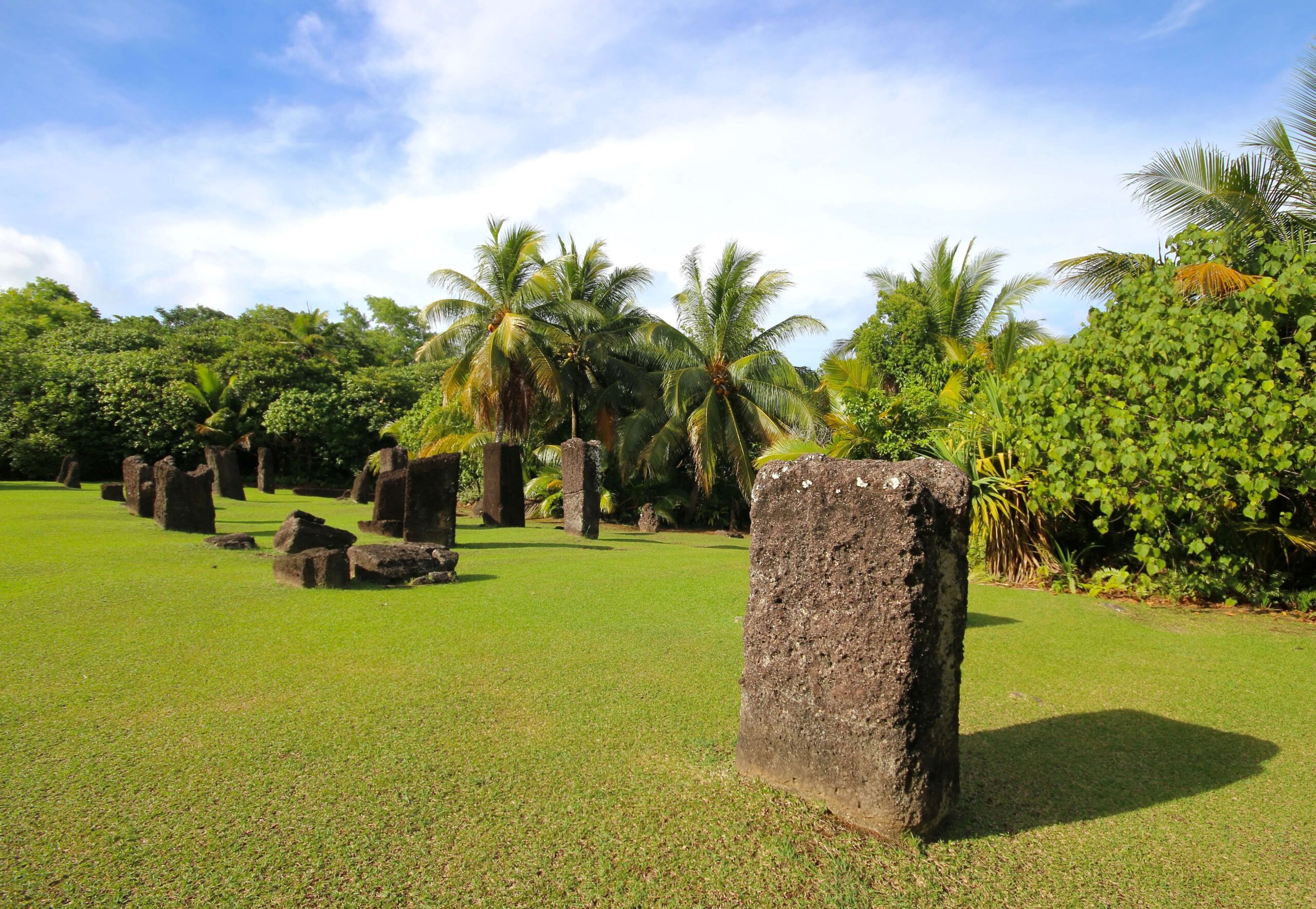
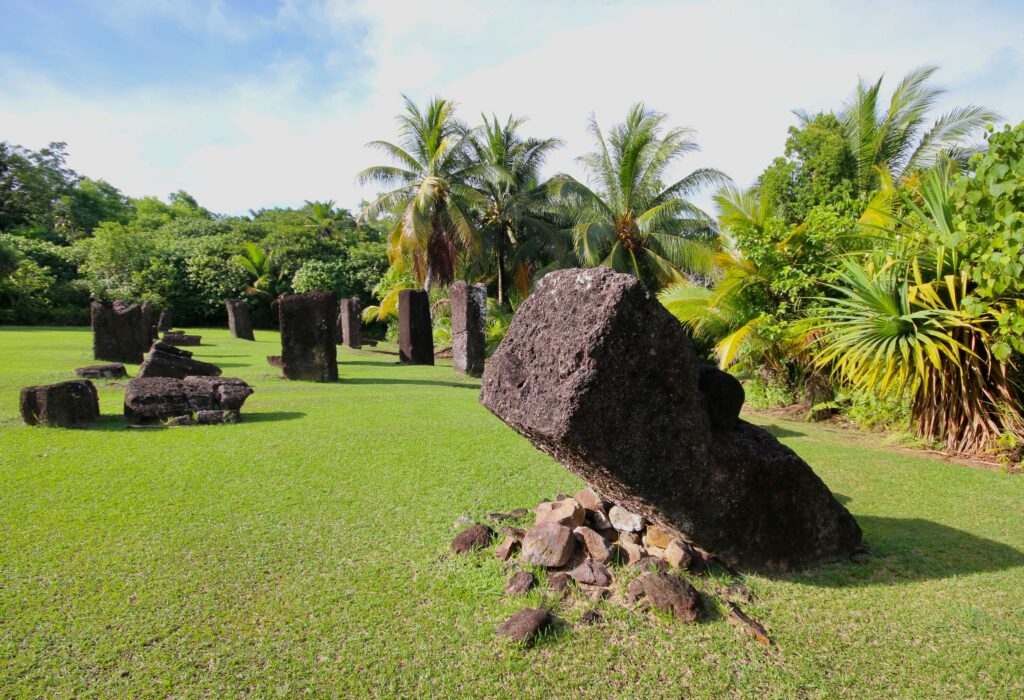
From Melekeok, we returned to the main road and continued north to the Badrulchau Stone Monoliths near the village of Ngerchelong. They are located just off the main road and there’s a small carpark with a toilet block where you can leave your vehicle.
Entrance costs 5 USD a person – you pay whoever from the local community is manning the entrance that day. When we visited, it was a local mum with her two kids. She was not only greeting visitors and taking payments, but also wrangling her children and cooking a barbecue – talk about multi-tasking!
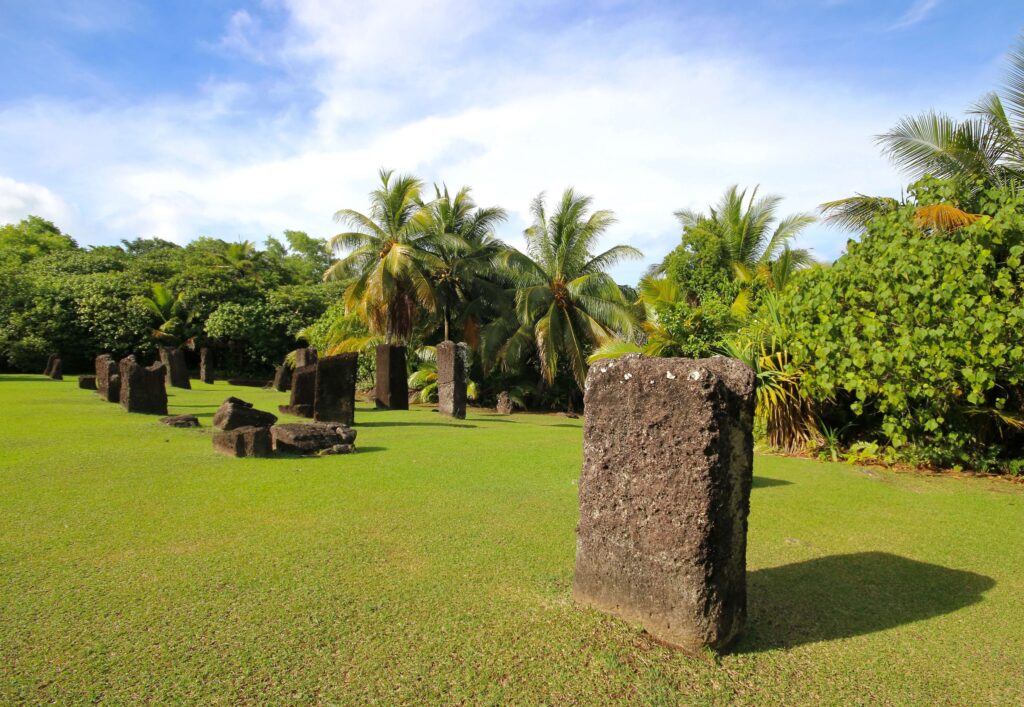
The site itself contains rows of large basalt stone pillars, some over two metres tall. Archaeologists believe they were built between the 9th and 14th centuries, thought to have once supported a traditional meeting house or ceremonial structure.
It’s around 10 minutes’ walk down to the site from the carpark (it’s hot and sweaty in the humidity) and there are some wonderful views across the coastline along the way.
Overlooking the stone monoliths are a couple of picnic tables, so you could bring your lunch with you. We had it all to ourselves on the day we visited and thought it was a pretty surreal backdrop for eating bagels and oranges!
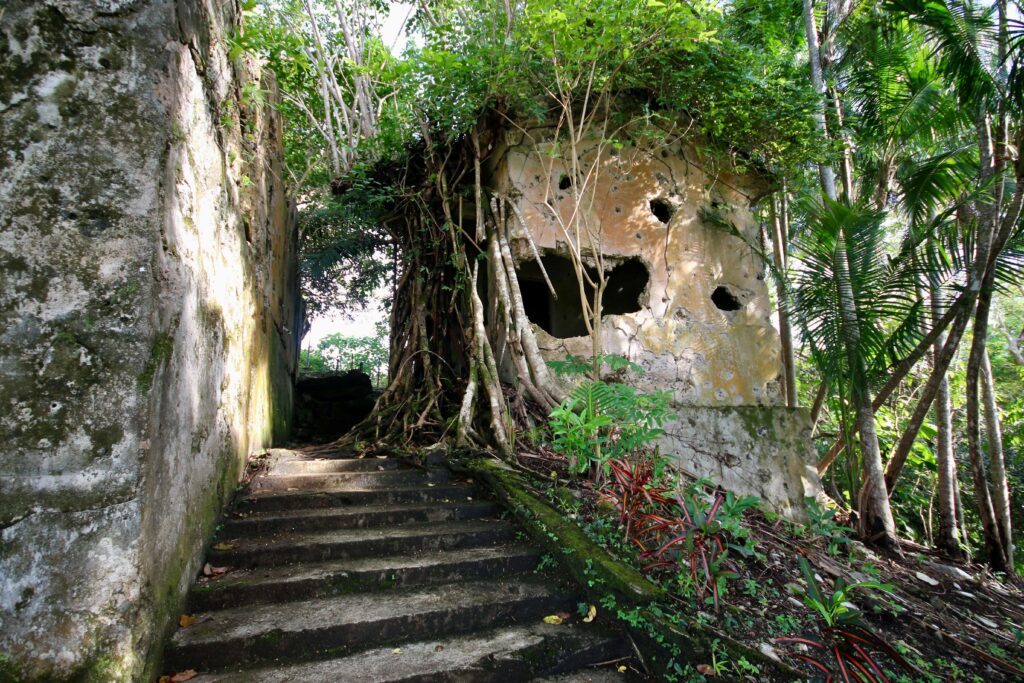
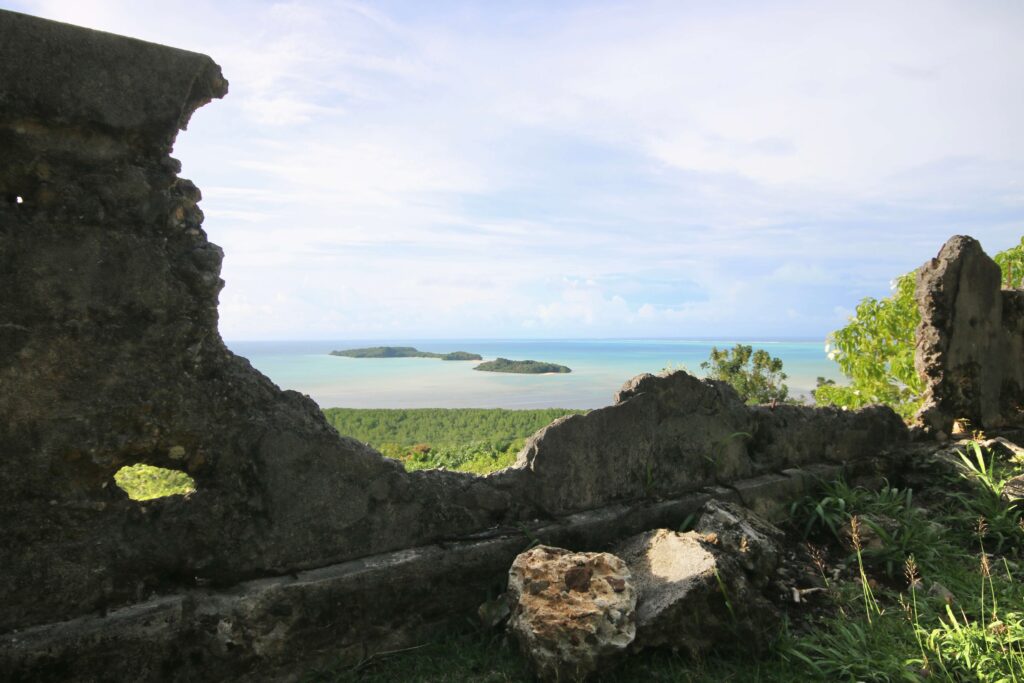
Todai Lighthouse Ruins
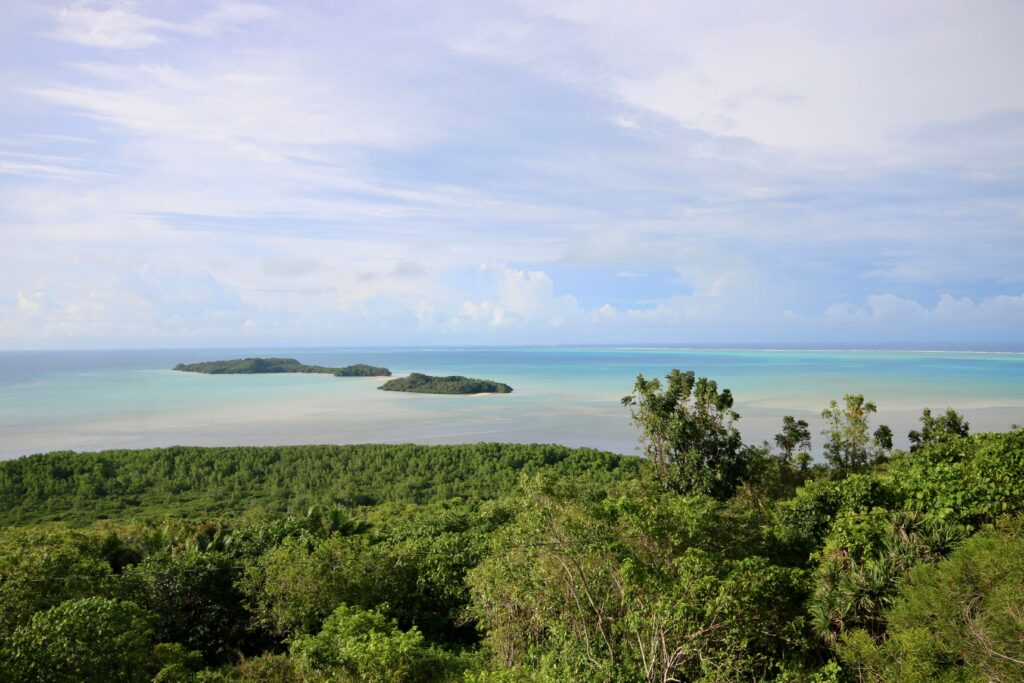
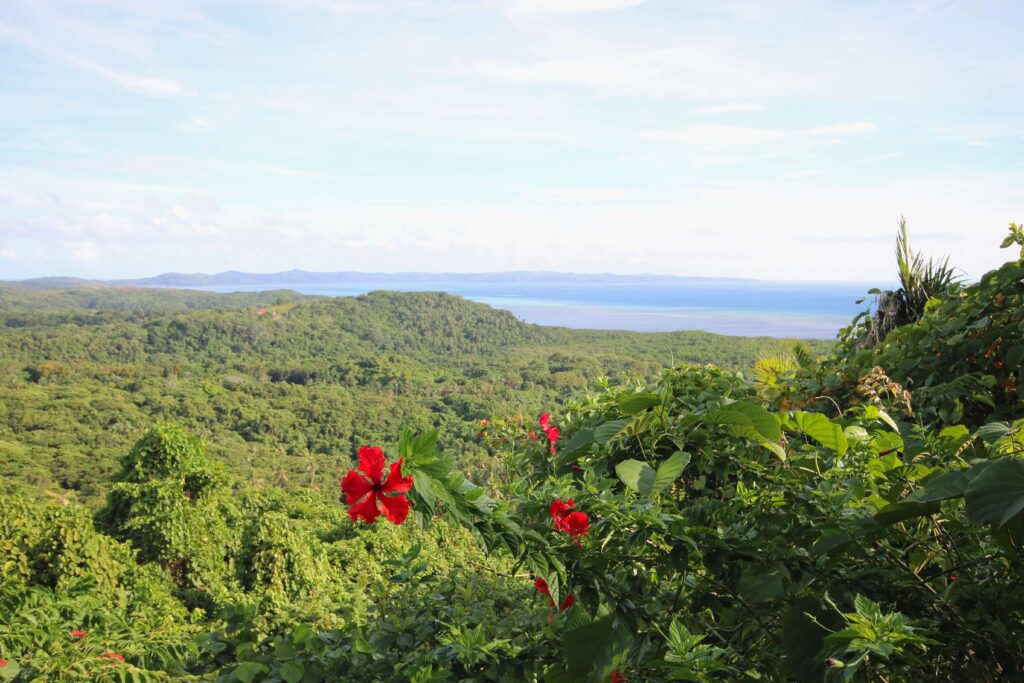
Our next stop was the Todai Lighthouse Ruins near the northernmost tip of Babeldaob. Lots of people had told us the views here were epic and they didn’t disappoint.
The road to reach the ruins was, let’s say, “challenging” – it was heavily rutted from rain and we were glad we had a 4WD.
“Todai” is the Japanese word for lighthouse and the site was built during the Japanese administration of Palau before and during World War II. It served as a lighthouse and military observation post, overlooking the nearby islands and sometimes even as far as the state of Kayangel on clear days.
The entrance fee here is also 5 USD and the woman at the booth was really chatty, asking us where we were from and which places we had already visited in Palau.
A staircase leads from the entrance booth up through the remains of the concrete structures and old military installations. Most are now being reclaimed by the natural world.
The ruins themselves are atmospheric, but it’s the views that are the real showstopper. Because the top of Babeldaob is quite skinny, you can see out across both the east and west coasts.
Definitely worth a stop if the road doesn’t intimidate you!
Ngardmau Waterfall
As we began the drive south, back towards Koror, our next stop was the Ngardmau Waterfall. It’s the tallest waterfall in Palau and arguably the most impressive. Water cascades down from a height of about 30 meters (100 feet) into a freshwater pool where you can splash around or swim.
Reaching the waterfall involves a jungle hike along wooden walkways and old railway tracks dating from the Japanese colonial era. We read lots of mixed reviews about this and I think the experience you have will depend on your fitness level and how much rainfall there has been.
It’s not the easiest hike, particularly after heavy downpours when it can be muddy and slippery. One couple we met diving said that the woman at the entrance actually advised them not to hike on the day they visited because she thought the conditions weren’t good.
On the afternoon we went, there had been rain in the morning, but the heat throughout the day had tempered the muddy conditions. It was still challenging walking in the humidity, but worth it in our opinion.
Entrance to the Ngardmau Waterfall is 10 USD. Bring a decent pair of walking shoes and drinking water. Walking sticks are available at the entrance for added support on the trail.
If you’re really into waterfalls, you could also visit Ngatpang Tabecheding Waterfall, which is closer to Koror. We heard the hike here is shorter, but the cascade not quite as impressive as Ngardmau.
World War II Truck Ruins
Before returning to Koror, we made one final stop at these World War II ruins, which are located on the side of the road near the state border between Aimeliik and Airai. They’re not signposted and we actually missed them at first and had to backtrack a little way.
During the war, Palau was an important Japanese military base and many vehicles, weapons and military structures were abandoned following their withdrawal. Over time, these trucks have been enveloped by vines and tropical vegetation, making them popular with history buffs and photographers alike.
We only made a quick stop here as the sun was setting and we didn’t want to be driving after dark. But I think it’s definitely worth a stop if you’re interested in Palau’s World War II history.
Where to stay in Palau
Palau Central Hotel
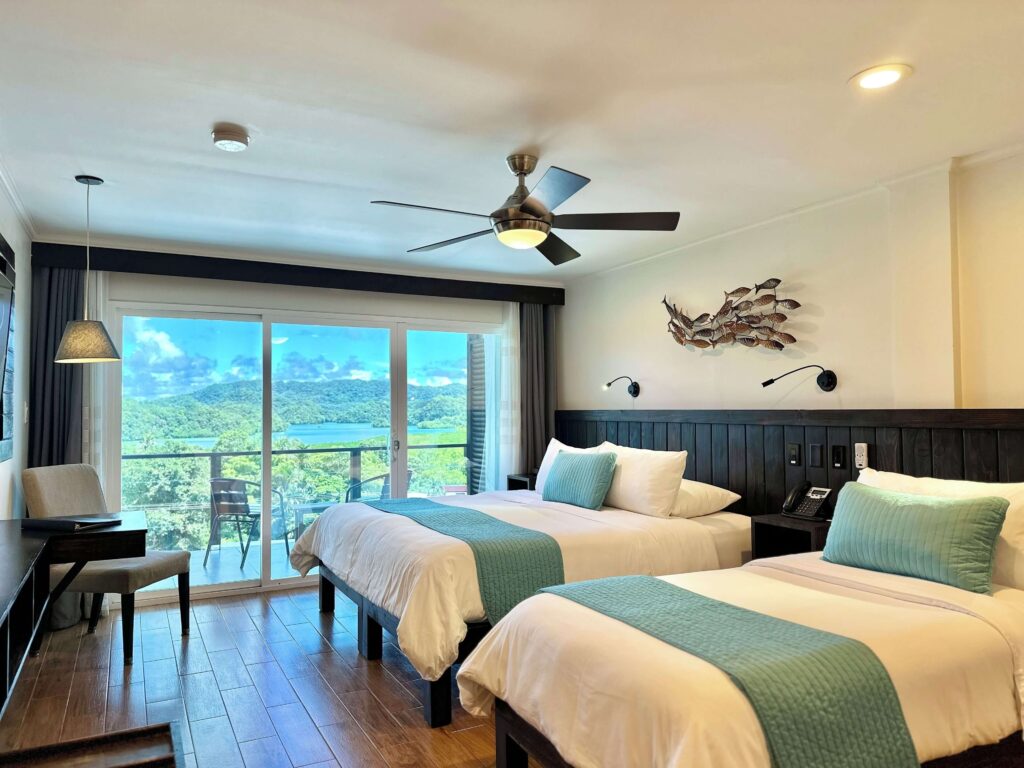
This is where we stayed in Koror and it ticked all of our boxes. It’s really central (the clue is in the name!), affordable and you can easily walk to restaurants and museums.
In total, there are around 50 rooms at Palau Central Hotel, all of which are air-conditioned and with balconies, some overlooking the Rock Islands. There’s also a swimming pool and a restaurant, the Canoe House, that does good pizzas, burgers and beers.
Breakfast is included in the rates.
Palau Pacific Resort
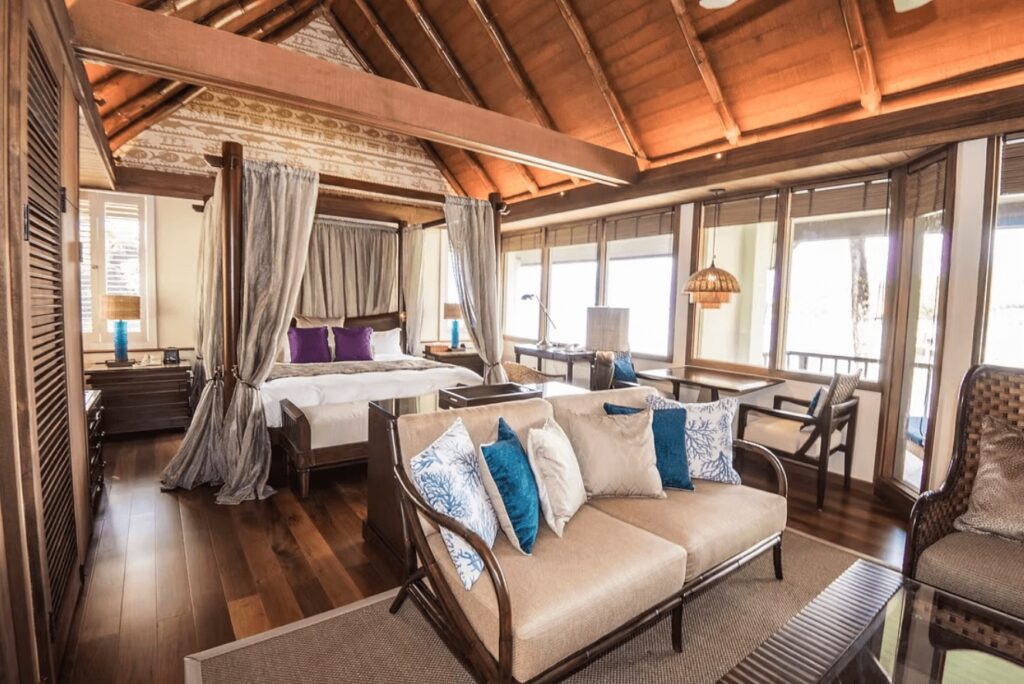
If you want more of a resort feel and a private beach, consider splurging at the Palau Pacific Resort. Nestled among 64 acres of tropical gardens, it features cottage-style guest rooms and a handful of overwater bungalows that are hard to beat.
Aside from several onsite dining options, there’s a full-service spa, tennis courts and a PADI 5-Star dive centre.
Palau Carolines Resort
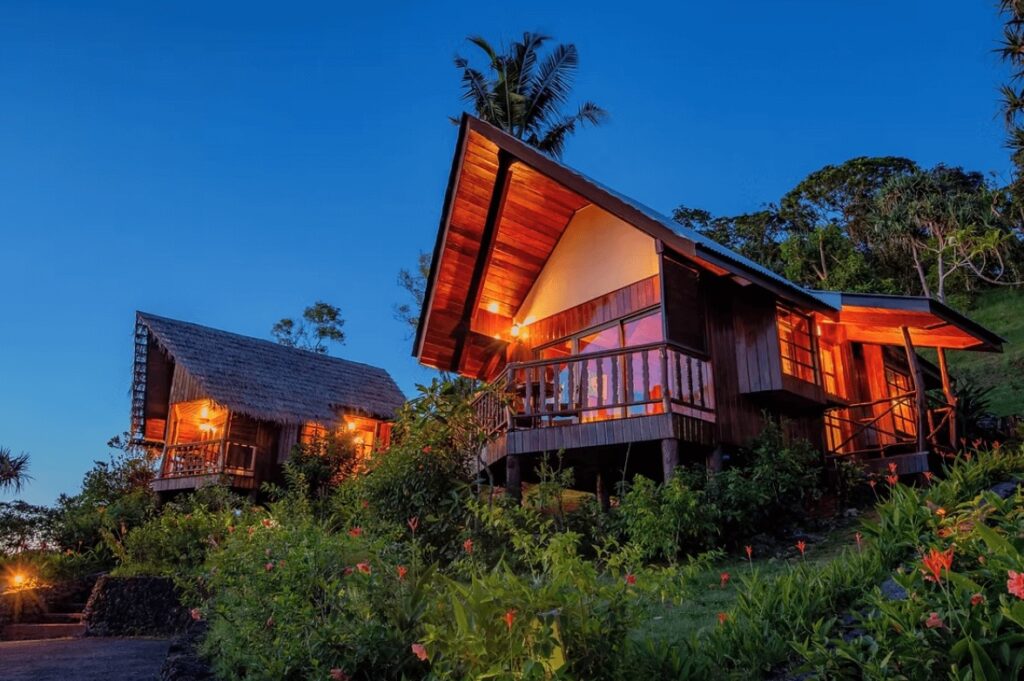
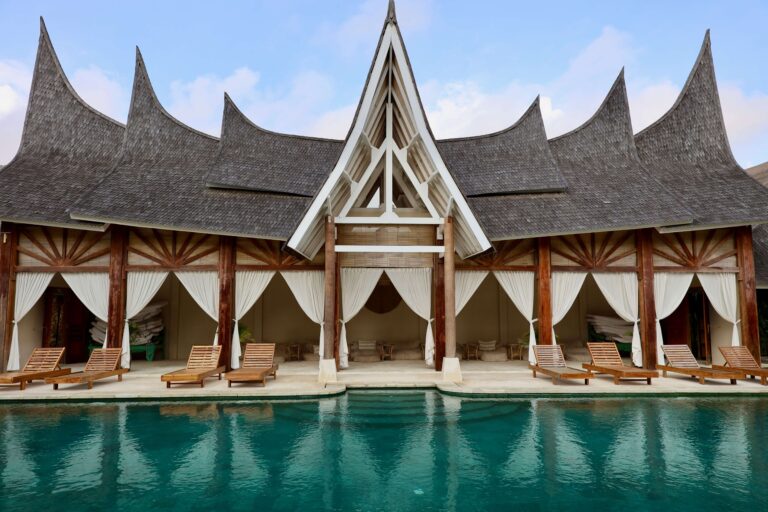
Inspired by Palau’s centuries-old architecture, this boutique resort is a great option if you have a rental car. It’s located in the village of Ngerkebesang, so it’s not within walking distance of local restaurants.
In total, there are eight private bungalows and tented suites. We think the views are among the best in the area!
PLAN YOUR TRIP WITH OUR FAVOURITE RESOURCES:
Find hotels and resorts via Booking or Agoda
Book tours and experiences via Viator or GetYourGuide
Find a rental car via Discover Cars
Book flights via Kiwi or Booking
Search for buses and trains via 12Go or Omio
Get travel insurance via SafetyWing
Buy a digital eSIM with Airalo
By purchasing through our links, you’ll be supporting our website at no additional cost to you
We are a team of passionate divers and surfers with decades of combined experience in the water and travelling to all corners of the globe.
After years of chasing waves and descending into the deep blue, we’ve created this resource to highlight sustainable surf camps, eco-dive resorts and conservation-focused ocean trips to help inspire your next adventure.
Eco Ocean Escapes was born out of a love of the ocean, an obsession with travel and a concern about the impacts of our adventures on the environments we explore.