Risong Bay vs Nikko Bay Kayaking in Palau
While our trip to Palau was centred around scuba diving, we also set aside a day to go kayaking with Paddling Palau (and another for a self-driving road trip around Babeldaob).
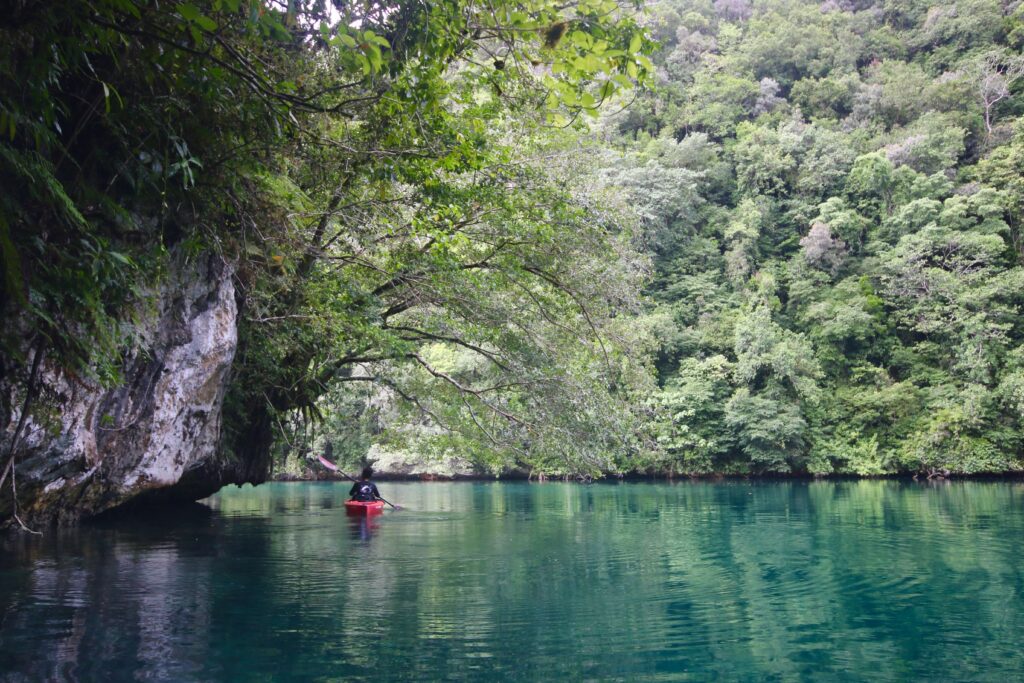
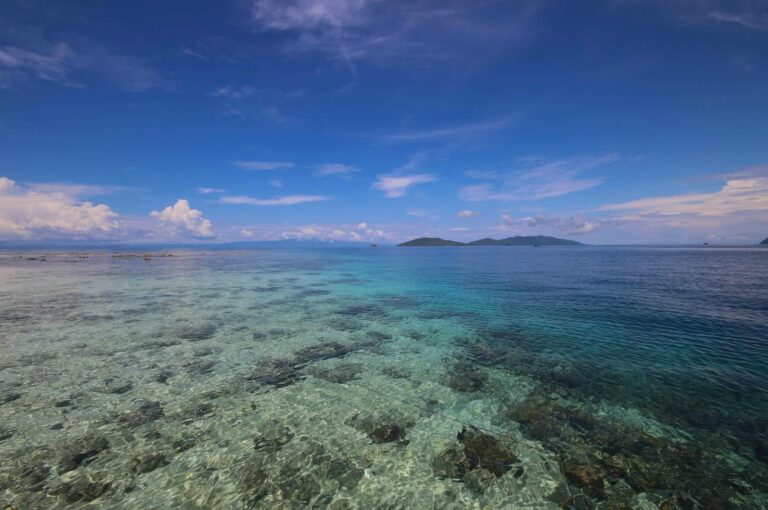
We’d heard great things about Paddling Palau and we wanted to experience the UNESCO-listed Rock Islands up close…and at a slower pace than you get whizzing by in a speedboat on the way to a dive site.
On the day we wanted to kayak in the Rock Islands, Paddling Palau was going to Risong Bay, so that’s where we ended up. It was so incredible (I mean soooooo incredible) that we ended up booking again to do their Nikko Bay trip a couple of days later.
Not only did we get to do some beautiful kayaking around the limestone islands, but we were snorkelling alongside golden and moon jellyfish, spotting (usually elusive) mandarin fish and watching baby sharks gliding between mangrove roots.
On our Nikko Bay kayaking trip a few days later, we got up close to wrecks and ruins from World War II, snorkelled on the most insanely beautiful coral reefs and were followed by pairs of white tailed tropic birds as we paddled along the forested coastline.
Both trips with unforgettable for different reasons, so if you have time to do both, I would highly recommend it. But if you only have time for one, this article is to help you decide which Rock Islands destination is right for you.
We’ll explain the Risong Bay vs Nikko Bay kayaking experience and what you can expect to see/do on each of these adventures.
If you’re a diver heading to Palau, discover everything you need to know in our detailed guide here.
Want to snorkel some of Palau’s most famous sites (including Jelly Fish Lake), check out this highly-rated tour.
This article may contain affiliate links, which means when you make a purchase through that link, we earn a small commission. Affiliate links come at no cost to you and ensure our content remains free!
Why Paddling Palau?
Let’s start by saying we have no partnership/affiliate relationship with Paddling Palau and paid for all of our trips independently. We booked our first trip with them through Sam’s Tours (the company we were diving with) and read lots of glowing reviews from other travellers.
Founded in 1995 by marine biologist Ron Leidich, Paddling Palau is the leading kayaking company in Koror. It’s family-run, has an all-Palauan team to benefit locals and is involved in a range of marine conservation projects around the islands. So much to love!
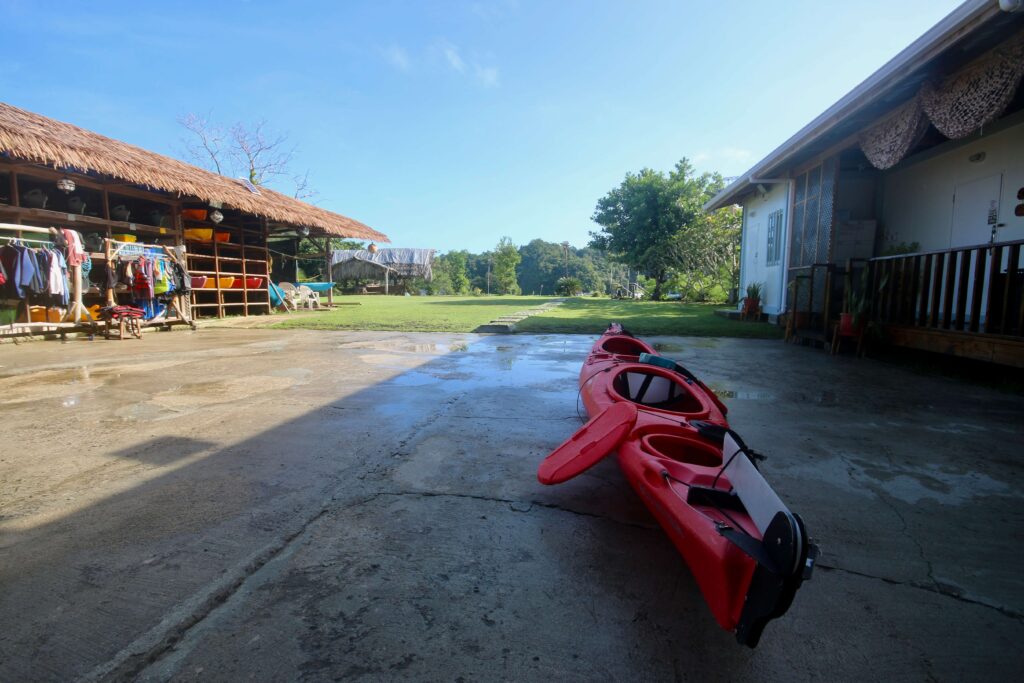
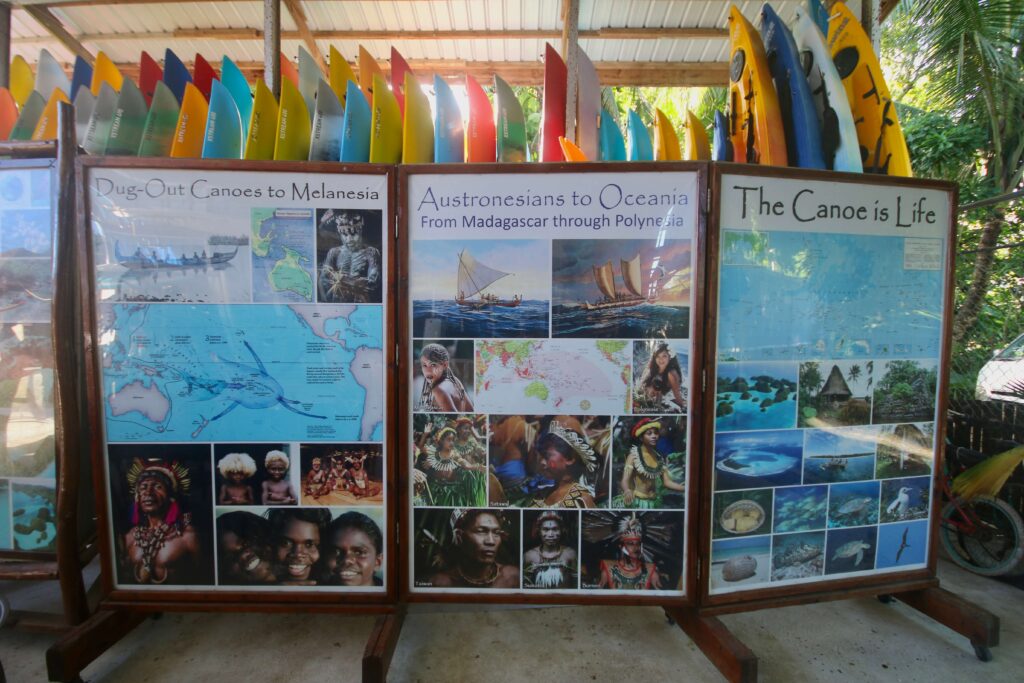
Paddling Palau has a fantastic setup on the waterfront in Koror. It’s really spacious and with an undercover area where you gather before heading out to the Rock Islands. There are lots of posters here about the local ecology and fish identification charts, as well as maps so you can visualise where you are going.
We were really impressed with the knowledge of both our Paddling Palau guides – they delivered so much information during the trips and answered our myriad questions. Whether it was about Palauan culture, tree species or birdlife, they had detailed answers.
It’s also worth mentioning that the kayaks were really stable and comfortable. On one of our trips, the kayaks were taken to the start of our paddling location early in the morning and tied up (without anyone keeping an eye on them).
When someone in our group asked about the risk of them being stolen, the captain said that everyone knew these kayaks belonged to Paddling Palau because they were the best in the country!
Risong Bay kayaking
Because we initially booked our trip through Sam’s Tours, we didn’t know whether we were visiting Risong Bay or Nikko Bay on our first day with Paddling Palau. But we didn’t really mind either way – at that point, we hadn’t done any research on the difference!
One of Paddling Palau’s drivers picked us up from our hotel at 7:45 am and it was about 8 minutes drive to their base. I had accidentally left my rash top at Sam’s the previous day and the driver happily swung by on the way so I could pick it up.
On arrival at Paddling Palau, we signed our waiver and showed our Rock Islands Permits – you MUST have one of these to visit the archipelago. If you don’t have one, Paddling Palau will arrange it for you.
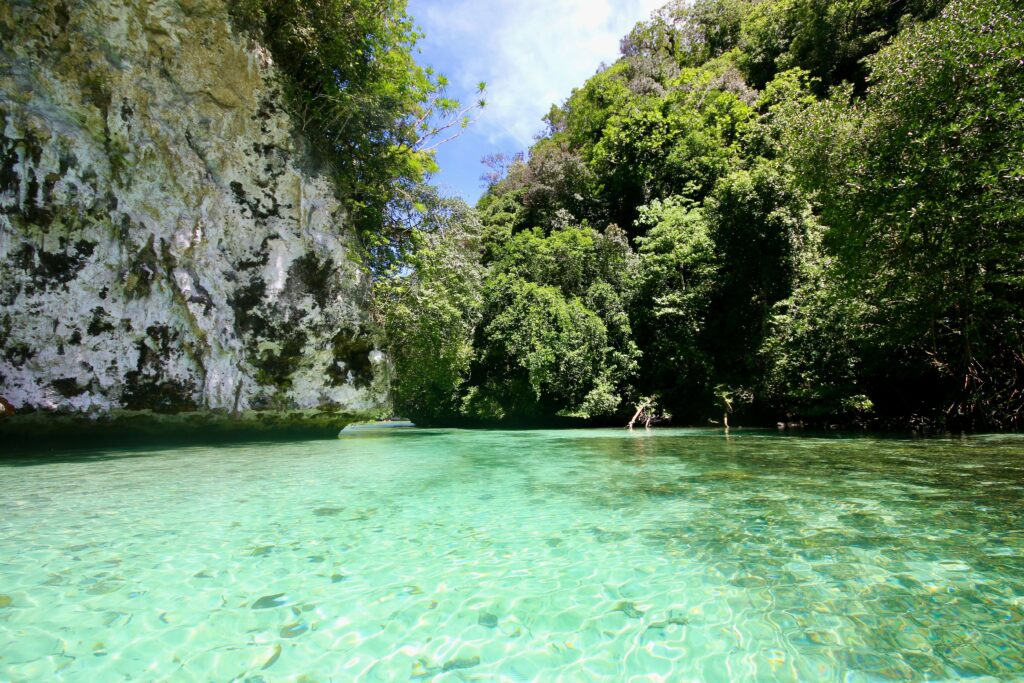
A 5-day permit (not including Jelly Fish Lake) is 50 USD. If you’re visiting Jelly Fish Lake on any of your tours, the cost of a 5-day permit is 100 USD.
The team at Paddling Palau also asked for our shoe size and found fins, masks and snorkels for us to use during the trip. Then, we were given a short briefing, explaining where we would be going and what we might see throughout the day. It was at this point we realised we were visiting Risong Bay!
Our group of 10 paddlers then loaded into a boat at Paddling Palau’s dock, along with our kayaks. Initially, we thought we would be kayaking directly from Paddling Palau’s dock. But considering Risong Bay was around 15 minutes away by speedboat, I’m glad we weren’t!
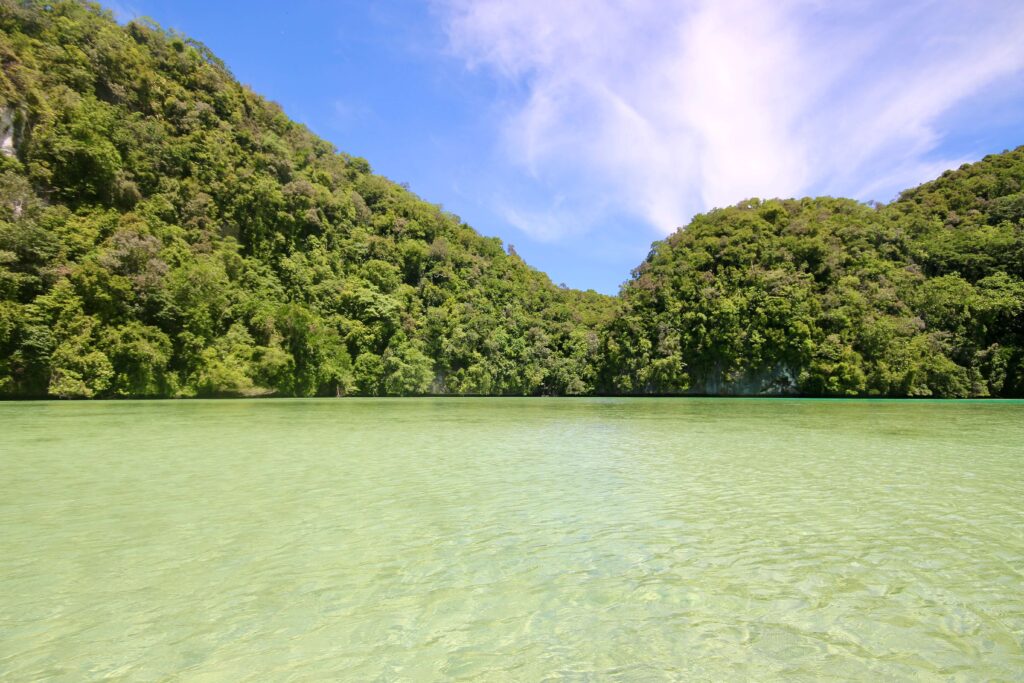
Paddling Palau plans their days according to the tides, as this determines access to lagoons and the suitability of snorkelling sites.
We began the day with a snorkel along the outer reef, just outside the entrance to Risong Bay. There were some impressive bommies here to explore and lots of colourful reef fish.
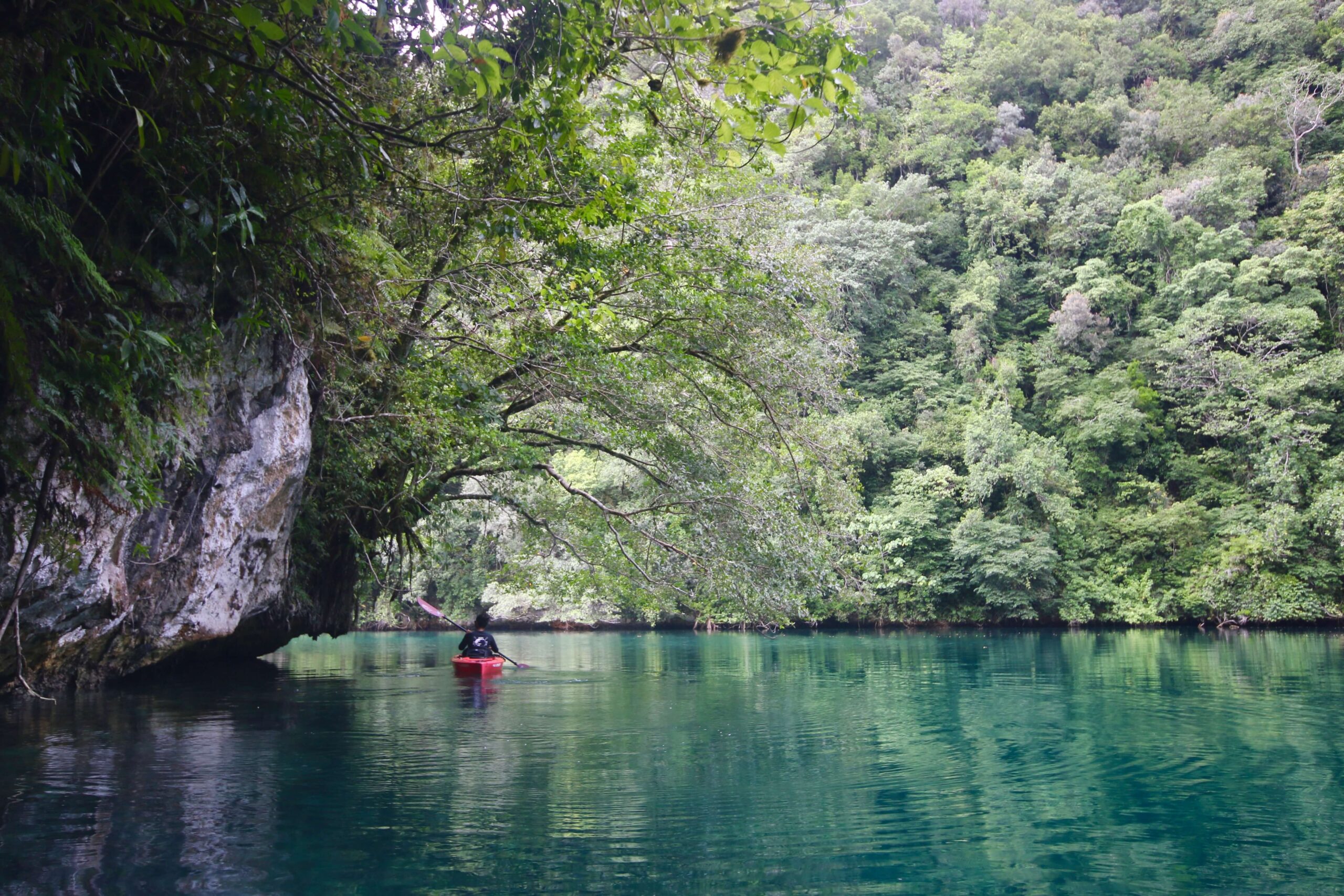
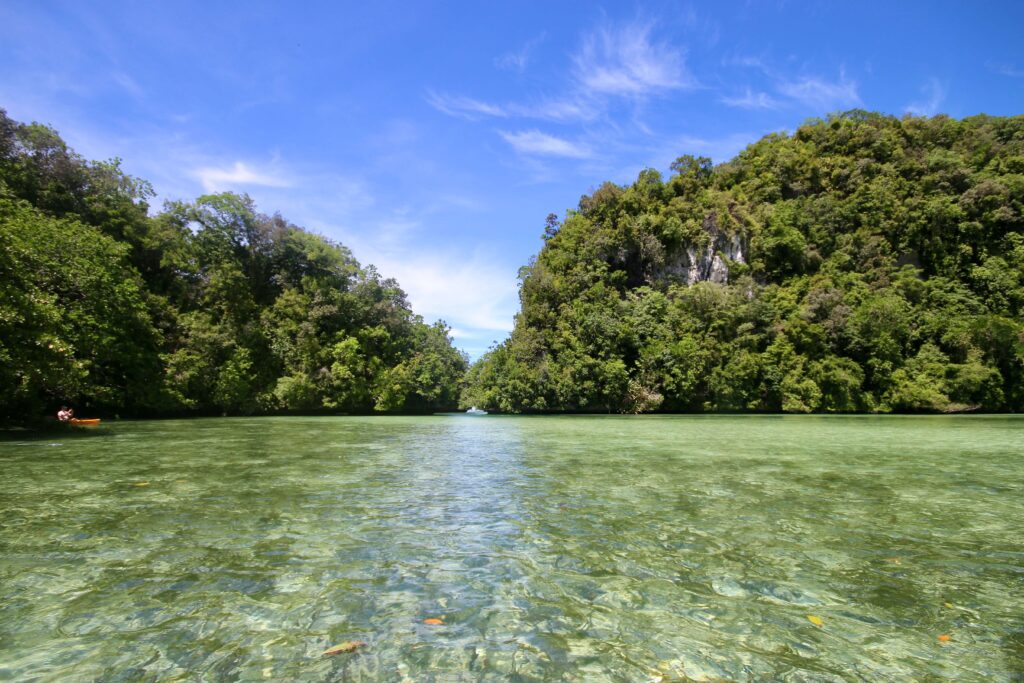
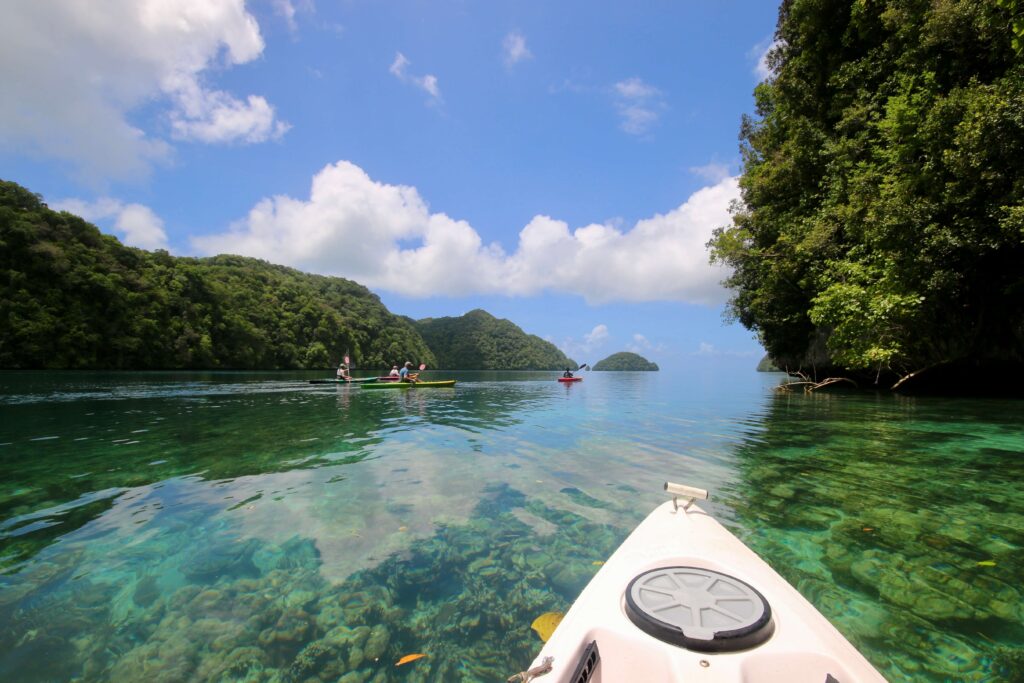
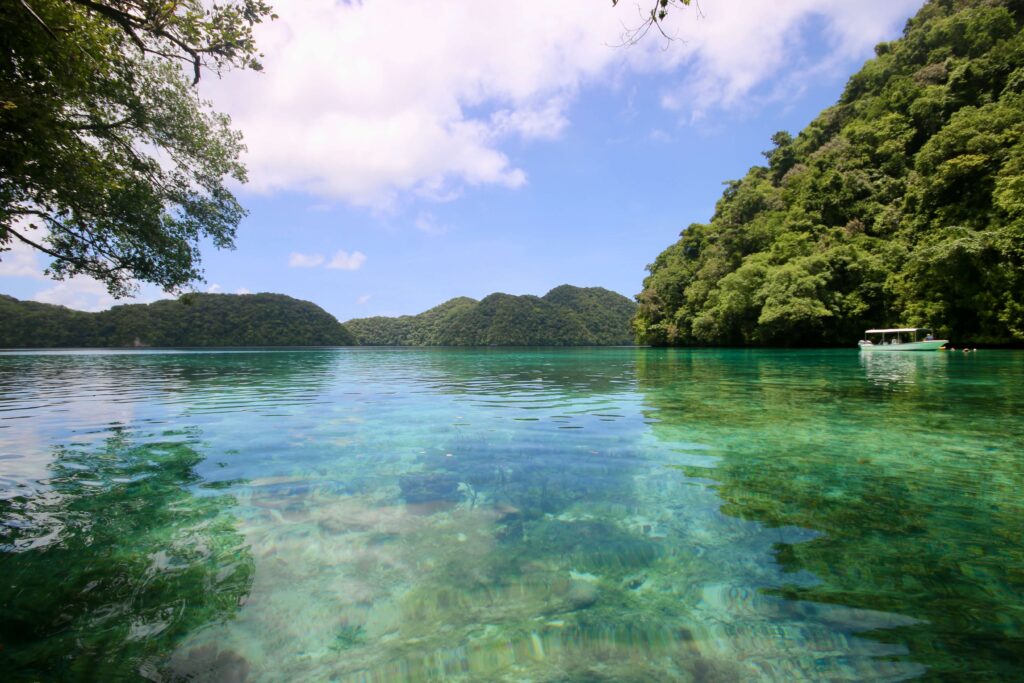
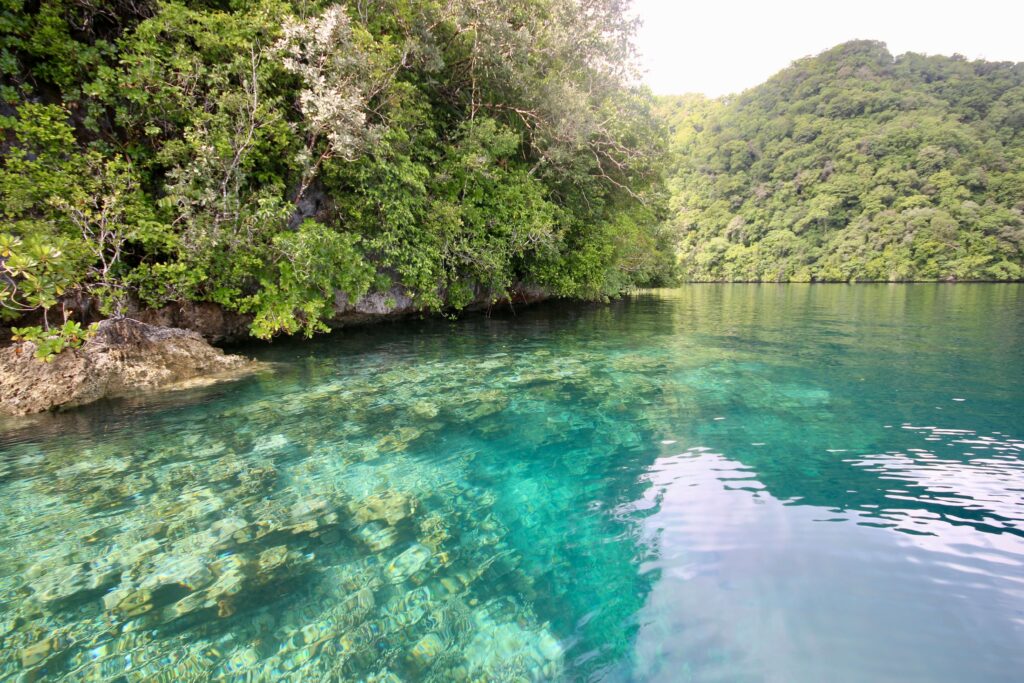
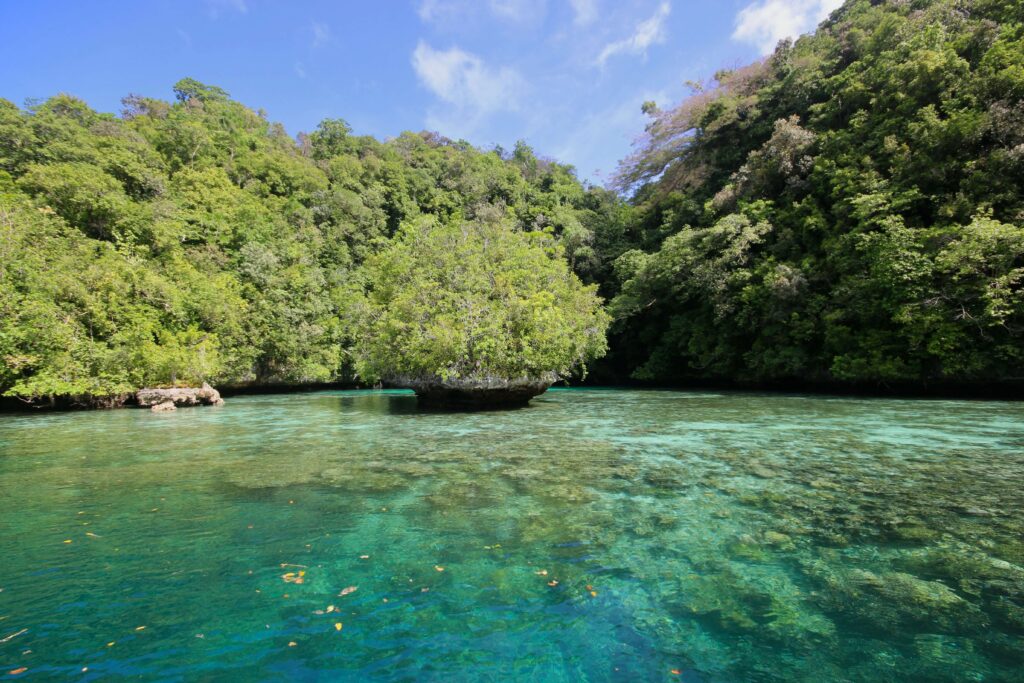
Then, we hopped back in the boat and cruised a short distance to the entrance of Risong Bay. Here, we hopped in the kayaks and spent around 1.5 hours paddling around the islands and into the most gorgeous lagoons. The water was so clear and at one point, we could see golden jellyfish propelling themselves near the surface.
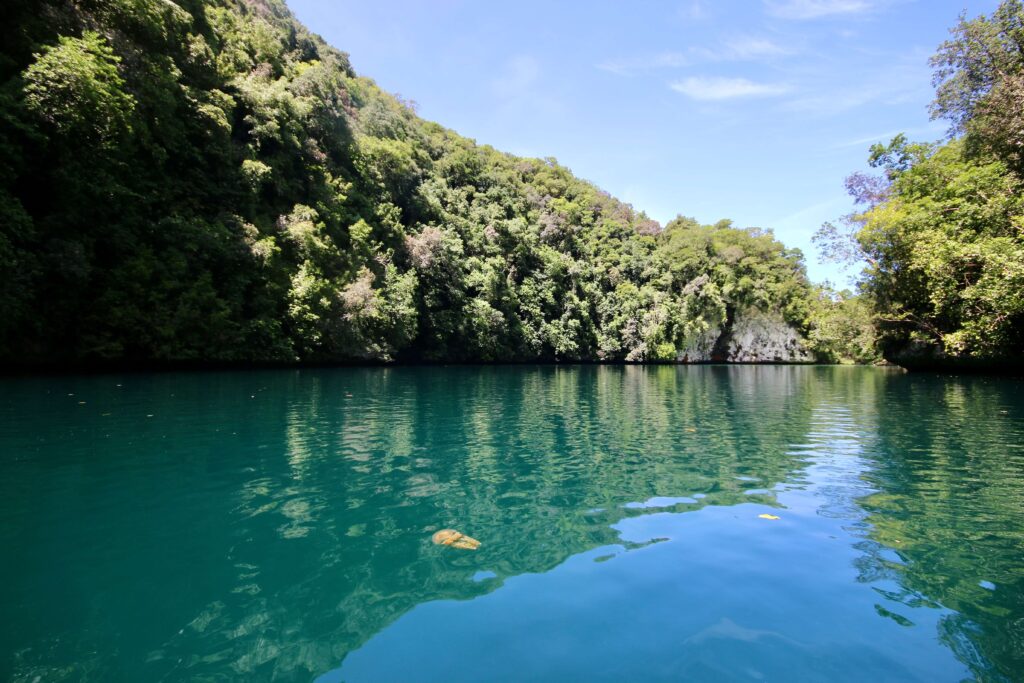
As we hadn’t been to Palau’s famous Jelly Fish Lake (we’d been too busy diving), we were so keen to get in and snorkel with them. Although a little nervous at the prospect of getting back into our kayaks at the end, we jumped in and were surrounded by hundreds of these spellbinding creatures.
Our guide explained that these were actually the ancestors of the jellyfish found in the more famous lake! If you want to visit Palau’s famous Jelly Fish Lake, check out this highly-rated tour.
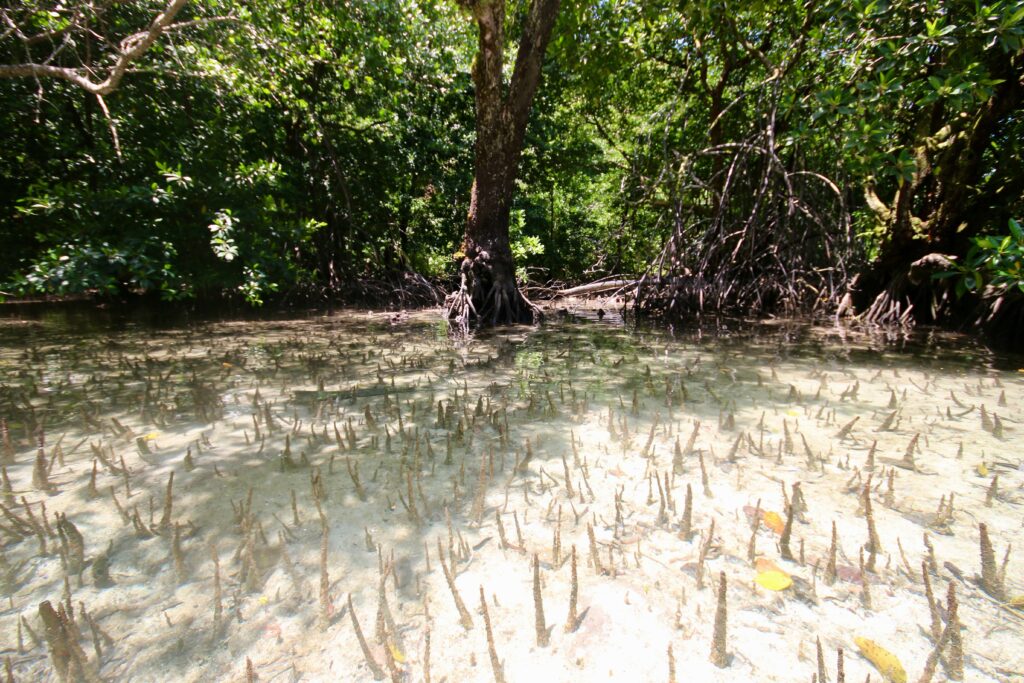
Successfully negotiating our way back into the kayak, we returned to the boat for lunch (bento boxes for the win!) Along the way, we stopped beside some mangroves that served as a nursery for baby blacktip reef sharks. So cute!
In the distance, we could see rain clouds moving rapidly in our direction and knew that we were in for a wet afternoon. Our guide suggested we have our rain jackets at the ready – more to avoid getting cold than wet.
After lunch, we cruised to our second kayaking spot and as soon as we started paddling, the skies opened! It was actually incredibly beautiful kayaking in the rain and it felt as though we were experiencing the Rock Islands through a different lens.
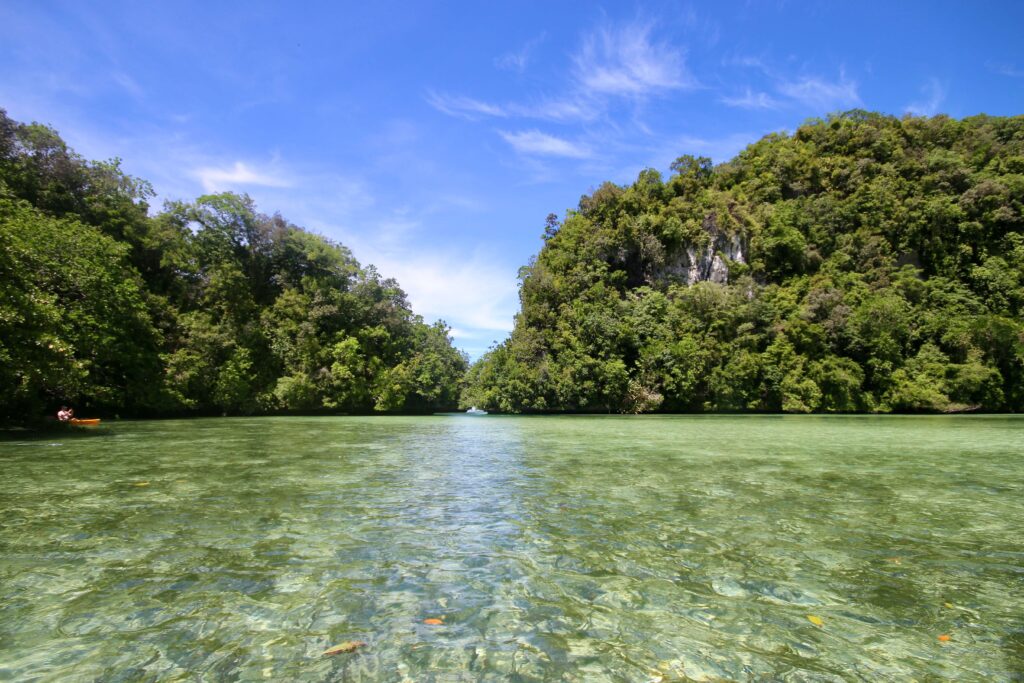
Our guide took us to a second jellyfish lagoon, this one inhabited by blue-hued moon jellyfish. They were in far greater numbers than the golden jellyfish we’d seen that morning and it was otherworldly snorkelling amongst them.
Our final stop of the day was Mandarin Fish Lake where we spotted (you guessed it!) mandarin fish. I had only ever seen them on night dives, so it was really special to see them in daylight while snorkelling.
The water was incredibly clear (our guide said this was due to the nearby siphon that funnels seawater in and out) and we also saw loads of juvenile cardinal pajama fish. In fact, the lagoon served as a nursery and there were lots of miniature versions of fish species I’d seen diving out at Ulong Channel.
As we cruised back to Paddling Palau’s Koror base around 3pm, we were both exhausted but so gobsmacked at everything we’d experienced. We immediately agreed that we had to do another trip and signed up for Nikko Bay a couple of days later.
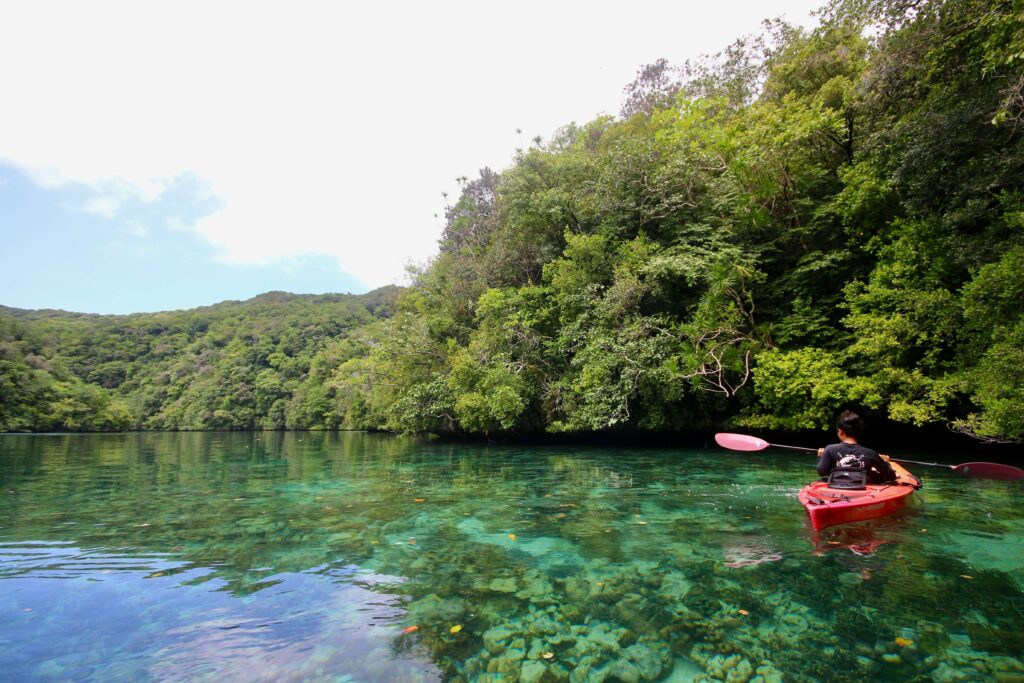
Nikko Bay kayaking
Our Nikko Bay kayaking trip with Paddling Palau started exactly the same way, with a 7:45 am pickup from our hotel.
After a detailed briefing at their Koror base, we headed down to the dock to board the boat. This time, our group was smaller (just 6 of us) and our kayaks had already been taken to our paddling start point in the Rock Islands.
Our tour began with a short boat cruise around Nikko Bay, stopping to view the wing of a plane that had been shot down during World War II. It was really interesting to get an insight into Palau’s involvement in this global conflict (at this point we hadn’t yet visited the Belau National Museum, which provides a wealth of information).
Our guide even had photos of what the plane originally looked like and told us about the fate of the pilot who was shot down.
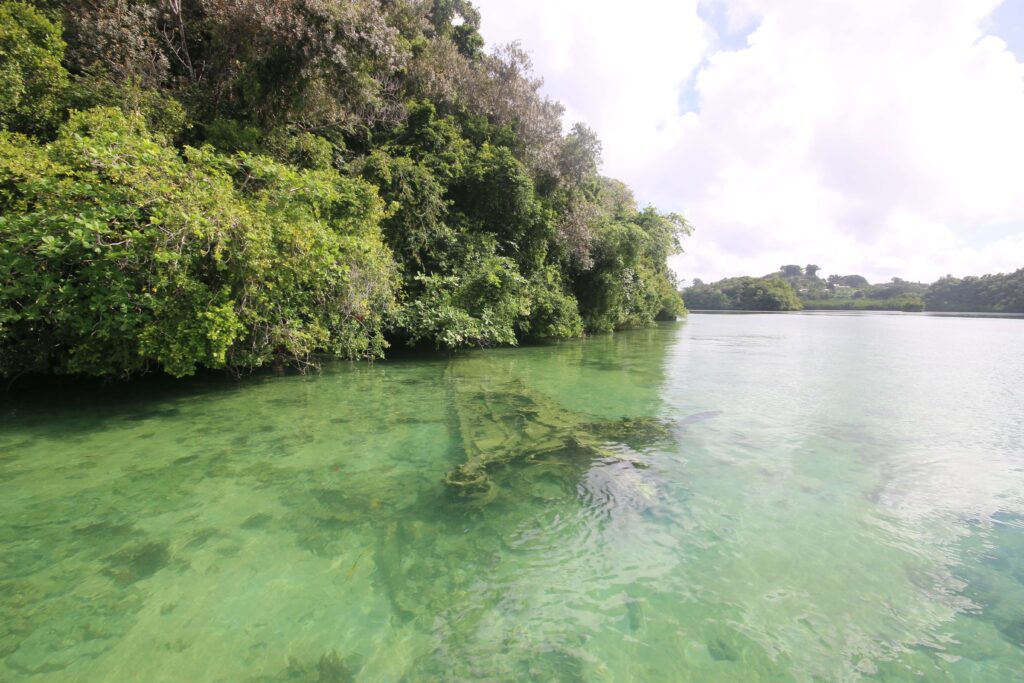
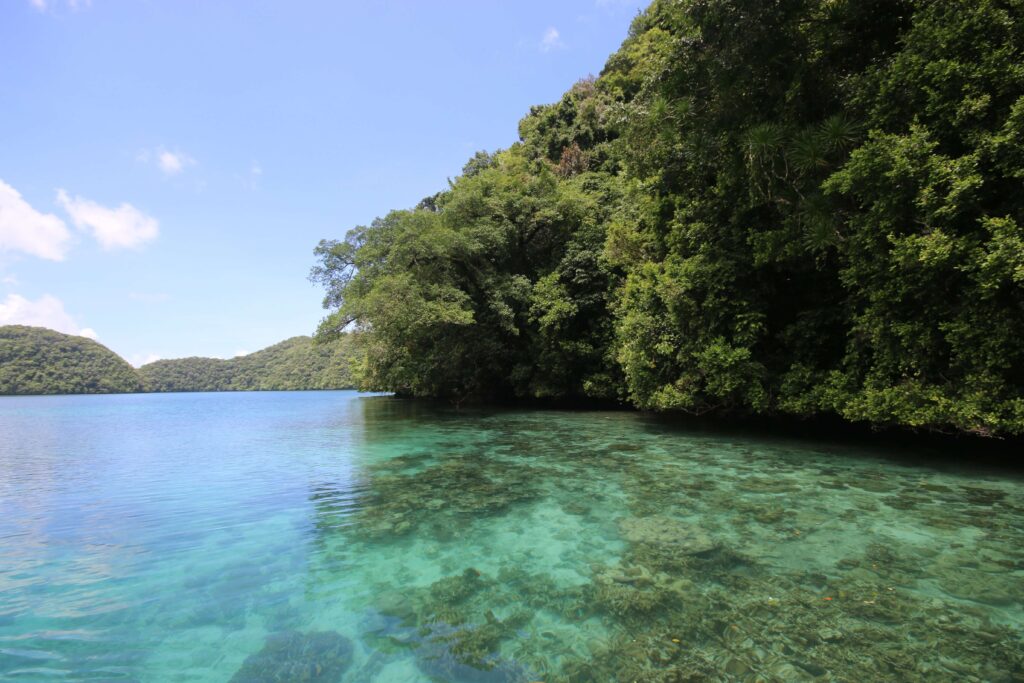
Once we were in our kayaks, we began paddling around Nikko Bay, passing by bunkers and landing craft used by the Japanese. Many of these were really well hidden – blink and you’d miss them if you were in a speedboat.
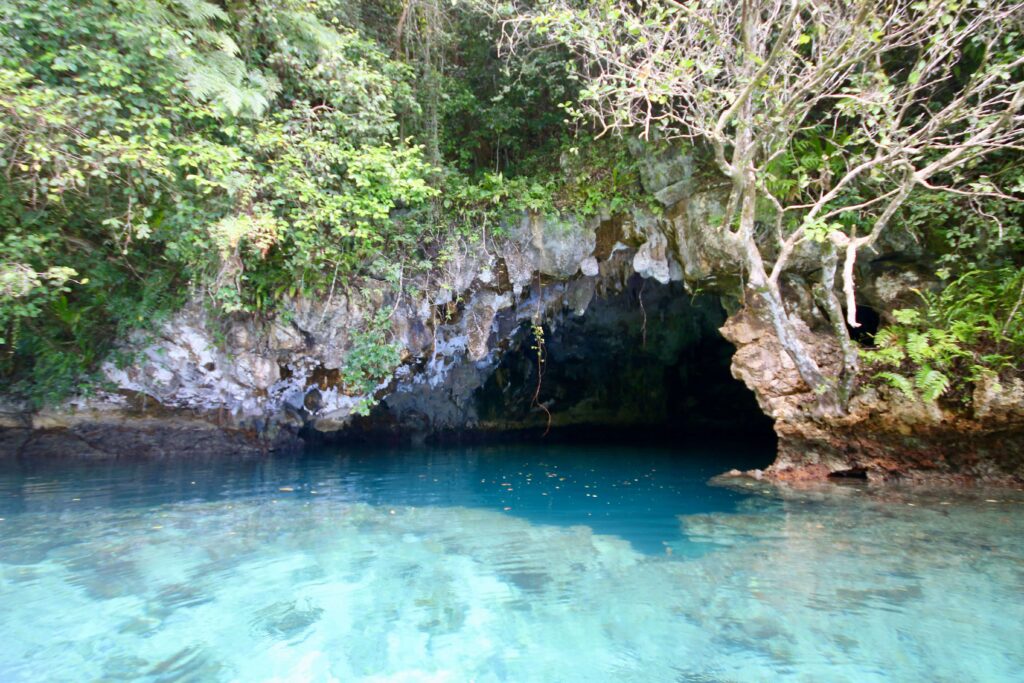
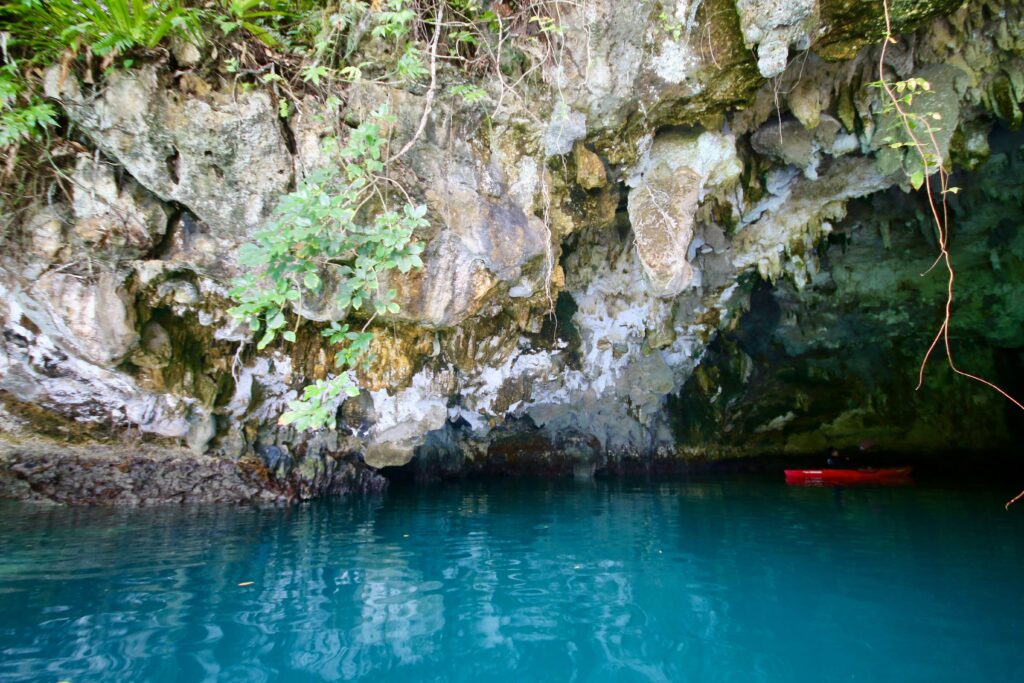
We also kayaked into an impressive cave where one of our team accidentally capsized (whoops!) Luckily, our boat and captain were moored just outside, and we were all ready for a refreshing swim by that point anyway.
What I really loved about kayaking around Nikko Bay was the birdlife. Not only were we followed by pairs of brown noddies, but also the most elegant white tailed tropic birds, which our guide said were culturally significant for Palauan people. They seemed really curious, swooping down close to our kayaks so we could get a really good look.
After lunch, we visited two different snorkelling sites, both of which were amazing for different reasons. Lettuce Coral Wall had the most incredible giant clams (the lip colours were mind-blowing) and it served as a nursery for all kinds of fish. As always, we particularly loved the groups of juvenile cardinal pajama fish, which appear to just be hovering in space.
We both agreed that the second site, Rembrandt’s Cove, was one of the best snorkelling spots we’ve ever encountered. As the name suggests, the colours of the corals were like something out of a painting. If I’m being honest, I can’t remember what fish we saw because I was so fixated on the canvas!
Being a diver, I’m sometimes worried that snorkelling won’t have that “wow” factor, but this most certainly did!
Nikko Bay vs Risong Bay kayaking
So which should you choose if you only have one day to spend with Paddling Palau – Risong Bay or Nikko Bay? Honestly, it really depends on your interests and what you want to see.
Overall, we both agreed that Risong Bay was our favourite – the jellyfish, mandarin fish and baby sharks left a big impression! But the snorkelling at Lettuce Coral Wall and Rembrandt’s Cove on the Nikko Bay trip was exceptional – if you’re after mesmerising coral displays, these are hard to beat.
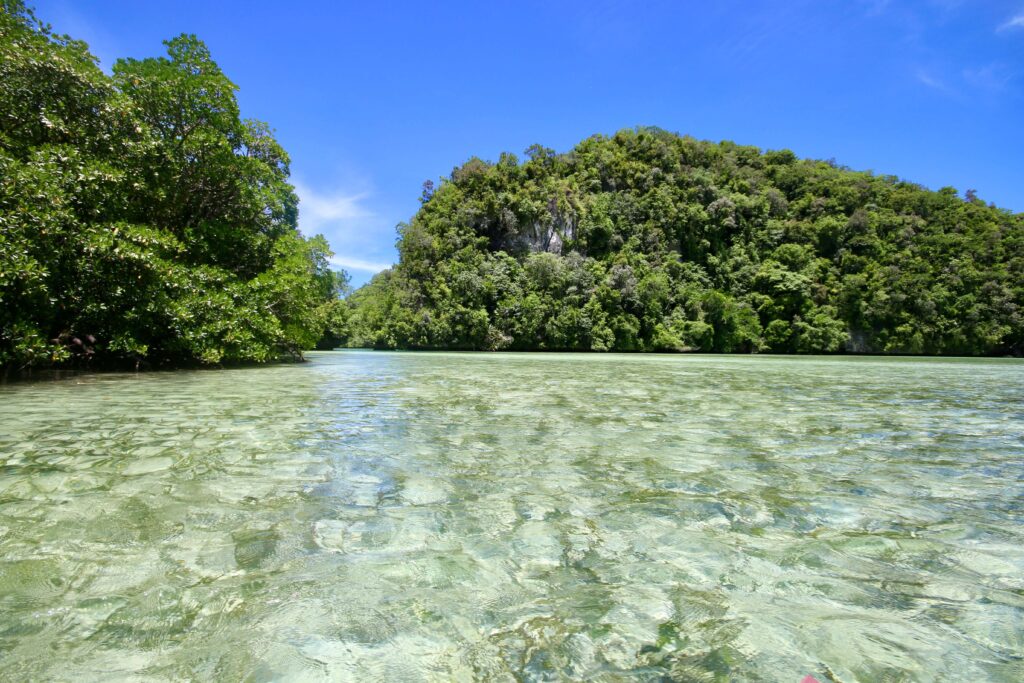
For World War II history, Nikko Bay is definitely the winner. But in terms of scenery, I think Risong Bay was slightly more photogenic. Remember, however, this is the Rock Islands, so it’s all pretty paradisiacal!
Paddling Palau doesn’t offer every trip, every day. So if you only have one day set aside for kayaking, their schedule might make the decision for you.
Personally, I think kayaking in Palau is a great activity for divers looking for something to do on the day before they fly that doesn’t involve breathing in more nitrogen.
It’s worth nothing that Paddling Palau also offers kayaking trips to Long Lake, German Lighthouse and Ulong Island, so you aren’t restricted to Risong Bay or Nikko Bay. If time (and money) allows, you could experience so much of Palau with this wonderful team. Fingers crossed we can do just that in the near future.
PLAN YOUR TRIP WITH OUR FAVOURITE RESOURCES:
Find hotels and resorts via Booking or Agoda
Book tours and experiences via Viator or GetYourGuide
Find a rental car via Discover Cars
Book flights via Kiwi or Booking
Search for buses and trains via 12Go or Omio
Get travel insurance via SafetyWing
Buy a digital eSIM with Airalo
By purchasing through our links, you’ll be supporting our website at no additional cost to you
-
Plan a Surf + Yoga Retreat at Rascals: An Adults-Only Hotel in Kuta, Lombok
Tucked away on a quiet street off Kuta’s main drag, Rascals was our stay of choice on our last visit to Lombok. It had been on our radar for many years, but we’d always returned to Mana Eco Retreat – a place we’d fallen in love with for its tranquil cabanas, vegetarian-friendly restaurant and incredible…
-
The Blue Revolution: How Ocean Conservation Is Changing Travel
If you’re anything like us, the ocean is what fuels your travel adventures. Over the last 20+ years, we’ve flown across the globe to dive with manta rays, kayak above coral reefs and surf legendary waves. But there is an uncomfortable contradiction at the heart of ocean tourism: the healthier the marine environment, the more…
-
Climate Change in the Ocean: A Guide for Surfers + Divers
When we think about climate change, our attention naturally turns to what we can see on land or are experiencing first hand: rising temperatures, melting glaciers, wildfires and more intense weather events. Many of these are well-reported on the nightly news and it’s devastating to see intense wildfires ripping across landscapes and floods wreaking havoc…
-
Resort vs Liveaboard vs Homestay Diving in Raja Ampat: Choosing the Right Experience
Raja Ampat is one of my favourite diving destinations in Indonesia. In fact, that’s probably an understatement. Raja is one of my favourite places to dive anywhere in the world. The underwater experiences I’ve had here are nothing short of extraordinary…and that’s not taking into account the incredible above-water scenery. It really does feel like…
-
How Sunscreen Affects Coral Reefs + Marine Life
If you’re anything like us, applying sunscreen is second nature before heading out to surf or spending a day on a dive boat. In fact, our skin type means we need to apply sunscreen before we step outdoors…full stop! Since we were little, it’s been drummed into us that sunscreen protects our skin from harmful…
-
The Essential Scuba Diving Guide to Raja Ampat, Indonesia
Few places we’ve dived have captured our imagination quite like Raja Ampat. Our first visit was back in the early 2000s, staying at a homestay on a blissfully gorgeous beach, and our second in 2023 at the eco-friendly Papua Explorers Resort. Both are experiences that will stay with us forever and affirmed what so many…

We are a team of passionate divers and surfers with decades of combined experience in the water and travelling to all corners of the globe.
After years of chasing waves and descending into the deep blue, we’ve created this resource to highlight sustainable surf camps, eco-dive resorts and conservation-focused ocean trips to help inspire your next adventure.
Eco Ocean Escapes was born out of a love of the ocean, an obsession with travel and a concern about the impacts of our adventures on the environments we explore.