Seagrass Meadows: An Underappreciated Marine Environment
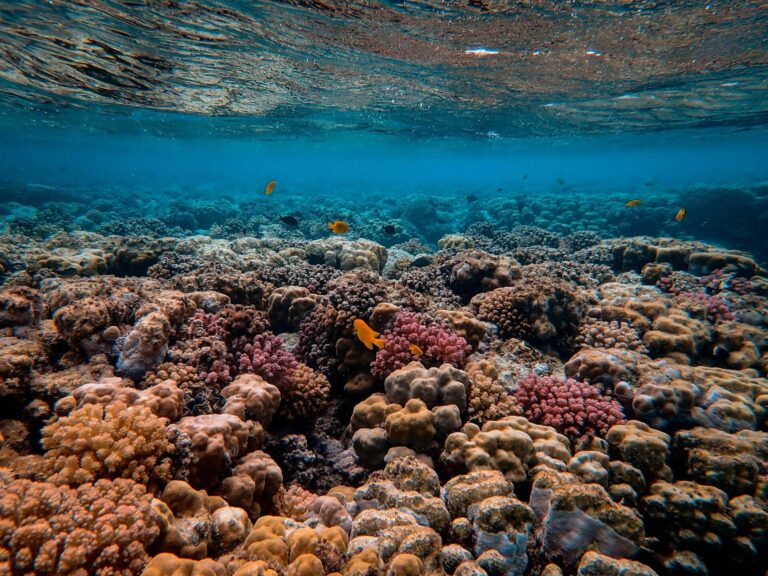
My early scuba diving years focused (mostly) on exploring coral reefs. As someone new to the underwater world, they felt like a sensory overload in terms of colour and species diversity.
Over the years, that interest shifted to include wrecks and caves – underwater environments that, for me, required a slower, more curiosity-driven approach.
More recently, I’ve become fascinated by “supporting” environments and underappreciated coastal landscapes that are helping our coral reefs thrive. I honed in on mangrove forests during my undergrad thesis and that led me to discover the importance of another “blue carbon” specialist – seagrass meadows.
Seagrass meadows may look like underwater fields of grass, but they are among the most productive ecosystems on Earth, providing food, shelter and nursery grounds for thousands of marine species. They are also punching above their weight when it comes to carbon storage, helping to mitigate the affects of climate change.
As a scuba diver, I’ve discovered that understanding seagrass meadows can transform an ordinary dive into an opportunity to appreciate one of the ocean’s most important (and threatened) environments.
What Are Seagrass Meadows?
Despite what many people think, seagrass isn’t seaweed.
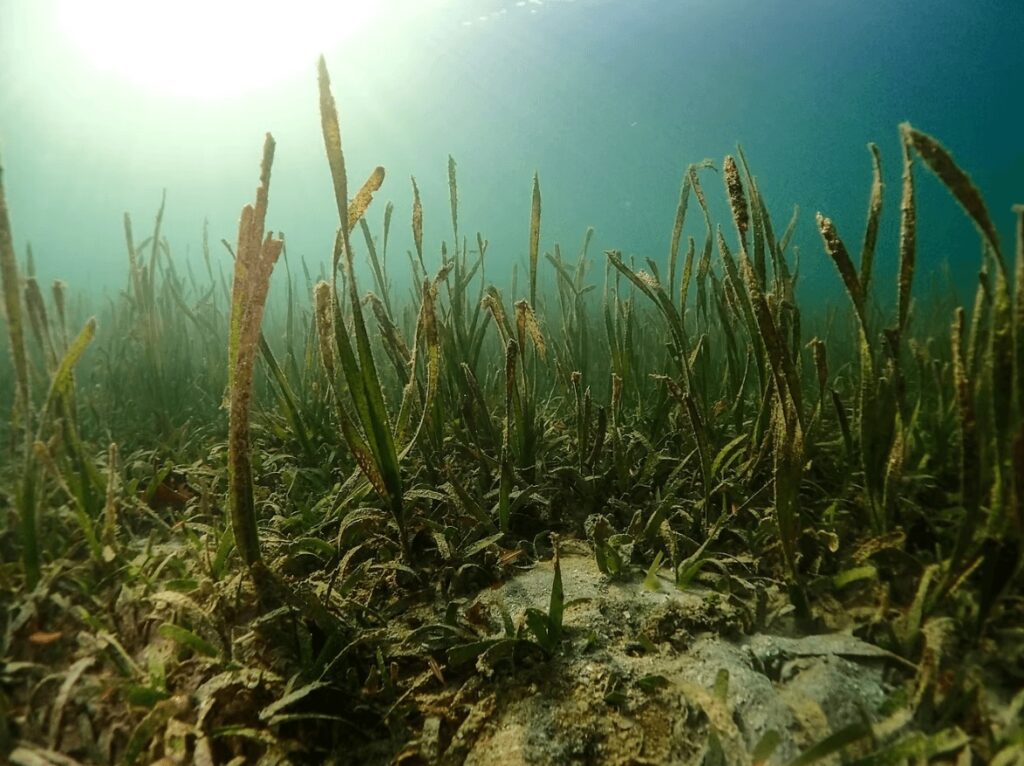
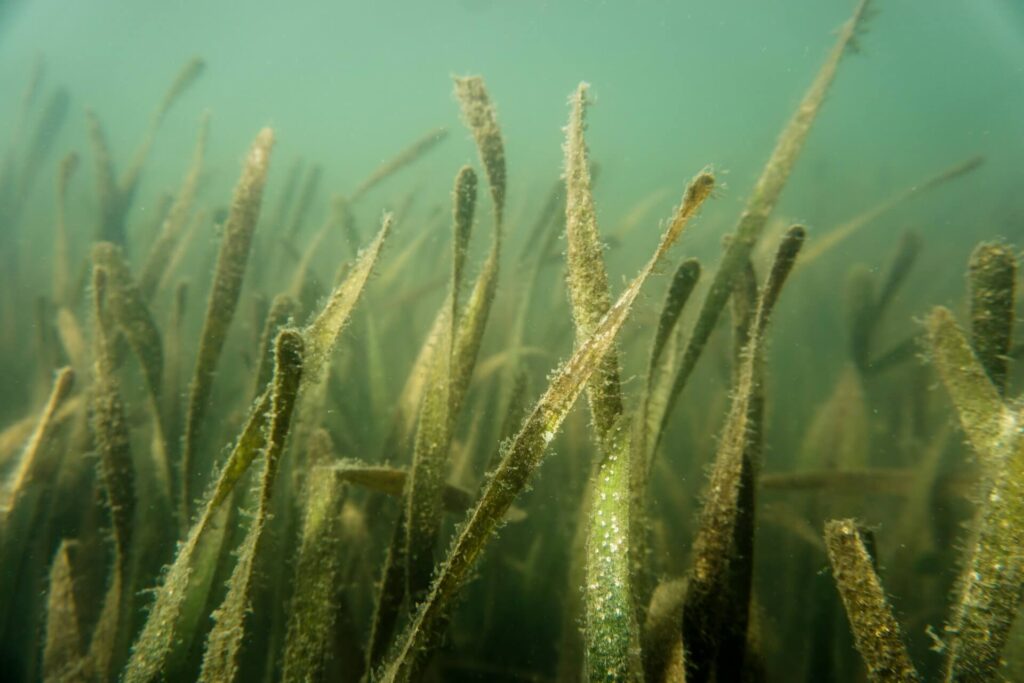
Seagrasses are true flowering plants that evolved on land millions of years ago before adapting to life in the ocean. They have roots, stems, leaves, flowers and even produce seeds, just like many plants you see on land.
Seagrasses anchor themselves into sandy or muddy seabeds using underground root systems called rhizomes. This allows them to spread and create vast underwater “fields” or “meadows”.
These meadows are usually found in shallow coastal waters where sunlight can penetrate the surface, allowing the plants to photosynthesise. This is why you’ll often encounter them in bays, lagoons and along sheltered coastlines, as well as in the shallow areas between coral reefs and mangrove forests.
Like plants on land, seagrasses:
- Produce oxygen through photosynthesis
- Absorb carbon dioxide
- Grow flowers and produce seeds
- Create complex habitats for other organisms
Where Are Seagrass Meadows Found?
More than 70 species of seagrass exist worldwide and they can be found in tropical, temperate and even some colder coastal waters. From the Caribbean and Africa to Oceania and Southeast Asia, seagrass meadows occur on every continent except Antarctica.
Because they require sunlight, seagrasses generally grow in waters shallower than about 40 to 50 metres (130–165 feet), although depth varies depending on water clarity.
• The warm, shallow waters of the Caribbean are home to extensive seagrass meadows that play an important role in supporting coral reefs in the Bahamas, Belize and the Cayman Islands.
• The Mediterranean is home to one of the world’s most significant seagrass species: Posidonia oceanica, often called Neptune grass. Sardinia, Crete and the Balearic Islands are destinations to check out.
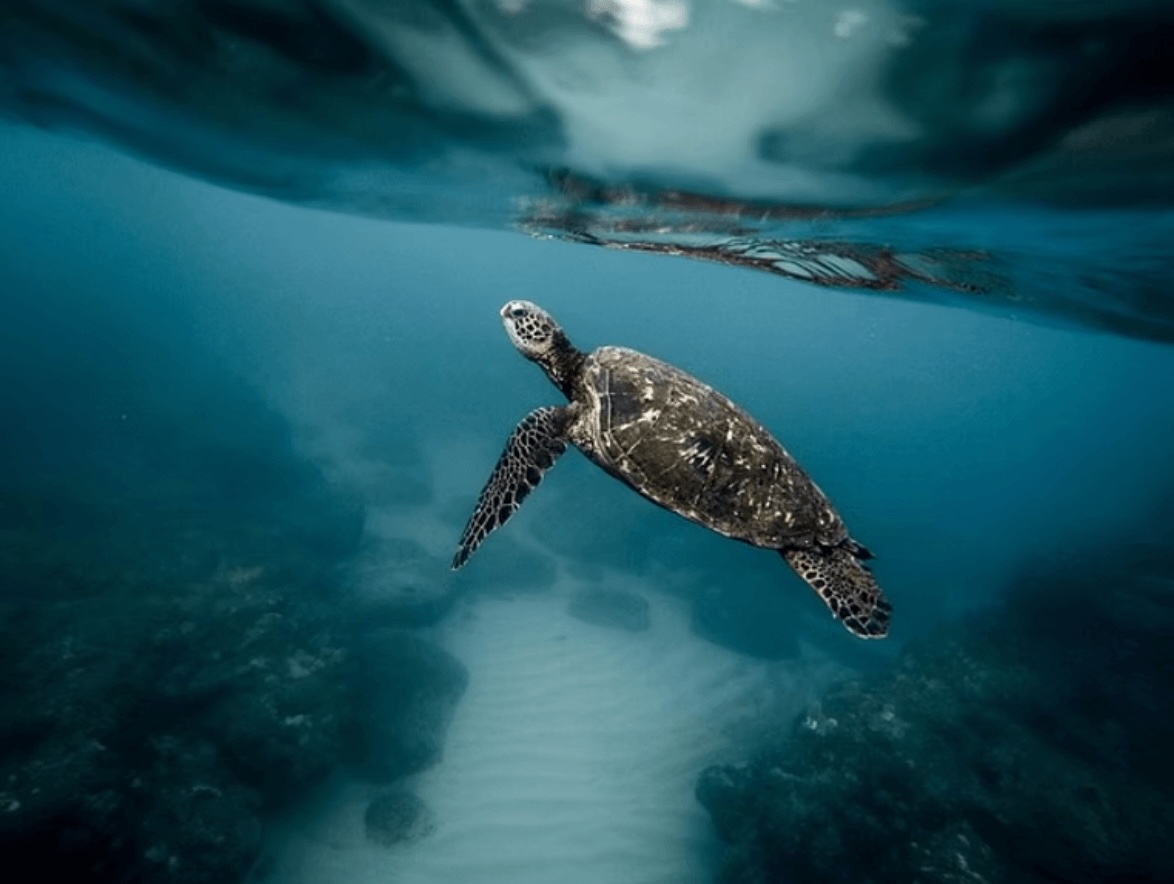
• Along the Red Sea coastlines of Egypt, Jordan, Saudi Arabia and Sudan, seagrass meadows provide feeding grounds for green turtles and dugongs.
• Countries such as Indonesia, the Philippines, Malaysia and Thailand are home to extensive seagrass meadows that connect mangrove forests and coral reefs.
• Australia has some of the world’s most extensive seagrass habitats, with meadows found everywhere from Shark Bay in Western Australia to the Great Barrier Reef in Queensland and the cool-climate waters of Tasmania.
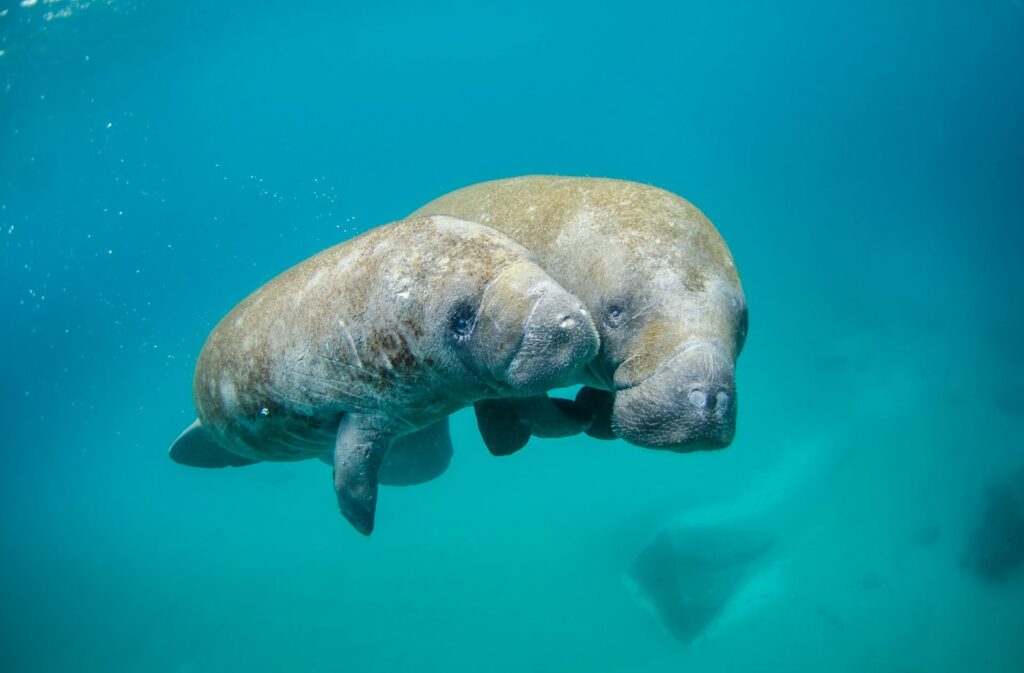
• Florida’s shallow coastal waters contain large areas of seagrass, particularly around the Florida Keys and the Gulf of Mexico. These meadows provide essential habitat for manatees, sea turtles and rays, not to mention countless fish species.
Why Are Seagrass Meadows So Important?
Marine Nurseries
One of the things I find most fascinating is that so much reef life actually begins on or around seagrass meadows.
Many of the fish we regularly encounter (and admire) on coral reefs spend the first part of their lives hidden within seagrass meadows or mangrove forests. Here, they’re protected from predators while they grow, mature and establish their “sea legs”.
Juvenile snappers and groupers rely heavily on seagrass beds as critical nursery habitats, as do leatherjackets and pipefish.
After floating near the water’s surface as planktonic newborns, juvenile seahorses descend into sheltered environments like seagrass meadows and anchor to the blades using their prehensile tails.
Several species of prawns, crabs and lobsters also spend their early days within shallow seagrass beds, before migrating to deeper waters as adults.
As you can see, without healthy seagrass, many reef ecosystems would struggle to support the diversity of life that they do. So now when I’m diving over meadows, I try and remind myself that I’m looking at tomorrow’s reef.
Home to Iconic Marine Animals
If seeing incredible marine life is your goal, don’t underestimate the importance of seagrass meadows. While many divers associate these habitats with tiny creatures and juvenile fish, healthy seagrass beds also attract a wide range of mature marine animals.
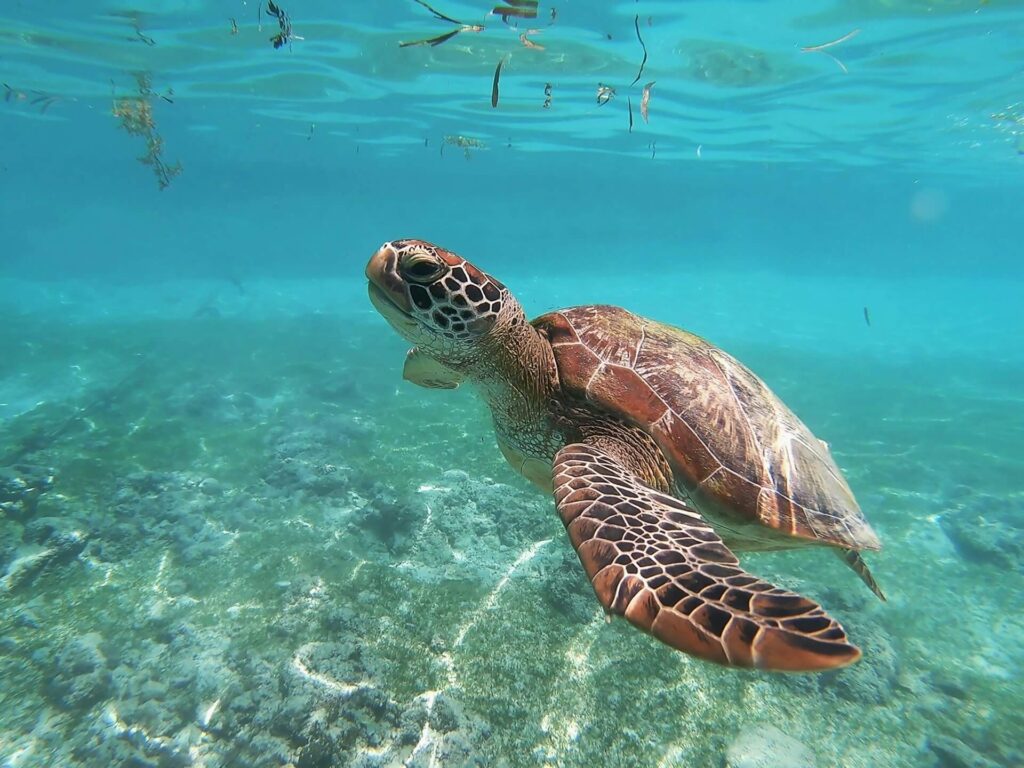
Green sea turtles, dugongs and manatees all rely on these underwater meadows for food, while pipefish, sea dragons and nudibranchs are attracted to them for shelter and protection.
Some of my favourite underwater encounters have actually taken place on seagrass meadows. With fewer creatures vying for your attention, there’s something incredibly special about these quieter, sometimes one-on-one interactions, allowing you to observe behaviours you might miss in “busier” habitats.
Excellent Carbon Storage
Seagrass meadows are often referred to as “blue carbon” ecosystems because of their ability to capture carbon dioxide (CO₂) from the atmosphere and store it for incredibly long periods.
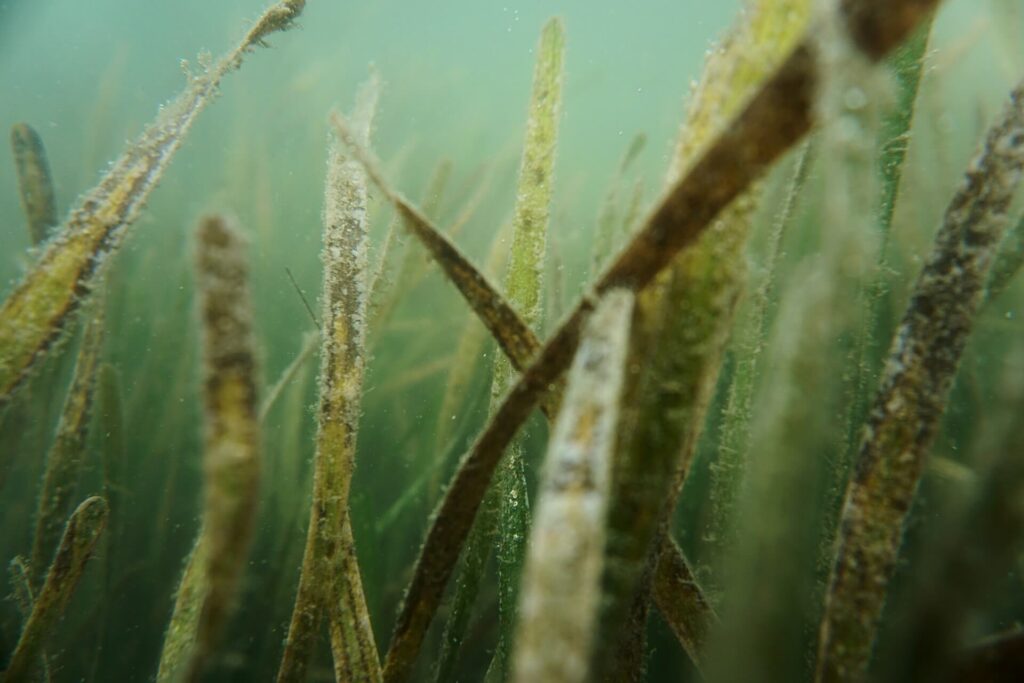
Through photosynthesis, seagrasses absorb CO₂ dissolved in seawater, using it to grow their leaves, roots and rhizomes (horizontal underground stems).
But unlike many terrestrial plants, the story doesn’t end there.
As seagrass leaves die, they settle into the seabed, where they’re buried by sediment. In the oxygen-poor conditions beneath the meadow, this organic material decomposes very slowly, allowing the carbon to remain locked away for hundreds or even thousands of years.
Over time, thick layers of carbon-rich sediment build up beneath healthy seagrass meadows, creating one of nature’s most effective long-term carbon storage systems.
What really blows me away is the fact that although seagrass meadows cover less than 0.2% of the ocean floor, they are estimated to account for around 10% of the carbon buried annually in the ocean. For me, that’s staggering!
Per unit area, they can store carbon at rates comparable to (or even greater than) many forests on land. But from my perspective, they are far less appreciated for their carbon storage potential.
Unfortunately, when seagrass meadows are damaged by boat anchors, coastal development, pollution or rising sea temperatures, they don’t just stop capturing carbon.
Disturbing the seabed can release centuries’ worth of stored carbon back into the water (and eventually the atmosphere), contributing to greenhouse gas emissions.
So protecting seagrass isn’t just about saving turtles, seahorses or those iconic dive sites we love so much. It’s also about preserving one of the ocean’s most effective natural climate solutions.
Coastal Protection
Seagrass meadows have dense root systems that bind the seabed together, much like the roots of plants help hold soil in place on land. This natural anchoring system stabilises sand and sediment, making it much harder for waves and currents to wash it away.
As a result, healthy seagrass meadows play an important role in reducing coastal erosion and helping beaches retain their shape over time.
The leaves themselves also act as a natural filter. As water moves through the meadow, the blades slow the current. This allows suspended sand, silt and organic particles to settle onto the seabed, rather than remaining suspended in the water column. This has several important benefits:
- Improves water clarity, creating better conditions for diving, snorkelling and underwater photography.
- Allows more sunlight to reach the seabed, helping both seagrass and nearby coral reefs thrive.
- Reduces sediment settling on coral reefs, preventing corals from becoming smothered.
- Creates calmer conditions by absorbing and dispersing wave energy before it reaches the shoreline.
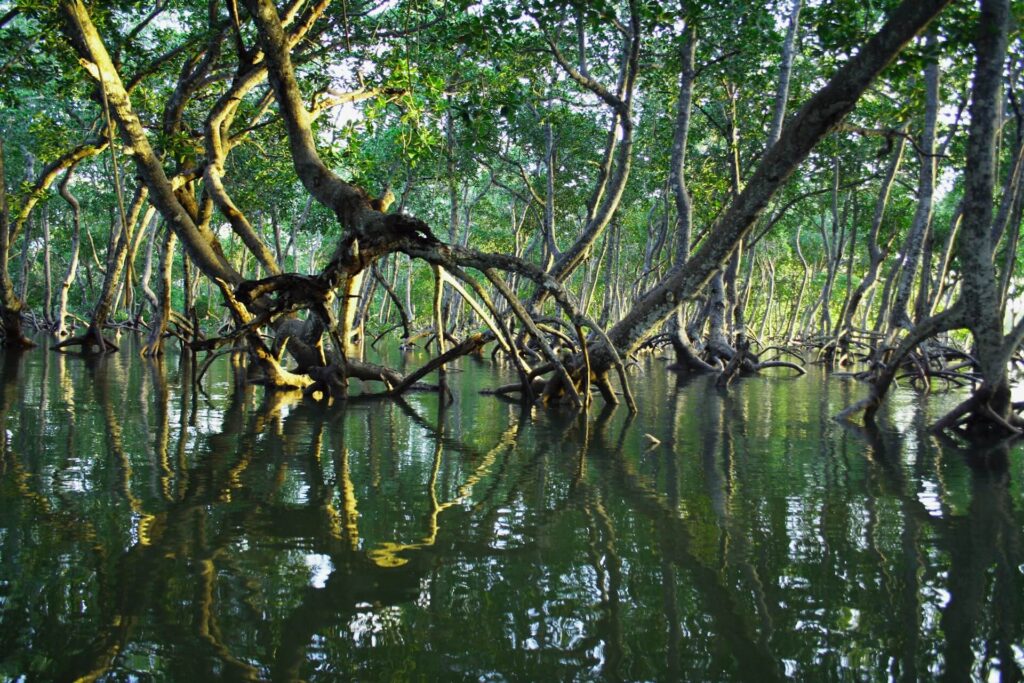
Perhaps even more importantly, seagrass meadows are closely connected to other coastal ecosystems. They often sit alongside mangrove forests and coral reefs, forming what scientists describe as an interconnected coastal network.
Mangroves help trap sediment flowing from the land, seagrass filters and stabilises it underwater and coral reefs act as natural breakwaters that reduce the force of incoming waves.
Together, these three ecosystems protect coastlines far more effectively than any one could alone. So rather than just protecting one ecosystem, conservation is increasingly turning to a multi-pronged approach and it’s something I’m eager to learn more about.
Threats Facing Seagrass Meadows
Despite their importance, seagrass meadows are disappearing worldwide at a rate of around 7% annually. To put that in perspective, it’s the equivalent to one football field vanishing every 30 minutes!
In fact, scientists estimate that seagrass has been declining globally for decades, largely due to human activity, coastal development and climate change.
Unlike a damaged coral reef, which often looks visibly degraded, the loss of seagrass can go unnoticed. A meadow may simply become thinner each year or disappear as the water above becomes increasingly murky.
Several factors are driving this decline:
Coastal Development
As coastal towns and cities expand, natural shorelines are often replaced with marinas, ports and housing developments. Tourism infrastructure for hotels, resorts and restaurants contributes to this and is something for divers to be aware of.
Construction, dredging and land reclamation can bury or remove seagrass meadows altogether, while increased sediment runoff blocks the sunlight the plants need to survive.
Pollution and Poor Water Quality
Seagrasses rely on clear, clean water to photosynthesise. Fertilisers, sewage and agricultural runoff introduce excess nutrients into coastal waters, encouraging algal blooms that cloud the water and prevent sunlight from reaching the seabed.
Without enough light, seagrass gradually weakens and dies. On a large scale, this can signal the loss of entire meadows.
Plastic pollution and chemical contaminants can also damage seagrass ecosystems and the species that depends on them.
Boat Anchors and Propellers
Anchors being carelessly dropped can tear up years of seagrass growth…sometimes in the space of a few seconds.
Boat propellers are equally damaging, carving long scars (known as propeller scars) through meadows. Because seagrass grows relatively slowly, these scars can remain visible for years or even decades.
Many popular diving and snorkelling destinations now use permanent mooring buoys to prevent this type of damage. But in some places, it’s a case of too little action, too late.

Climate Change
Climate change presents one of the biggest long-term threats to seagrass ecosystems. Rising sea temperatures can stress or kill certain species, while stronger storms physically uproot plants and disturb the sediment they rely on.
Sea-level rise and changing weather patterns can also alter water clarity and salinity, making conditions less suitable for seagrass to thrive.
Ironically, the loss of seagrass also reduces the ocean’s ability to store carbon, creating a feedback loop that can worsen climate change.
Careless Human Activity
Although scuba divers are generally more aware of marine conservation than many other ocean users, we can still unintentionally cause damage.
Poor buoyancy, dragging gauges or cameras across the seabed and standing or kneeling on seagrass, can all negatively impact plant life. Additionally, chasing wildlife through the meadow can stress or alter the behaviour of animals that rely on seagrass for their survival.
Thankfully, these are some of the easiest impacts to avoid and, unlike climate change and coastal development, we have a greater ability to enact immediate change.
For me, it all starts with educating myself on how my actions underwater can be detrimental to marine environments. We can’t change what we’ve done in the past, but we can rectify them for future dives.
How to Make a (Positive) Difference as a Diver
One of the reasons I love diving is knowing that we get to experience places many people never will. But with that privilege comes a responsibility to protect them.
Individual divers rarely cause as much damage to seagrass meadows as boat anchors or coastal development (although we may inadvertently by diving with or staying at irresponsible operators). However, careless diving can still do harm:
Here are some of the simple habits I try to remember whenever I’m diving over seagrass:
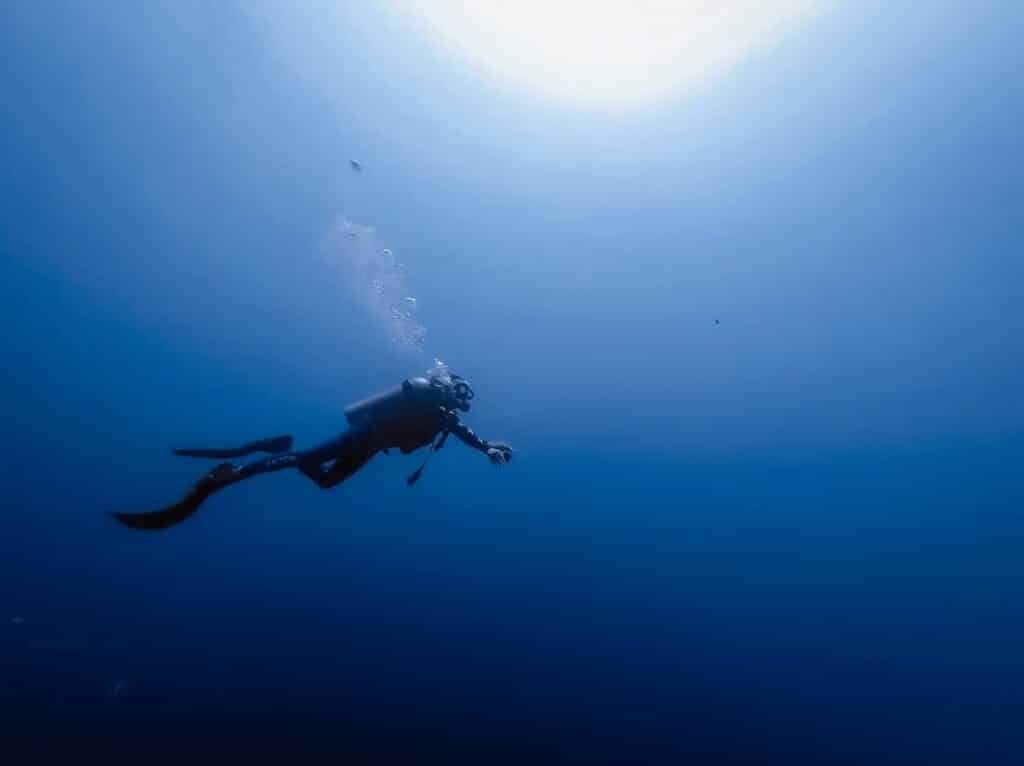
- Maintain good buoyancy to prevent accidental contact with the seabed
- Avoid standing or kneeling on the seabed – just because there’s no coral doesn’t mean it’s not a living habitat
- Keep fin kicks gentle to prevent disturbing sediment and damaging vegetation
- Never chase wildlife – allow them to graze and behave naturally without interruption
- If diving from a private boat, use designated moorings instead of dropping anchors into seagrass.
Appreciating Seagrass Meadows as a Diver
Seagrass meadows may lack the immediate visual drama of coral reefs, but they are among the ocean’s most essential ecosystems.
Not only do they nurture young fish and sustain iconic marine species like turtles and dugongs, but they help to improve water quality, protect coastlines and store staggering amounts of carbon.
As a scuba diver, I feel like exploring seagrass meadows means discovering a different side of the underwater world. The interactions are often subtler and there are countless small creatures that are easy to miss.
While diving on seagrass beds, I’ve seen tiny pipefish weaving between the blades, observed stingrays buried in the sand and watched turtles enjoying what is essentially an underwater salad.
So, the next time you encounter what looks like a patch of underwater grass, don’t rush through it to the coral reef that lies beyond. Hover for a while, look closely and you might discover that one of the ocean’s greatest treasures has been hiding in plain sight.
By diving responsibly and supporting conservation efforts focused on seagrass and blue carbon destinations, we can help ensure these underwater meadows continue to thrive for generations to come.
PLAN YOUR TRIP WITH OUR FAVOURITE RESOURCES:
Find hotels and resorts via Booking or Agoda
Book tours and experiences via Viator or GetYourGuide
Find a rental car via Discover Cars
Book flights via Kiwi or Booking
Search for buses and trains via 12Go or Omio
Get travel insurance via SafetyWing
Buy a digital eSIM with Airalo
By purchasing through our links, you’ll be supporting our website at no additional cost to you
We are a team of passionate divers and surfers with decades of combined experience in the water and travelling to all corners of the globe.
After years of chasing waves and descending into the deep blue, we’ve created this resource to highlight sustainable surf camps, eco-dive resorts and conservation-focused ocean trips to help inspire your next adventure.
Eco Ocean Escapes was born out of a love of the ocean, an obsession with travel and a concern about the impacts of our adventures on the environments we explore.