The Carbon Footprint of Surf Trips: How to Reduce + Offset Yours
Surf travel is all about chasing waves, feeling a complete sense of freedom and embracing time spent in nature. Here at EcoOceanEscapes, we also believe it’s an incredible opportunity to connect with locals and discover unique corners of the globe.
But the reality is that most surf trips (especially international ones) come with a heavy carbon footprint. Flights, accommodation, motorbike rentals, boat trips – it all adds up.
So should we all throw it in and only surf our home breaks? That’s not what we’re suggesting.
However, we do think understanding your surf carbon footprint is important and looking to reduce and/or offset your emissions is the way forward.
This article may contain affiliate links, which means when you make a purchase through that link, we earn a small commission. Affiliate links come at no cost to you and ensure our content remains free!
Why Surf Trips Have a High Carbon Footprint
Surf travel (particularly international surf travel) is carbon-intensive for a few reasons.
Long-Haul Flights Are the Biggest Contributor
For most surfers, flights account for the vast majority of carbon emissions associated with surf travel. A return long-haul flight (for example, Europe to Indonesia or Australia to Central America) can produce 1–5 tonnes of CO₂ per person, often more than a year of driving at home.
Add on connecting flights to remote islands or surf breaks, and emissions increase even further.
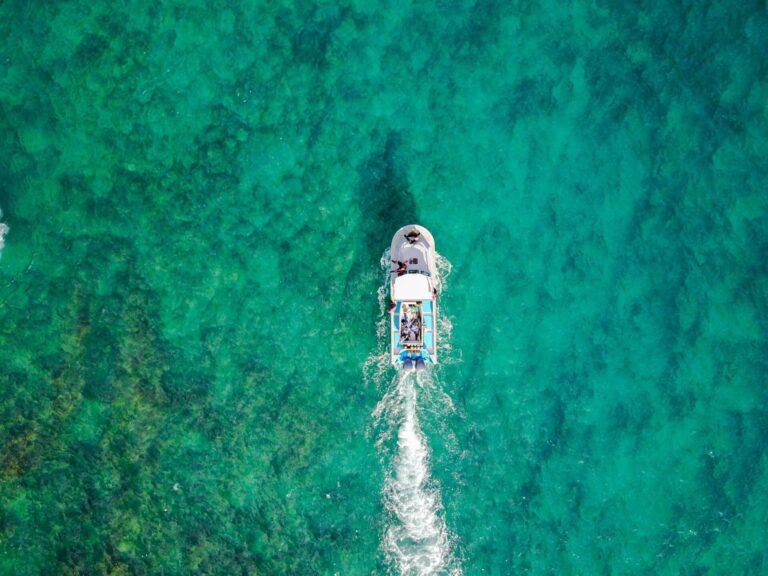
Aside from domestic flights between islands, you might rent a motorbike/4WD to get between breaks or rely on fuel-intensive speedboats to access reef passes. Individually, these may seem minor. But collectively, they add up.

Accommodation & Energy Use
Many surf lodges and camps are located in remote environments, which is all part of their allure. But this can mean relying on diesel generators for electricity and desalination plants or water trucking for basic supplies.
In some cases, bottled water is a mainstay and imported foods make up a significant portion of menu ingredients to satisfy guest tastes.
That being said, surf eco-lodges and camps do exist and they play an important role in helping to reduce the carbon footprint of surf trips. But unless they are completely carbon neutral, they consume some amount of energy and resources in what are often fragile ecosystems.

Surf Gear & Consumption
Boards, wetsuits, fins and leashes are rarely considered when calculating the carbon footprint of surf trips. But they are contributors.
Surfboards are usually petroleum-based, wetsuits are traditionally neoprene and gear is rarely sustainably made. And as surfers, we’re all a little guilty of buying more than we need or consuming based on industry trends.
You can argue that most surfers already own their gear and aren’t buying it specifically for an international surf trip.
But surfing unfamiliar breaks often leads to board damage (we’ve seen it more times than we can count) and damaged gear gets left behind (rather than being repaired) due to luggage weight restrictions.

How to Reduce the Carbon Footprint of Surf Travel
Let’s say this straight up – offsetting the carbon footprint of your surf trip should be the last step, not the first. Reducing emissions wherever possible has a far greater impact and is what we should all be focusing on.
So how exactly can you do that?
Travel Less Often, Stay Longer
One extended overseas surf trip to a single destination is far better than multiple holidays to all corners of the globe.
By staying longer, you’ll reduce your flight frequency (and the carbon emissions associated with air travel) and be making a more meaningful contribution to local economies.
Slow travel is one of the most effective sustainability choices surfers can make…and it can be applied to non-surf-related travel too.

Choose Destinations Thoughtfully
It’s easy to choose surf destinations based on waves alone. And social media is full of footage that makes you want to book a flight without a second thought.
But what if we considered sustainability when deciding where to embark on surf trips?
Ask yourself:
- Can I surf closer to home?
- Is there a direct flight option?
- Does this destination rely heavily on internal flights or boats?
In most cases, surfing less “Insta-famous” breaks that are closer to home will reduce emissions dramatically, and there’s no reason why the sessions can’t be just as good.

Use Ground Transport Wherever Possible
Trains and buses are almost always lower-carbon than flights. And in many surf destinations (Morocco, Portugal, Nicaragua, Sri Lanka), there are incredible breaks that are reachable without having to take domestic flights.
If you’re renting a vehicle, always opt for a smaller engine, rather than creating additional carbon emissions for the sake of making an impression. And if possible, share a vehicle with other surfers or provide lifts for locals travelling your route.
And if you are taking flights, always opt to offset your carbon emissions, either with the airline (if there’s the option) or independently.

Choose Accommodation That’s Reducing Its Impact
One of the most impactful ways to reduce the carbon footprint of your surf trip is by staying at eco-friendly camps, hotels and resorts. These are properties that minimise their environmental impact wherever possible, whether that’s through sustainable construction or eco-conscious operations.
This might mean the use of renewable and solar energy or the absence of air-conditioning. Most eco-friendly surf camps and lodges will provide filtered drinking water (rather than relying on plastic bottles) and will source their food locally.
While not directly related to carbon emissions, we also think it’s important to support properties that employ local staff and pay them a fair wage. Surf camps and lodges that rely heavily on overseas volunteer staff as surf guides and yoga instructors are denying locals employment opportunities.
Offsetting Your Surf Trip
Carbon offsetting is controversial for a reason: many schemes are vague and poorly regulated or they’re simply misleading. But when done properly, it can play a useful role and is something to consider when planning your surf trip budget.
When calculating your emissions, look for programs that are independently verified (Gold Standard, VCS) and benefit local communities. Aim to support renewable energy or reforestation projects and avoid anything that focuses on monoculture tree planting.
Mangrove reforestation and reef protection can also deliver strong environmental outcomes if you want something directly connected to coastal ecosystems.
Most importantly, be honest when calculating your emissions. Include not only your international flight and any domestic connections, but also your class (whether that’s economy or business).
Also include your accommodation for the duration of the trip and any ground transport and activities (including boat trips to reach the breaks).
Support Local Conservation Initiatives
If you want to visibly see your carbon offsetting in action, consider supporting local conservation initiatives in your destination. That way, you know exactly where your money is going – you might even be able to get hands-on.
While these may not always be formal offsets, they often have a more tangible impact.
Local conservation initiatives to look for:
- Marine conservation NGOs near your surf destination
- Reef restoration or mangrove projects
- Community-led waste management initiatives

Is Carbon-Neutral Surf Travel Possible?
Realistically, no. Any flight-based surf trip has an environmental cost. In fact, unless you’re walking to your home break, there is carbon being emitted to get you there.
But lower-impact surf travel is absolutely possible and the choices you make matter. As a surfer, you can travel less frequently and/or stay for longer in destinations (who doesn’t love an extended surf trip?)
You can also be selective about where you stay and who you support – vote with your tourism dollars. If sustainably run surf camps and lodges start receiving lots of guests because of their eco-credentials, others will follow suit.
And if you can’t realistically reduce the carbon emissions of your surf trip, then look for reputable carbon offsetting programs that align with your ethics.
If you’re anything like us, you’re drawn to surf travel because it connects you to the ocean and the world around us. This is exactly why we have a responsibility to protect it.

PLAN YOUR TRIP WITH OUR FAVOURITE RESOURCES:
Find hotels and resorts via Booking or Agoda
Book tours and experiences via Viator or GetYourGuide
Find a rental car via Discover Cars
Book flights via Kiwi or Booking
Search for buses and trains via 12Go or Omio
Get travel insurance via SafetyWing
Buy a digital eSIM with Airalo
By purchasing through our links, you’ll be supporting our website at no additional cost to you
-
The Blue Revolution: How Ocean Conservation Is Changing Travel
If you’re anything like us, the ocean is what fuels your travel adventures. Over the last 20+ years, we’ve flown across the globe to dive with manta rays, kayak above coral reefs and surf legendary waves. But there is an uncomfortable contradiction at the heart of ocean tourism: the healthier the marine environment, the more…
-
Climate Change in the Ocean: A Guide for Surfers + Divers
When we think about climate change, our attention naturally turns to what we can see on land or are experiencing first hand: rising temperatures, melting glaciers, wildfires and more intense weather events. Many of these are well-reported on the nightly news and it’s devastating to see intense wildfires ripping across landscapes and floods wreaking havoc…
-
Resort vs Liveaboard vs Homestay Diving in Raja Ampat: Choosing the Right Experience
Raja Ampat is one of my favourite diving destinations in Indonesia. In fact, that’s probably an understatement. Raja is one of my favourite places to dive anywhere in the world. The underwater experiences I’ve had here are nothing short of extraordinary…and that’s not taking into account the incredible above-water scenery. It really does feel like…
-
How Sunscreen Affects Coral Reefs + Marine Life
If you’re anything like us, applying sunscreen is second nature before heading out to surf or spending a day on a dive boat. In fact, our skin type means we need to apply sunscreen before we step outdoors…full stop! Since we were little, it’s been drummed into us that sunscreen protects our skin from harmful…
-
The Essential Scuba Diving Guide to Raja Ampat, Indonesia
Few places we’ve dived have captured our imagination quite like Raja Ampat. Our first visit was back in the early 2000s, staying at a homestay on a blissfully gorgeous beach, and our second in 2023 at the eco-friendly Papua Explorers Resort. Both are experiences that will stay with us forever and affirmed what so many…
-
Successful Marine Protected Areas You Can Visit Around the World
After almost two decades of scuba diving around the globe, we’ve come to the conclusion that marine protected areas (MPAs) are one of the most powerful tools we have for conserving ocean ecosystems. Essentially, they are like “national parks of the seas” – established to limit activities such as overfishing, habitat destruction and unsustainable development….



We are a team of passionate divers and surfers with decades of combined experience in the water and travelling to all corners of the globe.
After years of chasing waves and descending into the deep blue, we’ve created this resource to highlight sustainable surf camps, eco-dive resorts and conservation-focused ocean trips to help inspire your next adventure.
Eco Ocean Escapes was born out of a love of the ocean, an obsession with travel and a concern about the impacts of our adventures on the environments we explore.