Whale Shark Tourism: Responsible or Not?
If you’ve ever had the privilege of seeing or swimming alongside whale sharks, you’ll understand what an incredible experience it is. Even just thinking about it sends shivers of joy through our bodies!
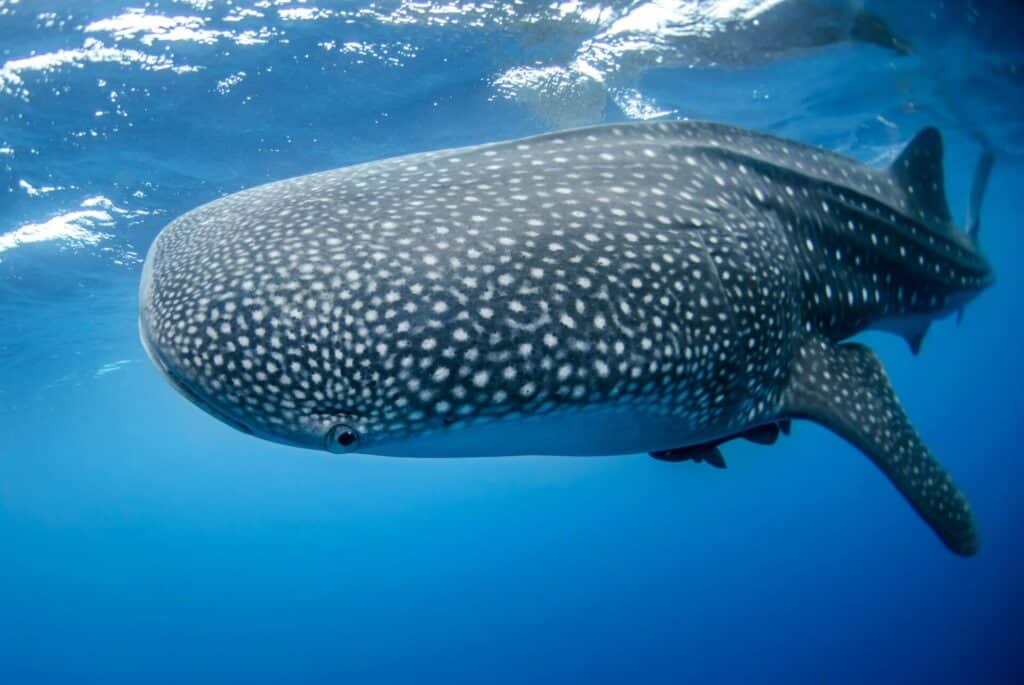
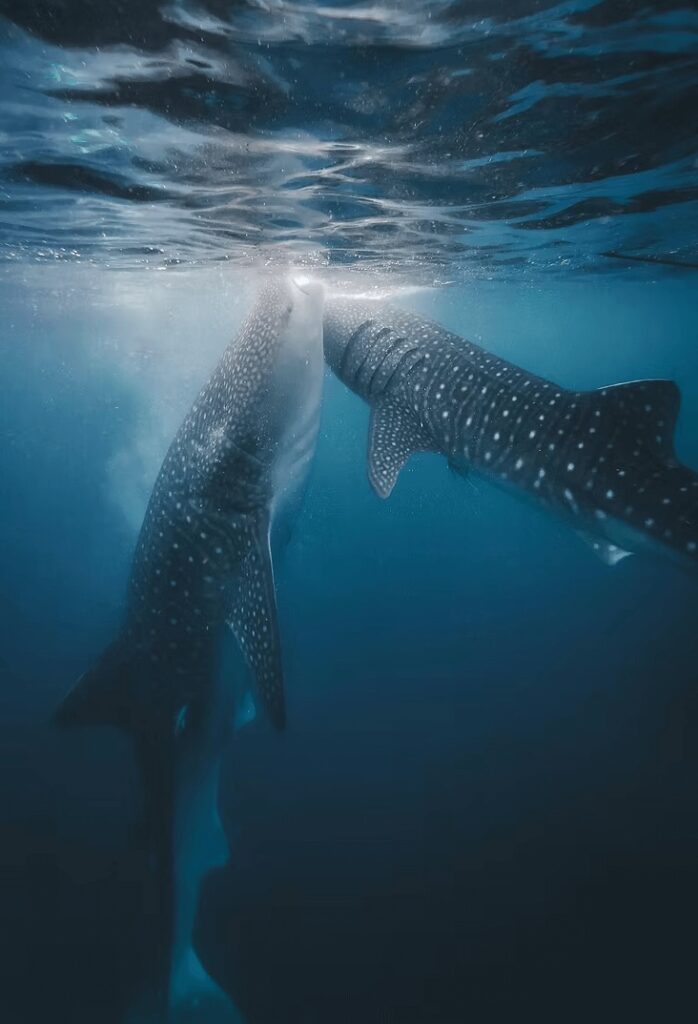
Despite growing to more than 12 metres (40 feet) in length, the world’s largest fish moves through the water with effortless ease. Seeing a whale shark first hand and witnessing its grace is something that you don’t forget…ever!
It’s no surprise that whale shark encounters have become one of the most sought-after wildlife experiences on the planet.
From Mexico and the Maldives to the Philippines and Western Australia, every year thousands of people plan their travels around sharing a few unforgettable moments with these gentle giants.
But as whale shark tourism has grown, so have questions about its impact. Can tourism help protect whale sharks by giving them economic value? Or are we placing unnecessary stress on a vulnerable species in pursuit of “sharable” travel encounters?
As with many marine conservation issues we’ve explored here at EcoOceanEscapes, the answer isn’t simply “black and white”.
This article may contain affiliate links, which means when you make a purchase through that link, we earn a small commission. Affiliate links come at no cost to you and ensure our content remains free!
Why Whale Sharks Need Protecting
Whale sharks are found in tropical and subtropical oceans around the world, where they feed primarily on plankton, fish eggs and other tiny organisms. While they’re enormous in size and have “shark” in their name, they are, in fact, harmless to humans.
Unfortunately, whale sharks are also listed as Endangered for a number of reasons. Major threats to their survival include irresponsible fishing practices and boat/ship strikes, plastic pollution and the ongoing effects of climate change.
Some marine species are more resilient than others to these threats. But whale sharks grow slowly, mature late and have low reproductive rates. This means that populations recover slowly (or not at all) when numbers decline.
In some coastal communities, tourism has become an incentive to protect whale sharks from these threats and devise alternative solutions to exploitation.
In that sense, seeing a live whale shark has become far more valuable than catching one or allowing populations to succumb to the effects of pollution and climate change.
The Benefits of Whale Shark Tourism
When managed well, wildlife tourism can become a powerful conservation tool. We’ve seen it the world over, from the rainforests of Borneo to the savannahs of East Africa.
In an ideal world, we believe that animals should be protected for their inherent value, not because they provide an income to humans. But the reality is that economic incentives help drive conservation and without them, many wildlife species would be allowed to go extinct.
In many destinations, income generated by whale shark tours supports local jobs. Guides, boat operators, accommodation providers, restaurants and transport services all benefit.
In fact, entire communities can benefit from whale shark tourism, meaning there is much more to gain by protecting the species and the habitats they rely on, rather than exploiting them.
Tourism can also help fund or support scientific research. At EcoOceanEscapes, we’re a big fan of getting involved in citizen science projects during our dive and snorkel trips.
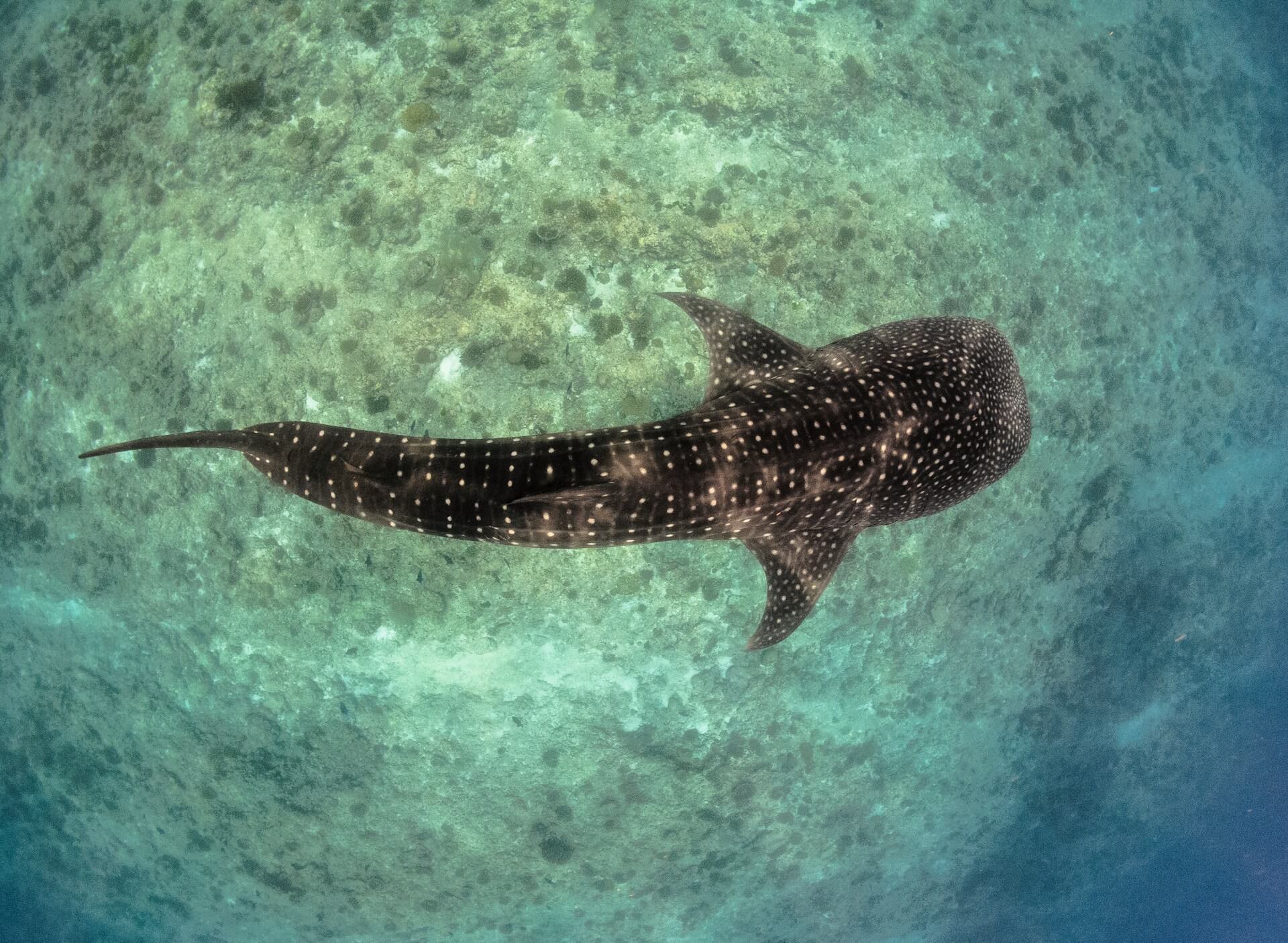
Researchers use photographs submitted by divers and snorkellers to identify individual whale sharks by the unique pattern of spots on their bodies – it’s kind of like a human fingerprint. Check out Shark Guardian or Wildbook for Whale Sharks if you want to get involved.
These images help scientists monitor movements, estimate population sizes and better understand migration patterns. It’s information that would be difficult for scientists to collect alone on such a large scale.
Perhaps most importantly, close encounters with any wildlife species often inspire people to care more deeply about their conservation. On a personal note, we know our passion for ocean conservation is a direct result of the experiences we’ve had diving all over the world.
The same is true for whale sharks. It’s one thing to read about them; it’s another to watch one swim past just a few metres away.
When Whale Shark Tourism Becomes a Problem
The benefits of whale shark tourism depend entirely on how it is managed. In some destinations, the rapid growth of tourism has led to overcrowding, poor regulation and practices that prioritise visitor experiences over animal welfare.
Talking to ocean-loving travellers, we’ve heard some horror stories about whale shark encounters. Waaaay too many boats clustered around individual animals, preventing their escape, and tourists jumping atop one another to get in the water, fearful that they’ll “miss out”.
Some encounters are more like busy swimming pools than respectful wildlife experiences. We’re talking large groups, pool noodles splashing about and lots of shouting at the water’s surface.
Sometimes people chase the animals to get as close as possible or block their path, often in pursuit of getting the “perfect shot”.
And although most operators prohibit touching, it still happens. Touching whale sharks can damage the protective mucus coating covering their skin, increasing their susceptibility to disease and parasites.
We’ve even heard stories of tourists attempting to ride whale sharks and can’t imagine the stress that causes.
Ethical whale shark tourism operators call this kind of behaviour out. In fact, they wouldn’t let it happen in the first place. But in some destinations, there’s fear around reprimanding tourists, particularly when they’re bringing much needed income to a region.
The Controversy Around Feeding
Perhaps the most debated aspect of whale shark tourism is artificial feeding. In some locations, whale sharks are fed by local tourism operators to guarantee reliable encounters.
While this provides exceptional opportunities to see the animals up close, many scientists and conservationists are concerned that regular feeding may alter natural behaviours.
Some are worried that instead of following their usual migratory routes in search of seasonal plankton blooms, whale sharks may remain in one area for longer periods because food is readily available.
Researchers have also raised concerns that regular feeding could increase the risk of boat strikes, expose whale sharks to higher levels of stress and change the way they interact with both humans and other marine life.
However, long-term studies at some provisioning sites have shown that many whale sharks continue to undertake their normal migrations, despite returning seasonally to feeding locations. In other words, while feeding appears to influence their behaviour locally, it may not completely override their natural movement patterns.
Scientists continue to investigate the long-term effects of whale shark feeding. As far as we understand, there is still no universal consensus on how significant these behavioural changes are or what they might mean for populations as a whole.
It’s also important to take into account the socioeconomic dimension of this debate. In places where whale shark tourism has become a major source of income (leading to whale sharks becoming a valuable living resource worth protecting), some argue that slight alterations to natural behaviours is a small price to pay.
Responsible Whale Shark Tourism
Rather than asking whether feeding is simply “good” or “bad,” many scientists argue that the more useful question is how tourism can be managed to maximise conservation benefits while minimising impacts on the animals.
As divers who love up close encounters with marine life, this is something we’re eager to promote.
Whether whale sharks are being fed or encountered “naturally”, the focus should be on ensuring strict limits on the number of boats and swimmers, maintaining respectful viewing distances and avoiding overcrowding.
Ongoing scientific monitoring is also key to better understand whale sharks and help reduce disturbances.
If you’re thinking about a whale shark encounter, look for operators that:
- Limit the number of swimmers per shark
- Restrict the number of boats at each encounter
- Maintain minimum viewing distances
- Prohibit touching or “riding” whale sharks
- Ban flash photography where appropriate
- Support scientific research and monitoring
Choosing ethical operators sends a clear message that you value responsible wildlife experiences over high-impact, unnatural encounters.
When swimming with whale sharks, never touch the animals. Always stay beside the shark, rather than directly in front of it, blocking its path. Follow your guide’s instructions at all times and keep any noise or splashing to an absolute minimum. We understand that’s sometimes easier said than done in such an exhilarating situation!
It can be tempting to try and get close to a whale shark for a selfie, but never do this if it’s at the expense of the animal’s wellbeing. Personally, we think the most memorable wildlife encounters are the ones you experience completely in the moment, rather than trying to get photographic evidence as “proof”.
If you’re applying sunscreen before entering the water, always opt for a reef-safe one – chemical-lade lotions can have devastating impacts on marine life.
The Best Places in the World for Ethical Whale Shark Encounters
If your goal is to see whale sharks while supporting responsible wildlife tourism, these destinations are widely regarded as some of the best options.
1. Ningaloo Reef, Australia
Each year, whale sharks arrive to feed in the nutrient-rich waters off Western Australia and Ningaloo Reef is often considered the gold standard for ethical whale shark tourism.
Tours operate under a strict licensing system, with limits on the number of boats and swimmers allowed, and the whale sharks are not fed or lured. Guides provide detailed briefings, swimmers must keep a minimum distance and touching or obstructing the animals is absolutely prohibited.
Keep in mind scuba diving with whale sharks is illegal on Ningaloo Reef – it’s all snorkelling and swimming here!
Check out Ningaloo Discovery or Exmouth Dive and be aware that tours book out early during school holiday periods.
Best time to visit: March to July
2. La Paz, Mexico
The waters around La Paz in the Sea of Cortez are home primarily to juvenile whale sharks during the cooler months. The calm, shallow waters make this a great place for first-time whale shark encounters in Mexico.
Access is carefully managed, with designated viewing zones, licensed operators and restrictions on the number of boats permitted in the area. Keep in mind that whale shark experiences in La Paz are restricted to snorkelling (not diving) to minimise disturbance.
Check out Whale Shark Diaries for more info.
Best time to visit: October to April
3. Maldives
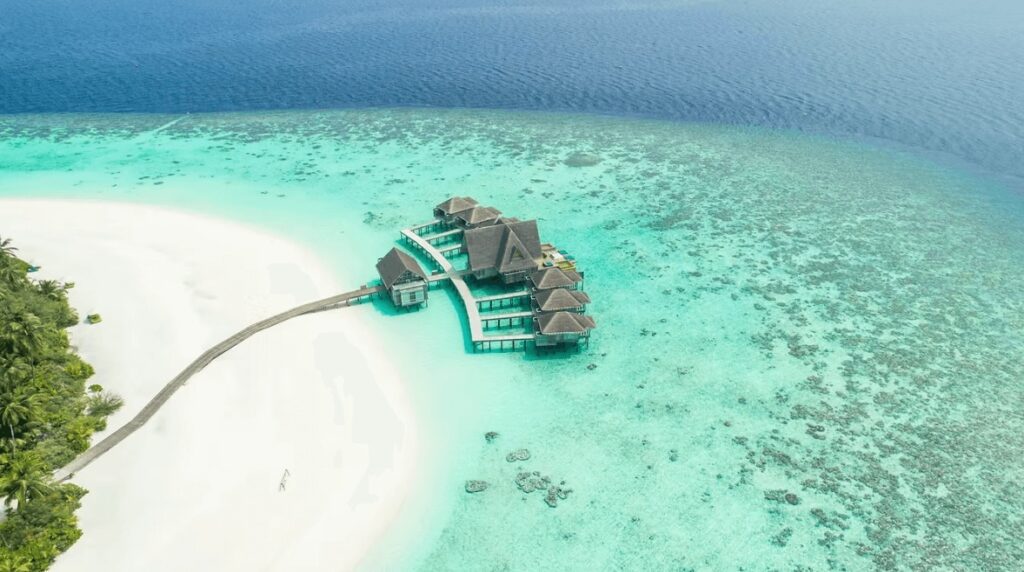
The Maldives offers year-round opportunities to encounter whale sharks, particularly around the South Ari Atoll.
Many operators follow a code of conduct developed with marine conservation organisations, focusing on respectful wildlife interactions and citizen science. Try to select an operator that actively participates in research and conservation, ensuring your trip contributes to protecting the species.
Check out Maldives Whale Shark Research to learn about their expeditions.
Best time to visit: Year-round, with seasonal variations by atoll
4. Mafia Island, Tanzania
Mafia Island remains one of the quieter destinations for whale shark encounters, offering a more relaxed experience than many better-known hotspots.
The whale sharks here arrive here to feed, and many local operators work closely with conservation organisations to monitor the population and promote responsible tourism practices.
Because visitor numbers are generally lower, whale shark encounters in Tanzania are rarely crowded.
Check out Afro Whale Shark Safari for inspiration.
Best time to visit: October to February

5. Donsol, Philippines
Before whale shark tourism expanded elsewhere in the Philippines, Donsol was setting the standard, Today, it has established itself as a model for community-based, non-feeding whale shark tourism.
Encounters depend entirely on natural sightings, meaning there are no guarantees. But if you’re a conservation-focused traveller, you’ll appreciate that!
Strict guidelines govern the number of swimmers, approach distances and interaction times.
Check out Donsol Whale Shark Adventures & Tours for more info.
Best time to visit: November to June
6. Galápagos Islands, Ecuador
The Galapagos offers one of the world’s most incredible opportunities to dive with whale sharks in what is a truly wild setting.
Most encounters occur while scuba diving around Darwin and Wolf Islands, where large female whale sharks are occasionally seen cruising through the deep, nutrient-rich waters.
These are not predictable tourism encounters but natural pelagic sightings, making them particularly special for experienced divers.
Check out Galapagos Shark Diving for more info about responsible expeditions.
Best time to visit: June to November
7. Cenderawasih Bay, Indonesia
Cenderawasih Bay in Papua offers one of the world’s most unique whale shark experiences.
Here, whale sharks are regularly seen around traditional floating platforms, known as bagans, where they feed on small baitfish and discarded bycatch from local fishers. This relationship has developed over many years and is closely tied to long-standing local fishing practices, rather than tourism.
Several scuba diving liveaboards in Indonesia offer trips to Cenderawasih Bay that are operated in accordance with ecotourism guidelines.
Check out Coralia (a liveaboard connected to Papua Explorers Resort) for inspiration.
Best time to visit: June to October
Is Whale Shark Tourism Good or Bad?
The reality is that whale shark tourism can be both. Poorly managed tourism risks disturbing wildlife, altering natural behavious and encouraging unsustainable practices. All the things we don’t want to happen.
Well-managed tourism, on the other hand, can provide strong incentives for conservation, create sustainable livelihoods for coastal communities and fund valuable research. It can also inspire people to protect the ocean and its marine inhabitants.
At the end of the day, the difference lies in the management of whale shark tours and where priorities lie. It also depends on the kind of experiences tourists are willing to support.
As travellers, the choices we make matter. Every time we book a tour, we’re supporting a particular way of operating. By choosing businesses that prioritise animal welfare and conservation, you’ll be helping to encourage higher standards across the industry.
For us, the best wildlife encounters aren’t measured by how close we get or the photos we come away with. They’re measured by knowing that our presence didn’t change the animal’s behaviour…and may have played a small role in ensuring the species’ long-term survival.

PLAN YOUR TRIP WITH OUR FAVOURITE RESOURCES:
Find hotels and resorts via Booking or Agoda
Book tours and experiences via Viator or GetYourGuide
Find a rental car via Discover Cars
Book flights via Kiwi or Booking
Search for buses and trains via 12Go or Omio
Get travel insurance via SafetyWing
Buy a digital eSIM with Airalo
By purchasing through our links, you’ll be supporting our website at no additional cost to you


We are a team of passionate divers and surfers with decades of combined experience in the water and travelling to all corners of the globe.
After years of chasing waves and descending into the deep blue, we’ve created this resource to highlight sustainable surf camps, eco-dive resorts and conservation-focused ocean trips to help inspire your next adventure.
Eco Ocean Escapes was born out of a love of the ocean, an obsession with travel and a concern about the impacts of our adventures on the environments we explore.