Scuba Diving in Micronesia: Palau + Kosrae + Guam + Yap + Pohnpei + Chuuk
Planning a dive trip to Micronesia? Discover everything you need to know about scuba diving in Micronesia, from the best dive spots to highly-rated Micronesia dive resorts.
Scattered between the Philippines and Hawaii, Micronesia is a little-visited region in Oceania. It encompasses thousands upon thousands of tiny islands and atolls dotted across the Pacific Ocean.
Politically, it is organised into the Federated States of Micronesia, which comprises the four island states of Pohnpei, Kosrae, Chuuk and Yap. Additionally, there is Guam, a U.S. territory, and Palau, an island nation within the Micronesia region.
Each one of these remote island groups has developed its own unique identity and traditions, making Micronesia ideal for adventurous travellers seeking an island-hopping experience.
Beyond its fascinating cultures and tropical landscapes, Micronesia is a dream dive destination. It boasts crystal clear lagoons, healthy coral reefs and some of the best wreck diving in the world.
While diving in Palau, you can discover rare and elusive critters amidst paradisiacal topside scenery. Meanwhile, Chuuk Lagoon wreck diving offers up close encounters with World War II planes, tanks and ships.
In this article, we’ll highlight 6 of the best places to dive in Micronesia, including what you can expect to see in each. Discover the ideal time to visit the island groups and the best dive resorts in Micronesia for an incredible underwater vacation.
Looking for eco-dive resort inspiration further afield? Check out 13 of our favourite sustainable scuba stays around the globe.
Disclosure: This article contains affiliate links, meaning we earn a small commission when you make a purchase. Affiliate links cost you nothing and ensure our content stays free!
Palau
Located in the far-flung reaches of the western Pacific Ocean, Palau comprises around 500 distinct landmasses.
Jungles cloak the island interiors, concealing hidden waterfalls and moss-covered rock formations. Meanwhile, towering stone monoliths stand as silent remnants of Palau’s cultural heritage.
It’s geographically part of Micronesia, although it’s not politically part of the FSM. Regardless, diving in Palau is up there with the best in the region!
With its turquoise lagoons, crystalline waters and healthy coral reefs, Palau boasts some surreal and otherworldly underwater landscapes. Among the most famous of these are the UNESCO-listed Rock Islands.
Its signature blue holes, dramatic drop-offs, mysterious caverns and winding channels create an aquatic playground that continually captivates and thrills.
Palau boasts over 1400 species of corals and around 500 different fish – its marine diversity is staggering! From whale sharks to hammerheads and manta rays, diving in Palau will leave you awestruck by the archipelago’s sheer abundance and variety of pelagic creatures.
For in-the-know scuba enthusiasts, Palau has well and truly cemented its status as one of the best places to dive in Micronesia. What sets Palau apart is its exceptional underwater visibility, which is quite unusual for a location with nutrient-rich waters and strong ocean currents.
For more info about planning a dive trip to Palau, check out our detailed article here.
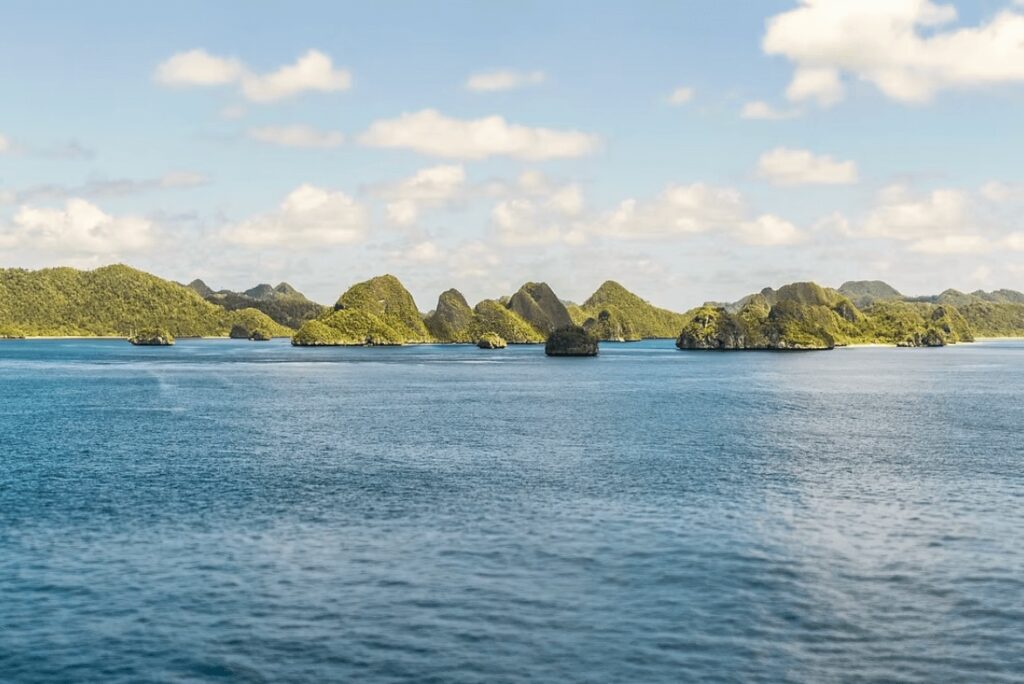
Best time to dive in Palau
Scuba diving in Palau can be enjoyed year-round. But the best time to visit is during the dry season from October through May.
During these months, the water temperatures are delightfully warm, typically ranging between 27 and 30°C (81 and 86°F). A lightweight 3mm wetsuit is more than sufficient for all-day diving.
Best eco-friendly dive resort in Palau
Palau Pacific Resort
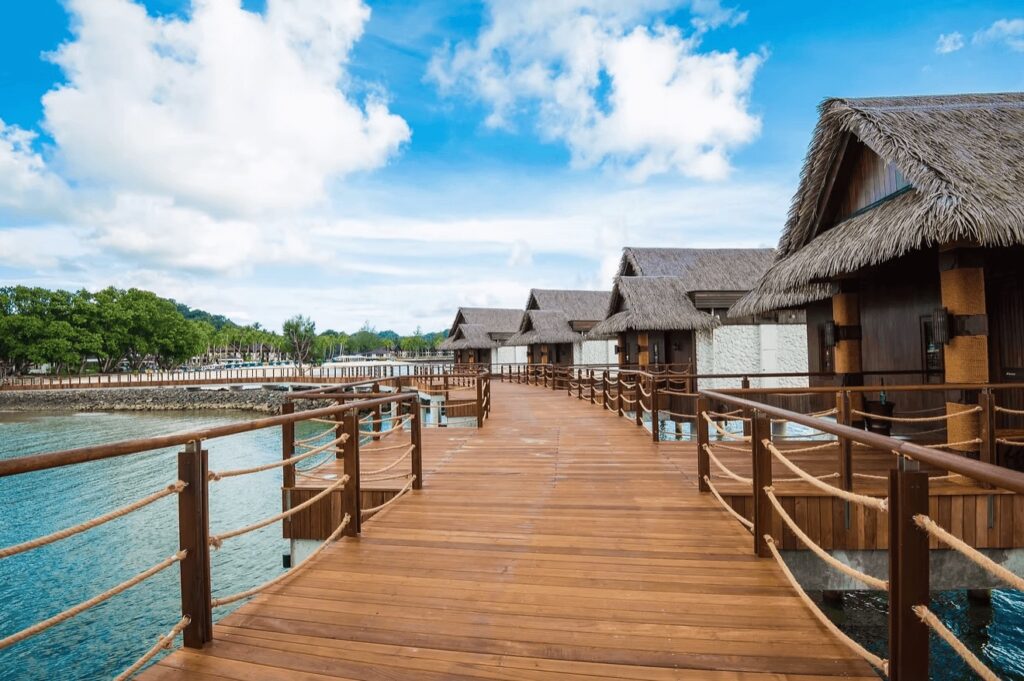
Nestled among 64 acres of tropical gardens is the Palau Pacific Resort, one of the best hotels for divers in Palau. It seamlessly blends luxury accommodations with the natural beauty of its stunning island setting.
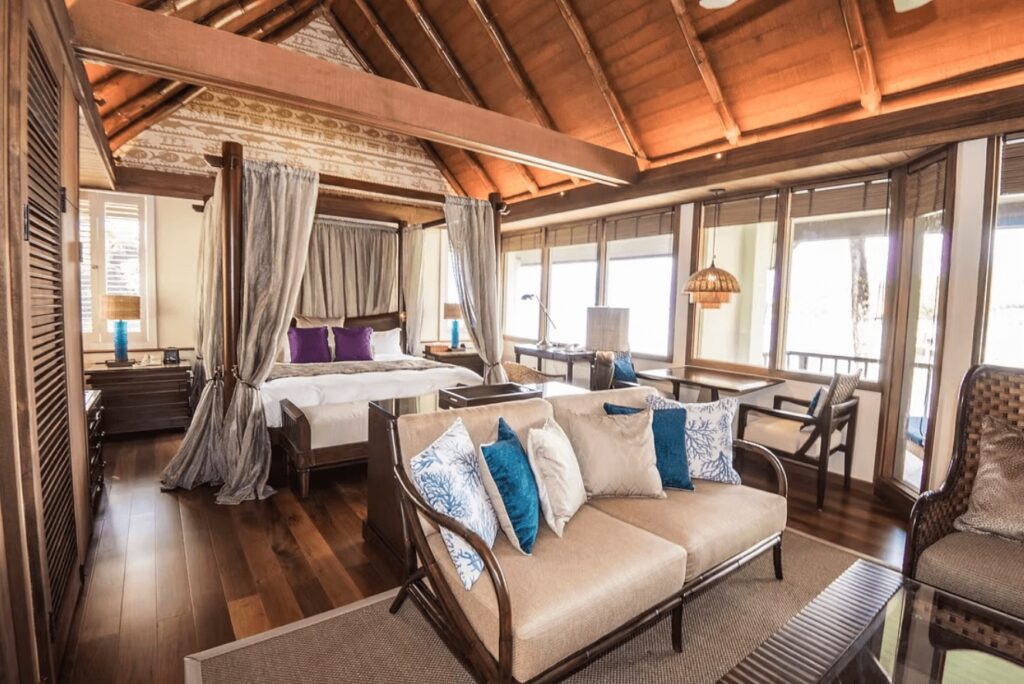
The Palau Pacific Resort features 160 unique guest rooms, suites and overwater bungalows. None of its buildings is taller than the tallest coconut tree to ensure a low-impact experience.
While staying at this highly-rated Palau dive resort, guests can indulge at the serene spa or swim in the infinity pool. There’s also a large hot tub, which overlooks the sparkling waters of the Pacific Ocean.
When hunger strikes, the resort’s acclaimed restaurant serves up regional cuisine that highlights the fresh, locally sourced ingredients of Palau.
This luxury Palau resort is not only an oasis but also a primary supporter of conservation efforts to protect the island’s biodiversity. It overlooks a marine sanctuary established by Koror State Law in 2002, which encompasses a fringing reef that’s home to several endangered species.
Recognising Palau’s frequent water shortages, the resort has taken measures to ensure a sustainable water supply, drawing from its own rainwater catchment system and deep wells.
Additionally, this eco-friendly Palau resort has invested in solar power generation and an innovative plastic-to-oil conversion system that transforms discarded plastic into fuel for its operations.
Kosrae
Tucked away in the vast expanse of the Pacific Ocean, the remote island of Kosrae remains a well-kept diving secret. This small landmass has been affectionately described as an “undeveloped Tahiti” – Kosrae really is a paradise on Earth!
Despite its diminutive size (Kosrae spans just 12 kilometres at its furthest points), the island’s underwater realm is nothing short of captivating. The sloping benthic environment is draped in a diversity of coral growth, with nearly every inch blanketed in colourful displays.
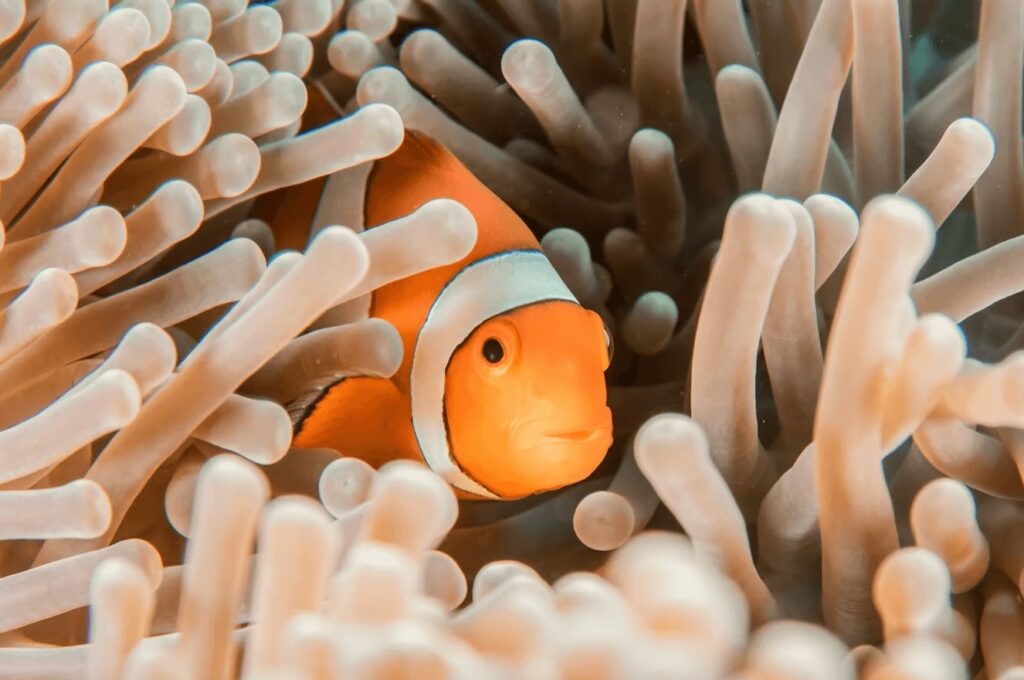
Amidst this seascape, a sprinkling of anemones provides the island’s most reliable and enchanting attraction – the captivating clownfish. Three species in particular – the tomato clownfish, Clark’s clownfish and pink clownfish – can be reliably spotted. They make for stunning photographic subjects!
Venturing a bit deeper, diving in Kosrae may reveal the undulating forms of crinoids swaying in the current or glimpses of giant Pacific groupers prowling the reef.
And for those with a bit of luck, you may see blacktip reef sharks patrolling the edge of visibility or grey reef sharks playing in the current.
For more info about the ethics of shark diving, check out our detailed article here.
Best time to dive in Kosrae
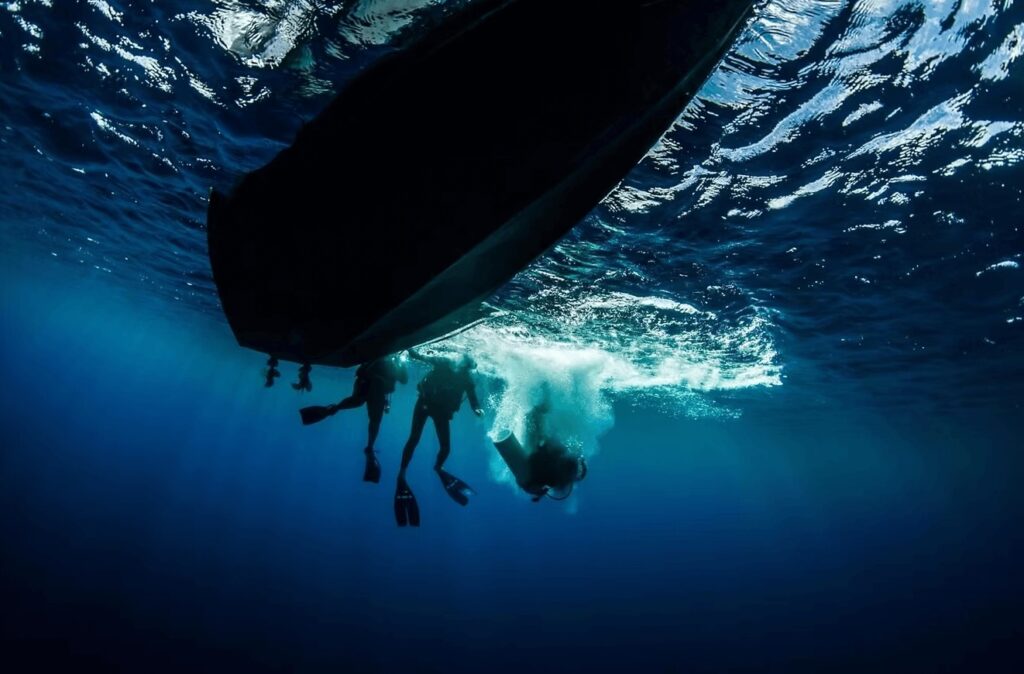
The water temperature around Kosrae remains consistent, holding steady at a comfortable 28°C (82°F) year-round.
During the summer months (June through October), the ocean is generally calmer and the currents more gentle. This is generally considered the best time for diving in Kosrae.
In contrast, the winter season (late November to May) can bring increased wind and stronger ocean currents, especially along the southern and western sides of the island.
While these conditions may limit accessibility to some dive sites, they also attract larger pelagic species. Sharks, manta rays and schools of migratory fish are drawn to the nutrient-rich currents.
Best dive resort in Kosrae
Kosrae Nautilus Resort
Featuring just 18 rooms, this intimate Kosrae dive resort is the perfect base for a Micronesia dive vacation. It lies amidst picturesque gardens and is staffed by friendly, attentive faces dedicated to ensuring all your needs are met.
Each of the air-conditioned rooms is outfitted with two double beds. This makes them ideal for couples, families or dive buddies. Additionally, they feature TVs, minibars, and tea and coffee-making facilities.
When you’re not out diving, you can take advantage of the resort’s full-service restaurant and bar. Or enjoy a refreshing dip in the sparkling swimming pool.
Kosrae Nautilus Resort is committed to sustainable practices, recently installing a 40-kilowatt (160-panel) solar system in addition to their existing solar water heaters.
It’s worth noting that this Kosrae dive resort is located on the island’s sheltered side, providing a welcome respite from the trade winds. Its experienced divemasters will ensure you get to the best sites for the day’s conditions.
Guam
Guam is the largest island in the Mariana Islands Chain and the only U.S. territory in Micronesia.
It’s located just south of the Mariana Trench, the deepest point in the world’s oceans. Geologists believe it was formed millions of years ago by the fusion of two ancient volcanoes that have since sunk beneath the waves.
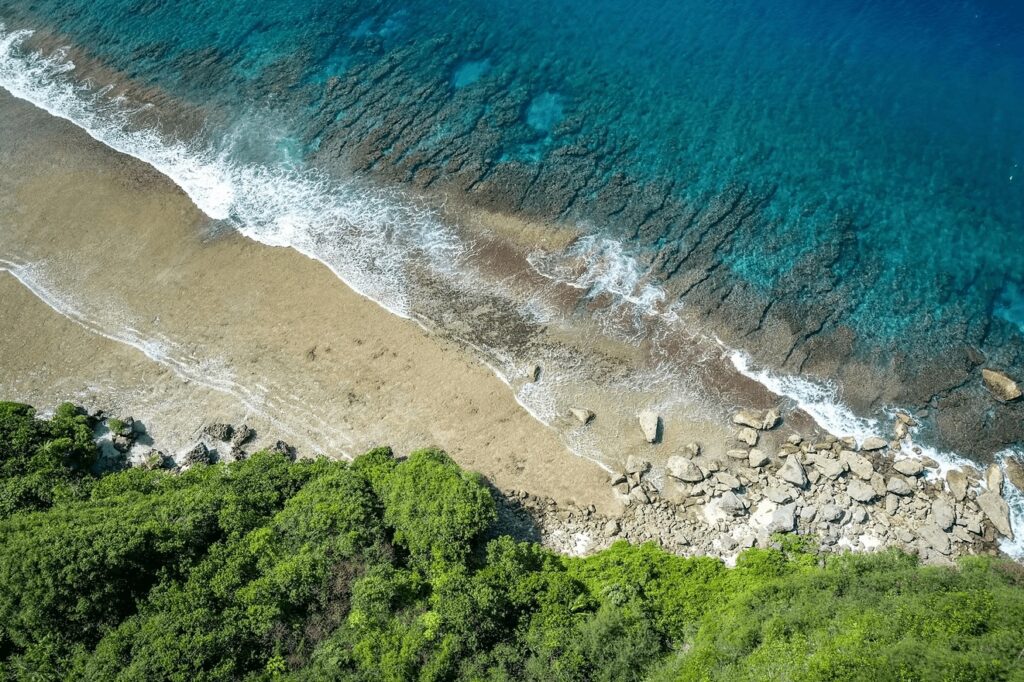
Surrounding Guam is an extensive coral reef table, interrupted by deep water channels that allow access to the stunningly clear waters for which the area is renowned.
Along the coastline, rugged cliffs give way to mangrove forests and sandy beaches. Meanwhile, the island’s interior is dominated by high volcanic mountains, cascading waterfalls and traditional villages.
Underwater, diving in Guam is a dream, with over 200 species of coral and an abundance of marine life to discover. There are more than 75 easily accessible dive sites catering to all skill levels, from boat and beach dives to exhilarating drift dives.
Complementing the warm water temperatures is Guam’s incredible visibility.
Whether you’re exploring the historic shipwrecks and aircraft in Apra Harbour or marvelling at the sheer walls and pelagic life just offshore, Guam’s captivating natural beauty makes it one of the best places to dive in Micronesia.
Best time to dive in Guam
Guam’s tropical climate is characterised by warm, balmy weather. Average temperatures hover around 28 to 29°C (82 to 84°F) throughout the year.
While the calmest conditions are experienced from late April to August, the windiest time in Guam is usually between January and early April.
That being said, the majority of Guam’s best dive sites are located on the leeward, or western, side of the island. This means they’re protected from the full force of the winds.
Water temperatures remain relatively consistent throughout the year at 28°C (82°F).
Best dive resort in Guam
Dusit Thani Guam Resort
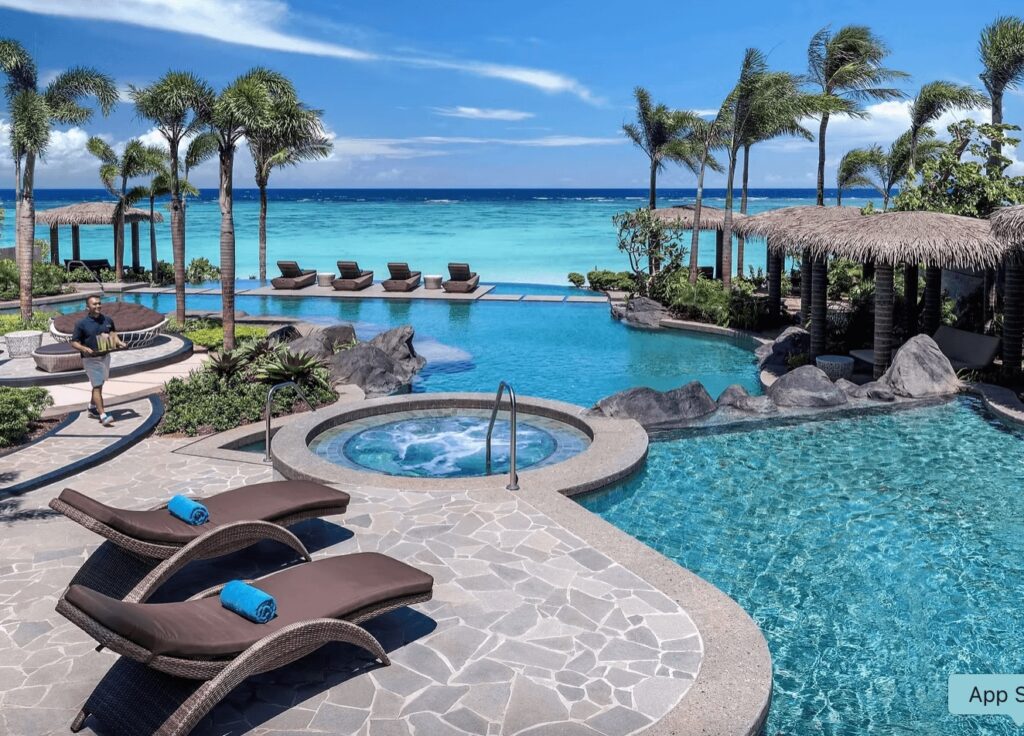
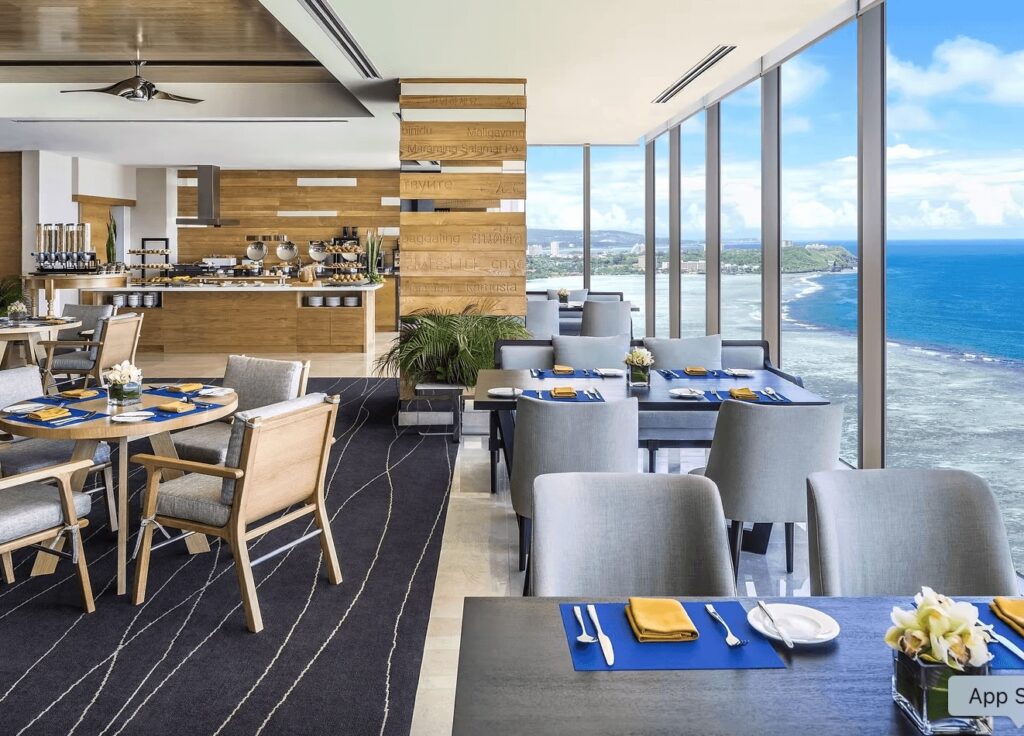
Overlooking Tumon Bay, Dusit Thani Guam Resort blends the luxuries of a five-star property with the warm hospitality that Guam is renowned for.
Situated in this majestic Micronesian locale, the resort enjoys a prime beachfront location. The views across the Pacific Ocean are sublime!
The elegant accommodations, which range from stylish guest rooms to opulent suites and villas, fuse modern conveniences with Thai-inspired design.
In addition to the Devarana Spa (renowned for its innovative therapeutic treatments), the resort boasts an array of dining venues serving cuisines from across the globe.
When it comes to sustainability, Dusit Thani has implemented the Tree of Life program. This is a multi-step initiative that’s guiding its properties towards greater environmental and social responsibility.
In addition to eliminating single-use plastics and connecting with local producers, this eco-friendly Micronesia resort is helping to empower the local community to be active stewards of their environment.
Dusit Thani Guam regularly hosts coral reef and beach cleanups that guests are welcome to participate in. This makes the resort an ideal base for a sustainable Micronesia dive vacation.
Yap
Comprising four islands encircled by a coral reef, Yap is a unique destination. In fact, it was formed by an uplifted portion of the ancient Asian Continental Shelf.
Surrounded by a broad, shallow lagoon, its coastlines are fringed by mangrove forests. Yap’s interiors feature rolling hills blanketed in thick, jungle-like vegetation.
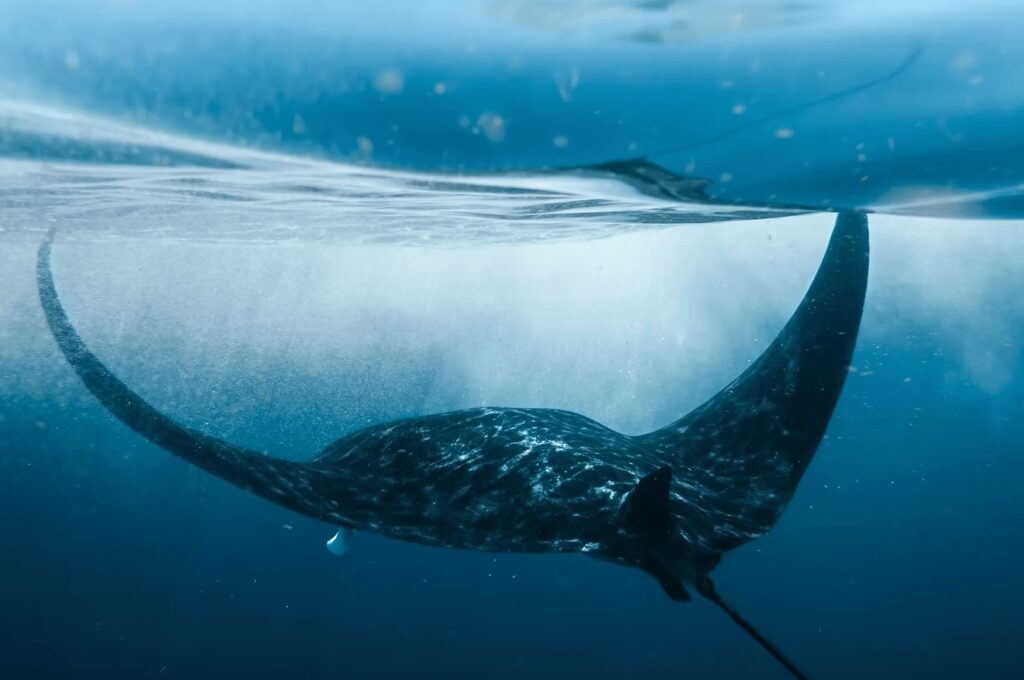
The archipelago’s most famous marine residents are the hundreds of manta rays that frequent its waters. During the mating season between December and late April, these ocean giants congregate in breathtaking numbers. Processions of up to a dozen mantas at a time gracefully cruise back and forth through the channels.
Not to miss is the “Valley of the Rays”. Here, you can witness the magnificent spectacle of these mantas (some with wingspans up to 4 metres wide) gliding effortlessly around the cleaning stations.
Aside from its manta ray encounters, Yap boasts a diversity of underwater environments, from dramatic drop-offs to gentle sloping reefs and thrilling channel drifts. It’s a paradise for underwater photographers, videographers and adventurous divers of all skill levels.
Additionally, there’s the unique opportunity to witness the captivating courtship displays of the mandarin fish.
While it might not be a hugely popular scuba destination, we think all of this combines to make Yap one of the best places to dive in Micronesia.
Best time to dive in Yap
Yap experiences consistently warm and humid conditions that allow for year-round diving. Average daytime temperatures hover around 30°C (86°F) while the ocean waters maintain an average temperature of 28°C (82°F).
Yap’s subtropical climate is characterised by two distinct seasons – the northeast trade wind months from November to May and the calmer summer months from June through October.
Best dive resort in Yap
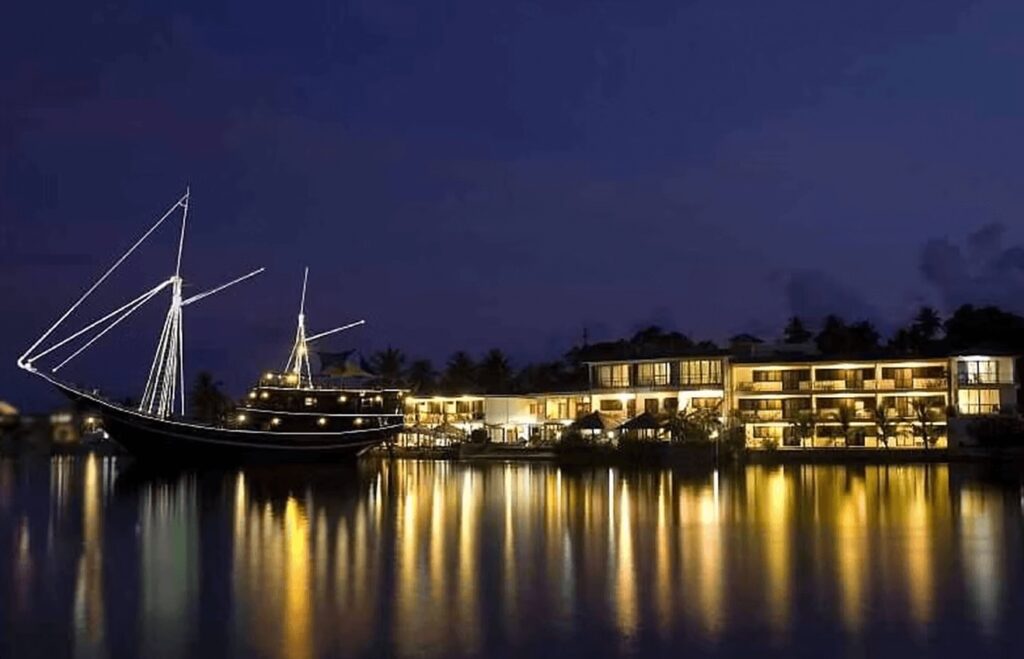
Manta Ray Bay Resort
Established in 1986, this family-owned Yap dive resort caters to just 1,000 divers per year, providing an uncrowded experience.
It boasts breathtaking views across a sparkling bay and the century-old Indonesian schooner “The Mnuw”. This serves as the property’s floating restaurant and bar.
Manta Ray Bay Resort’s well-appointed accommodations range from individually themed rooms to high-end suites. All come with private verandas overlooking the picturesque surroundings.
Guests can enjoy a sunset soak in the rooftop jacuzzi, take a refreshing dip in a secluded dip-pool or indulge with a massage at the Taro Leaf Spa.
Also on site is a full-service dive shop, which offers morning and afternoon dives to experience the best dive sites in Yap.
Since its opening, Manta Ray Bay Resort has been at the forefront of sustainability. Its commitment to eco-friendly practices has only grown stronger over the years.
In fact, it generates more than half of its power from solar panels and has implemented a “plastic-less” ethos by cutting out every disposable plastic product it possibly can.
This eco-friendly Yap dive resort has also spearheaded numerous ecological and marine conservation programs. Notably, it partners with NGOs globally to facilitate important scientific research on Yap’s manta ray populations.
Pohnpei
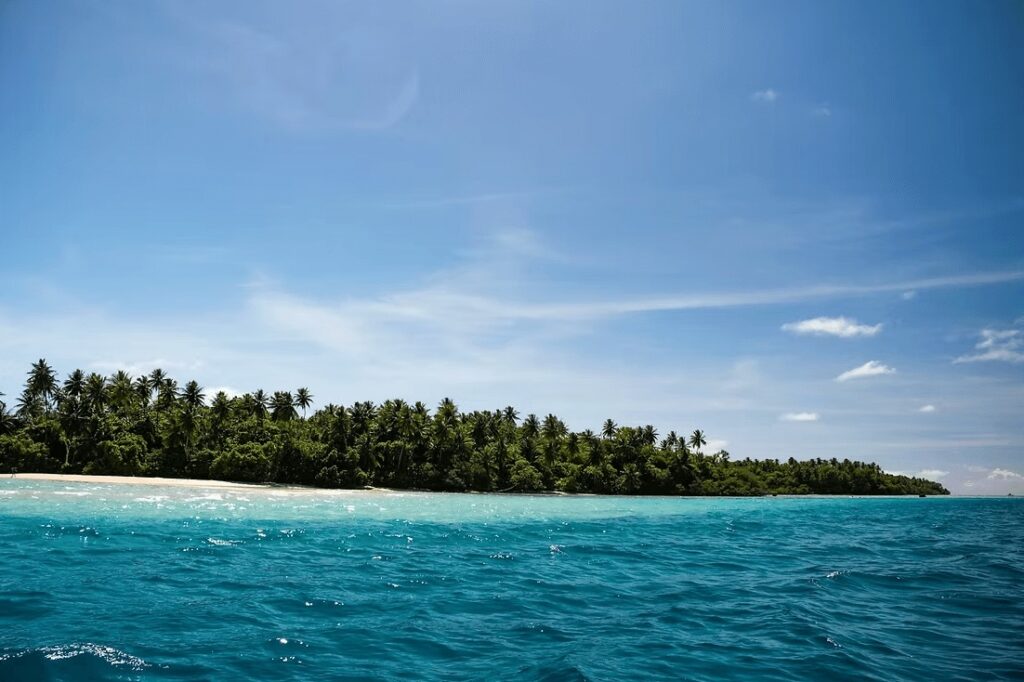
Pohnpei is a mountainous island oasis that boasts an abundance of natural wonders and cultural treasures.
Situated roughly halfway between Hawaii and the island of Guam, it’s home to the capital of the Federated States of Micronesia, the friendly city of Palikir.
Pohnpei rises dramatically from the surrounding ocean. Its jungle-clad interior is crowned by some of the highest peaks in the entire region.
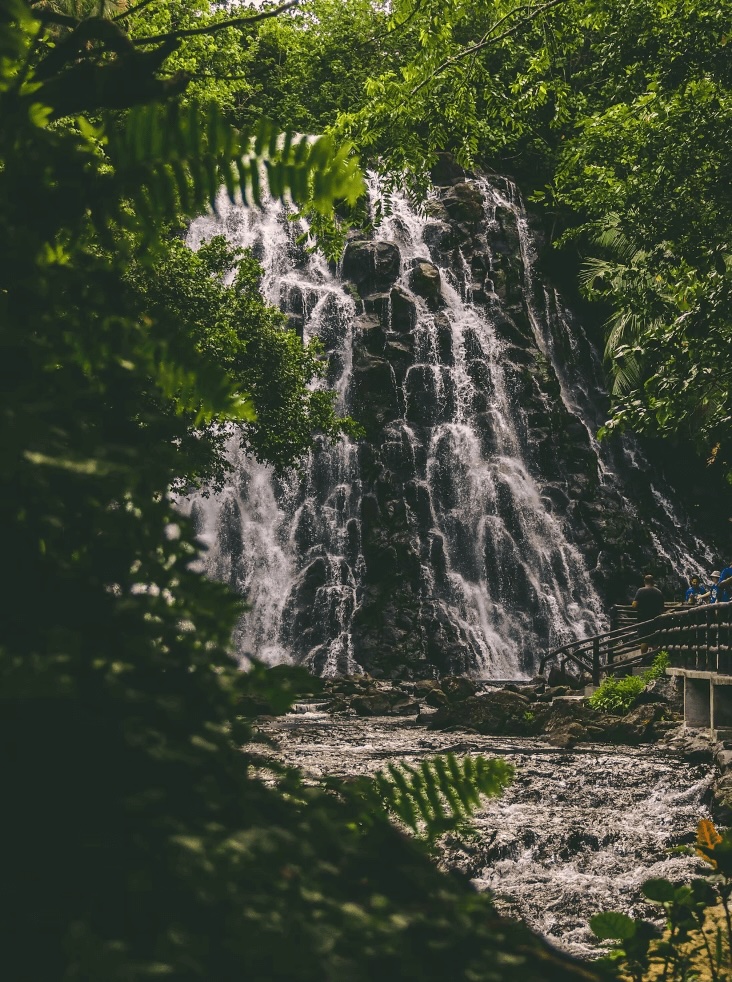
The island’s abundant rainfall feeds a network of more than 40 rivers that cascade down from the mountains through the island’s interior. These form countless waterfalls and freshwater swimming holes.
This nutrient-rich ecosystem has created a flourishing environment of tropical forests and floral diversity. As such, it has earned Pohnpei the moniker of the “Garden Island.”
Along the coast, these waterways have also given rise to thriving mangrove forests that provide a crucial habitat for juvenile marine life. In turn, this attracts a wide variety of larger pelagic species to the island’s offshore waters.
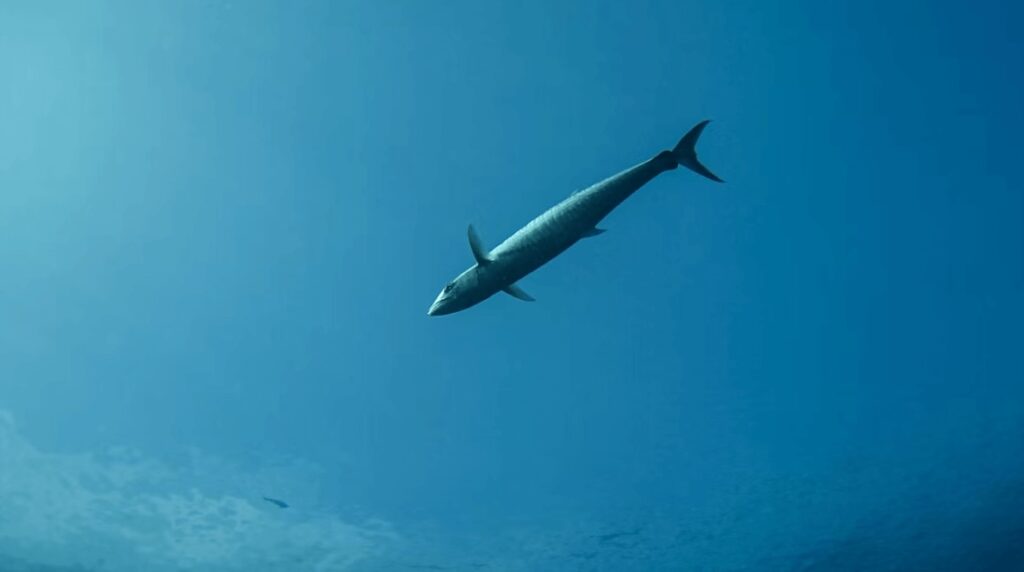
Pohnpei is renowned for its incredibly healthy and diverse underwater ecosystems, protected by a barrier reef surrounding the island. Beneath the waves, divers and snorkellers can encounter an impressive array of marine life, from eagle rays and tuna to barracuda, sharks and brightly-coloured reef fish.
Perhaps the crown jewel of Pohnpei’s underwater world, however, are the island’s resident manta rays. These can be spotted on a near-daily basis.
Additionally, Pohnpei boasts a wealth of ancient cultural treasures, most notably the ruins of Nan Madol on the island’s east coast.
This photogenic archaeological site features a network of man-made islands, basalt temples and burial vaults. They stand as a testament to the ingenuity and sophistication of Pohnpei’s long-ago inhabitants.
Best time to dive in Pohnpei
Pohnpei is renowned for its tropical climate and remains consistently warm and wet throughout the year. Generally speaking, temperatures hover around 30°C (86°F).
While the island experiences rainfall in abundance, the months of January and February tend to see a slight reduction in precipitation. The island’s tropical climate is further shaped by the predictable trade wind patterns that blow across the region, typically from December to March.
Regardless of the time of year, the surrounding waters maintain a consistently comfortable temperature of around 27°C (80°F).
Best dive resort in Pohnpei
Mangrove Bay Hotel
Located just a 10-minute car ride from the airport, this beloved Pohnpei dive resort is home to the Pohnpei Surf Club. It’s a home base for adventure seekers from near and far.
The Mangrove Bay Hotel features a full-service bar and the island’s best sushi restaurant, as well as a dock from where dive boats depart for daily excursions.
Within the hotel itself, you’ll find eight modern rooms. Each has a private balcony, air conditioning and views across the lagoon and surrounding mountains.
Centrally situated, it’s just a stone’s throw from an abundance of bars, restaurants and local markets, making it an ideal setting for a Pohnpei dive vacation.
Chuuk
Formerly known as Truk, this cluster of 16 volcanic islands comprises one of the Federated States of Micronesia’s four states.
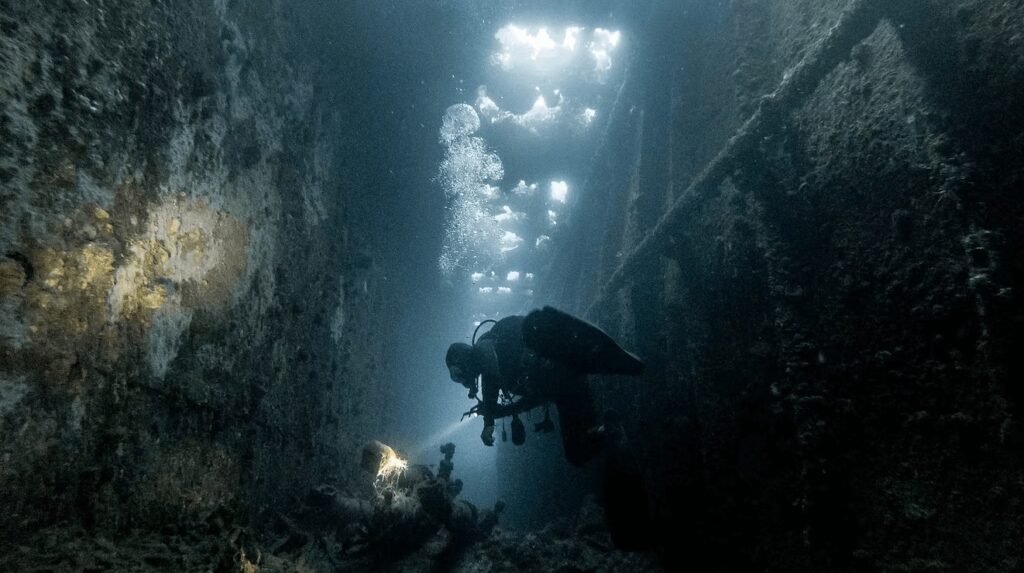
Amongst divers, it’s most famed for the Truk Lagoon. It’s the final resting place for an astounding array of World War II wrecks.
This natural harbour served as the headquarters of the Japanese Imperial Fleet between 1914 and 1945. Today, it is home to more than 70 ships, planes and submarines that were sunk during a 1944 aerial attack by Allied carrier planes.
The atoll’s outer barrier reef is dotted with palm-fringed sand spits that give way to diverse marine ecosystems. Meanwhile, the central lagoon is dominated by volcanic islands that rise dramatically from the fantastically blue waters.
Many of the wrecks are only accessible to technical divers due to their depth. But there are also several shallower sites that are suitable for open-water divers and even snorkellers.
The main island of Weno serves as the commercial and population centre of the region. Here you’ll find hotels catering to the divers and tourists who flock to this underwater museum.
Best time to dive in Chuuk
As with all of Micronesia, Chuuk experiences a tropical climate, with a distinct rainy season stretching from April through December. The rest of the year is relatively dry, ushering in a welcome respite from the heavier rains.
Regardless of the season, the water temperatures in Truk Lagoon remain warm, ranging between 27°C and 30°C (80°F and 86°F). Most divers are comfortable exploring in a 3mm wetsuit.
Best dive resort in Chuuk
Blue Lagoon Resort
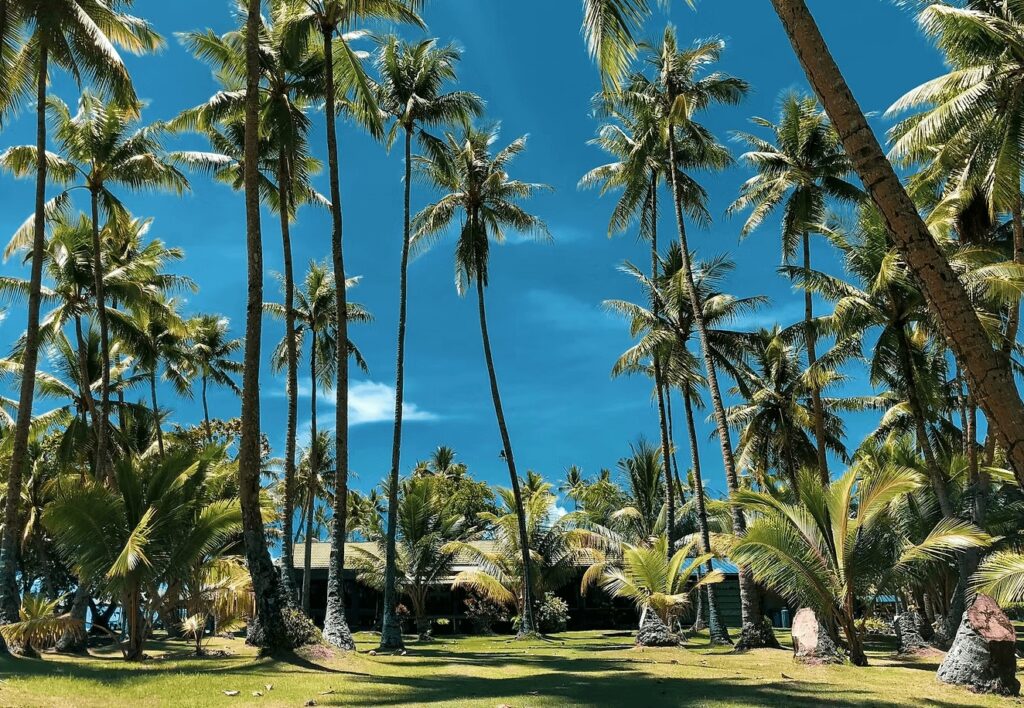
Located on one of Micronesia’s most naturally breathtaking peninsulas, the Blue Lagoon Resort lies at the southwestern tip of Weno Island. Its well-manicured grounds are surrounded by towering palms, creating a typically tropical island getaway in Micronesia.
Guests can indulge in pampering treatments at the on-site spa or enjoy a relaxing drink at the famous Sunset Bar. Newly renovated rooms and a full-service dining room serving both international and local cuisine round out the offerings.
Conveniently located on the resort’s grounds is the Blue Lagoon Dive Shop. It offers daily diving and snorkelling excursions to the Truk Lagoon’s most famous wreck sites.
Kayaks and standup paddleboards are also available for rent if you want to explore the coastline at your leisure.
How to get to Micronesia
If you’re planning to go scuba diving in Micronesia, the most convenient and well-connected airport is Antonio B. Won Pat International Airport in Guam. It receives numerous international flights from all over the world, including the United States, Japan, China and South Korea.
Alternatively, Roman Tmetuchl International Airport in Palau receives flights from select destinations. It can serve as an alternative entry point, particularly for those planning to go scuba diving in Palau.
Similarly, the Yap and Chuuk International Airports (located in their respective Micronesian states) offer more localised connections. They may be preferable for scuba divers with a specific interest in those regions.
Getting around Micronesia is made easy by the extensive flight network of Continental Air Micronesia. Their “Island Hopper” service connects Guam to Hawaii. It makes stops along the way in Micronesian hubs like Majuro, Kwajalein, Kosrae, Pohnpei and Chuuk.
Additionally, Continental Air Micronesia offers another route linking Guam to Manila, with stops in Yap and Palau.
For those looking to reach Micronesia from other parts of the world, there are several viable options. Nauru Airlines and Fiji Airways both operate flights from Fiji to Tarawa, the capital of Kiribati, while Continental Airlines can transport travellers directly from the continental United States to Guam. Nauru Airlines also offers connections from Brisbane and Fiji to Nauru and Tarawa.
PLAN YOUR TRIP WITH OUR FAVOURITE RESOURCES:
Find hotels and resorts via Booking or Agoda
Book tours and experiences via Viator or GetYourGuide
Find a rental car via Discover Cars
Book flights via Kiwi or Booking
Search for buses and trains via 12Go or Omio
Get travel insurance via SafetyWing
Buy a digital eSIM with Airalo
By purchasing through our links, you’ll be supporting our website at no additional cost to you
-
Surfing and Environmental Activism: A Growing Movement
Surfing has always been more than a sport. It’s a culture shaped by natural forces – tides, winds, swells – and a lifestyle that depends on healthy ocean environments. So it’s no surprise that surfers are often engaged environmental activists, at both a local and global scale. As we’ve travelled around the world, we’ve loved…
-
Sustainable Snorkelling Tips for Ocean Advocates
You don’t need a scuba certification to fall in love with the ocean. Snorkelling is an equally magnificent way to explore coral reefs, seagrass meadows and the marine life that calls them “home”. In fact, snorkelling is often a gateway to scuba diving. Or sometimes, it’s the destination. We all snorkelled long before we ever donned…
-
How to Be a More Responsible Underwater Photographer
In recent decades, photography has become unbelievably accessible. Almost everyone carries a camera around with them everyday in the form of a smartphone. Technological improvements have also made underwater photography far more accessible, resulting in powerful images of a world that’s inaccessible to many. A single image of a healthy reef, a shark passing through…
-
Second-Hand Surf Gear: Embracing the Circular Economy
Surfing sells itself as a low-impact pursuit. All you need is a board and the ocean (and if you live where we do, a wetsuit!) What could be simpler? But behind this “at-one-with-nature” facade lies an industry built on short product cycles, seasonal “drops” and a steady turnover of gear due to new “innovations”. The…
-
How Coral Nurseries Work (And How Divers Can Join Planting Programs)
Coral reefs support an extraordinary diversity of marine life, and as divers, being able to explore them is one of life’s great privileges. But coral reefs are also among the most threatened habitats on the planet. Pollution, destructive fishing practices and climate change-induced coral bleaching are all having a devastating impact. In response, coral nurseries…
-
Are Wave Pools Sustainable? The Surf Park Environmental Debate
Nothing compares to surfing in the ocean. Full stop. For us, being at the whim of Mother Nature is a big part of surfing’s allure, and all things being equal, we’d pick the ocean over a wave pool every time. But with coastal communities under increasing pressure and surf breaks being flooded with people, are…
We are a team of passionate divers and surfers with decades of combined experience in the water and travelling to all corners of the globe.
After years of chasing waves and descending into the deep blue, we’ve created this resource to highlight sustainable surf camps, eco-dive resorts and conservation-focused ocean trips to help inspire your next adventure.
Eco Ocean Escapes was born out of a love of the ocean, an obsession with travel and a concern about the impacts of our adventures on the environments we explore.