The Great Pacific Garbage Patch and its affect on marine life
The issue of plastic pollution in the ocean has been a long-standing problem. But it wasn’t until the discovery of a massive garbage patch in the Pacific Ocean in 1997 that scientists understood the magnitude of the problem.
Known as the Great Pacific Garbage Patch, it is the largest of several offshore plastic accumulation zones around the globe.
Since its discovery, researchers have been working tirelessly to measure the size of the patch, understand its origins and find solutions to address the issue.
In this article, discover everything you need to know about the Great Pacific Garbage Patch. We’ll explain what it is, how it’s affecting marine life and the innovative solutions being harnessed to reduce it.
For more insights into marine conservation issues, check out our collection of articles here. They focus on everything from ocean acidification and mercury pollution to coral bleaching.
Disclosure: This article contains affiliate links, meaning I earn a small commission when you make a purchase. Affiliate links cost you nothing and ensure my content stays free!
What is the Great Pacific Garbage Patch?
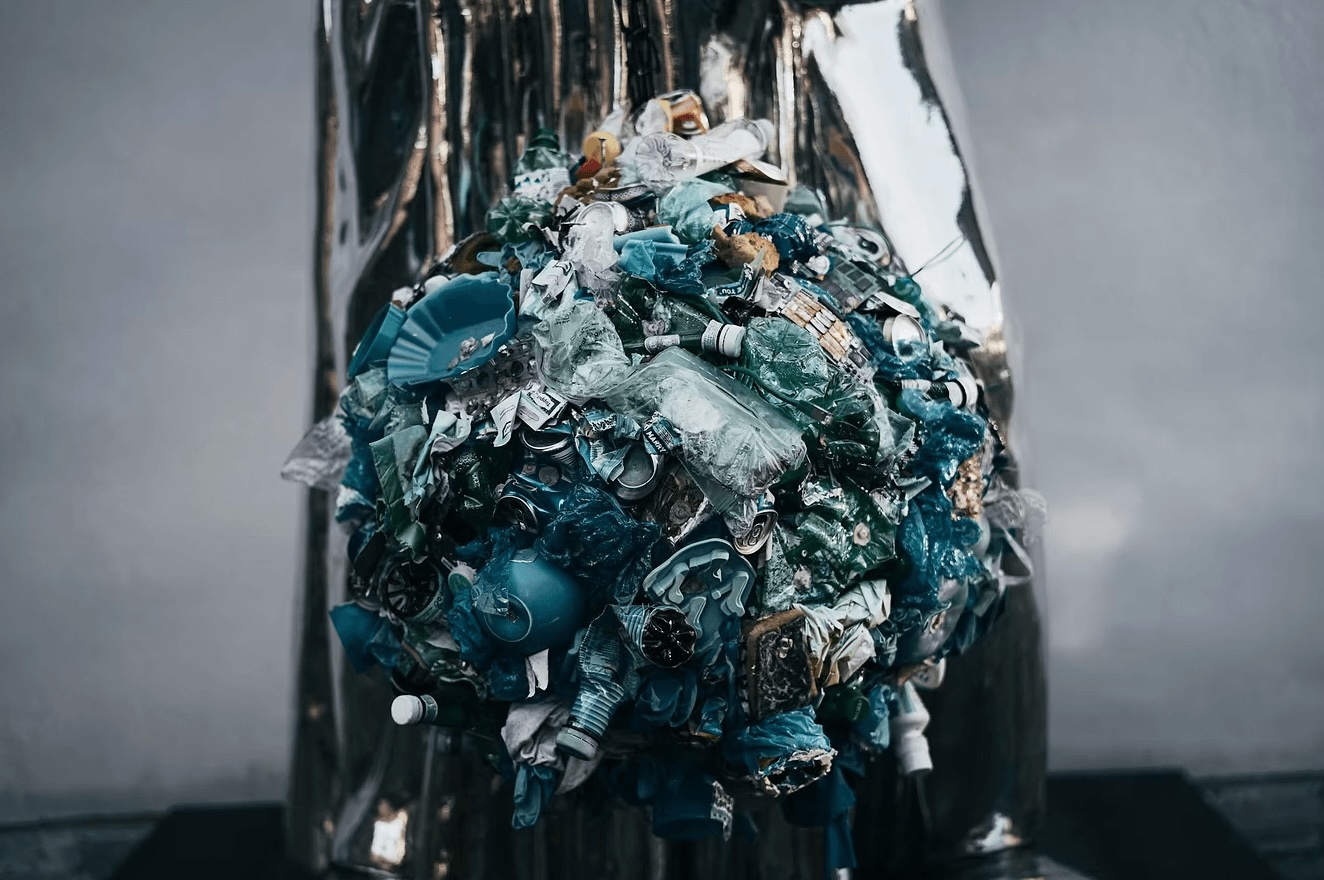
Contrary to popular belief, the Great Pacific Garbage Patch is not a solid island of plastic waste. Rather, it’s a scattered collection of plastics and microplastics.
Sometimes referred to as the Pacific trash vortex, it covers an expansive area of one million square miles in the central North Pacific Ocean.
The existence of the Great Pacific Garbage Patch was predicted by oceanographers for a long time. But it wasn’t until 1997 that it was confirmed by Charles Moore, a racing boat captain who witnessed millions of plastic pieces surrounding his vessel during a yacht race.
The exact location and shape of the patch constantly change due to currents and winds. But scientists predict that it roughly orbits around 32°N and 145°W and is bounded by the North Pacific Subtropical Gyre.
The Great Pacific Garbage Patch is low density and the fact that much of it is suspended as microplastics in the upper water column make it difficult to detect through satellite imagery.
This massive accumulation of plastic is divided into two sections:
- The Eastern Garbage Patch, which stretches between Hawaii and California
- The Western Garbage Patch, which extends between Japan and the Hawaiian Islands
The North Pacific Subtropical Convergence Zone connects these two patches. As warm water from the South Pacific merges with cooler water from the Arctic, it causes the debris to shift between the two areas.
Despite common misconceptions, the Great Pacific Garbage Patch is not a massive island of trash floating in the ocean. Instead, it consists of a dispersed mixture of microplastics and some larger objects like discarded fishing nets. Considering around 70% of marine litter sinks to the ocean floor, much of it remains hidden from view.
Researchers have calculated that the plastic density at the centre of the Great Pacific Garbage Patch is approximately 354 pounds per square mile. It decreases to about 35 pounds per square mile towards the outer edges.
Estimates suggest there are roughly 1.8 trillion plastic pieces dispersed throughout, with a total mass of around 80,000 tons.
To put this in context, that’s roughly equivalent to 500 jumbo jets worth of plastic or 250 pieces of debris for every person on Earth.
How could so much trash be accumulated in our oceans? Approximately 100 million tons of plastic waste is produced globally each year due to plastic’s durability, low cost and versatility in various consumer and industrial products.
Everything from toothbrushes to water bottles and plastic bags are among the items drawn into the North Pacific Subtropical Gyre, ending up in the Great Pacific Garbage Patch.
The impact of the Great Pacific Garbage Patch on marine life
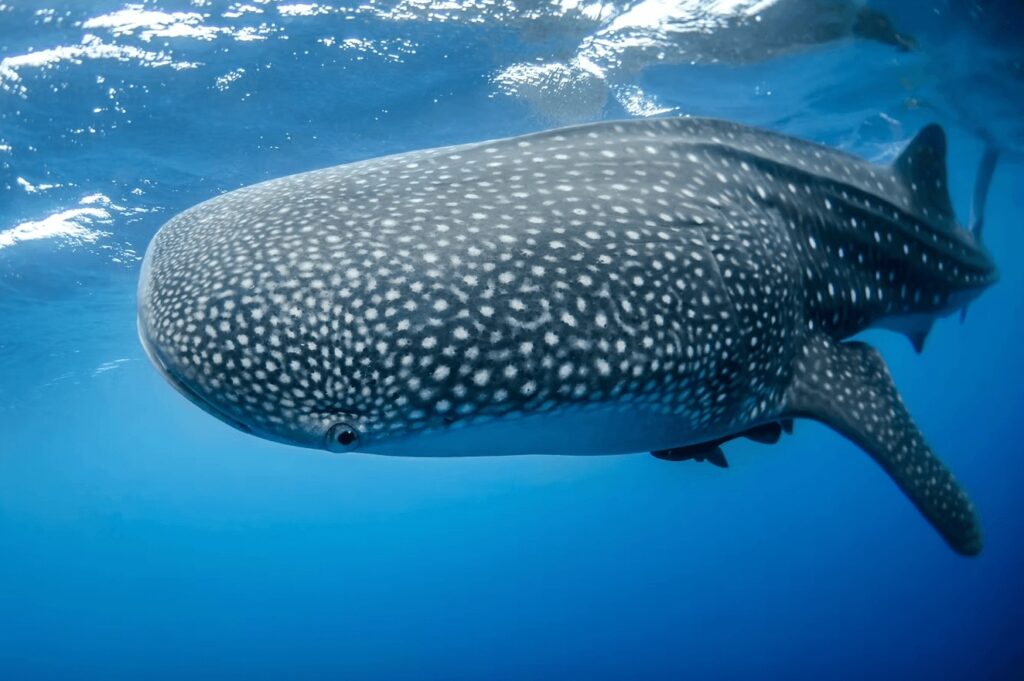
The impact of the Great Pacific Garbage Patch and ocean plastics on marine life is a major concern. This is definitely true when it comes to the entanglement of species in abandoned fishing nets, leading to incidents of what is known as “ghost fishing”.
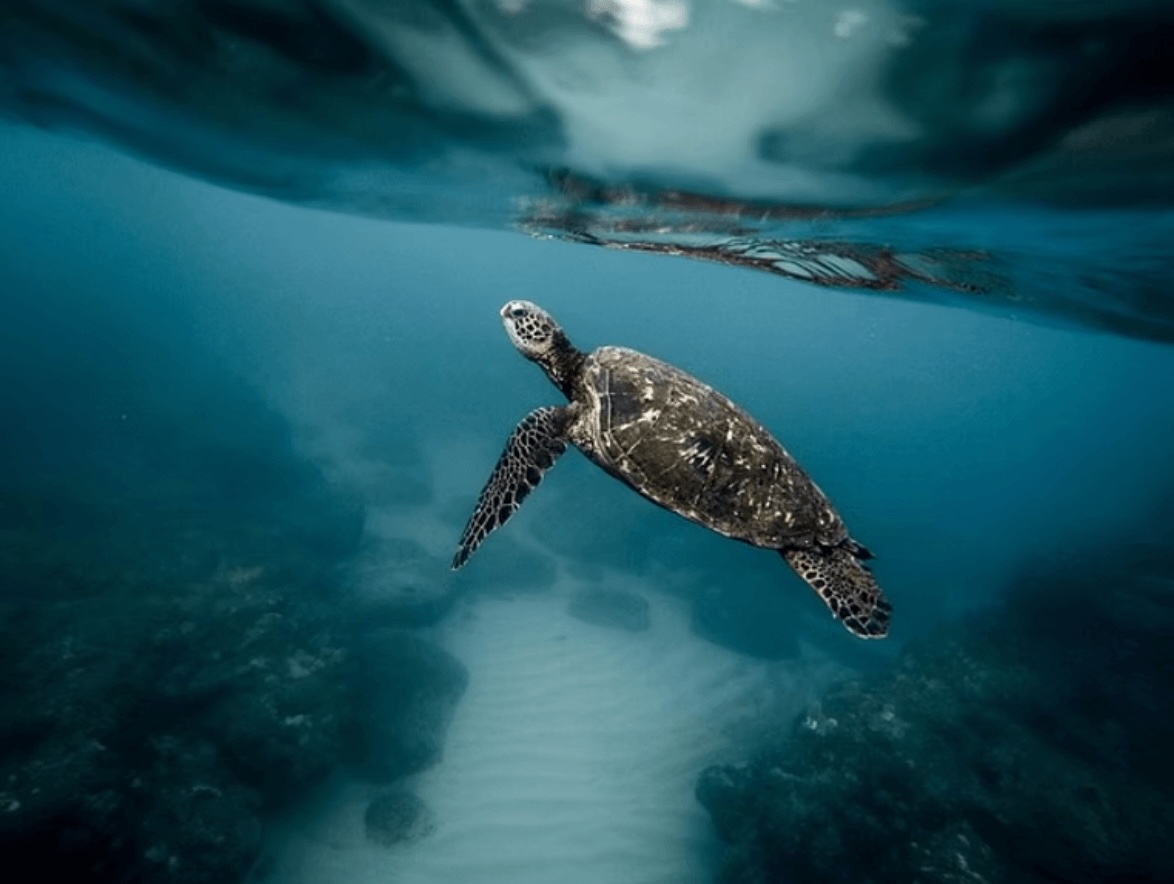
Turtles are often caught in six-pack rings or mistake plastic bags for food. Meanwhile, seabirds like albatrosses are known to accidentally feed plastic resin pellets to their young, resulting in malnutrition and death.
But it’s not just the ingestion of plastic debris that is the issue. Microplastics gathering near the water’s surface obstruct sunlight from reaching plankton and algae. These are essential for producing nutrients in the marine food chain.
This disruption can lead to a decrease in food supply for fish, as well as for large predators like sharks and whales.
Want to learn more about ghost nets and their impact on marine life? Check out our detailed article here.
Exposure to ultraviolet light causes a chemical reaction in the hazardous ingredients used in plastic manufacturing. Over time, this leads to the formation of plastic “tea”. This leachate contains colourants, chemicals, pollutants and oils that pose environmental and health risks for marine-dwelling species.
Many marine animals consume these concentrated toxins, which then bioaccumulate and threaten the seafood industry. Even fish intended for human consumption have been shown to contain tiny pieces of plastic and chemical toxins.
Research has also revealed that coral reefs exposed to plastic pollution are more susceptible to diseases compared to those that are plastic-free.
The presence of plastic on coral creates conditions that are conducive for disease-causing microbes to thrive. This is largely due to low-light and low-oxygen environments.
Additionally, hard plastic waste can physically harm corals (leading to infections) and can obstruct branching corals. This prevents juvenile marine life from utilising them as nurseries.
Discover ways you can support sustainable fisheries and the long-term health of our marine environments.
Cleaning up the Great Pacific Garbage Patch
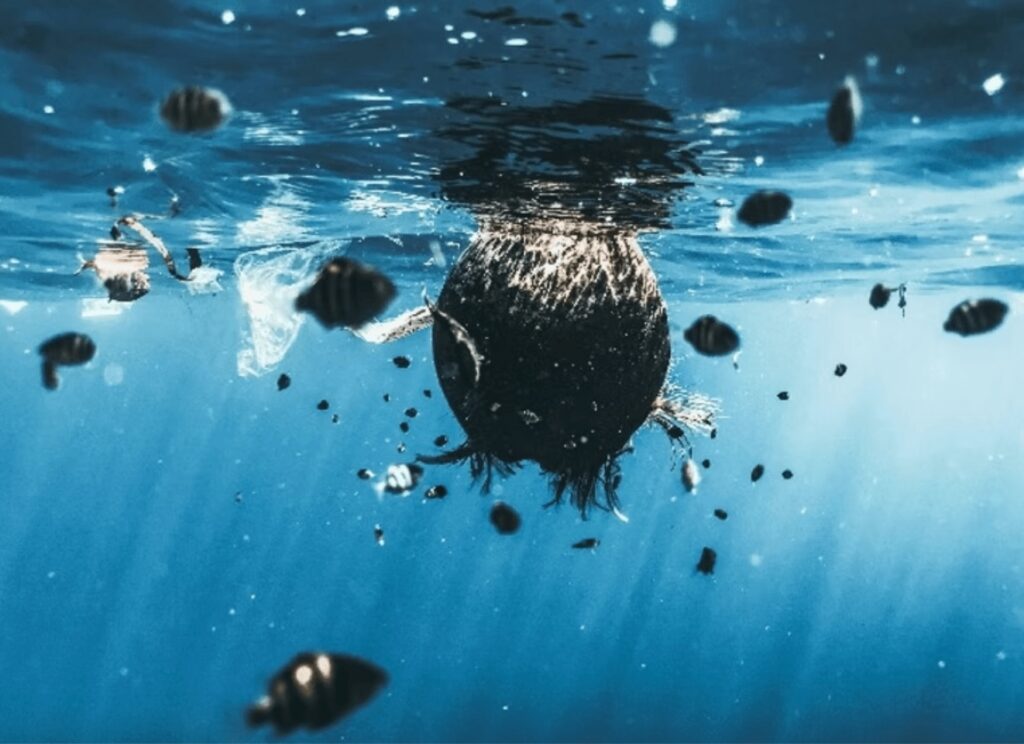
Rehabilitating the Great Garbage Patch poses a significant challenge. This is largely due to its immense size and its location far from any country’s coastline. It makes it difficult for any nation to bear the financial responsibility for its cleanup efforts.
Despite the obstacles, various international organisations have pledged to stop the growth of the Great Pacific Garbage Patch. Charles Moore (who initially uncovered the patch in 1997) is actively involved in raising awareness through the Algalita Marine Research Foundation.
The Ocean Cleanup is one of the organisations that has taken on the fight, led by Boyan Slat. It aims to eliminate 90% of ocean plastic pollution by 2040. The organisation is developing technology to extract plastic from the oceans and intercept it in rivers before it reaches the sea.
One of the primary challenges in addressing the ocean garbage patches is the widespread distribution of plastic pollution. Unfortunately, it covers millions of square miles.
The Ocean Cleanup’s approach is to concentrate the plastic in “artificial coastlines” before collecting and removing it in large quantities. This is achieved through a long U-shaped barrier that directs the plastic towards a retention zone at the end.
The Ocean Cleanup’s current plastic collection exceeds hundreds of tons and continues to grow as it enhances its operations. But the battle is far from over. They are always looking for partners, donors and inventive people to help them reach their 2040 target.
Learn about 7 of the biggest threats facing our oceans and the humans who rely on it for their survival.
How to minimise plastic pollution in our oceans
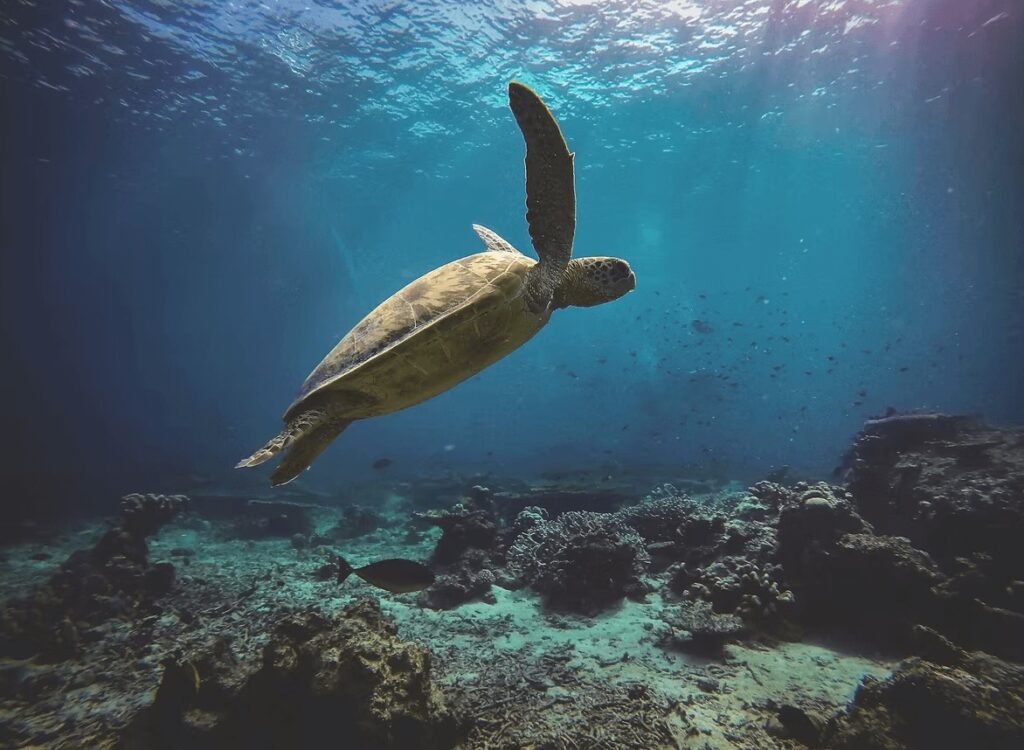
While cleaning up the Great Pacific Garbage Patch is of utmost importance, so too is preventing plastic waste from ending up in our oceans in the first place.
At an individual level, we can all do our bit by reducing our use of single-use plastics and refusing products containing microbeads, as well as being effective recyclers.
If you don’t have adequate recycling facilities in your community, lobby your council to make changes that put the environment first. Additionally, you can support legislation that curbs plastic waste.
Participating in beach and river cleanup initiatives in your area is one way to get hands-on in the fight against plastic waste. You can also help spread the word about ocean plastics with your network of friends or through social media.
Learn more about the lifestyle changes you can make to help reduce ocean plastics here.
When you’re heading off on a surf trip or dive vacation, opt to stay at eco-friendly resorts and camps. Seek out properties that are taking steps to minimise their plastic waste.
This is particularly important in destinations that don’t have adequate waste management facilities and where plastic regularly ends up in waterways.
Many surf camps and dive resorts are playing a leading role in cleaning up their surrounding environments. Some are eliminating plastics from their operations altogether.
By pointing you in the direction of some of the world’s best, we hope that it will inspire you to plan sustainable stays, no matter where in the world you’re travelling to.
PLAN YOUR TRIP WITH OUR FAVOURITE RESOURCES:
Find hotels and resorts via Booking or Agoda
Book tours and experiences via Viator or GetYourGuide
Find a rental car via Discover Cars
Book flights via Kiwi or Booking
Search for buses and trains via 12Go or Omio
Get travel insurance via SafetyWing
Buy a digital eSIM with Airalo
By purchasing through our links, you’ll be supporting our website at no additional cost to you
About the authors
We are a team of passionate divers and surfers with decades of combined experience in the water and travelling to all corners of the globe. After years of chasing waves and descending into the deep blue, we’ve created this resource to highlight sustainably run surf camps, eco-friendly dive resorts and conservation-focused ocean trips to help inspire your next adventure.
Eco Ocean Escapes was born out of a love of the ocean, an obsession with travel and a concern about the impacts of our adventures on the environments we explore. Despite the benefits that surf and dive tourism can bring to local communities, we recognised that ocean-based adventures are not always managed in a sustainable manner.
Through our articles, we hope to inspire those seeking a responsible surf or dive trip that is all about supporting local communities, preserving our coastal environments and the incredible marine species that inhabit our oceans.
-
Surfing and Environmental Activism: A Growing Movement
Surfing has always been more than a sport. It’s a culture shaped by natural forces – tides, winds, swells – and a lifestyle that depends on healthy ocean environments. So it’s no surprise that surfers are often engaged environmental activists, at both a local and global scale. As we’ve travelled around the world, we’ve loved…
-
Sustainable Snorkelling Tips for Ocean Advocates
You don’t need a scuba certification to fall in love with the ocean. Snorkelling is an equally magnificent way to explore coral reefs, seagrass meadows and the marine life that calls them “home”. In fact, snorkelling is often a gateway to scuba diving. Or sometimes, it’s the destination. We all snorkelled long before we ever donned…
-
How to Be a More Responsible Underwater Photographer
In recent decades, photography has become unbelievably accessible. Almost everyone carries a camera around with them everyday in the form of a smartphone. Technological improvements have also made underwater photography far more accessible, resulting in powerful images of a world that’s inaccessible to many. A single image of a healthy reef, a shark passing through…
-
Second-Hand Surf Gear: Embracing the Circular Economy
Surfing sells itself as a low-impact pursuit. All you need is a board and the ocean (and if you live where we do, a wetsuit!) What could be simpler? But behind this “at-one-with-nature” facade lies an industry built on short product cycles, seasonal “drops” and a steady turnover of gear due to new “innovations”. The…
-
How Coral Nurseries Work (And How Divers Can Join Planting Programs)
Coral reefs support an extraordinary diversity of marine life, and as divers, being able to explore them is one of life’s great privileges. But coral reefs are also among the most threatened habitats on the planet. Pollution, destructive fishing practices and climate change-induced coral bleaching are all having a devastating impact. In response, coral nurseries…
-
Are Wave Pools Sustainable? The Surf Park Environmental Debate
Nothing compares to surfing in the ocean. Full stop. For us, being at the whim of Mother Nature is a big part of surfing’s allure, and all things being equal, we’d pick the ocean over a wave pool every time. But with coastal communities under increasing pressure and surf breaks being flooded with people, are…

We are a team of passionate divers and surfers with decades of combined experience in the water and travelling to all corners of the globe.
After years of chasing waves and descending into the deep blue, we’ve created this resource to highlight sustainable surf camps, eco-dive resorts and conservation-focused ocean trips to help inspire your next adventure.
Eco Ocean Escapes was born out of a love of the ocean, an obsession with travel and a concern about the impacts of our adventures on the environments we explore.