Sustainable Surf Tourism and Respecting Local Communities
Surf tourism has exploded over the last two decades. With travel becoming more accessible and social media exposing hidden spots, once-remote breaks in Indonesia, Central America, Morocco and the Pacific Islands are now iconic stops on global surf circuits.
While surf travel brings income, jobs and global attention to coastal towns, it can also disrupt ecosystems, inflate local prices and reshape community identity.
It’s something we’re acutely aware of here at EcoOceanEscapes. While travelling the world to discover new breaks is something we’re passionate about, it’s not without its downsides.
So what can we all do to ensure that our global adventures aren’t leaving destruction in their wake?
If you’re a travelling surfer, understanding your impact – and how to minimise harm – is important in more ways than one.
In this article, discover what every surf traveller should know before paddling out in someone else’s backyard.
Want to reduce your carbon footprint on your next surf trip? Discover everything you need to know about offsetting surf travel.
This article contains affiliate links, which means when you make a purchase through that link, we earn a small commission. Affiliate links come at no cost to you and ensure our content remains free!
Surf spots are local spaces first
Every surf break has a long, local history before travellers ever “discovered” it. Beaches, reefs and river mouths are places where locals:
- Fish and gather food
- Socialise and build community
- Practice cultural or spiritual traditions
- Learn to surf
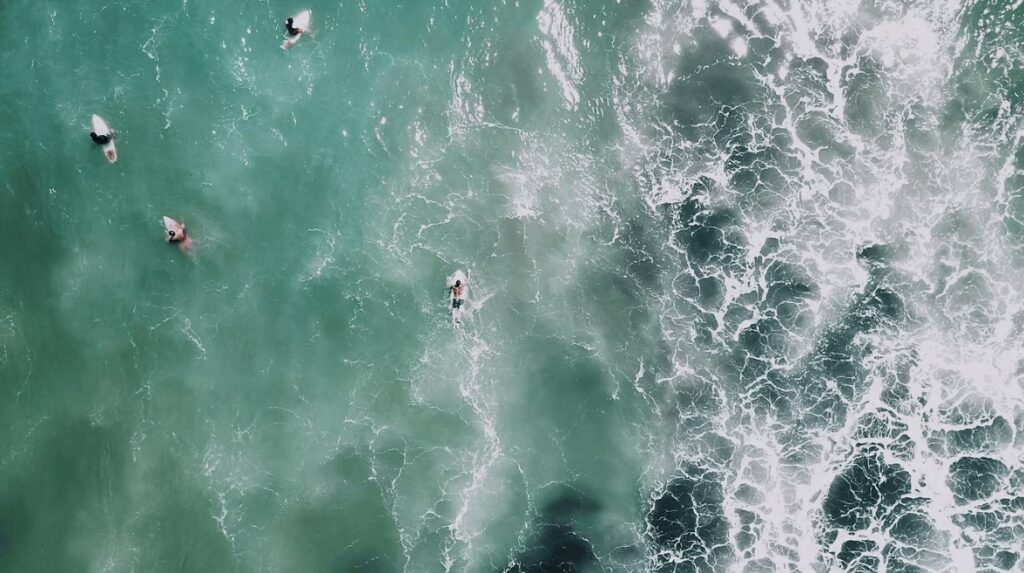
When travellers arrive in large numbers (and without respect for locals), tensions can grow over crowding, land access and changing social dynamics.
How to respect this:
- Learn local etiquette and lineup rules
- Don’t paddle straight to the peak without observing first
- Support local surf clubs, schools and coaches
- Avoid posting “secret spots” online.

2. Tourism can raise local costs
Surf hubs like Canggu (Bali), Taghazout (Morocco), Santa Teresa (Costa Rica) and Byron Bay (Australia) have been transformed in recent years, largely due to their popularity as surf destinations.
All of these spots have seen dramatic rises in rent and land values, as well as pressure for coastal developments.
This often forces locals out of neighbourhoods or reshapes entire economies around tourism. While surf dollars can bring benefits to local economies, it’s also important to be aware of their negative impacts.
As a traveller you can:
- Spend money in locally owned shops and cafes
- Stay in family-run eco-guesthouses rather than large foreign-owned hotels
- Book lessons or surf guiding with local coaches
- Be aware of your presence in residential areas – keep noise to a minimum and show respect
Remember, you’re a guest in someone’s “home” and showing respect for locals is all part of the agreement.
3. Surf tourism affects marine environments
Surfers depend on healthy oceans, but surf tourism can unintentionally harm them. More surfers = more stress on reef passes and marine ecosystems.
Unfortunately, surf tourism can contribute to plastic waste and sunscreen pollution, as well as increased boat traffic. With increased demand for coastal construction (resorts, hotels, restaurants), it puts added pressure on coral reefs and marine life.
Travel sustainably by:
- Using mineral, reef-safe sunscreen
- Avoiding single-use plastics wherever possible
- Joining beach cleanups or citizen science surveys
- Choosing eco-lodges and surf camps that operate sustainably
- Supporting marine protected areas (MPAs) and surfing reserves
4. Local surf economies should benefit from tourism
Surf tourism promises economic benefits, but they don’t always reach local people.
Many surf camps are owned by foreign investors (and trickle-down economics doesn’t always work). Meanwhile, some employ staff from abroad, rather than hiring locally.
Look for surf operators who:
- Employ and train local surfers
- Run fair-wage programmes
- Offer surf scholarships for local kids
- Are transparent about their sustainability practices
- Buy locally sourced food and materials
Remember, every dollar you spend is a vote for the kind of tourism you want to support.
Additionally, it’s important to remember that financial wealth is not the be-all and end-all in all cultures/communities. Having access to ancestral lands and being able to practice cultural/religious traditions may be of greater importance.
Don’t presume that just by injecting funds into local communities means your presence is welcome, particularly if it’s done without cultural sensitivity.
5. Cultural sensitivity matters – on and off the beach
Not every surf destination shares the same cultural norms as those you might be used to back home. As a guest, it’s important that you respect local dress codes and cultural expectations around behaviour, both in and out of the water.
In places like Morocco, Sri Lanka or Fiji:
- Dress codes may be modest
- Public displays of affection may be frowned upon
- Alcohol may be limited
- Surf breaks may be used by working fishers
- Certain areas may have spiritual or sacred significance
By respecting local cultures, you’ll help to build bridges between surf travellers and locals, rather than contribute to hostilities. And being open-minded about how other people live can have surprisingly positive impacts on your life, long after you leave a destination.
Good mindsets to adopt during surf travels abroad:
- Always ask before photographing people
- Wear clothing appropriate for the area (when not surfing or on the beach)
- Learn a few words of the local language
- Understand local religion, traditions and taboos

6. Overcrowding Can Push Locals Out of Their Own Lineups
In many countries, locals can feel displaced in their own surf breaks due to:
- Aggressive pack behaviour by travelling groups of surfers
- Inexperienced surfers dropping in and creating hazards
- Social media hype leading to sudden (unsustainable) tourism spikes
To avoid adding to overcrowding:
- Surf early or during off-peak hours (not when the surf camps are in the water)
- Spread your sessions across different breaks
- Avoid joining large groups if you can surf independently
- Respect locals’ right-of-way – always
Remember: you’re visiting their home break. Think about how you would feel if hordes of tourists started descending on the waves you surf daily back home. Being friendly and allowing locals to take waves can prevent antagonistic behaviour.

7. Support community-based surf initiatives
Many coastal communities have established inspiring organisations working in surf therapy, youth training or environmental protection. Some surf clubs are teaching local kids about ocean safety, while others are promoting women’s empowerment through female-only surf programs.
Many are supporting and actively involved in local conservation projects that monitor beaches and reefs.
How you can help:
- Book surf lessons or rentals with ethical community organisations
- Donate old boards, leashes, wax (ask what’s genuinely helpful)
- Share skills: photography, marketing, coaching
- Join beach cleanups or workshops
Remember, impact doesn’t need to be big – it just needs to be meaningful.
Check out 10 sustainable surf organisations to support, no matter where in the world you are.
The future of surf tourism depends on responsible travellers
Surf tourism has the power to uplift communities, but only if travellers understand their role and act accordingly. Being a conscious surf traveller means respecting local culture and supporting local businesses, as well as minimising your environmental impacts.
The surf travel boom is not slowing down anytime soon. Okay, if we’re being realistic, it’s never! Without awareness, many surf towns risk losing:
- Their community identity
- Their access to coastal land
- Their fisheries and food security
- The health of their marine ecosystems
- The very waves that attract travellers
But with respectful visitors, we here at EcoOceanEscapes believe that surf tourism can become a force for:
✔ community empowerment
✔ environmental stewardship
✔ cultural pride
✔ sustainable income
✔ protection of surf ecosystems
Surf with gratitude. Travel with intention. Leave each break better than you found it.
PLAN YOUR TRIP WITH OUR FAVOURITE RESOURCES:
Find hotels and resorts via Booking or Agoda
Book tours and experiences via Viator or GetYourGuide
Find a rental car via Discover Cars
Book flights via Kiwi or Booking
Search for buses and trains via 12Go or Omio
Get travel insurance via SafetyWing
Buy a digital eSIM with Airalo
By purchasing through our links, you’ll be supporting our website at no additional cost to you
-
Surfing and Environmental Activism: A Growing Movement
Surfing has always been more than a sport. It’s a culture shaped by natural forces – tides, winds, swells – and a lifestyle that depends on healthy ocean environments. So it’s no surprise that surfers are often engaged environmental activists, at both a local and global scale. As we’ve travelled around the world, we’ve loved…
-
Second-Hand Surf Gear: Embracing the Circular Economy
Surfing sells itself as a low-impact pursuit. All you need is a board and the ocean (and if you live where we do, a wetsuit!) What could be simpler? But behind this “at-one-with-nature” facade lies an industry built on short product cycles, seasonal “drops” and a steady turnover of gear due to new “innovations”. The…
-
Are Wave Pools Sustainable? The Surf Park Environmental Debate
Nothing compares to surfing in the ocean. Full stop. For us, being at the whim of Mother Nature is a big part of surfing’s allure, and all things being equal, we’d pick the ocean over a wave pool every time. But with coastal communities under increasing pressure and surf breaks being flooded with people, are…
-
10 Easy Ways Surfers and Divers Can Protect the Ocean While Travelling
For surfers and divers, the ocean isn’t just a destination. Often, it’s the reason we travel, full stop. But the very act of travelling across the globe to chase waves or incredible underwater experiences comes with an environmental cost. There’s the carbon footprint of air travel, the overdevelopment of coastlines for waterfront resorts and the…
-
Reef-Safe Sunscreen: Does It Really Make a Difference?
If you’ve been on a dive liveaboard recently or stayed at a sustainable surf resort, you may have been advised to bring only “reef-safe sunscreen”. This request is often included in trip dossiers and/or mentioned by dive/surf guides before heading into the water. These days, there’s a consensus amongst the ocean-loving community that reef-safe sunscreen…
-
The Biggest Threats Facing Surf Breaks Worldwide
We’re as guilty as the next surfer for taking our breaks for granted. They’re our playgrounds – firing up one day and flat the next, but always with another swell on the horizon. But the reality is, surf breaks are delicate coastal systems shaped by geology, tides, sand movement and the overall health of marine…

We are a team of passionate divers and surfers with decades of combined experience in the water and travelling to all corners of the globe.
After years of chasing waves and descending into the deep blue, we’ve created this resource to highlight sustainable surf camps, eco-dive resorts and conservation-focused ocean trips to help inspire your next adventure.
Eco Ocean Escapes was born out of a love of the ocean, an obsession with travel and a concern about the impacts of our adventures on the environments we explore.