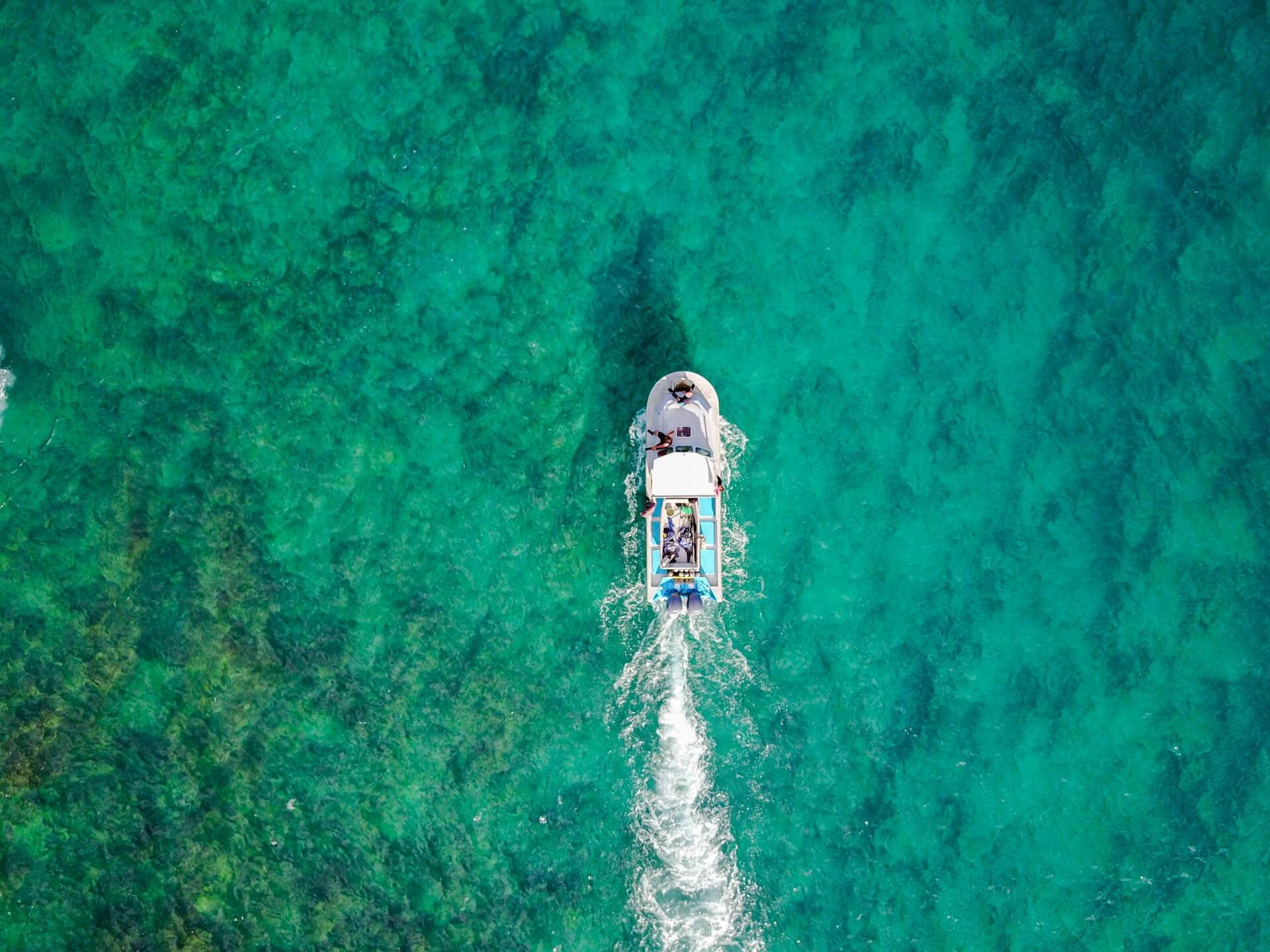
10 Easy Ways Surfers and Divers Can Protect the Ocean While Travelling
For surfers and divers, the ocean isn’t just a destination. Often, it’s the reason we travel, full stop.
But the very act of travelling across the globe to chase waves or incredible underwater experiences comes with an environmental cost. There’s the carbon footprint of air travel, the overdevelopment of coastlines for waterfront resorts and the destruction of coral reefs due to human behaviour.
So should we just stop travelling altogether? That’s not what we’re suggesting.
It’s human nature to want to explore…and if you’re passionate about surfing or diving, it’s hard to give up those dreams of far-flung adventures.
The good news? Protecting the ocean while travelling is an option, if you choose to take it. Small, conscious choices (made consistently) can add up to meaningful impact. And your actions might encourage others to do the same.
In this article, we’ll share 10 simple ways surfers and divers can reduce their footprint and travel more responsibly, no matter where in the world you’re headed.
This article may contain affiliate links, which means when you make a purchase through that link, we earn a small commission. Affiliate links come at no cost to you and ensure our content remains free!
1. Choose Reef-Safe Sunscreen and Use Less of It
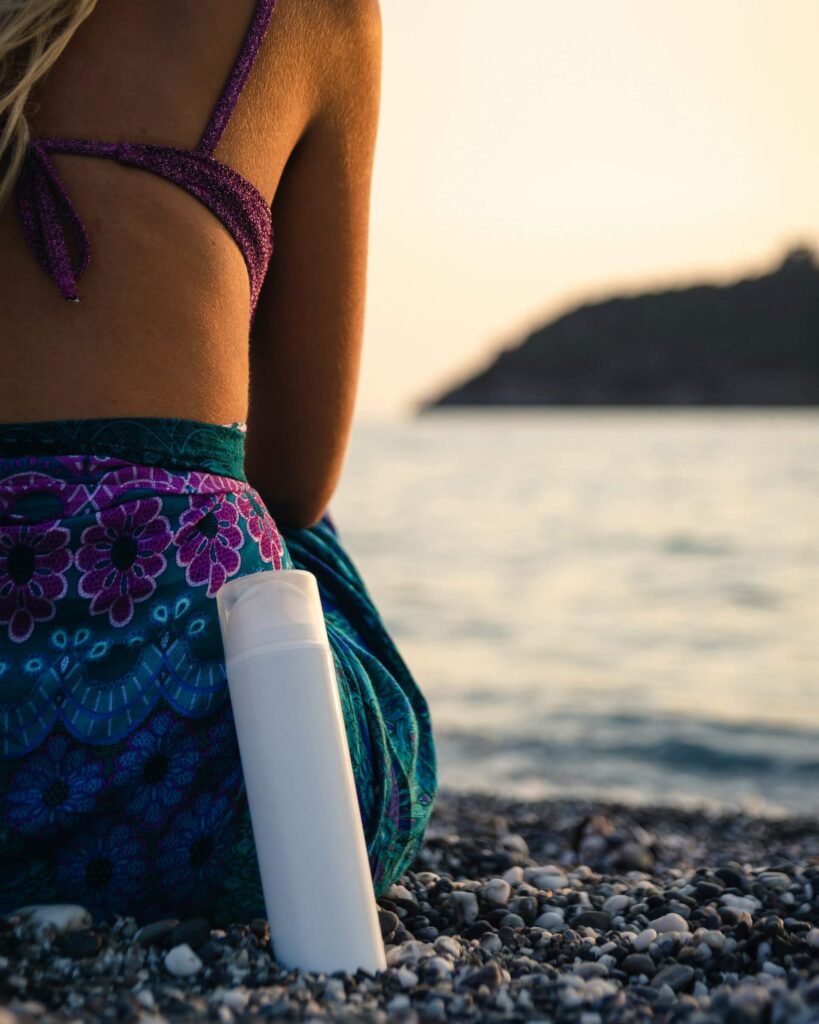
We’ve long known that many conventional sunscreens contain chemicals linked to coral bleaching, DNA damage and abnormal coral development. Oxybenzone, octinoxate and octocrylene are among the main culprits.
A safer alternative is mineral-based sunscreen, which does far less damage to fragile reefs. But even mineral sunscreens can create issues in marine environments if they are used excessively.
The solution? Use only reef-safe sunscreens. But use them sparingly and opt to cover your skin wherever possible (rash guards, wetsuits, hats), instead of slathering lotion on.
2. Support Local, Low-Impact Operators
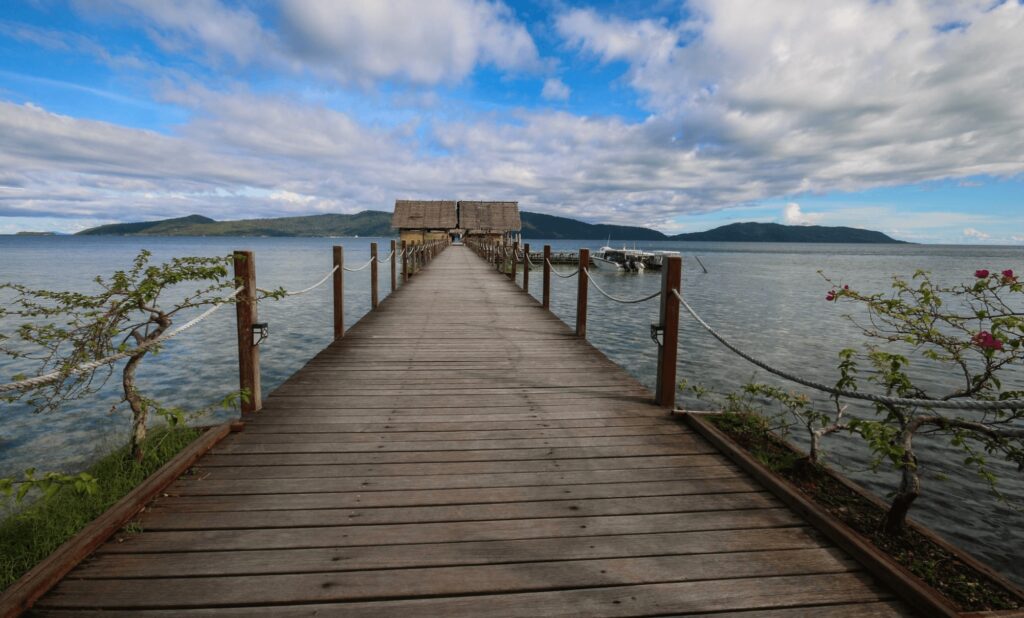
Whether it’s a surf camp or a dive resort, choose to stay at properties that recognise their impact on the environment and take genuine steps to reduce it.
This might be using locally sourced building materials or investing in renewable energies and waste treatment facilities. Or, it might be through the creation of programs that enable guests to give back to local environments, communities and marine ecosystems.
Responsible operators will employ local staff (and not just in low-wage roles) and reinvest money in their communities. Ideally, they will be locally-owned!
They will limit group sizes on dives, respect marine park regulations to a tee and never, ever privatise waves so that local surfers are shut out.
3. Respect Wildlife (Both Above and Below the Water’s Surface)
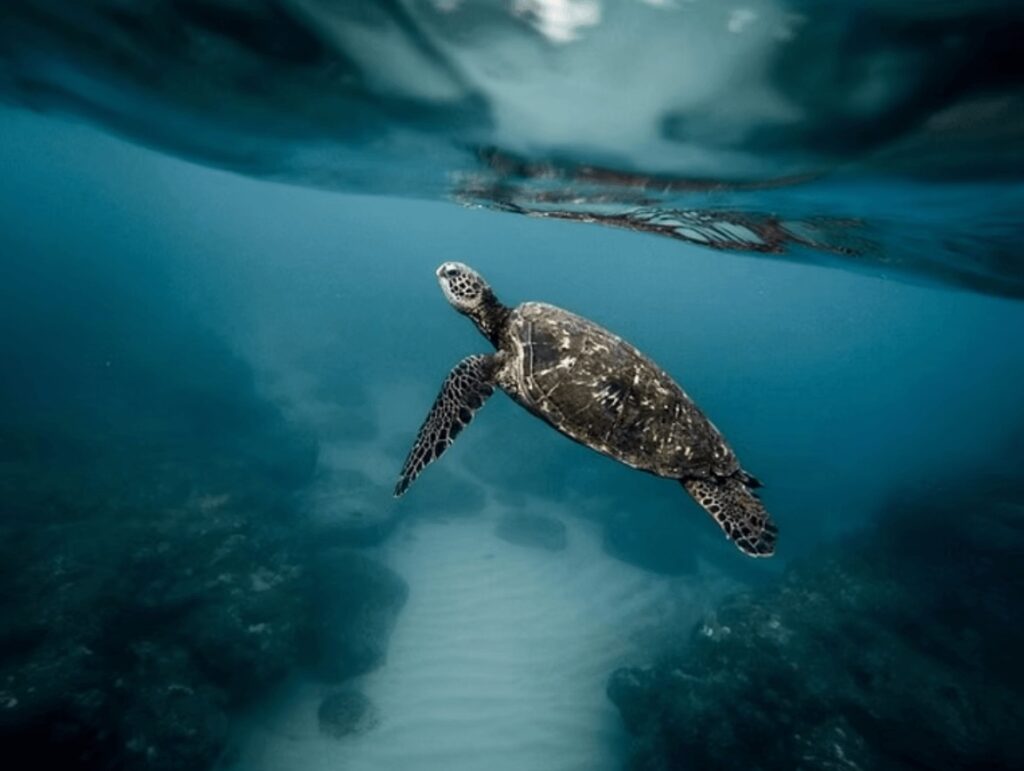
No matter where you travel and how you interact with the ocean, you should never touch, chase, feed or crowd wildlife. This applies to everything from sea turtles and reef fish to birdlife and forest-dwelling creatures.
In our experience, the best wildlife encounters happen when animals set the terms, not when humans push for proximity or agitate to get the perfect shot.
If you want to protect the ocean while travelling, it starts with respecting the creatures who call it “home” and behaving as a guest in their habitat.
4. Improve Buoyancy (or Board Control)
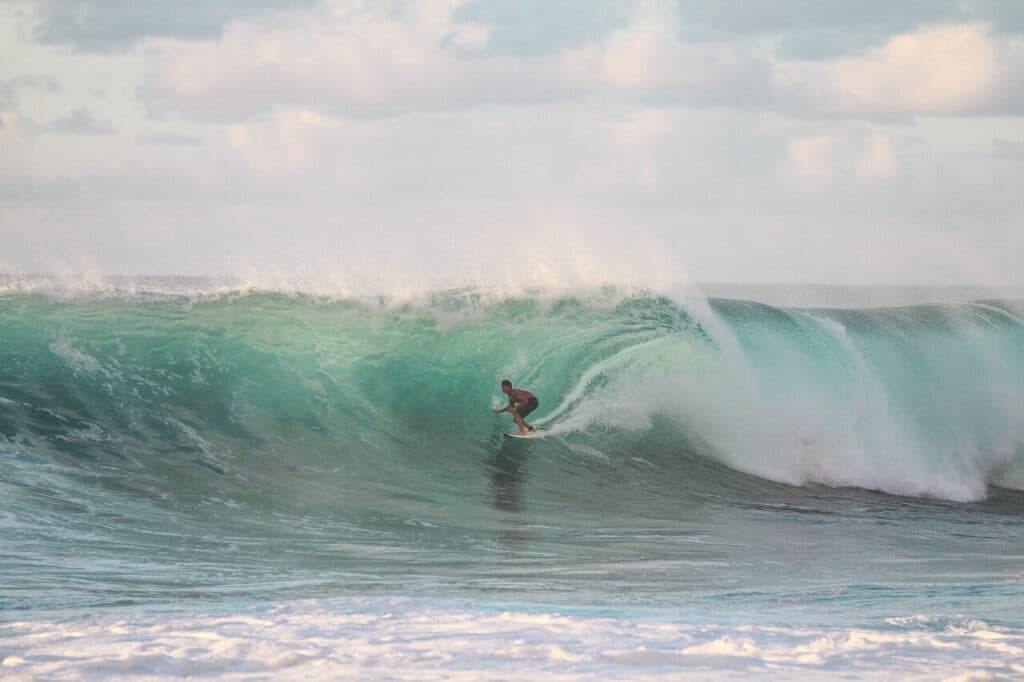
For divers, poor buoyancy damages reefs through collisions and fins breaking coral. In the surf world, uncontrolled boards can do the same….and they can injure others in the process.
Before travelling abroad to surf and dive in unfamiliar environments, invest time in honing skills that will reduce your impact on underwater habitats. Practice in environments where you can’t cause environmental damage and only travel once your technique is up to scratch.
5. Reduce Single-Use Plastics on the Road
In remote coastal regions where waste and recycling systems are limited, refusing plastic matters more than you might think. Every bit of plastic you bring in or consume has to end up somewhere…and often that is the ocean.
So instead of contributing to the problem, bring a reusable water bottle and/or filtration tablets, so you aren’t relying on bottled water. A tote bag is another easy addition, meaning you’ll always have somewhere to stash purchases (whether it’s foodstuffs or souvenirs).
Discover more lifestyle changes to reduce ocean plastic in our detailed article here.
6. Leave Beaches Better Than You Found Them
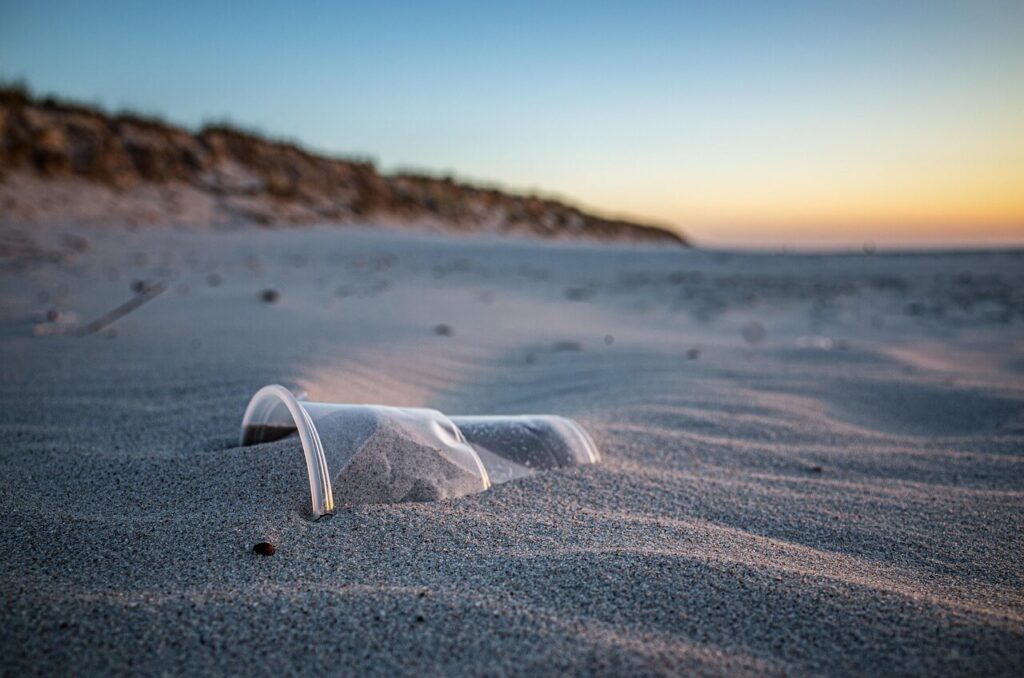
While organised beach cleanups are always fun, social events, you don’t need to wait for someone else to take charge to make a difference.
Pick up a few pieces of trash after each surf session or stash any rubbish you find during dives into your BCD (for responsible disposal later).
It’s a simple way to leave coastal environments better than you found them and it doesn’t need to be performative. People will undoubtedly notice and others will likely follow suit.
7. Eat and Shop Locally
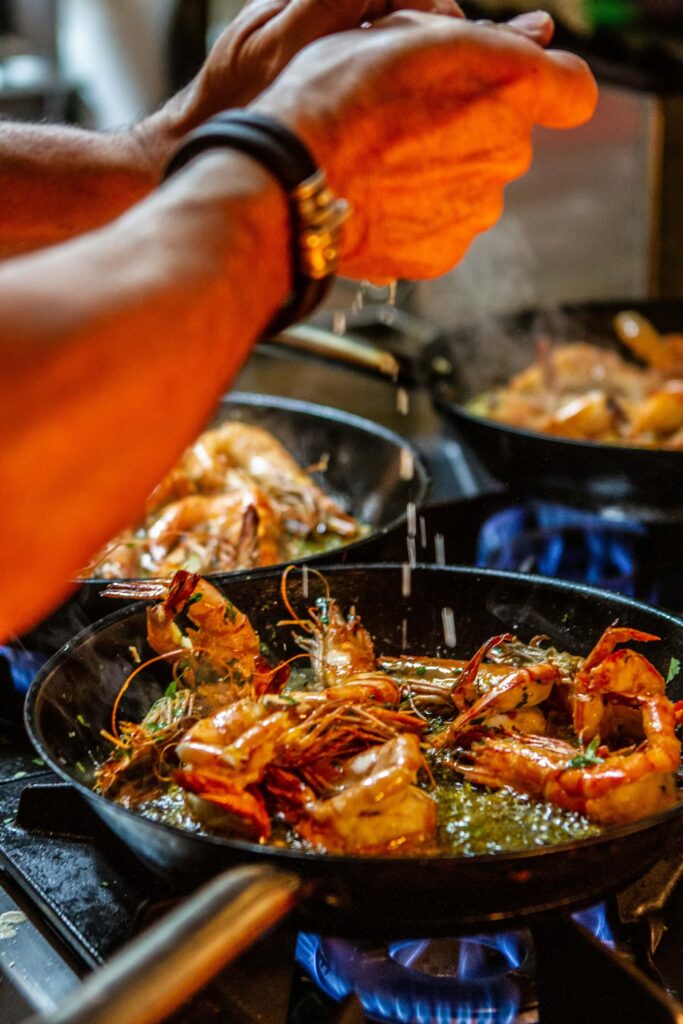
Local food usually means fewer food miles and more direct benefit to coastal communities. So when you’re browsing restaurant menus during your surf or dive trip, be brave and try the “local” option.
“International” or “Western” dishes are more likely to rely on imported ingredients…and the local stuff always tastes better anyway!
And while it can be really tempting to buy marine “souvenirs” (coral, shells and shark teeth) as a memento of your trip, it can be detrimental to underwater environments.
Put simply: If it came from the ocean, it belongs there, not in your living room.

8. Be Mindful of Water and Energy Use
Freshwater is limited in many surf and dive destinations, and it’s easy to forget this if you come from somewhere connected to unlimited mains water.
In remote areas, properties often rely on rain-fed tanks and springs or energy-intensive desalination plants.
And it’s not just water. Energy resources are also limited. For example, many surf camps and dive resorts rely on solar, with fuel-fed generators serving as a backup.
So what can you do to reduce your impact on limited resources? Take shorter showers, reuse towels and turn off air conditioning when you don’t need it. These habits matter most in places already under environmental strain.
9. Learn Before You Go
If you’re staying at a sustainable surf camp or an eco-friendly dive resort, staff usually brief guests about environmental issues before letting them loose in the water.
But if you’re travelling independently or staying at properties that don’t take environmental responsibility seriously, then that onus falls on you.
Before grabbing your board or donning your BCD, it’s important to educate yourself. What are the marine park regulations? Are there protected species? Will fishing boats be coming through the area? Is localism an issue?
Knowing what not to do is just as important as knowing what to do, both for your safety and that of coastal environments.
10. Share the Right Story
Social media shapes travel behaviour and can transform hidden gems into overtouristed hotspots overnight. So rather than geotagging your surf and dive adventures for shares and likes, consider the impact it may have on fragile spots.
This is especially important in marine areas without adequate protection or coastal landscapes that don’t have the infrastructure to handle a rapid increase in tourist numbers.
Instead, share stories that highlight environmental issues or conservation “wins”. And only promote surf camps and dive resorts that care about the long-term sustainability of a destination, both socially and environmentally.
Protecting the Ocean as a Practice
In reality, many of the things mentioned above are easy to put into practice and they can be applied to all types of travel, not just ocean adventures.
If we want to preserve natural environments around the globe, we should be making everyday decisions that prioritise their survival.
Here at EcoOceanEscapes, we think surfers and divers are uniquely positioned to lead by example. After all, when you spend so much time in the water, the health of the ocean becomes something personal, not something you can easily overlook.
PLAN YOUR TRIP WITH OUR FAVOURITE RESOURCES:
Find hotels and resorts via Booking or Agoda
Book tours and experiences via Viator or GetYourGuide
Find a rental car via Discover Cars
Book flights via Kiwi or Booking
Search for buses and trains via 12Go or Omio
Get travel insurance via SafetyWing
Buy a digital eSIM with Airalo
By purchasing through our links, you’ll be supporting our website at no additional cost to you
-
The Blue Revolution: How Ocean Conservation Is Changing Travel
If you’re anything like us, the ocean is what fuels your travel adventures. Over the last 20+ years, we’ve flown across the globe to dive with manta rays, kayak above coral reefs and surf legendary waves. But there is an uncomfortable contradiction at the heart of ocean tourism: the healthier the marine environment, the more…
-
Climate Change in the Ocean: A Guide for Surfers + Divers
When we think about climate change, our attention naturally turns to what we can see on land or are experiencing first hand: rising temperatures, melting glaciers, wildfires and more intense weather events. Many of these are well-reported on the nightly news and it’s devastating to see intense wildfires ripping across landscapes and floods wreaking havoc…
-
Resort vs Liveaboard vs Homestay Diving in Raja Ampat: Choosing the Right Experience
Raja Ampat is one of my favourite diving destinations in Indonesia. In fact, that’s probably an understatement. Raja is one of my favourite places to dive anywhere in the world. The underwater experiences I’ve had here are nothing short of extraordinary…and that’s not taking into account the incredible above-water scenery. It really does feel like…
-
How Sunscreen Affects Coral Reefs + Marine Life
If you’re anything like us, applying sunscreen is second nature before heading out to surf or spending a day on a dive boat. In fact, our skin type means we need to apply sunscreen before we step outdoors…full stop! Since we were little, it’s been drummed into us that sunscreen protects our skin from harmful…
-
The Essential Scuba Diving Guide to Raja Ampat, Indonesia
Few places we’ve dived have captured our imagination quite like Raja Ampat. Our first visit was back in the early 2000s, staying at a homestay on a blissfully gorgeous beach, and our second in 2023 at the eco-friendly Papua Explorers Resort. Both are experiences that will stay with us forever and affirmed what so many…
-
Successful Marine Protected Areas You Can Visit Around the World
After almost two decades of scuba diving around the globe, we’ve come to the conclusion that marine protected areas (MPAs) are one of the most powerful tools we have for conserving ocean ecosystems. Essentially, they are like “national parks of the seas” – established to limit activities such as overfishing, habitat destruction and unsustainable development….


We are a team of passionate divers and surfers with decades of combined experience in the water and travelling to all corners of the globe.
After years of chasing waves and descending into the deep blue, we’ve created this resource to highlight sustainable surf camps, eco-dive resorts and conservation-focused ocean trips to help inspire your next adventure.
Eco Ocean Escapes was born out of a love of the ocean, an obsession with travel and a concern about the impacts of our adventures on the environments we explore.