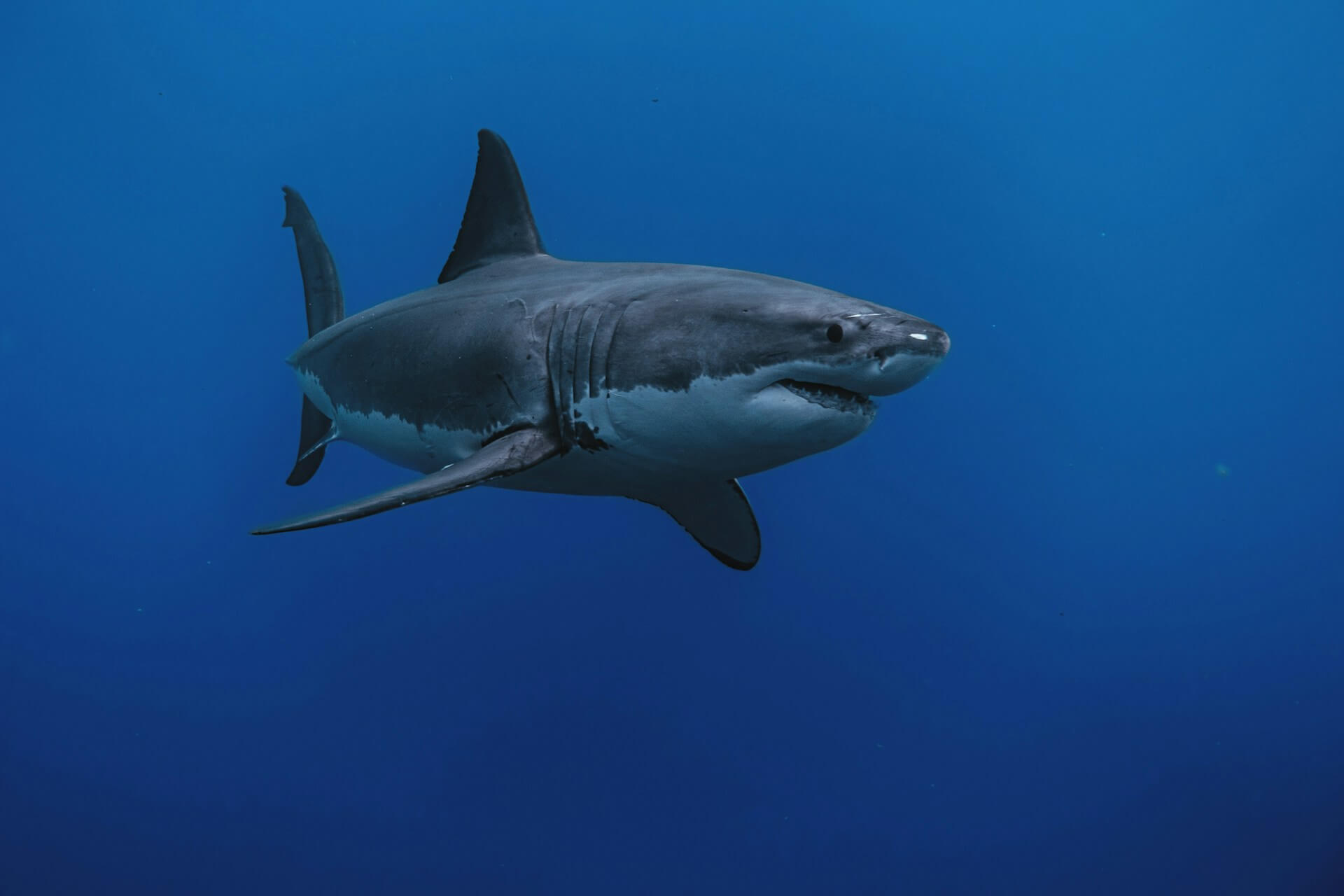
Shark Conservation: How to Dive Responsibly With Sharks
Sharks have roamed our oceans for more than 400 million years (yes, they’re older than dinosaurs). Today, there are more than 400 different species, ranging from tiny dwarf lantern sharks to predatory great whites and tiger sharks.
Unfortunately, many face an uncertain future. This is due to habitat loss, bycatch and demand for shark fins, which are used in some Asian cultures to make a soup with purported health benefits.
At the same time, shark diving has grown into a lucrative tourism industry. In Australia, it’s been (conservatively) estimated at 25.5 million AUD a year. Shark tourism gives divers the chance to encounter these animals alive, rather than in a bowl.
But shark diving tourism is shrouded in controversy – is it ethical? – and the answer isn’t always straightforward.
When done responsibly, shark diving can support conservation, research and local livelihoods. But if done poorly, it can stress animals, alter natural behaviour and undermine the very ecosystems that we, as divers, come to admire.
In this article, we’ll explain some of the “pros” of shark diving tourism and how it can be managed responsibly. We’ll also highlight some of the “red flags” to be aware of and when it’s best to walk away.
This article may contain affiliate links, which means when you make a purchase through that link, we earn a small commission. Affiliate links come at no cost to you and ensure our content remains free!
The Importance of Sharks in Marine Ecosystems
Sharks are apex and meso-predators (mid-ranking predators that are both consumers and prey) and they play a critical role in maintaining healthy marine ecosystems.
By regulating prey populations and influencing behaviour, sharks help keep coral reefs, seagrass beds and open-ocean systems in balance. In reality, they’re so much more than just a “ferocious” face!
Unfortunately, after spates of shark attacks (as occurred in Australia recently), there are often calls to cull sharks. But removing them doesn’t just affect one species. It can trigger cascading impacts throughout the food web.
In contrast, protecting sharks means protecting the broader health of the ocean and the underwater ecosystems we love to explore.
The Rise of Shark Diving Tourism
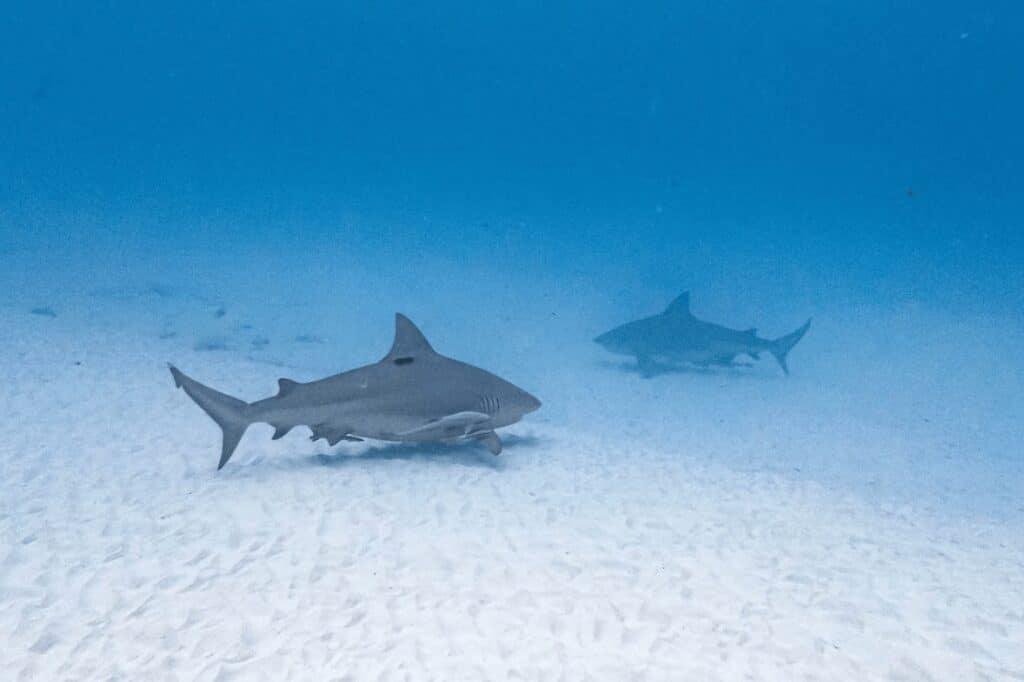
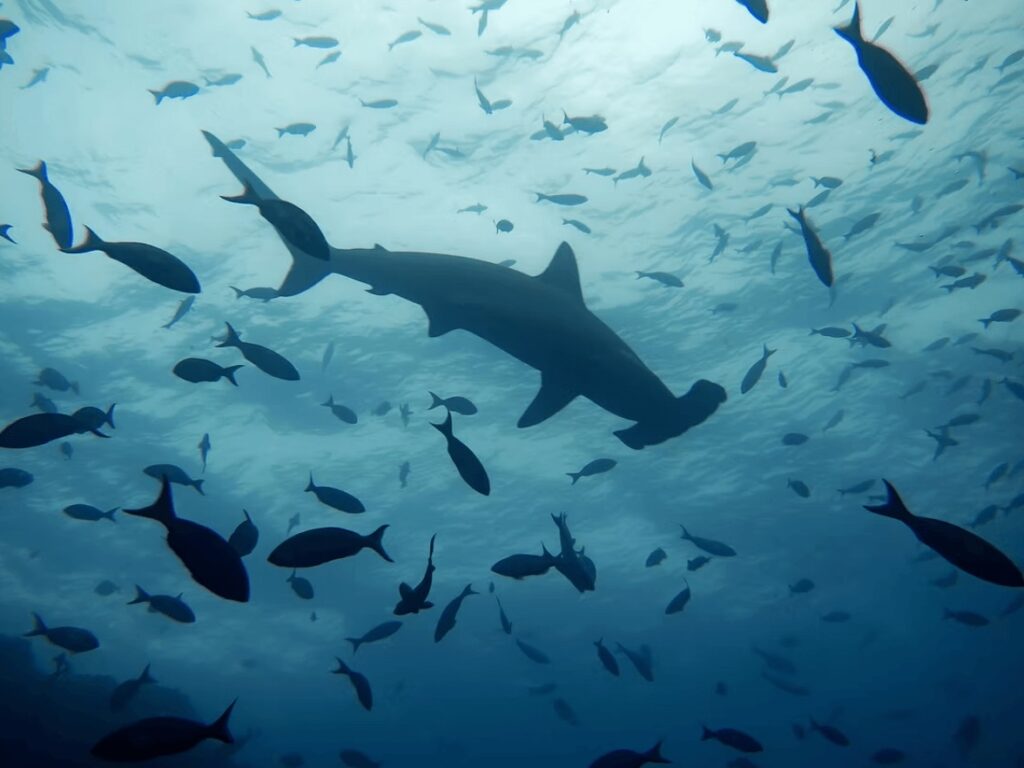
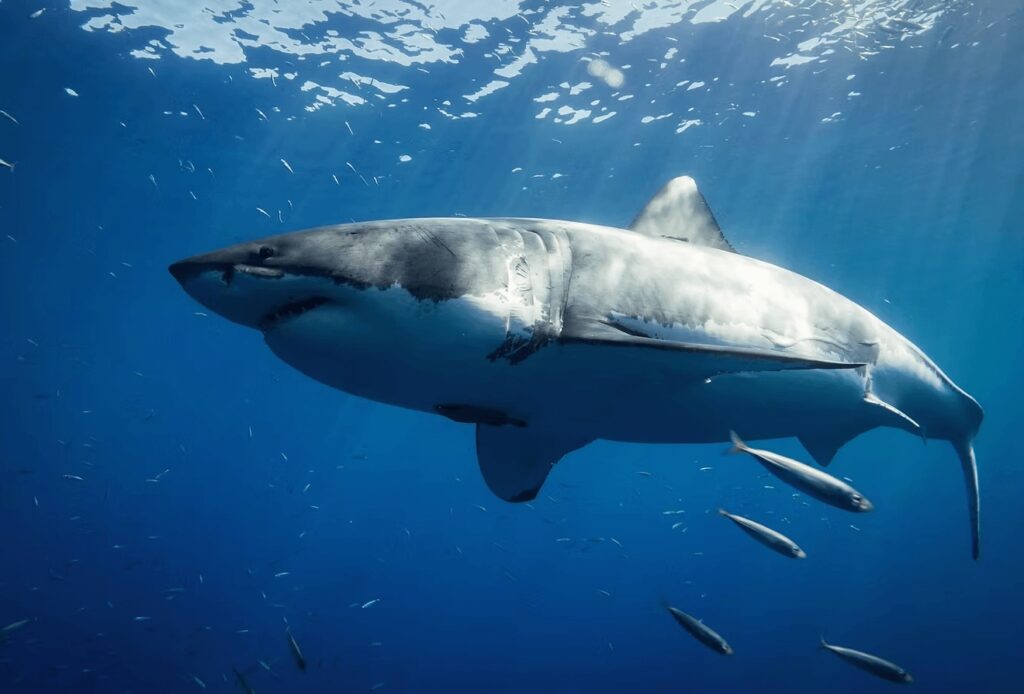
From cage encounters with great whites to reef dives with hammerheads, shark tourism is deservedly popular. Getting up close to these (sometimes) feared pelagic species is always an adrenaline-pumping experience and one that leaves us in awe.
Due to the rise in shark tourism in many places around the globe, live sharks are sometimes worth far more to local economies than dead ones.
For the record, we firmly believe that sharks should be protected for their intrinsic value and not for the monetary value assigned to them.
But the reality is that shark diving tourism can provide income that incentivises protection. In some cases, it can also help to shift public perception away from fear…and toward respect.
When managed responsibly, shark diving tourism can help to fund marine protected areas and support scientific research.
Unfortunately, shark diving tourism isn’t always done with the animals’ best interests at heart.
Choose Ethical Shark Diving Operators
Aside from selecting a destination with shark protections in place, the most important decision you make is who you dive with. Sometimes, this is easier said than done, particularly when you’re relying solely on internet research before your trip.
Our advice is to start with the operator’s website. Are they transparent about their practices? And how are they supporting local conservation initiatives? Do they follow established shark interaction guidelines and are their guides conservation trained?
Be cautious of operations that promise guaranteed sightings (sharks are wild creatures after all). And any baiting should be approached with caution (read more on this below).
Avoid diving with outfits that are focused solely on the thrill of diving with sharks, without providing any educational resources. An ethical shark diving operator will usually share information about the species and any threats to its survival.
As with all diving, never support a dive shop/school that encourages touching or provoking marine life to get a reaction. How can you determine this before diving with them?
Read reviews from past guests on TripAdvisor or Google. Any behaviour that compromises animal welfare is usually called out here by fellow divers who want to do the right thing.
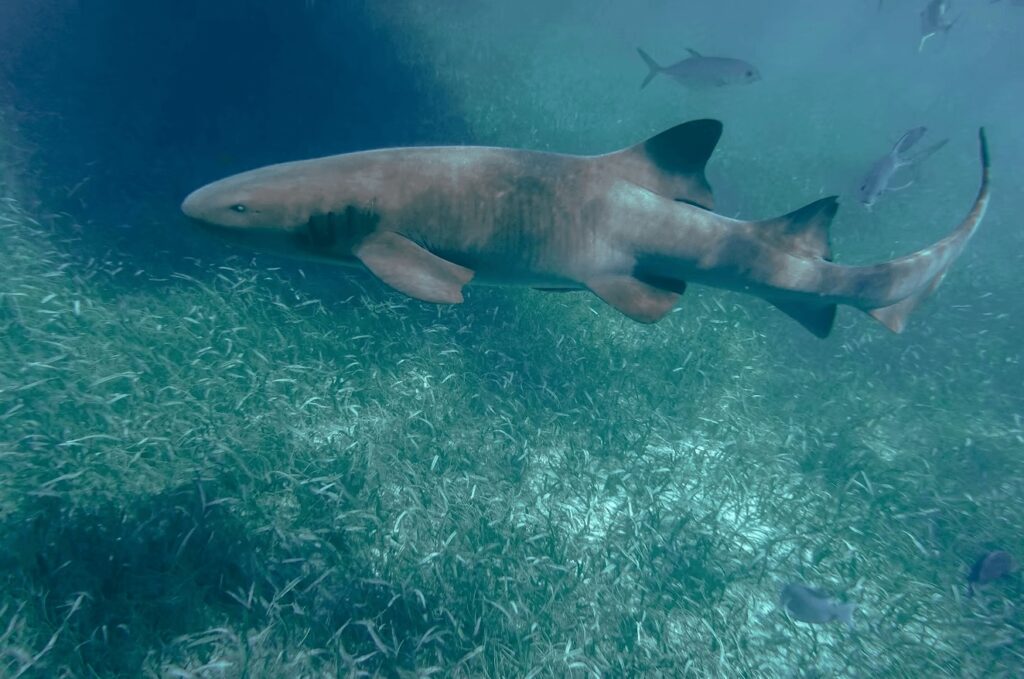
Baiting & Feeding: Is it Ethical?
Baiting and feeding are among the most debated aspects of shark diving, and practices vary widely by species, location and regulation.
Critics say that it disrupts the natural behaviour of sharks and can lead to increased conflicts with humans. Meanwhile, proponents highlight its role in conservation education and suggest it doesn’t significantly alter behaviour if managed responsibly.
If you’re thinking about diving with an operator that does use baiting, it doesn’t necessarily mean an automatic red flag. In our experience, you need to ask a few more questions:
- Is the baiting tightly controlled and absolutely minimal?
- Does it follow scientific guidance and local laws?
- Is the scent of the bait used, rather than direct feeding?
- Does it encourage sharks to associate humans with food?
In some cases and with certain species, the scientific research indicates that minimal baiting doesn’t negatively impact the sharks or their relationship with humans.
Before booking, ask operators to explain their approach clearly or check out some of the case studies in this WWF Guide to Responsible Shark and Ray Tourism. It highlights a variety of situations around the globe and the outcomes for local communities, dive operators and (of course) sharks.
The Importance of Diver Behaviour During Shark Encounters
Even if you go shark diving with the most ethical operator, the experience can be detrimental to wildlife if your behaviour is poor.
Most importantly, you should never chase or corner sharks and never block their escape routes. If sharks feel threatened, there is a greater chance they will display aggressive or “dangerous” behaviour.
Always follow your guide’s instructions and stay with your group, all while keeping a respectful distance from the sharks. Staying calm, moving slowly and maintaining buoyancy control are also important in reducing stress on marine life.
If you are cool, calm and collected underwater, the encounter will be a far more natural one, for both you and the shark.
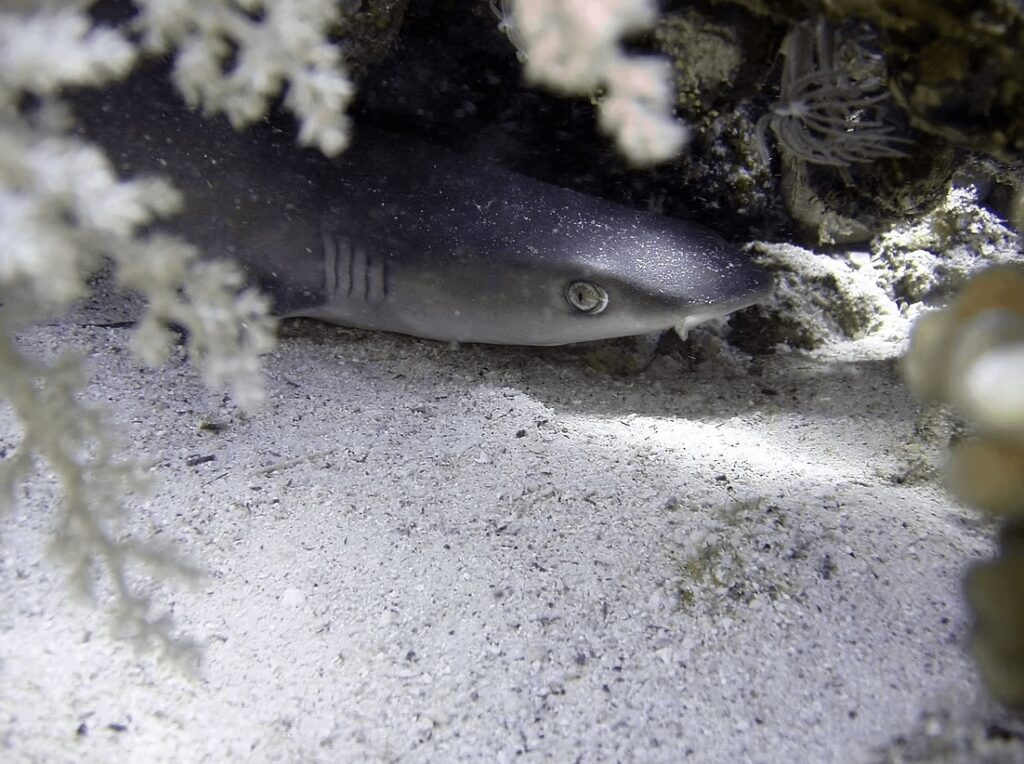
Photography & Filming Ethics
Shark encounters are powerful…and they can be highly photogenic. But the quest for the perfect shot shouldn’t come at the animal’s expense. Unfortunately, it often does.
So, what does responsible photography and filming mean in relation to shark encounters? It means not chasing animals to get a closer angle and always allowing the shark to swim away if it desires.
Avoid making any sudden movements that could alarm the shark and never corner it for the perfect shot.
Strobes and flashes should also be limited. These can disorient some species, particularly nocturnal or bottom-dwelling ones.
For more tips on being a responsible underwater photographer, check out our detailed article here.
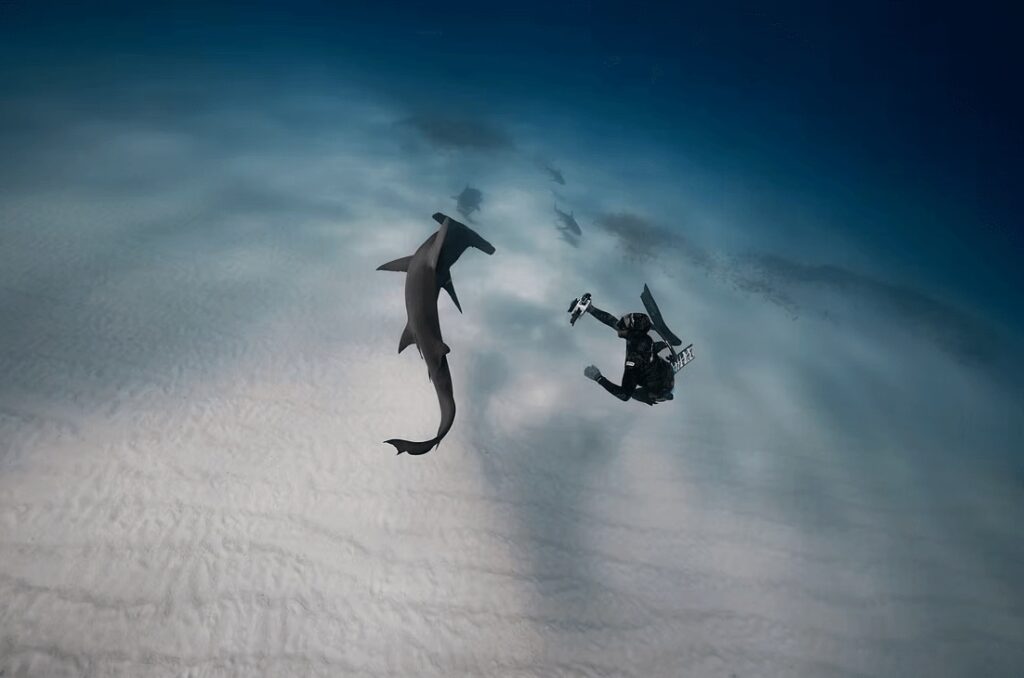
Understand Species & Context
Not all sharks behave the same way and “ethical shark diving” means different things for different species.
Great white sharks seen cage diving in South Australia behave very differently from thresher sharks in Malapascua and tiger sharks in the Bahamas.
If you really want to be a responsible diver, it’s important to educate yourself. Learn about the species you’re likely to encounter and gain a better understanding of their natural behaviour.
What kind of habitat do they prefer? Which animals do they like to feast on? What are some of the signs of agitation that that particular species exhibits, and how can you avoid creating a stressful situation?
Understanding context helps you read situations accurately and respond appropriately underwater, rather than relying on a one-size-fits-all solution.
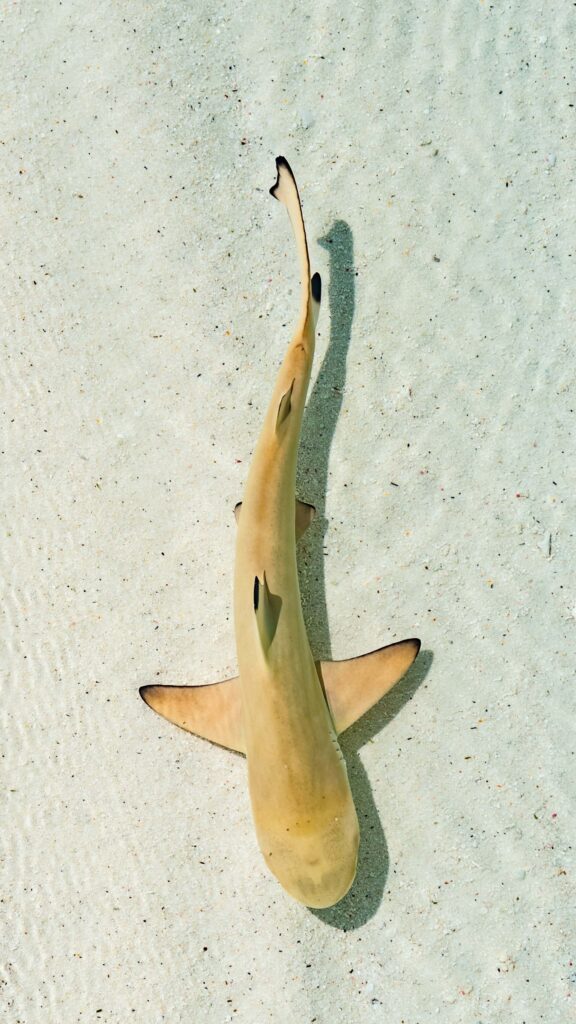
Support Conservation Beyond the Dive
Here at EcoOceanEscapes, we believe that responsible shark diving is not just about what you do in the water. It’s also about how you support and platform marine conservation when you’re on land.
How can you do this? By supporting NGOs working on shark research and policy. They are the ones with the latest information about sharks and how human behaviour impacts them.
You can also share accurate and respectful information about sharks with family and friends (through your social media platforms). Avoid any news that is sensationalised for clicks or based on fear-based narratives.
This helps change the negative perception many people have of sharks and can influence the support they give when calls for shark culls are made.
When Shark Diving Isn’t the Right Choice
In some destinations around the world, unethical practices (often combined with poor regulation) make shark diving problematic. Large group sizes, unnecessary baiting and provocation are all red flags.
Any dive operator that is focused solely on promoting the “thrill” of shark diving is probably not in it for the right reasons. When conservation takes a back seat, marine life suffers…and diving experiences will also suffer in the long term with ecosystem collapse.
Responsible dive travel also means recognising when not to participate. Walking away sends a powerful message to operators that they need to do better.
The Bigger Picture
At the end of the day, only you can decide whether shark tourism is ethical in your eyes, based on the current research and individual practices of operators.
Some divers don’t want to be involved in anything that involves baiting and that’s absolutely understandable. Others are open to the idea if it brings long-term benefits to sharks, without significantly impacting behaviour.
In our eyes, responsible shark tourism can help to shift the global narrative from exploitation and fear to protection. When done effectively, it can turn sharks into ambassadors for healthy oceans.
We also believe that diving with sharks is an absolute privilege and should be approached with humility, knowledge and restraint. Ethical shark experiences can deepen your connection to the ocean and contribute to real conservation outcomes.

PLAN YOUR TRIP WITH OUR FAVOURITE RESOURCES:
Find hotels and resorts via Booking or Agoda
Book tours and experiences via Viator or GetYourGuide
Find a rental car via Discover Cars
Book flights via Kiwi or Booking
Search for buses and trains via 12Go or Omio
Get travel insurance via SafetyWing
Buy a digital eSIM with Airalo
By purchasing through our links, you’ll be supporting our website at no additional cost to you
-
The Blue Revolution: How Ocean Conservation Is Changing Travel
If you’re anything like us, the ocean is what fuels your travel adventures. Over the last 20+ years, we’ve flown across the globe to dive with manta rays, kayak above coral reefs and surf legendary waves. But there is an uncomfortable contradiction at the heart of ocean tourism: the healthier the marine environment, the more…
-
Climate Change in the Ocean: A Guide for Surfers + Divers
When we think about climate change, our attention naturally turns to what we can see on land or are experiencing first hand: rising temperatures, melting glaciers, wildfires and more intense weather events. Many of these are well-reported on the nightly news and it’s devastating to see intense wildfires ripping across landscapes and floods wreaking havoc…
-
Resort vs Liveaboard vs Homestay Diving in Raja Ampat: Choosing the Right Experience
Raja Ampat is one of my favourite diving destinations in Indonesia. In fact, that’s probably an understatement. Raja is one of my favourite places to dive anywhere in the world. The underwater experiences I’ve had here are nothing short of extraordinary…and that’s not taking into account the incredible above-water scenery. It really does feel like…
-
How Sunscreen Affects Coral Reefs + Marine Life
If you’re anything like us, applying sunscreen is second nature before heading out to surf or spending a day on a dive boat. In fact, our skin type means we need to apply sunscreen before we step outdoors…full stop! Since we were little, it’s been drummed into us that sunscreen protects our skin from harmful…
-
The Essential Scuba Diving Guide to Raja Ampat, Indonesia
Few places we’ve dived have captured our imagination quite like Raja Ampat. Our first visit was back in the early 2000s, staying at a homestay on a blissfully gorgeous beach, and our second in 2023 at the eco-friendly Papua Explorers Resort. Both are experiences that will stay with us forever and affirmed what so many…
-
Successful Marine Protected Areas You Can Visit Around the World
After almost two decades of scuba diving around the globe, we’ve come to the conclusion that marine protected areas (MPAs) are one of the most powerful tools we have for conserving ocean ecosystems. Essentially, they are like “national parks of the seas” – established to limit activities such as overfishing, habitat destruction and unsustainable development….



We are a team of passionate divers and surfers with decades of combined experience in the water and travelling to all corners of the globe.
After years of chasing waves and descending into the deep blue, we’ve created this resource to highlight sustainable surf camps, eco-dive resorts and conservation-focused ocean trips to help inspire your next adventure.
Eco Ocean Escapes was born out of a love of the ocean, an obsession with travel and a concern about the impacts of our adventures on the environments we explore.