Are Luxury Surf Resorts Compatible With Sustainability?
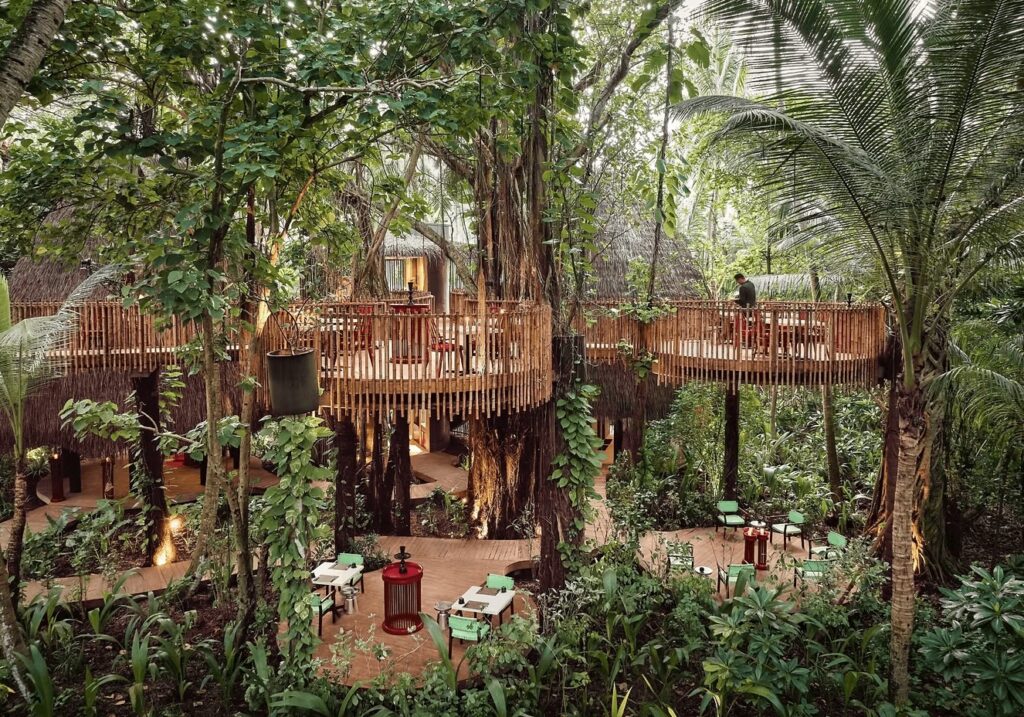
Luxury surf resorts promise a dream vacation: uncrowded waves, paradisiacal beaches and five-star facilities in some of the world’s most remote destinations.
Not only do they mean exclusivity, but also incredible food and all the creature comforts you could desire after your session.
But behind the infinity pools and curated “eco” language lies a difficult question – can a high-end surf resort ever be truly sustainable?
As surfers who want to keep our environmental footprint to a minimum (but who also love a little luxe), this is something we think about a lot!
In our opinion, the answer isn’t a simple yes or no. Luxury and sustainability may seem somewhat contradictory terms, but they are not automatically incompatible.
The difference lies in whether sustainability is embedded into the design and operations (is it the resort’s genuine ethos?) or merely used as a marketing tool.
In this article, we’ll break down the complexities of luxury surf resorts that claim sustainability and highlight when it all might just be greenwashing.
This article may contain affiliate links, which means when you make a purchase through that link, we earn a small commission. Affiliate links come at no cost to you and ensure our content remains free!
The Contradiction of Luxury Surf Resorts
Luxury, by definition, often involves excess. Large villas, energy-intensive air conditioning and imported food all come with a significant environmental footprint. And it’s important to mention that this footprint is exacerbated in fragile coastal ecosystems.
Surf resorts in remote regions often have limited freshwater supplies, sometimes leading to the construction of desalination plants. The waste management infrastructure may also be weak, resulting in mountains of rubbish hidden away from guests’ view or the burning of plastics.
Many remote-based luxury surf resorts rely heavily on generators or fuel-powered transport. Boats used to access breaks are the main culprits. The mere presence of resorts can also put pressure on local reefs and the fisheries that local communities rely on for survival.
No matter how carefully designed, a luxury resort will almost always consume more resources per guest than a homestay or small surf camp.
When Luxury Becomes Greenwashing
Many surf resorts now brand themselves as “eco-luxury” or “sustainable”. But this term is loosely defined.
There are no regulations in place stopping properties from claiming they are “eco-friendly” in marketing material, despite what they might actually be doing on the ground.
Warning signs of greenwashing include:
- Vague sustainability claims without measurable outcomes
- Focus on guest-facing initiatives (like encouraging guests to reuse towels), without addressing energy and waste issues
- Carbon offsetting without adequate energy reduction initiatives
- Sustainability messaging that doesn’t involve local communities

Where Luxury Surf Resorts Can Do Better
Despite these challenges, some luxury surf resorts are making genuine efforts to reduce their impact on the environment and bring positive benefits to local communities.
This is achieved through a combination of thoughtful design, careful management of resources and waste, and social sustainability initiatives.
Thoughtful Site Selection and Design
When luxury resorts are built on pristine coastlines that are inherently fragile, it can accelerate erosion. Instead, some sustainable resorts are choosing to build on already degraded land or moving construction inland to reduce environmental impacts.
Using locally sourced building materials can also reduce the environmental impact of a build by minimising transport miles. This is especially impactful (and inspiring) when combined with climate-adapted architecture.
And of course, small-scale, boutique surf camps create less of an impact when compared to sprawling resorts with huge guest capacities.
Energy and Water Management
Most luxury surf resorts are located in remote areas that may not be connected to electricity grids or mains water. Instead of relying on diesel generators (which are loud and fuel-intensive), properties can install solar or hybrid energy systems to meet their electricity needs.
When it comes to sourcing water, rainwater harvesting should be an integral part of sustainable surf resort design, together with low-flow fixtures in water-scarce regions.
Additionally, greywater recycling can be harnessed to keep gardens and grounds looking their best, rather than putting additional pressure on limited local water sources.
In some areas, desalination plants are the only option. But these are energy-intensive and should be avoided where possible.
Waste Reduction Beyond Recycling
Recycling is a starting point. But in this day and age, it really is the bare minimum. Sustainable surf resorts should be looking at eliminating single-use plastics entirely. And with guests paying luxury price tags, this shouldn’t be a big ask.
Reducing as much packing as possible should be the ultimate goal, together with limiting imported goods in favour of local products (that are packaging-free).
Additionally, luxury surf resorts with an eco-friendly tag should be composting all of their organic waste. This can either be used to feed kitchen gardens or made available to local farmers.
At the same time, sewage needs to be managed responsibly to avoid reef and coastal contamination. If existing sewage infrastructure isn’t in place, then advanced treatment systems should be installed to protect fragile environments.
Yes, these investments are expensive; there’s no denying it. But luxury pricing makes them achievable if surf resorts are prioritising the environment over profits alone.
The Social Side of Sustainability
Environmental sustainability is only half the equation. Social sustainability matters just as much, particularly in developing coastal regions.
What does this mean in practice? Employing local staff in skilled, long-term roles, providing ongoing training and paying fair wages.
It also means supporting local suppliers, fishermen and farmers. In our opinion, the surrounding community should benefit from surf resorts, even if they are not employed at the resort itself.
Operating responsibly as a surf resort also means respecting traditional access rights to land and ocean. This means NOT trying to “privatise” surf breaks for the exclusive use of guests or pressuring government officials to allow this to happen.
Resorts that restrict community access to waves risk creating resentment and long-term harm. And in our opinion, it’s completely unethical.
Some resorts will argue that limiting numbers can reduce environmental pressure. If that’s a genuine concern, then a better approach is to create shared-use policies and access agreements in collaboration with local communities. Exclusion is not the answer.
Can Luxury Ever Be Low Impact?
Luxury surf resorts will never be zero-impact. That’s just the reality. But they can be low-impact (or as low-impact as their budget counterparts) if the will is there.
In our experience, trotting around the globe, the most credible operations acknowledge that they have a footprint and highlight the goals they are working towards.
The focus is on reduction, transparency and accountability, rather than greenwashing guests with hollow claims of being “100% sustainable.”
So how can you tell if a luxury surf resort is really “walking the talk”? Check their website for:
- Independent sustainability audits or certifications
- Reports detailing energy/water usage and waste/recycling initiatives
- Details about community partnerships and NGO collaborations
Should Surfers Avoid Luxury Resorts?
The question isn’t whether surfers should avoid luxury resorts. That’s not what we’re suggesting.
But you should be selective. High-end travel has higher margins, which means guests can demand higher standards. If luxury resorts are going to exist, they should be held to the highest possible standard.
Before booking a “sustainable” luxury surf resort, ask a few essential questions:
- Where does the energy and water come from?
- How is waste treated?
- Who owns the resort?
- How does the local community benefit?
- Are surf breaks shared or restricted?
If you can’t find answers on the surf resort’s website, send a direct email to the property. Even if you don’t hear back, it sends a powerful message about the kind of properties you want to support. It might even encourage them to work towards authentic sustainability.
Luxury surf resorts are not inherently incompatible with sustainability, but they operate on a narrow margin of credibility. When sustainability is integrated from the ground up – architecturally, operationally and socially – they can spearhead conservation and be a force for good.
PLAN YOUR TRIP WITH OUR FAVOURITE RESOURCES:
Find hotels and resorts via Booking or Agoda
Book tours and experiences via Viator or GetYourGuide
Find a rental car via Discover Cars
Book flights via Kiwi or Booking
Search for buses and trains via 12Go or Omio
Get travel insurance via SafetyWing
Buy a digital eSIM with Airalo
By purchasing through our links, you’ll be supporting our website at no additional cost to you
-
Surfing and Environmental Activism: A Growing Movement
Surfing has always been more than a sport. It’s a culture shaped by natural forces – tides, winds, swells – and a lifestyle that depends on healthy ocean environments. So it’s no surprise that surfers are often engaged environmental activists, at both a local and global scale. As we’ve travelled around the world, we’ve loved…
-
Sustainable Snorkelling Tips for Ocean Advocates
You don’t need a scuba certification to fall in love with the ocean. Snorkelling is an equally magnificent way to explore coral reefs, seagrass meadows and the marine life that calls them “home”. In fact, snorkelling is often a gateway to scuba diving. Or sometimes, it’s the destination. We all snorkelled long before we ever donned…
-
How to Be a More Responsible Underwater Photographer
In recent decades, photography has become unbelievably accessible. Almost everyone carries a camera around with them everyday in the form of a smartphone. Technological improvements have also made underwater photography far more accessible, resulting in powerful images of a world that’s inaccessible to many. A single image of a healthy reef, a shark passing through…
-
Second-Hand Surf Gear: Embracing the Circular Economy
Surfing sells itself as a low-impact pursuit. All you need is a board and the ocean (and if you live where we do, a wetsuit!) What could be simpler? But behind this “at-one-with-nature” facade lies an industry built on short product cycles, seasonal “drops” and a steady turnover of gear due to new “innovations”. The…
-
How Coral Nurseries Work (And How Divers Can Join Planting Programs)
Coral reefs support an extraordinary diversity of marine life, and as divers, being able to explore them is one of life’s great privileges. But coral reefs are also among the most threatened habitats on the planet. Pollution, destructive fishing practices and climate change-induced coral bleaching are all having a devastating impact. In response, coral nurseries…
-
Are Wave Pools Sustainable? The Surf Park Environmental Debate
Nothing compares to surfing in the ocean. Full stop. For us, being at the whim of Mother Nature is a big part of surfing’s allure, and all things being equal, we’d pick the ocean over a wave pool every time. But with coastal communities under increasing pressure and surf breaks being flooded with people, are…


We are a team of passionate divers and surfers with decades of combined experience in the water and travelling to all corners of the globe.
After years of chasing waves and descending into the deep blue, we’ve created this resource to highlight sustainable surf camps, eco-dive resorts and conservation-focused ocean trips to help inspire your next adventure.
Eco Ocean Escapes was born out of a love of the ocean, an obsession with travel and a concern about the impacts of our adventures on the environments we explore.