Scuba Diving in Belize: Best Dive Sites + Highly-Rated Dive Resorts
Planning a dive trip to Central America? Discover everything you need to know about scuba diving in Belize, including the best dive sites in Belize and highly-rated dive resorts.
With direct access to the Mesoamerican Barrier Reef, Belize is an incredible destination for scuba divers. Aside from its stunning underwater landscapes, we find the land-side scenery to be paradisiacal and love the country’s unique cultural energy.
Scuba diving in Belize provides opportunities to come face-to-face with whale sharks, sea turtles and schools of eagle rays. Plus, there are plenty of smaller (but no less fascinating) marine species to discover.
Stretching for hundreds of kilometres, the Mesoamerican Barrier Reef is the second-largest barrier reef system in the world. It’s a global hotspot for marine life and boasts a diversity of dive sites that cater to all skill levels.
From near-vertical walls encrusted in corals to patch reefs interspersed with sandy channels and seagrass beds, the diving in Belize is outstanding.
Over 500 species of fish, 60 species of coral and 350 species of molluscs call this region “home”. Critically endangered species such as sea turtles and goliath groupers can be found here, together with the largest population of manatees in the western Caribbean.
Belize also hosts one of the world’s largest known aggregations of whale sharks. Seeing these massive creatures in their natural habitat is an experience we think shouldn’t be missed.
In this article, discover what makes Belize such a special scuba diving destination as we explore 5 of its top dive spots. Accompanying our list of the best places to dive in Belize are accommodation recommendations, all of which will see you in the heart of all the diving action.
Have your heart set on diving the Mesoamerican Barrier Reef? Check out our scuba guides to Mexico and Honduras.
Disclosure: This article contains affiliate links, meaning we earn a small commission when you make a purchase. Affiliate links cost you nothing and ensure our content stays free!
Ambergris Caye
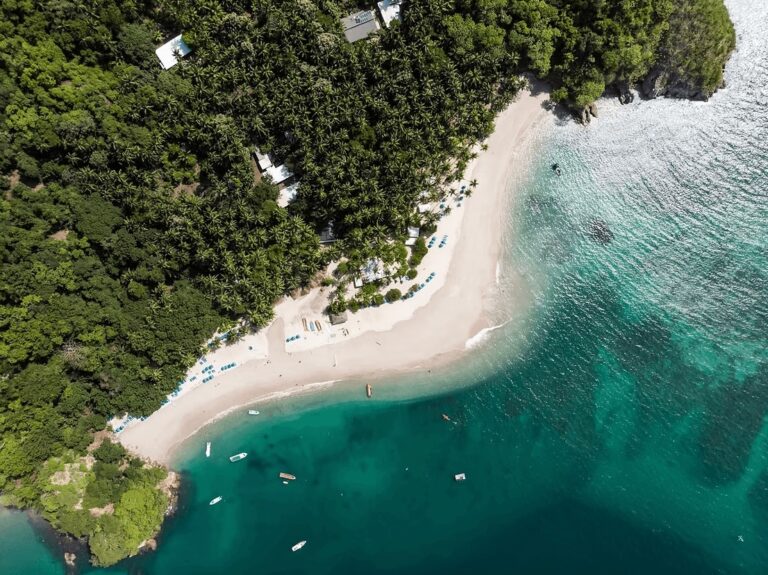
With white sand beaches stretching as far as the eye can see, Ambergris Caye is a tropical paradise. This idyllic island is home to Belize’s oldest marine protected area, the Hol Chan Marine Reserve. It encompasses several unique ecosystems to discover.
Snorkellers and divers can discover the reserve’s fringing coral reefs or drift through the sheltered mangrove forests that line the coastline.
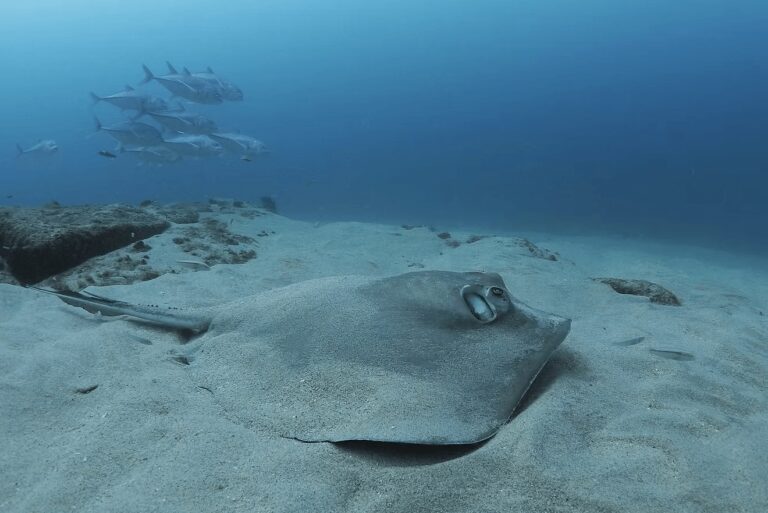
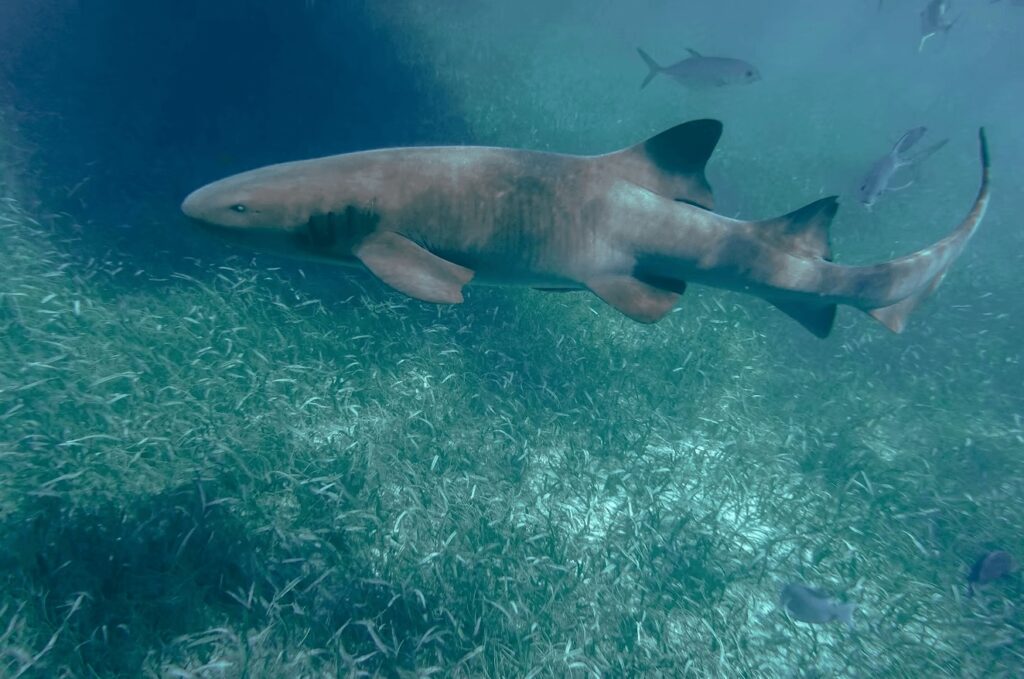
The crown jewel of the reserve is the world-famous “Shark Ray Alley”. At this shallow sand flat, schools of nurse sharks and Southern stingrays congregate.
After the sun goes down, the waters surrounding Ambergris Caye are renowned for incredible displays of bioluminescence. When it’s dark, millions of tiny glowing microorganisms cast an otherworldly neon blue glow.
Best places to stay in Ambergris Caye for divers
Portofino Beach Resort
From its charming beach cabanas to its whimsical treetop suites, every aspect of this Belize dive resort enchants. It’s an ideal escape for those looking to unwind and reconnect, all while indulging in high-end comforts and outstanding service.
When you’re ready to explore below the water’s surface, Portofino’s divemasters will whisk you away to the exceptional sites of the Mesoamerican Barrier Reef.
Ramon’s Village Resort
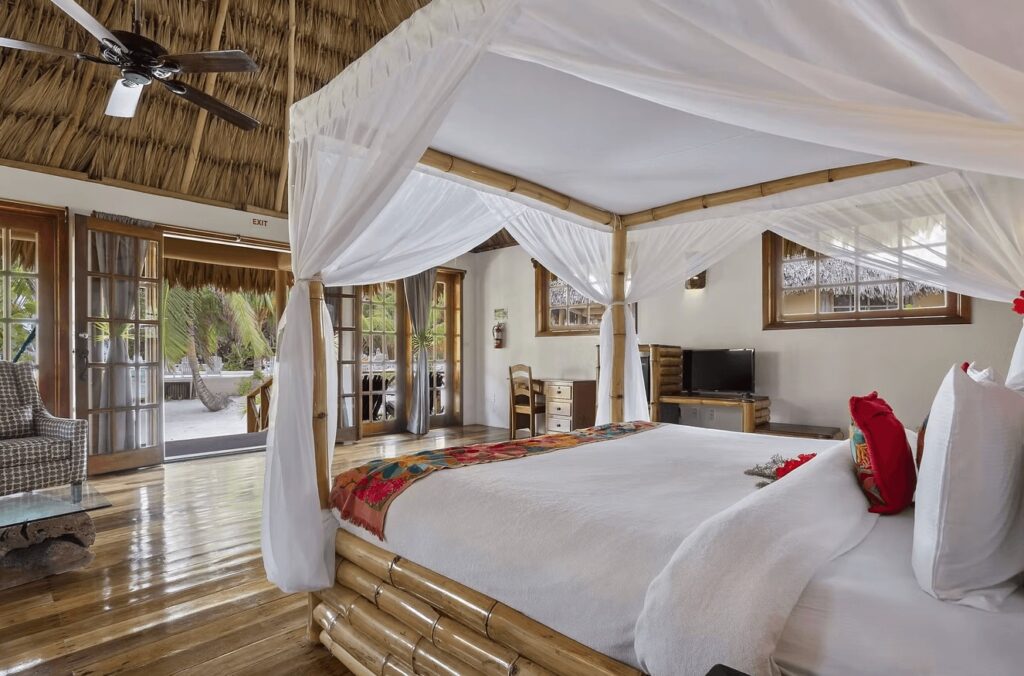
Embraced by a tropical garden, Ramon’s Village Resort overlooks a stunning expanse of sugar-white coral sand.
The thatched-roof villas and bungalows at this Belize dive resort evoke a sense of rustic luxury. We love how they seamlessly blend traditional Belizean architecture with modern comforts.
In addition to a world-class dive centre, Ramon’s boasts an indulgent spa and a swimming pool. When it comes to dining, there are several restaurants and bars to choose from.
Xanadu Island Resort
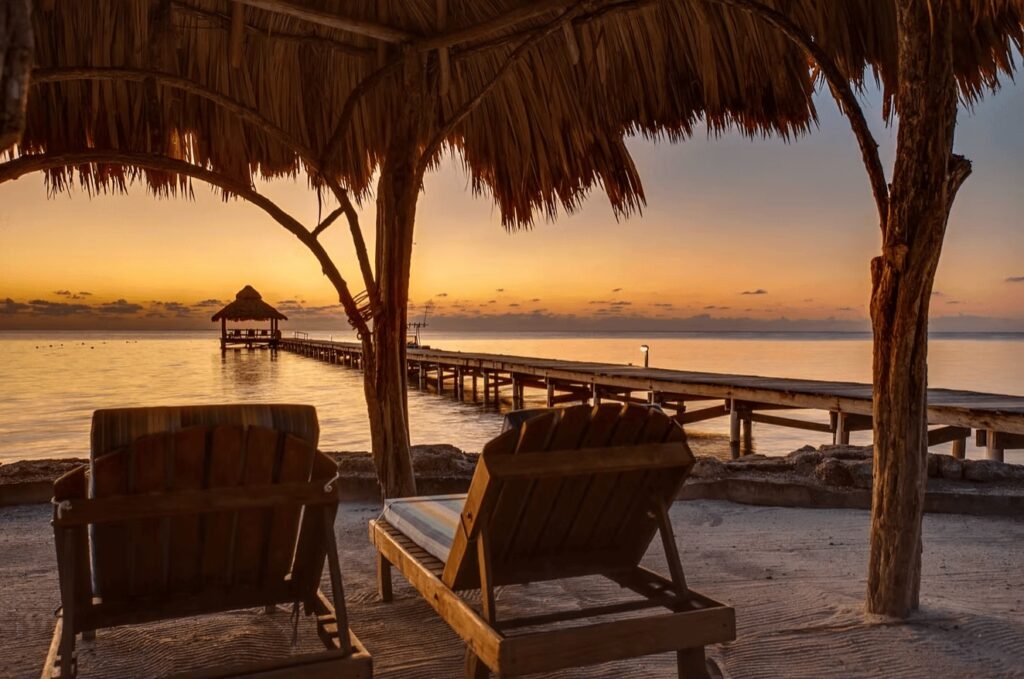
Drawing inspiration from Samuel Coleridge’s famous poem “Kubla Khan,” this Belize dive resort transports you to a completely different world. It offers ample opportunities to explore the Mesoamerican Barrier Reef. You can join a guided dive excursion or snorkel at your leisure.
Xanadu Island Resort is deeply committed to sustainable practices that benefit the local people and environment. Aside from its eco-friendly facilities, it runs community outreach programs.
Lighthouse Atoll
This isolated atoll faces the open expanse of the Caribbean Sea. Its sheer drop-offs descend over a thousand metres below the surface.
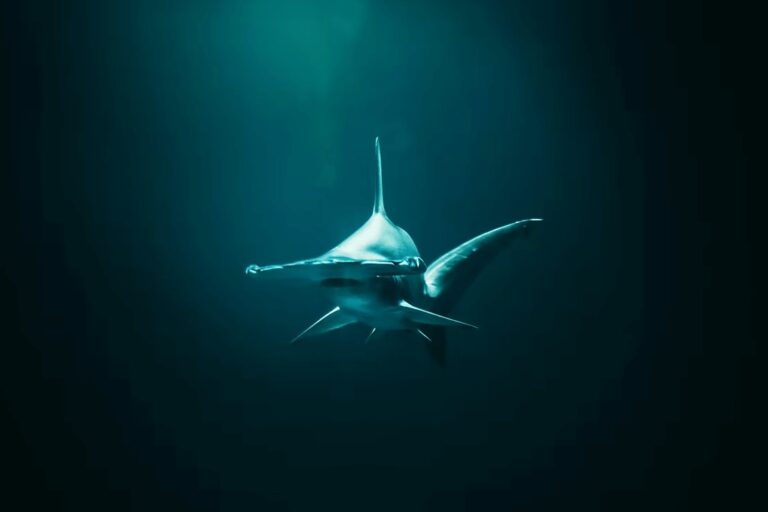
It is in this dramatic, oceanic environment that visitors are most likely to catch a glimpse of the larger marine life that inhabits Belize’s offshore waters. A highlight are the reef sharks that patrol the perimeter of Lighthouse Atoll.
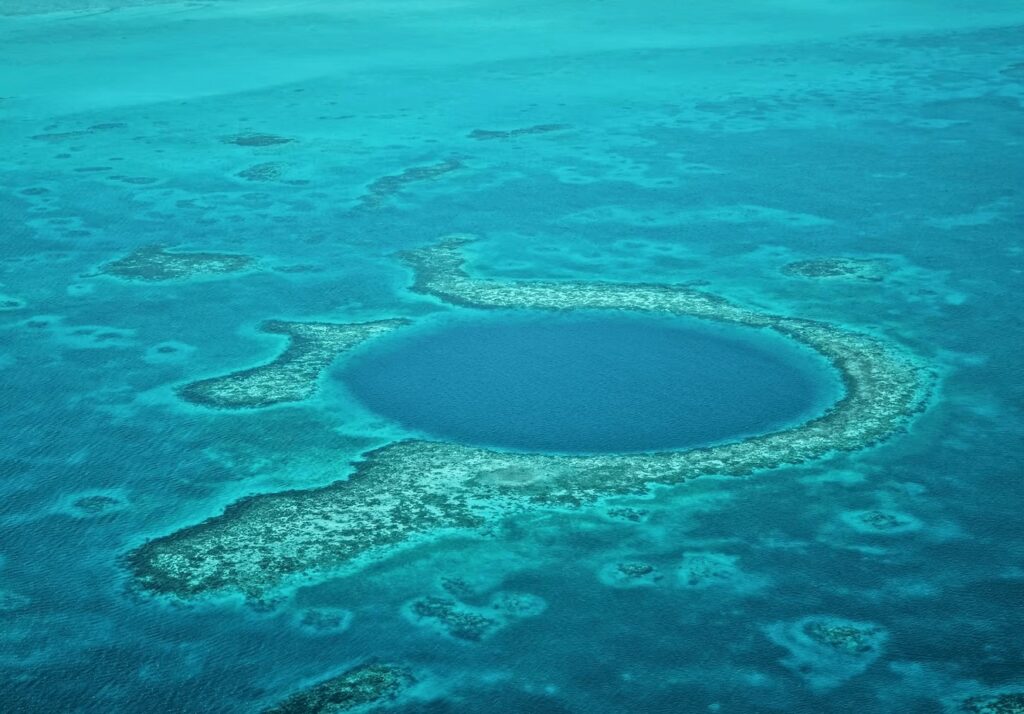
Not to miss is the legendary “Great Blue Hole” – a 300-metre wide collapsed limestone cavern that was formed thousands of years ago.
Divers venturing into this almost perfectly circular sinkhole will encounter dramatic overhangs and submerged stalactites. It’s also notable for its distinct thermocline, separating the warm surface waters from the cold, nutrient-rich depths below.
Larger marine life is scarce within the confines of the “Great Blue Hole” itself. However, curious reef sharks and the occasional bull shark have been known to investigate the perimeter, lured by the possibility of an easy meal.
For those willing to make the journey out to this remote oceanic outpost, Lighthouse Atoll is most definitely one of the best places to dive in Belize.
Turneffe Atoll
Situated just a short boat ride from the mainland, Turneffe Atoll is home to stunning geological formations. It also boasts a huge diversity of marine life, including eagle rays gliding overhead in graceful squadrons and massive moray eels lurking within crevices.
Turneffe Atoll also teems with schools of shimmering jacks and snappers congregating along the reef’s edge. Additionally, we think it’s one of the best places to spot tarpon, one of Belize’s most celebrated fish.
Those with a keen eye might also spot delicate seahorses and peculiar white-spotted toadfish, as well as an impressive array of sea slugs and industrious cleaner shrimp.
One of Turneffe’s most renowned sites is known as “The Elbow.” Here, the reef takes a dramatic twist and plunges into a series of drop-offs.
For experienced divers, it offers unforgettable experiences that showcase the sheer geological dynamism of this remarkable part of the world.
Best places to stay near Lighthouse Atoll and Turneffe Atoll for divers
Shaka Caye
Located just off the coast of Belize City, Shaka Caye is a private oasis where guests can bask in the lap of luxury. This exclusive resort, accessible only by boat, sits on its own secluded island and features just a handful of beachfront villas.
Offering all-inclusive packages, Shaka Caye is one of the best Belize dive resorts for guests who want to pay once and then enjoy their vacation.
Glover’s Atoll
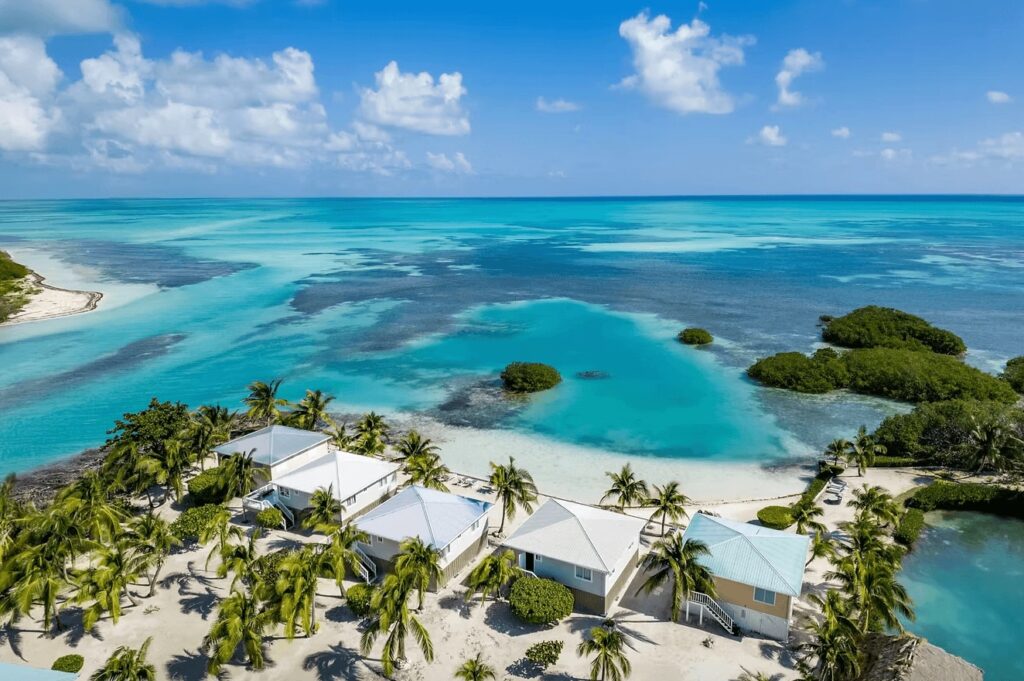
As the most remote and least visited of the country’s coral atolls, Glover’s Atoll lies nearly 50 kilometres offshore from the town of Placencia. Those who make the journey here are rewarded with some of the most uncrowded dive sites in Belize, if not the entire Caribbean region.
The atoll’s near-vertical walls plunge dramatically into the inky blue depths. Their surfaces are dotted with caverns, overhangs and other fascinating formations.
Towering pinnacles, some reaching heights of over 30 metres, rise towards the water’s surface. Here, you can see parrotfish, angelfish and countless other fish species darting between the corals.
The proximity of Glover’s Atoll to the Bartlett Trough – a deep ocean trench stretching all the way to the Cayman Islands – means that larger pelagic creatures like whale sharks and reef mantas are frequent visitors.
When diving here, you should keep one eye trained on the blue water beyond the reef, as you never know what may suddenly appear.
Gladden Spit and Silk Cayes Marine Reserve
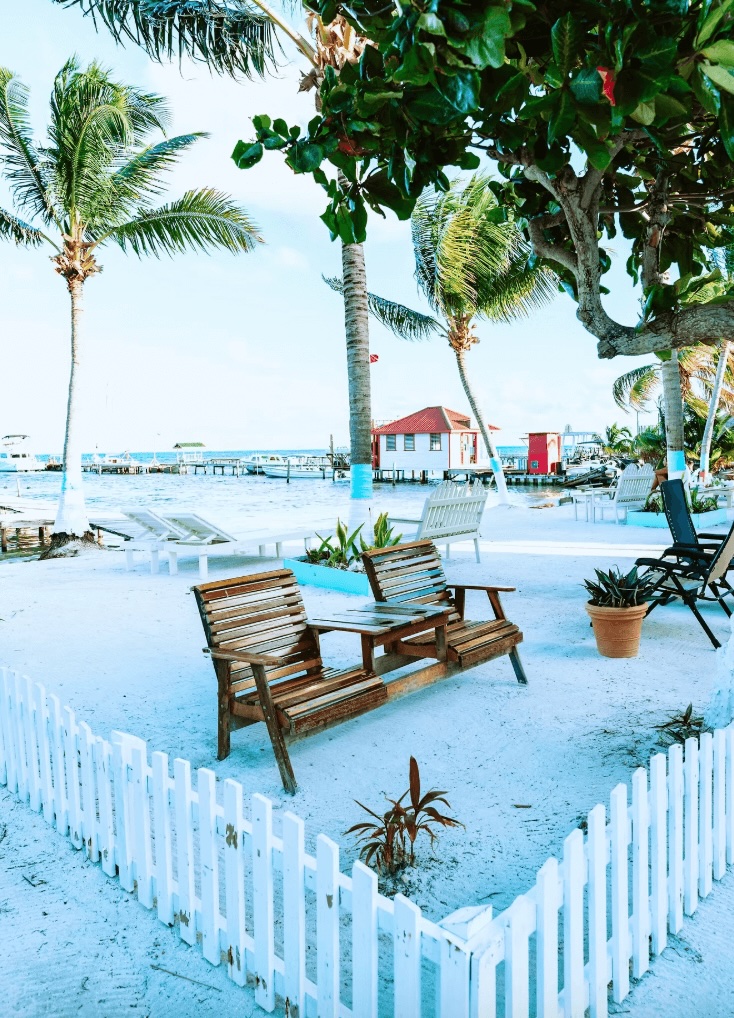
Located just off the coast of Placencia, Gladden Spit is renowned as the best place to spot whale sharks in Belize. Between March and June each year, these gentle giants make their way to this unique underwater ecosystem to take advantage of a natural phenomenon – the synchronised spawning of around 30 fish species.
Drawn by the abundance of nutritious fish eggs and larvae, large numbers of whale sharks can be spotted in the waters around Gladden Spit and the Silk Cayes Marine Reserve. It’s a unique opportunity for divers and snorkellers to encounter these magnificent animals in their natural habitat.
To maximize your chances, it’s best to time your visit around the new moon when the fish spawning reaches its peak.
Aside from its whale shark sightings, the Silk Cayes Marine Reserve protects some of the healthiest parts of the Mesoamerican Barrier Reef. This is largely due to its elevation and good water quality.
The area’s sandy beaches also serve as nesting sites for hawksbill turtles. Seeing these critically endangered creatures is a highlight of any visit.
Best places to stay near Glover’s Atoll and Gladden Spot for divers
King Lewey’s Island Resort
Located just a short boat ride from Placencia, King Lewey’s is a tropical island haven on the edge of Silk Cayes Marine Reserve.
It features charming bungalows with private bathrooms and spacious verandas that hang over the Caribbean Sea. Additionally, there’s a grill-style restaurant serving freshly caught seafood.
When you’re not out diving, snorkelling and fishing, you can unwind with a massage or body scrub at the onsite spa.
Caribbean Beach Cabanas
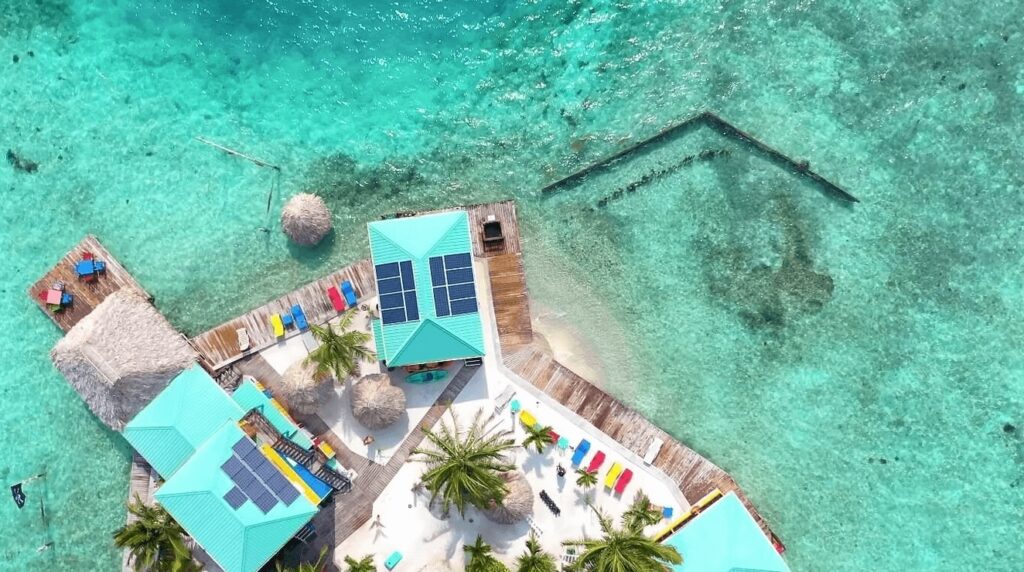
Featuring just a handful of well-appointed villas, Caribbean Beach Cabanas is an adults-only Belize resort in picturesque Placencia. This self-catering property boasts a prime beachfront location and breathtaking sea views from all of its accommodations.
You can take advantage of the complimentary bicycles to explore the surrounding area, then retreat to the tranquility of a child-free space.
Best time to dive in Belize
The peak tourist season in Belize runs from December through April, when the weather is at its driest and most pleasant.
During these months, daily temperatures average a comfortable 26°C (78°F). The refreshing breezes can occasionally pick up into more powerful gusts, particularly in the afternoons and evenings.
This is the best time to dive in Belize as the calm, clear waters offer excellent visibility of up to 30 metres (100 feet).
Water temperatures remain stable throughout the year, fluctuating only slightly between 27-30°C (80-86°F). A lightweight shortie or skinsuit is typically all that’s needed to stay comfortable underwater.
The rainy season runs from June through November, bringing daily downpours and an increased risk of hurricanes between August and October. This can lead to lower visibility due to coastal runoff, as well as choppier surface conditions.
But for those willing to brave the weather, the rewards can be great. May in particular is an excellent time to visit, as whale sharks are migrating through the area.
FAQs about diving in Belize
Does Belize have good scuba diving?
Yes! With over 400 islands dotting its Caribbean coastline, Belize is home to one of the longest unbroken barrier reefs in the world. Its waters are renowned for their exceptional clarity (and warmth), creating ideal conditions for scuba enthusiasts of all skill levels.
While the Great Blue Hole (a massive underwater sinkhole) is undoubtedly the country’s most iconic dive site, there is so much more to discover on a Belize dive vacation. This includes historic shipwrecks, underwater caves and canyons, as well as the unique mating rituals of groupers.
What is the best time of year to scuba dive in Belize?
The best time to dive in Belize is from December to April, when the weather is relatively dry and temperatures hover around 26°C (78°F). This season is perfect for diving, as the calm and clear waters provide visibility of up to 30 metres (100 feet).
Water temperatures remain consistently warm throughout the year, ranging from 27-30°C (80-86°F).
April to June is another great time to visit Belize for divers, as it coincides with the arrival of whale sharks.
From June to November, Belize experiences its rainy season. This brings daily showers and a heightened risk of hurricanes, especially from August to October (the warmest months). This can result in reduced visibility and rougher surface conditions.
If you want to see groupers mating, time your dive trip to Belize in October or November.
Do I need a wetsuit for diving in Belize?
During the warmer months, many divers visiting Belize find that a lightweight dive skin is sufficient to keep them comfortable.
A 3mm wetsuit, whether in the form of a shorty that covers the torso and arms or a full-length suit, can provide an extra layer of insulation. This will help to retain body heat, making for a more comfortable diving experience in the cooler months.
Most dive centres and resorts in Belize rent wetsuits if you don’t want to bring your own.
How much experience do you need to dive in Belize?
The amount of experience you need to dive in Belize depends on where you want to dive and how deep you want to go. Many dive resorts in Belize offer Open Water certification courses. Training is done on shallow coral reefs and sandy bottoms.
If you want to explore deeper dive sites, such as the legendary Great Blue Hole, it’s best to have an Advanced Open Water certification. This will allow you to descend to 30 metres (100 feet), rather than the 18 metres (60 feet) cap for Open Water divers.
If you want to reach the recreational limit of 40 metres (130 metres), you’ll need to complete a Deep Diver specialty course in addition to your Advanced Open Water.
PLAN YOUR TRIP WITH OUR FAVOURITE RESOURCES:
Find hotels and resorts via Booking or Agoda
Book tours and experiences via Viator or GetYourGuide
Find a rental car via Discover Cars
Book flights via Kiwi or Booking
Search for buses and trains via 12Go or Omio
Get travel insurance via SafetyWing
Buy a digital eSIM with Airalo
By purchasing through our links, you’ll be supporting our website at no additional cost to you
About the authors
We are a team of passionate divers and surfers with decades of combined experience in the water and travelling to all corners of the globe. After years of chasing waves and descending into the deep blue, we’ve created this resource to highlight sustainably run surf camps, eco-friendly dive resorts and conservation-focused ocean trips to help inspire your next adventure.
Eco Ocean Escapes was born out of a love of the ocean, an obsession with travel and a concern about the impacts of our adventures on the environments we explore. Despite the benefits that surf and dive tourism can bring to local communities, we recognised that ocean-based adventures are not always managed in a sustainable manner.
Through our articles, we hope to inspire those seeking a responsible surf or dive trip that is all about supporting local communities, preserving our coastal environments and the incredible marine species that inhabit our oceans.
-
Surfing and Environmental Activism: A Growing Movement
Surfing has always been more than a sport. It’s a culture shaped by natural forces – tides, winds, swells – and a lifestyle that depends on healthy ocean environments. So it’s no surprise that surfers are often engaged environmental activists, at both a local and global scale. As we’ve travelled around the world, we’ve loved…
-
Sustainable Snorkelling Tips for Ocean Advocates
You don’t need a scuba certification to fall in love with the ocean. Snorkelling is an equally magnificent way to explore coral reefs, seagrass meadows and the marine life that calls them “home”. In fact, snorkelling is often a gateway to scuba diving. Or sometimes, it’s the destination. We all snorkelled long before we ever donned…
-
How to Be a More Responsible Underwater Photographer
In recent decades, photography has become unbelievably accessible. Almost everyone carries a camera around with them everyday in the form of a smartphone. Technological improvements have also made underwater photography far more accessible, resulting in powerful images of a world that’s inaccessible to many. A single image of a healthy reef, a shark passing through…
-
Second-Hand Surf Gear: Embracing the Circular Economy
Surfing sells itself as a low-impact pursuit. All you need is a board and the ocean (and if you live where we do, a wetsuit!) What could be simpler? But behind this “at-one-with-nature” facade lies an industry built on short product cycles, seasonal “drops” and a steady turnover of gear due to new “innovations”. The…
-
How Coral Nurseries Work (And How Divers Can Join Planting Programs)
Coral reefs support an extraordinary diversity of marine life, and as divers, being able to explore them is one of life’s great privileges. But coral reefs are also among the most threatened habitats on the planet. Pollution, destructive fishing practices and climate change-induced coral bleaching are all having a devastating impact. In response, coral nurseries…
-
Are Wave Pools Sustainable? The Surf Park Environmental Debate
Nothing compares to surfing in the ocean. Full stop. For us, being at the whim of Mother Nature is a big part of surfing’s allure, and all things being equal, we’d pick the ocean over a wave pool every time. But with coastal communities under increasing pressure and surf breaks being flooded with people, are…

We are a team of passionate divers and surfers with decades of combined experience in the water and travelling to all corners of the globe.
After years of chasing waves and descending into the deep blue, we’ve created this resource to highlight sustainable surf camps, eco-dive resorts and conservation-focused ocean trips to help inspire your next adventure.
Eco Ocean Escapes was born out of a love of the ocean, an obsession with travel and a concern about the impacts of our adventures on the environments we explore.