Scuba Diving in Galapagos Islands: Best Dive Sites + Eco-Resorts
Looking for the best places to dive in the Galapagos Islands? Discover everything you need to know about scuba diving in the archipelago, including the top dive sites and eco-friendly resorts in the Galapagos for a sustainable stay.
Situated in the remote Pacific Ocean (off the coast of Ecuador), the Galapagos Islands are a bucket-list destination for many scuba divers.
These volcanic islands boast an incredible marine biodiversity. They’re home to an astounding array of rare and remarkable creatures found nowhere else on Earth.
Divers who make the journey to this far-flung archipelago in South America are rewarded with exceptional underwater encounters. You can see everything from massive schools of hammerhead sharks to enigmatic marine iguanas, the only lizards in the world that have adapted to a fully aquatic lifestyle.
Following the groundbreaking work of Charles Darwin, the Galapagos are now designated as both a national park and a UNESCO World Heritage Site. This ensures the archipelago’s exceptional marine environment remains protected for generations to come.
The focus here is firmly on sustainable tourism, with strict guidelines regarding landings and a wonderful choice of eco-friendly hotels.
In this article, discover everything you need to know about scuba diving in the Galapagos Islands, from the best dive sites to eco-friendly accommodation and what to expect across the seasons.
Heading to the Galapagos to surf? Check out our detailed guide with all the best surf spots and eco-friendly stays.
This article contains affiliate links, which means when you make a purchase through that link, we earn a small commission. Affiliate links come at no cost to you and ensure our content remains free!
Best dive sites in the Galapagos Islands
Darwin & Wolf Islands (accessible by liveaboard only)
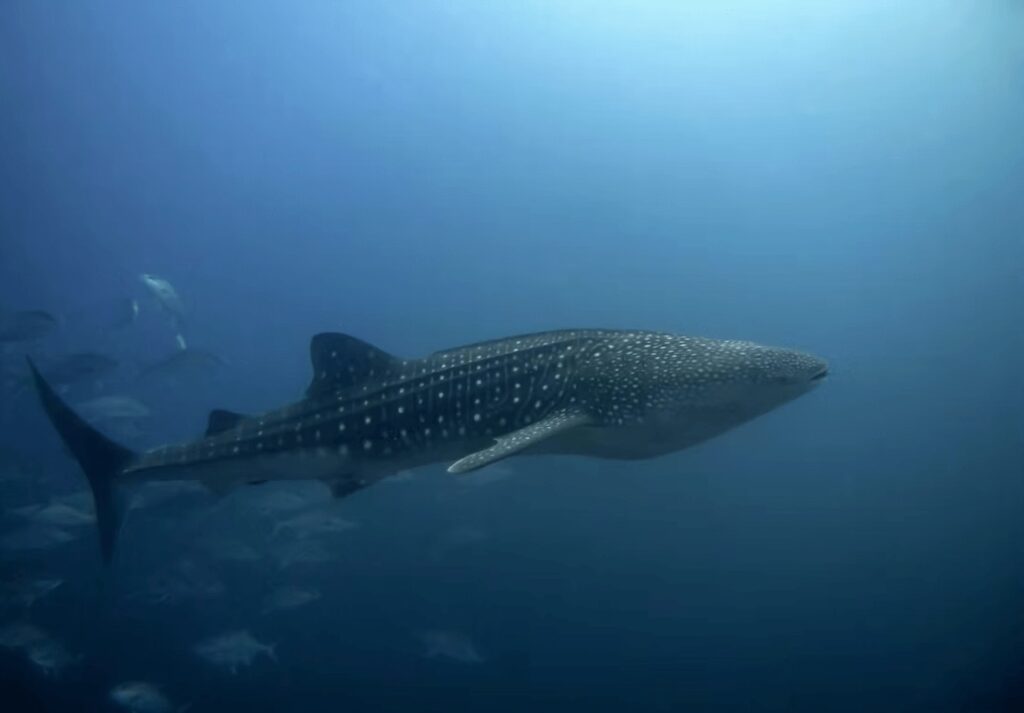
Darwin Island is widely regarded as one of the world’s premier dive destinations and for good reason. This small, volcanic island has gained a legendary reputation among scuba divers for its incredible marine life encounters, particularly regarding whale sharks and hammerheads.
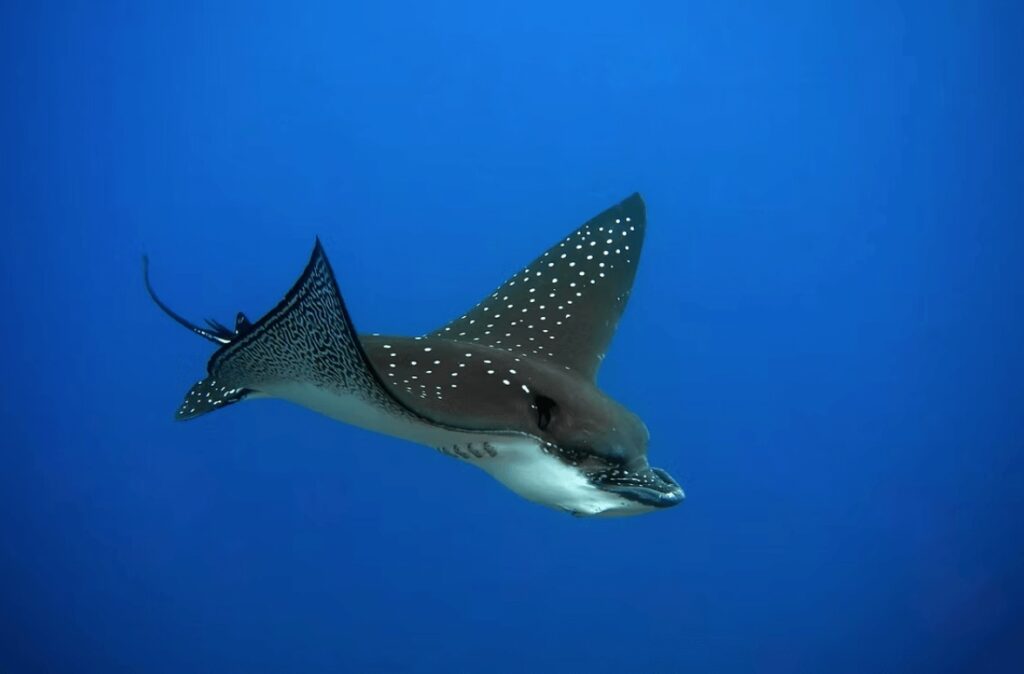
Nearby Wolf Island is equally captivating, with the opportunity to spot Galapagos sharks and spotted eagle rays.
Whether exploring Darwin Arch, the sloping seabed of El Arenal or aptly named Shark Bay, the concentration of sharks around Darwin and Wolf Islands is phenomenal.
While the journey to reach these remote islands requires a multi-day liveaboard cruise, the sheer density and variety of marine life make it more than worth it.
Keep in mind that these waters are often subject to strong currents. So dive experience in challenging underwater conditions is highly advised.
Isabela Island
The largest of the Galapagos Islands, Isabela straddles the equator in the west of the archipelago.
While the southern reaches of the island are accessible by boat from Santa Cruz (enabling access by land-based divers), the real gems lie in the untamed northern regions. To access these dive sites, it’s best to be on a liveaboard cruise.
At Punta Vincente Roca, you can see gorgonian fans in brilliant hues of purple, red and orange. Meanwhile, Roca Blanca is renowned for its curious sea lions.
For thrill-seekers, a dive at the submerged volcanic peak of Roca Redonda promises unforgettable encounters with hammerheads, Galapagos sharks and barracudas.
The waters around Isabela Island can be surprisingly chilly, dropping as low as 14°C (57°F) on some days.
Fernandina Island (accessible by liveaboard only)
Just an hour by boat from Isabela, Fernandina is the youngest island in the Galapagos and lies in the far west of the archipelago.
It’s renowned for its active volcano, “La Cumbre”, and is home to everything from flightless cormorants to Galapagos penguins and marine iguanas. The latter can be observed feeding underwater during dive trips around Fernandina, with a highlight being the site at Cabo Douglas.
Located on the northwest coast of Fernandina, Cabo Douglas is considered one of the best dive sites in the Galapagos Islands. Here, you can expect regular sightings of fur seals and sea lions.
Due to its remote setting, Cabo Douglas is only accessible on liveaboard trips.
San Cristobal Island
For budget-conscious scuba divers visiting the Galapagos Islands, San Cristobal is an ideal base. Day trips with local scuba operators are available from the main town of Puerto Baquerizo Moreno, which is only a short drive from San Cristobal Airport.
Not only that, but you can easily access hiking trails and snorkelling spots within a short walk of the town centre. This means you can experience a lot without having to pay for an expensive liveaboard trip.
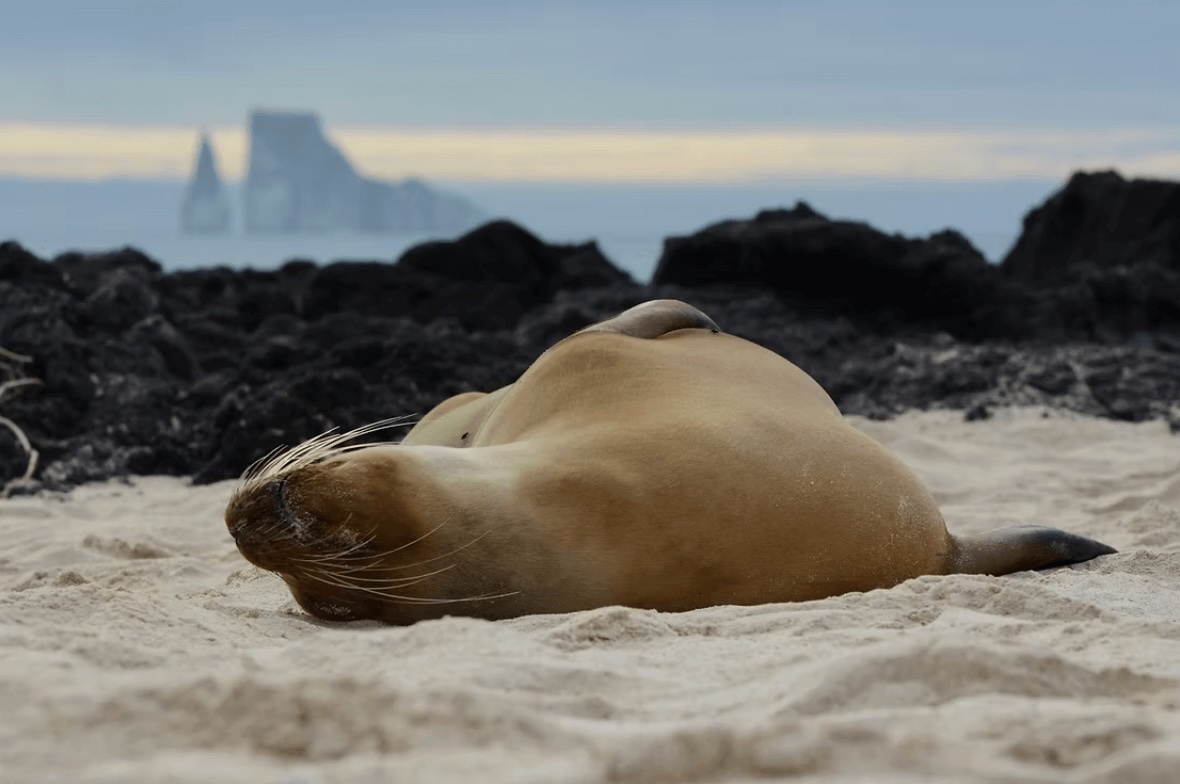
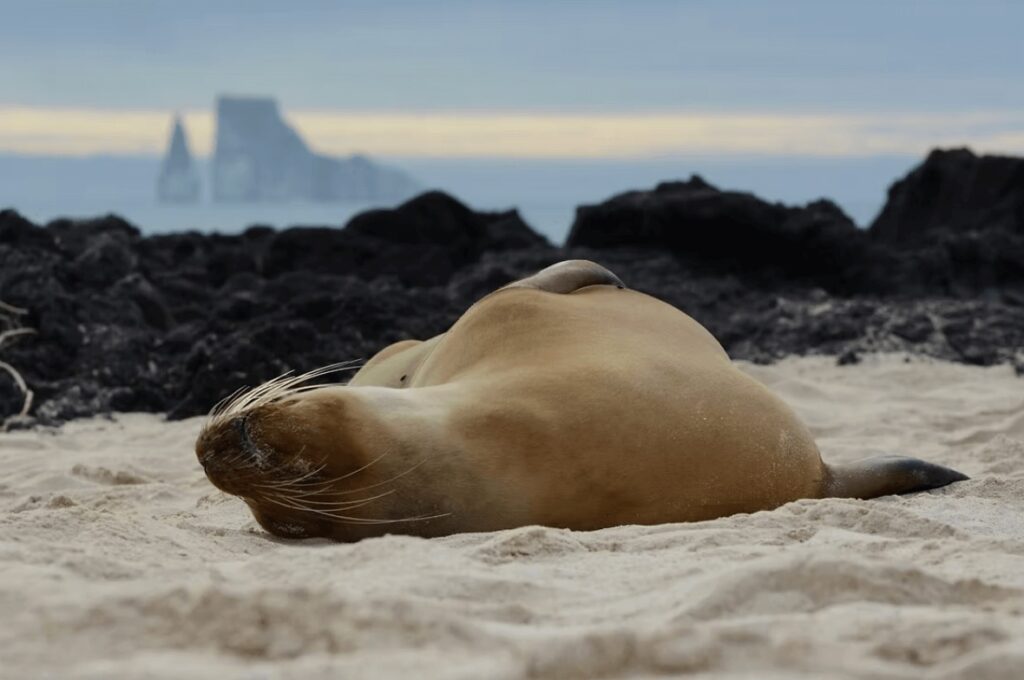
When it comes to diving around San Cristobal, the crown jewel is Kicker Rock (also known as León Dormido). This volcanic formation has become a renowned destination for both divers and snorkellers alike.
Its sheer walls provide a sheltered environment that allows less experienced divers to encounter the Galapagos’ abundant marine life.
Punta Pitt on the island’s easterly tip is another highlight, with the opportunity to see eagle rays, turtles and white-tip sharks.
Santa Cruz Island
If you want a land-based dive vacation in the Galapagos Islands, then Santa Cruz is a great option. It’s home to several highly rated dive centres offering daily trips.
From the central tourist hub of Puerto Ayora on the island’s south coast, divers can easily access Gordon Rocks, Daphne Island, Seymour Island and Mosquera Island. Each offers its own unique underwater landscapes and marine life encounters.
Of these sites, Gordon Rocks is particularly popular with experienced divers, as it is renowned for its abundance of sharks. However, the strong currents here require a high level of skill and caution.
For those seeking a slightly more relaxed dive, the calmer waters around Camaño Islet provide the opportunity to spot a diverse array of marine creatures, from graceful batfish to hulking groupers and playful sea lions.
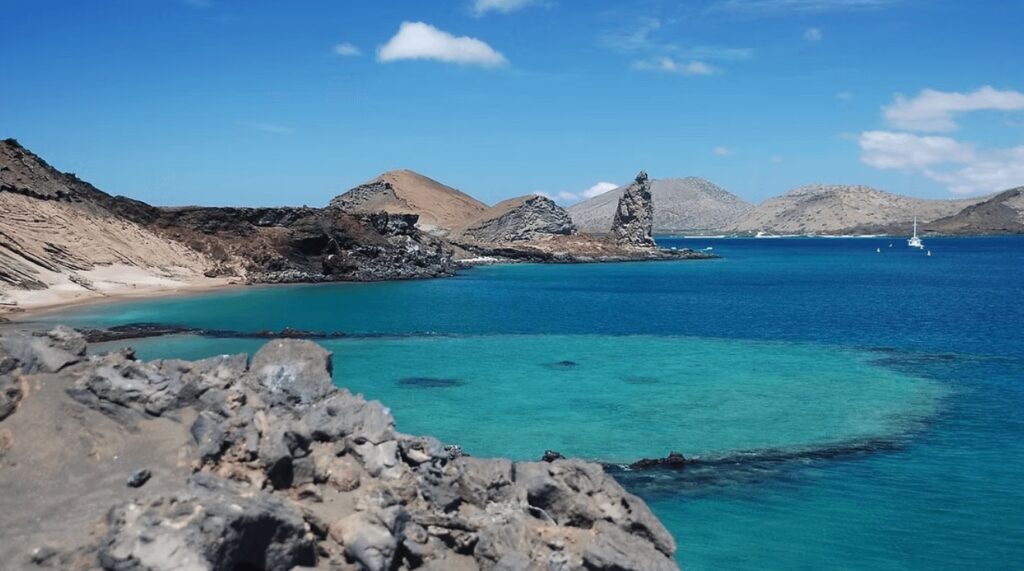
Galapagos eco-resorts vs liveaboard diving
When planning a sustainable dive vacation in the Galapagos Islands, you have two options available – a liveaboard cruise or land-based diving from an eco-resort.
The best way to experience the incredible underwater world of this fascinating archipelago comes down to personal preference and budget.
In some ways, the only way to truly experience the full breadth and diversity of the Galapagos Islands’ marine life is by embarking on a liveaboard expedition. These multi-day cruises provide access to the archipelago’s remote, far-flung islands, such as Wolf and Darwin. These are home to some of the Galapagos’ most legendary dive sites.
Typical Galapagos liveaboard itineraries span seven nights and include up to four dives per day. On these cruises, the focus is clearly on diving, rather than land-based excursions.
If you prefer the freedom to combine some diving with land-based excursions and other activities, then staying at a Galapagos eco-resort or hotel is a good alternative.
There are still some incredible dive sites that can be accessed as day trips from Santa Cruz and San Cristobal. Several of these are more suitable for less-experienced divers.
A land-based scuba vacation in the Galapagos Islands also tends to be a more budget-friendly option, depending on the hotel or resort you choose.
Liveaboards in the Galapagos Islands
Humboldt Explorer
Forming part of the world’s first Green Fins-approved liveaboard fleet, this eco-friendly Galapagos liveaboard focuses its itineraries around Wolf and Darwin Islands.
Tiburon Explorer
Also Green Fins-certified, this sustainably run Galapagos liveaboard is ideal for divers who want a more luxurious experience.
Aqua
Ideal for budget-conscious travellers, the Aqua offers scuba diving and naturalist-focused itineraries. It’s perfect if you want the best of both worlds.
Calipso
Aside from offering liveaboard itineraries through the Galapagos Islands, the Calipso can arrange pre- or post-trip excursions to the Amazon and the Andes.
Galapagos Aggressor III
Custom-built for dive safaris in the archipelago, this is one of the best Galapagos liveaboards for underwater photographers.
Galapagos Master
With a focus on Wolf and Darwin Islands, plus a nitrox compressor, this Galapagos liveaboard is ideal for highly experienced divers.
Galapagos Sky
Renowned for its luxury accommodations and gourmet food, the Galapagos Sky offers year-round liveaboard itineraries that include numerous land tours.
Solaris
This affordable Galapagos liveaboard focuses on naturalist itineraries. It’s a great choice for divers travelling with non-diving family and friends.
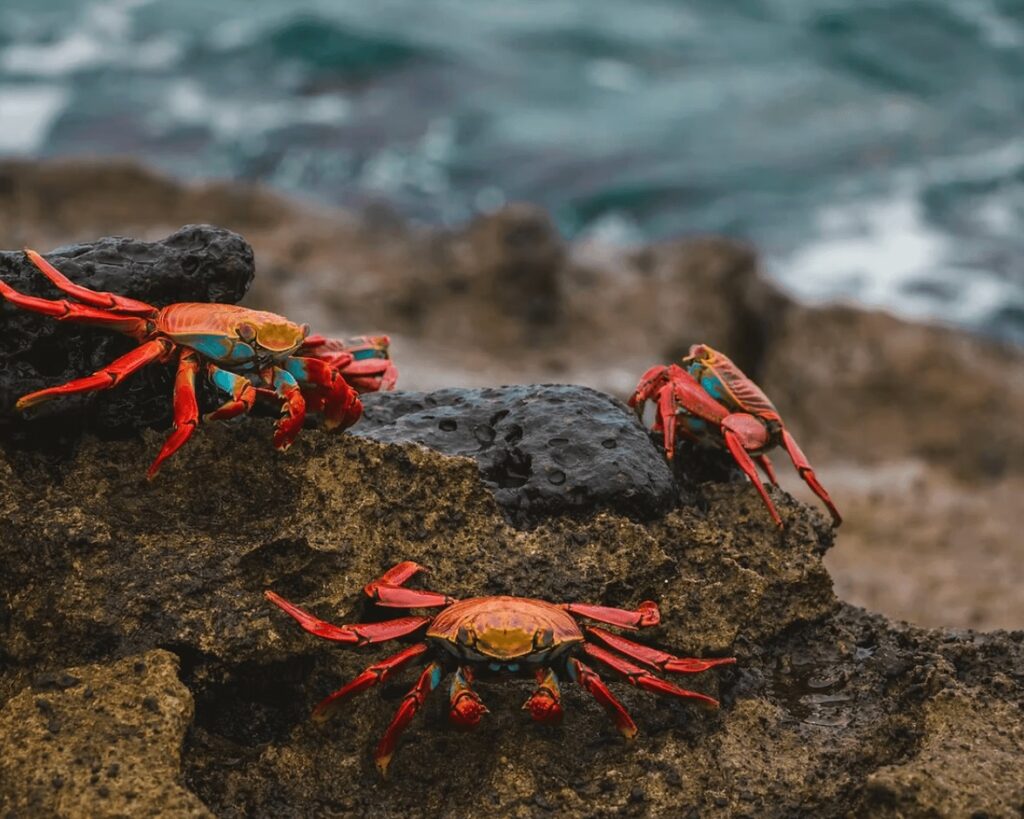
Eco-friendly hotels in the Galapagos Islands
Finch Bay Galapagos Hotel
Recognised by National Geographic as one of their “Unique Lodges of the World”, Finch Bay is the only full-service Galapagos eco-hotel with a beachfront setting.
Each of its rooms and suites is beautifully designed by Julio Vinueza. Plus the tranquil pool attracts finches and herons all day long.
Finch Bay offers scuba diving excursions and packages that explore the neighbouring waters of the Galapagos Marine Reserve.
Ikala Galapagos Hotel
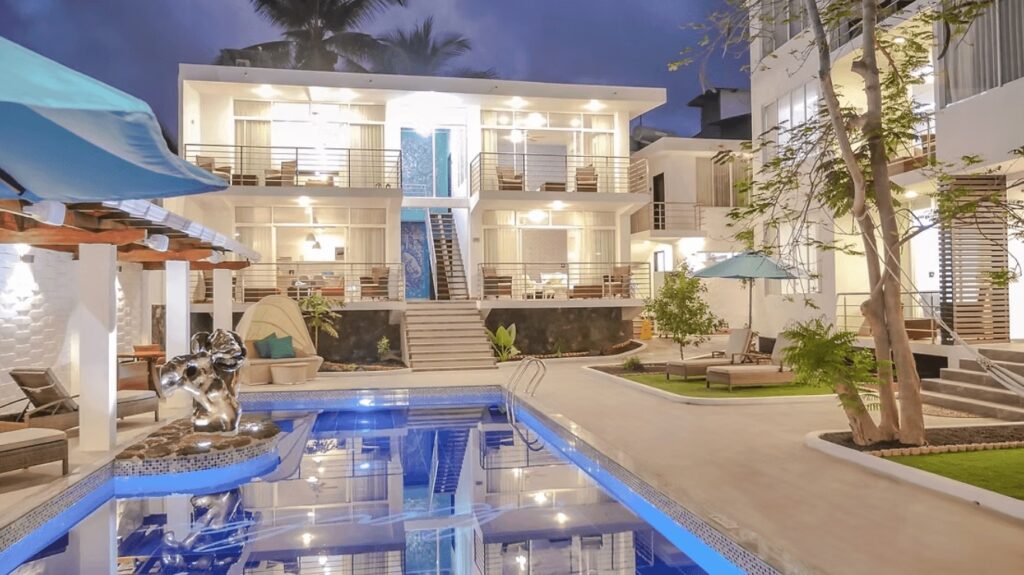
Located in Puerto Ayora, this modern hotel has been designed around the principles of luxury, sustainability and environmental protection. Most notably, it harnesses the use of solar for its energy needs.
Aside from its well-appointed rooms and suites, there’s an onsite restaurant and a small pool where you can refresh at the end of the day.
Ikala Galapagos is within walking distance of the 5-Star Padi Center at Scuba Iguana, which offers daily dive excursions.
Pikaia Lodge
Constructed using environmentally-conscious methods and materials, this sustainable Santa Cruz hotel blends seamlessly into its natural surroundings, perched on the edge of a crater.
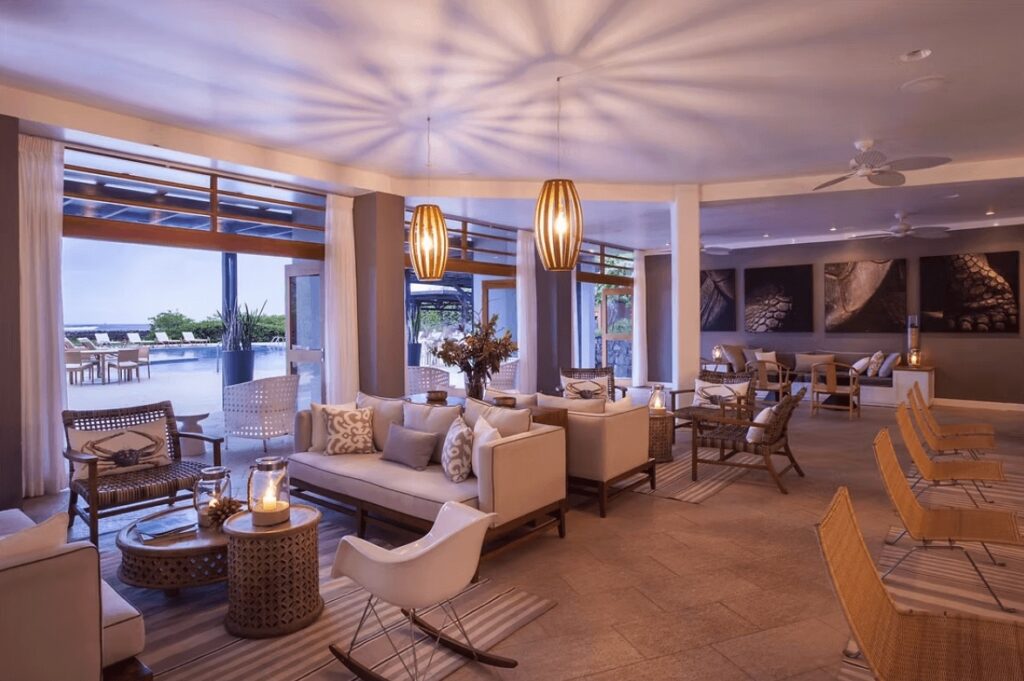
Pikaia’s rooms and suites feature floor-to-ceiling windows that frame breathtaking views of the coastal hills. Meanwhile, the Lobby Lounge opens onto an infinity pool with sweeping ocean views.
Dive trips with local operators can be organised at Pikaia Lodge or you can opt for one of their multi-day land and yacht packages.

Cucuve Eco Hostal
Tucked away among fruit trees and cosy hammocks is this eco-friendly hostel in Puerto Baquerizo Moreno. It’s an awesome spot for divers eager to explore the surrounding waters.
Cucuve offers budget-friendly accommodation on San Cristobal Island, with your choice of single and double rooms, plus family suites.
Planet Ocean offers daily dive trips around San Cristobal with a focus on marine conservation.
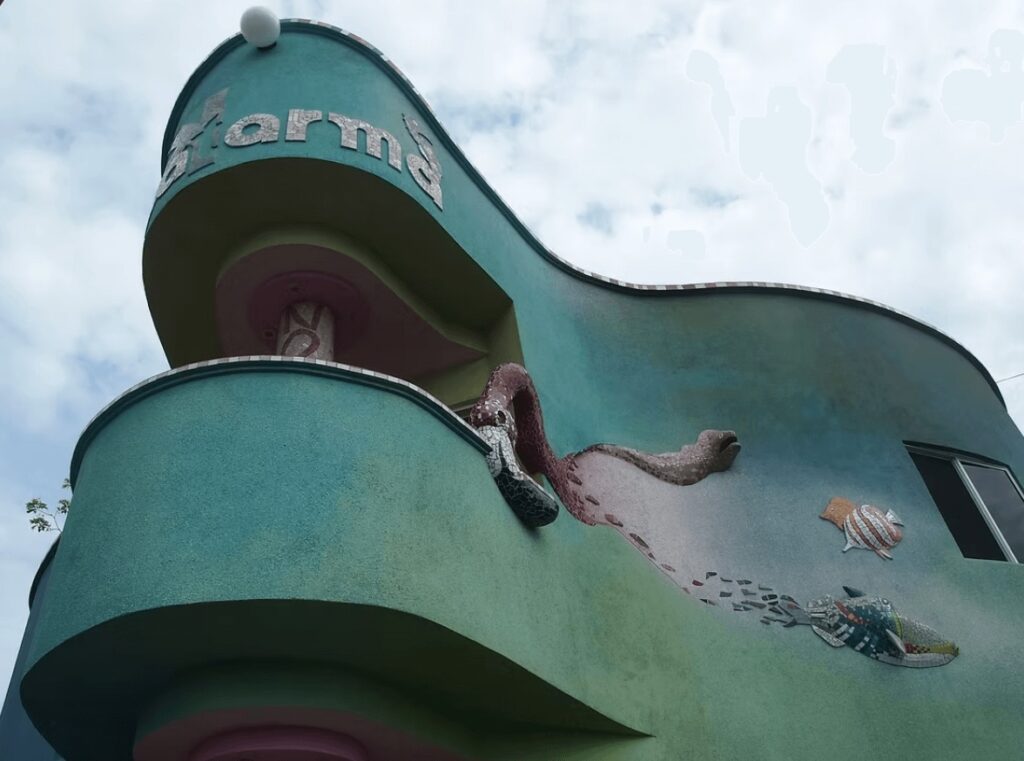
Eco Hotel Katarma
Not only is this one of the most eco-friendly hotels in San Cristobal, but it has a strong focus on art throughout its design.
Eco Hotel Katarma features 14 spacious rooms with recycled ceramic tiles that lend a warm, earthy feel. Additionally, there’s an inviting swimming pool for after-dive dips.
Eco Hotel Katarma can help you arrange scuba trips with local operators, as well as advise on lots of free activities to do in the area.
Getting to the Galapagos Islands
When planning a Galapagos scuba diving vacation, you have two options for flying to Ecuador. You can transfer through Mariscal Sucre International Airport (UIO) in the Ecuadorian capital of Quito or José Joaquín de Olmedo International Airport (GYE) in the coastal hub of Guayaquil.
Both of these well-connected airports offer easy access to the Galapagos Islands. There are daily flights to San Cristobal (SCY) and Isla Baltra (GPS), the two main jumping-off points for Galapagos cruises and liveaboards.
It’s generally recommended that you arrive in either Quito or Guayaquil at least 1-2 days before your scheduled liveaboard departure. This provides a buffer to account for any travel delays.
It’s worth noting that Galapagos-bound flights from mainland Ecuador only operate in the mornings, which may not align perfectly with the arrival times of international flights.
The flight time from the mainland to the islands is around two hours.
Best time to dive in the Galapagos Islands
Scuba diving in the Galapagos Islands can be enjoyed year-round. But the optimal time to visit largely depends on the specific marine life you hope to encounter….and your tolerance for colder water temperatures.
The diving season in the Galapagos is generally divided into two distinct periods: the whale shark season from June through November (when the waters are cooler and the climate drier) and the manta season from December through May (when the water is slightly warmer and rain can be expected most days).
The peak tourist months in the Galapagos Islands are July/August, Christmas and the Easter holidays. September/October is usually the quietest period.
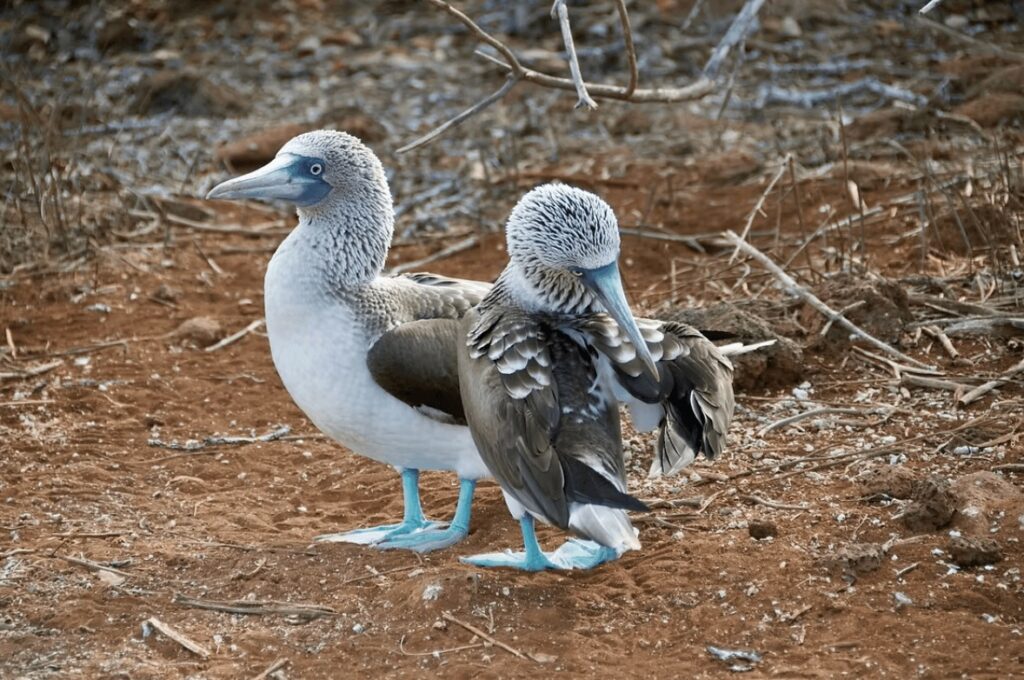
During the manta season, you may witness large schools of hammerhead sharks, as well as giant manta rays that congregate off the coast of Isabela Island. This is also a prime time to observe the fascinating mating behaviours of the Galapagos’ marine iguanas and the world-famous blue-footed boobies.
Additionally, the calmer ocean conditions and abundant sunshine make for a more comfortable boat experience.
May is considered an especially excellent month for scuba diving in the Galapagos. It falls just before the official start of the whale shark season, yet there is still a good chance of spotting these gentle giants.
Once June arrives, divers flock to the waters off Wolf and Darwin Islands, where the plankton-rich currents draw these magnificent creatures to feed.
During the whale shark season in the Galapagos Islands, the marine life in general is far more active, thanks to the increased nutrient levels in the water.
However, the tradeoff is that weather conditions can be rougher, with choppier seas and less sunshine. Bring seasickness pills if you’re on a liveaboard!
Nonetheless, the opportunity to encounter whale sharks in their natural habitat makes it well worth it for many adventurous scuba enthusiasts.
Water temperatures in the Galapagos Islands
The water temperatures off the coast of Ecuador can vary significantly throughout the year. This necessitates different equipment needs, depending on the season.
During the cooler months from June through December, the Humboldt Current flowing northward from Antarctica brings chilly waters that range from 22°C (71°F) down to around 14°C (57°F).
Bringing a 7mm or semi-dry wetsuit is highly recommended, as these provide superior insulation compared to a 5mm wetsuit. Even better, adding a hooded vest or even a full-coverage hoodie to wear under your wetsuit can make a big difference in retaining body heat.
Gloves are also an essential accessory for these cooler dives, as are neoprene booties.
In contrast, the waters are significantly warmer from December through May. Temperatures climb as high as 26°C (78°F) and rarely dip below 20°C (68°F) thanks to the influx of the Panama Current from the north.
Even so, a 7mm wetsuit is generally a more comfortable choice than a 5mm model. It will provide ample insulation without being overly restrictive.
Want to move away from neoprene wetsuits? Check out some eco-friendly alternatives here.
It’s worth noting that many dive operators and liveaboard vessels in the region may only have 5mm wetsuits available to rent. So if you plan to do extended or deep dives, you may want to consider bringing your own, thicker wetsuit for maximum warmth.
FAQs for diving the Galapagos Islands
What can you see diving in the Galapagos Islands?
The Galapagos Islands offer scuba divers the chance to encounter an incredible diversity of marine life – some species are found nowhere else on Earth.
As one of the world’s top destinations for seeing large pelagic species, the Galapagos is renowned for its abundant shark and ray populations. You can see everything from scalloped hammerheads to Galapagos sharks and manta rays regularly spotted.
But the islands’ appeal extends far beyond these charismatic megafauna. The nutrient-rich waters also support a vibrant array of smaller tropical fish, including king angelfish and red-lipped batfish.
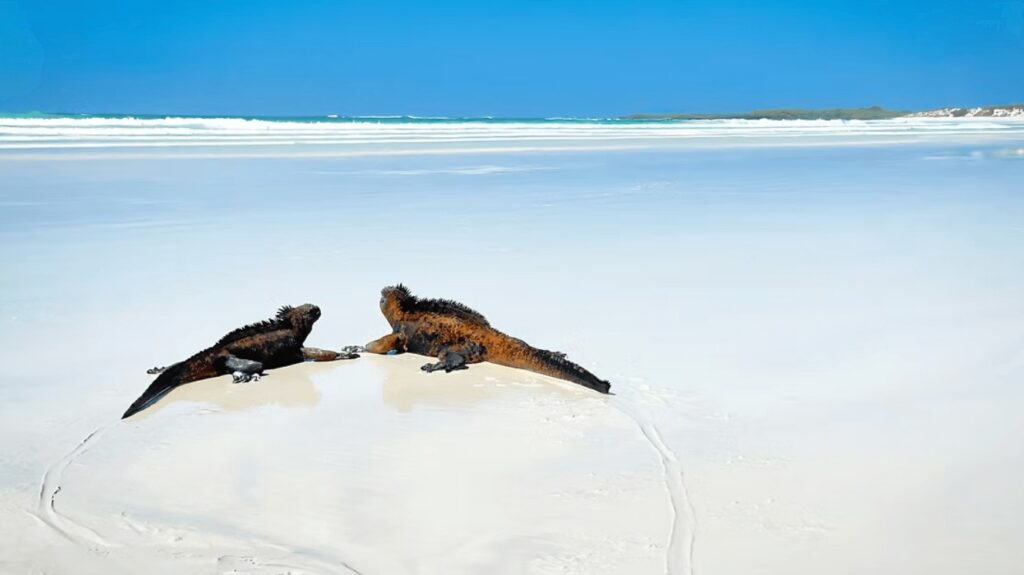
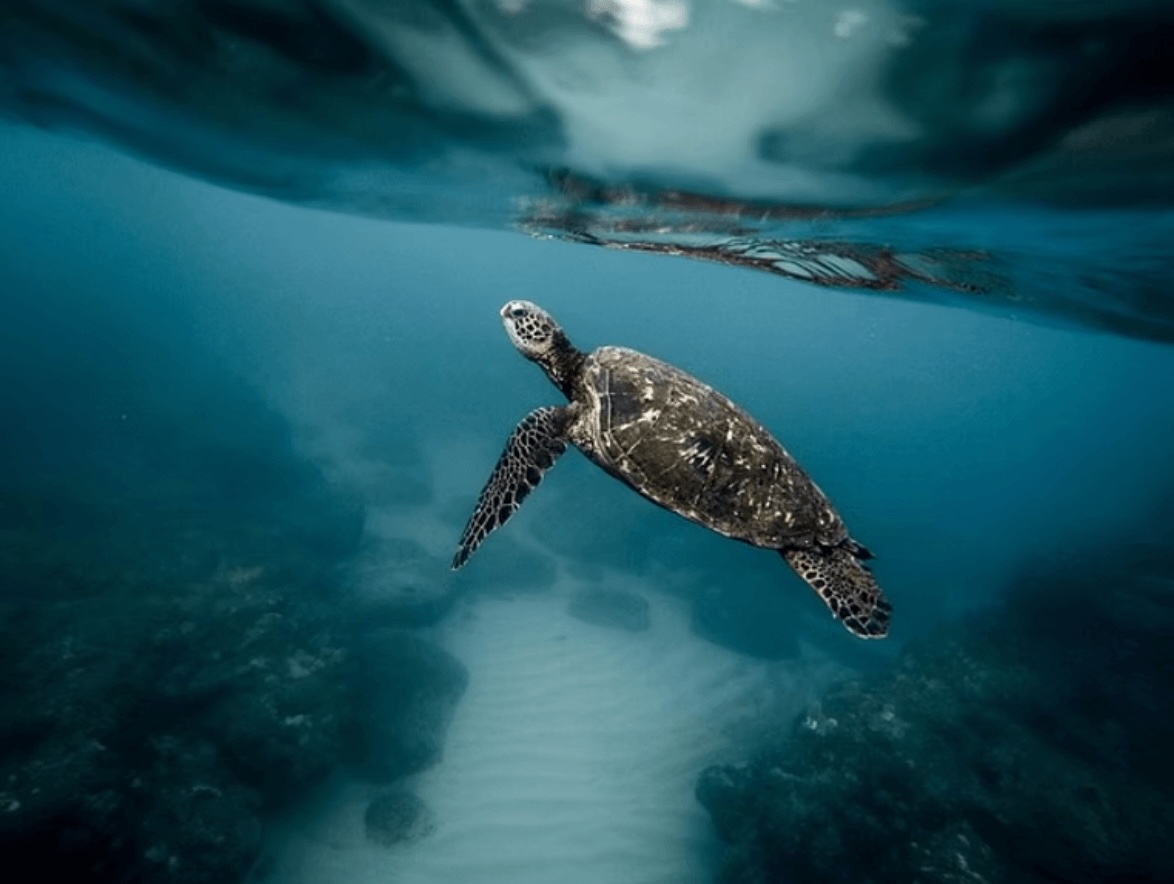
Particularly fascinating are the marine iguanas, which can be spotted underwater munching on algae and seaweed. Their prehistoric-looking bodies have adapted to thrive in this aquatic environment.
Each of the Galapagos’ islands has its own unique species, the result of millions of years of independent evolution.
Divers with a penchant for macro photography can capture the islands’ resident blennies, hawkfish and pufferfish. Meanwhile, wide-angle enthusiasts can revel in photographing the playful sea lions and occasional whale sharks.
Where are the best dive sites in the Galapagos Islands?
When it comes to the best dive sites in the Galapagos Islands, two locations stand out – Darwin and Wolf Islands. These uninhabited islands situated at the northern tip of the archipelago offer unparalleled encounters with some of the ocean’s most awe-inspiring creatures.
In addition to whale sharks, divers often encounter large schools of hammerhead sharks, as well as mantas and other rays. Due to their remote setting, Darwin and Wolf Islands are only accessible on liveaboard trips in the Galapagos Islands.
If you’re opting for a land-based Galapagos scuba adventure, there are several exceptional dive sites to discover. Gordon Rocks (off the east coast of Santa Cruz) is renowned for its resident population of hammerhead sharks. These can often be seen congregating in groups of 50 or more.
Meanwhile, North Seymour Island offers the chance to encounter white-tip reef sharks, while Roca Blanca (off the coast of Isabela) is renowned for its curious sea lions.
Can beginners dive the Galapagos Islands?
Generally speaking, the Galapagos Islands are not a great destination for beginner divers. The challenging conditions at many sites require a significant level of experience and skill.
The water temperatures are typically cold, often necessitating the use of a 5 or 7mm wetsuit to maintain warmth. This is a much different experience if you’re solely used to tropical water diving.
Additionally, the Galapagos is known for its strong ocean currents. These can make navigation and buoyancy control difficult, even for seasoned divers.
The water visibility can also be variable, ranging from clear to murky, adding another layer of complexity.
Divers need to be comfortable executing negative entries, where they descend rapidly from the surface. This may be required due to the sometimes choppy surface conditions.
How many dives do you need for the Galapagos Islands?
We would recommend you have at least 50 dives under your belt before you attempt to go scuba diving in the Galapagos Islands. It’s also good to have some experience diving with challenging environmental factors, such as cold water, low visibility and powerful currents.
Without this, you may find the Galapagos diving overwhelming or end up in potentially unsafe situations.
What is the best season for diving in the Galapagos Islands?
While scuba diving in the Galapagos Islands can be enjoyed year-round, the optimal time largely depends on the specific creatures you hope to spot.
During the “manta season” from December through May, divers often encounter large schools of hammerhead sharks, as well as giant manta rays that congregate off the coast of Isabela Island. The calmer ocean conditions during this period make for a more comfortable liveaboard experience as well.
In contrast, the “whale shark season” from June through November is a highlight for adventurous scuba enthusiasts. This is when these gentle giants arrive to feed in the plankton-rich waters off Wolf and Darwin Islands.
While you can expect choppier seas and slightly colder temperatures during this time, the opportunity to encounter whale sharks in their natural habitat is simply unparalleled.

PLAN YOUR TRIP WITH OUR FAVOURITE RESOURCES:
Find hotels and resorts via Booking or Agoda
Book tours and experiences via Viator or GetYourGuide
Find a rental car via Discover Cars
Book flights via Kiwi or Booking
Search for buses and trains via 12Go or Omio
Get travel insurance via SafetyWing
Buy a digital eSIM with Airalo
By purchasing through our links, you’ll be supporting our website at no additional cost to you
-
Surfing and Environmental Activism: A Growing Movement
Surfing has always been more than a sport. It’s a culture shaped by natural forces – tides, winds, swells – and a lifestyle that depends on healthy ocean environments. So it’s no surprise that surfers are often engaged environmental activists, at both a local and global scale. As we’ve travelled around the world, we’ve loved…
-
Sustainable Snorkelling Tips for Ocean Advocates
You don’t need a scuba certification to fall in love with the ocean. Snorkelling is an equally magnificent way to explore coral reefs, seagrass meadows and the marine life that calls them “home”. In fact, snorkelling is often a gateway to scuba diving. Or sometimes, it’s the destination. We all snorkelled long before we ever donned…
-
How to Be a More Responsible Underwater Photographer
In recent decades, photography has become unbelievably accessible. Almost everyone carries a camera around with them everyday in the form of a smartphone. Technological improvements have also made underwater photography far more accessible, resulting in powerful images of a world that’s inaccessible to many. A single image of a healthy reef, a shark passing through…
-
Second-Hand Surf Gear: Embracing the Circular Economy
Surfing sells itself as a low-impact pursuit. All you need is a board and the ocean (and if you live where we do, a wetsuit!) What could be simpler? But behind this “at-one-with-nature” facade lies an industry built on short product cycles, seasonal “drops” and a steady turnover of gear due to new “innovations”. The…
-
How Coral Nurseries Work (And How Divers Can Join Planting Programs)
Coral reefs support an extraordinary diversity of marine life, and as divers, being able to explore them is one of life’s great privileges. But coral reefs are also among the most threatened habitats on the planet. Pollution, destructive fishing practices and climate change-induced coral bleaching are all having a devastating impact. In response, coral nurseries…
-
Are Wave Pools Sustainable? The Surf Park Environmental Debate
Nothing compares to surfing in the ocean. Full stop. For us, being at the whim of Mother Nature is a big part of surfing’s allure, and all things being equal, we’d pick the ocean over a wave pool every time. But with coastal communities under increasing pressure and surf breaks being flooded with people, are…

We are a team of passionate divers and surfers with decades of combined experience in the water and travelling to all corners of the globe.
After years of chasing waves and descending into the deep blue, we’ve created this resource to highlight sustainable surf camps, eco-dive resorts and conservation-focused ocean trips to help inspire your next adventure.
Eco Ocean Escapes was born out of a love of the ocean, an obsession with travel and a concern about the impacts of our adventures on the environments we explore.