Diving in the Azores Islands: Best Dive Sites + Eco-Friendly Hotels
Looking for the best places to dive in the Azores? Discover some of the best dive sites in the Azores and eco-friendly hotels for a sustainable scuba vacation in Portugal.
Suspended in the Atlantic Ocean between Europe and North America, the Azores is a collection of nine volcanic islands administered by Portugal.
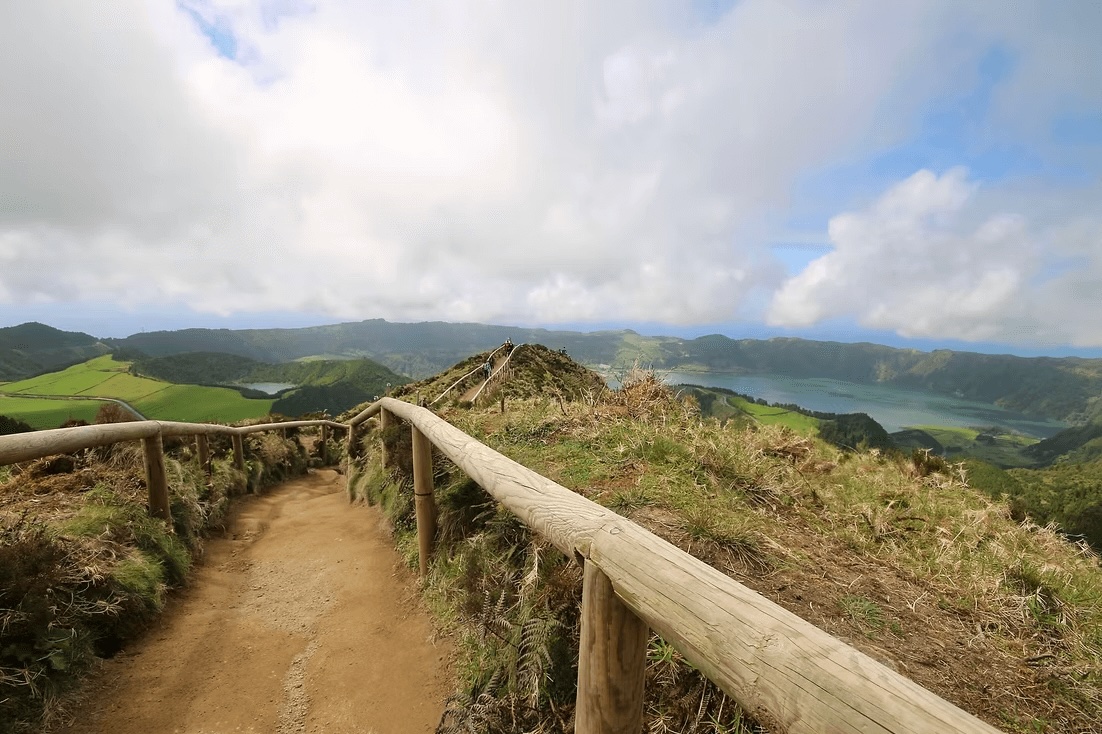
Each is blessed with an abundance of natural attractions, from the sparkling crater lakes of São Miguel to the waterfall-drenched cliffs of Flores and the iconic peak of Pico. Honestly, we couldn’t believe some of these places were real; they were THAT beautiful!
Underwater, the Azores provide divers with equally mesmerising environments to discover, where the nutrient-rich waters of the Gulf Stream support a thriving and diverse marine ecosystem.
From swim-throughs and caves carved by ancient lava flows to World War II shipwrecks, the Azores offer some of Europe’s best diving experiences.
The archipelago’s strategic location in the Atlantic also makes it a prime destination for whale watching. Resident sperm whales are joined by migratory blue, fin and humpback whales.
The Azores’ reputation as an up-and-coming shark diving hotspot is also well-deserved. There’s the chance to encounter elusive blue and mako sharks, as well as manta rays and the occasional whale shark.
With three UNESCO Biosphere Reserves dotting the islands (in addition to two UNESCO World Heritage Sites), the Azores have rightfully earned their place as one of the world’s most ecologically significant destinations.
This is supported by an impressive choice of eco-friendly Azores hotels, resorts and guesthouses that are prioritising environmental conservation and sustainable tourism.
In this article, we’ll highlight all of the best dive sites in the Azores, focusing on each of the island groups. To help you plan a sustainable scuba vacation in Portugal, we’ll also share our top picks for eco-friendly hotels in the Azores, all of which are within easy reach of dive operators.
This article contains affiliate links, which means when you make a purchase through that link, I earn a small commission. Affiliate links come at no cost to you and ensure my content remains free!
Best places to dive in the Azores
The Azores is an archipelago of nine major islands and an islet cluster, divided into three distinct geographic groups.
To the far west lies the isolated duo of Flores and Corvo, the two most remote islands in the chain.
Flores (the larger of the two) is known for its emerald landscapes dotted with countless lakes and lagoons, plus spectacular scenes of waterfalls tumbling over cliffs.
The tiny island of Corvo is the smallest and most sparsely populated, with a unique volcanic crater that is best visited on day trips.
Situated in the central region are the five islands of Graciosa, Terceira, São Jorge, Pico and Faial, each with its own distinct character.
Graciosa features rolling pastoral hills while São Jorge is ringed by dramatic sea cliffs. Meanwhile, Terceira is known for the UNESCO-listed town of Angra do Heroismo.
A towering volcanic peak dominates Pico Island and Faial is home to the colourful port city of Horta.
Finally, to the east lie the two largest Azorean islands, São Miguel and Santa Maria, as well as the tiny Formigas islet cluster, a protected nature reserve inhabited by seabirds.
São Miguel, the archipelago’s most populous island, is famed for its emerald green calderas and steaming fumaroles. Santa Maria offers a more arid, sun-drenched landscape.
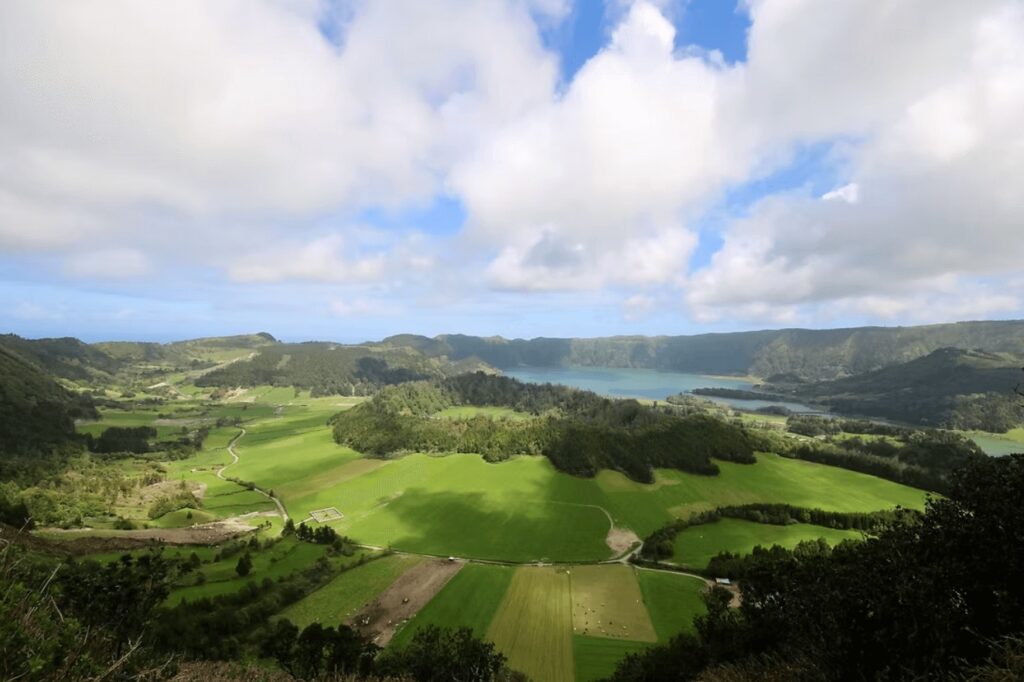
São Miguel
The largest of the Azores, São Miguel, is the entry point for most visitors to the islands and offers a wealth of natural and cultural attractions to explore.
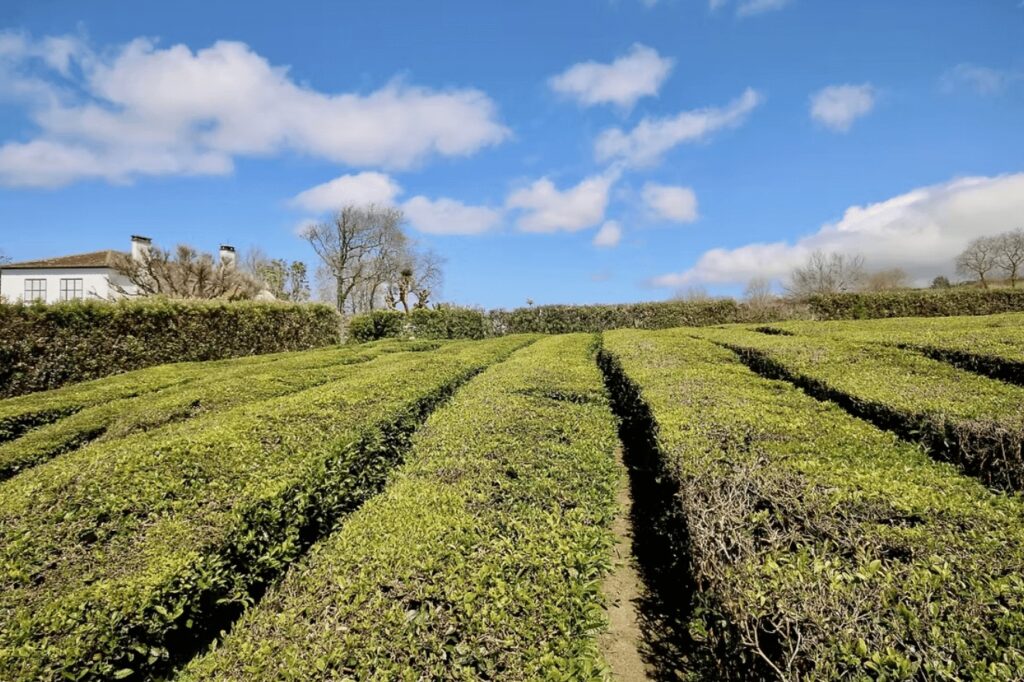
It’s home to the photogenic crater lakes of Sete Cidades and Europe’s oldest tea plantation, as well as the atmospheric city of Ponta Delgada with its centuries-old forts and churches.
The underwater landscapes around São Miguel have been sculpted over millennia by intense geothermal forces. This has given rise to cavernous grottos, tubular lava formations and plunging canyons.
Most of the dive sites are clustered along the island’s south coast, with the town of Vila Franca do Campo serving as a gateway. The Lourenços and Sabrina Reefs are particularly prized for their potential to attract schools of mobula rays when the ocean currents are just right.
If you’re based in Ponta Delgada, you can dive with Best Spot Azores, Season Challenge or Azores Diving.
Dive centres in Vila Franca do Campo include Espirito Azul and Azores Sub.
Best dive sites around São Miguel, Azores
Ponta da Cozinha
Located just five minutes by boat from Vila Franca do Campo, this easy dive features big boulders and canyons where you can spot barracudas, octopuses and moray eels.
Amora
Located between Ponta Garça and Ribeira Quente, this sandy bottom dive site is known for its ornate wrasses, horse mackerel and Madeira rockfish.
Baixa das Castanhetas
Featuring a complex network of interlinked caverns, tunnels and gorges, this multi-level dive site has options for all experience levels. It includes a vertical drop-off where mobula rays are often spotted.
MV Dori
Sunk in 1964, this World War II Liberty ship participated in Operation Overlord on the Normandy coast. It now lies between 9 and 20 metres off the coast of Ponta Delgada.
Arcos de Caloura
This shallow dive site is notable for its cave, where you can spot schools of white trevallies, dusky groupers and a huge diversity of nudibranch species.
Eco-friendly hotels in Ponta Delgada
Aqua – Pópulo Eco Village
Encompassing a collection of luxuriously appointed apartments and villas, this eco-friendly Azores hotel is located on the eastern outskirts of Ponta Delgada. On the rooftop, there’s a heated pool and a jacuzzi offering wonderful views of the nearby beach. The included breakfast includes lots of locally sourced products.
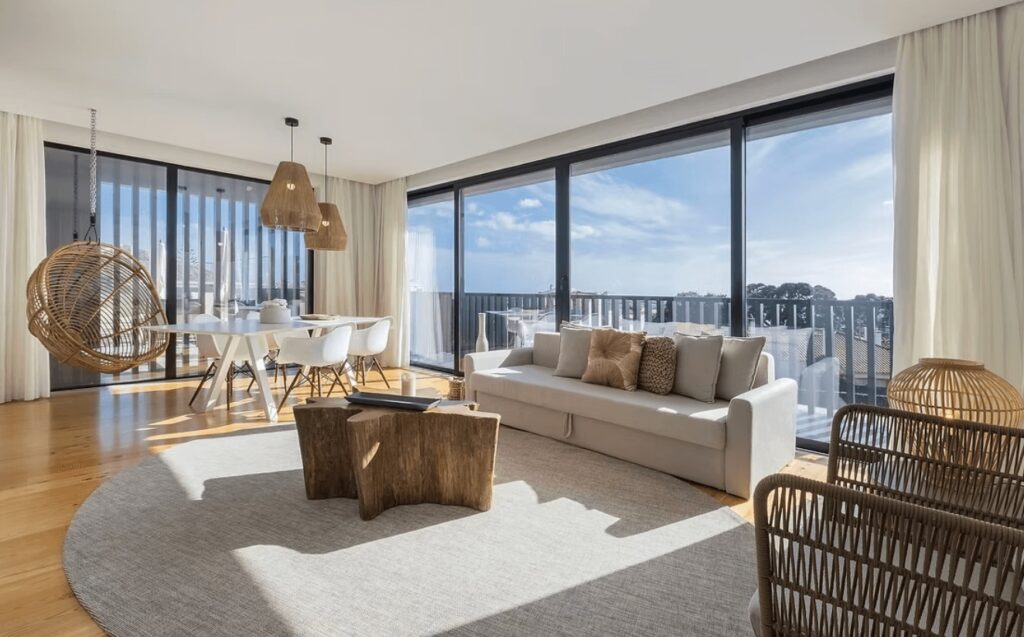
Solar Branco Eco Estate
Occupying a traditional Portuguese residence built in the 1880s, this eco-friendly Azores hotel is located just a short drive from Ponta Delgada. It features eight luxury suites and cottages that have been stylishly appointed and prides itself in operating in the most sustainable manner possible.
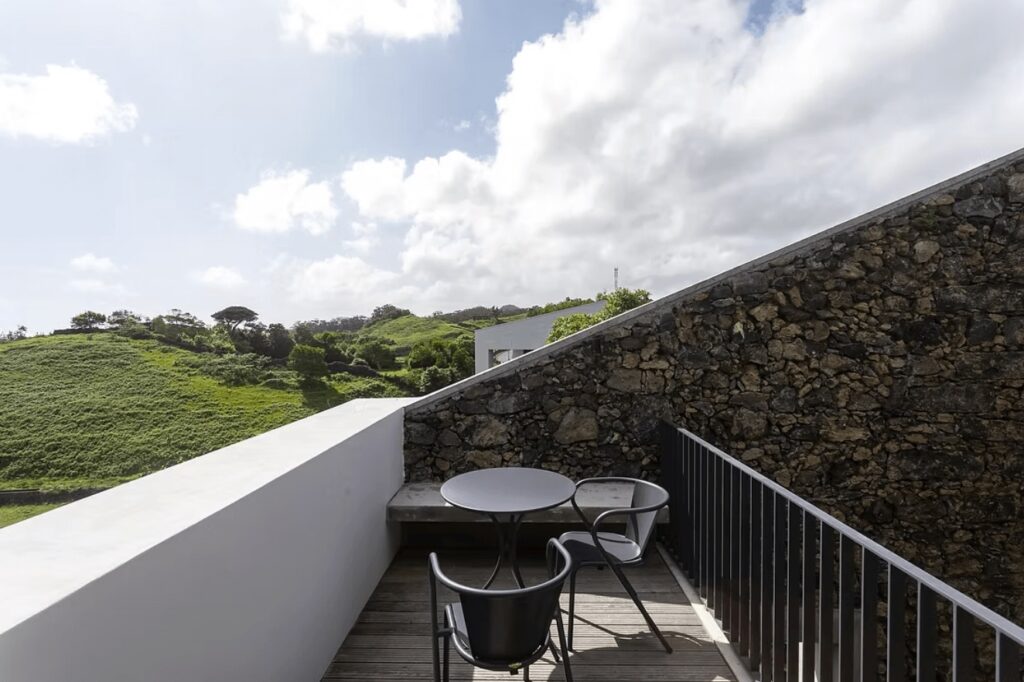
Eco-friendly hotel in Vila Franca do Campo
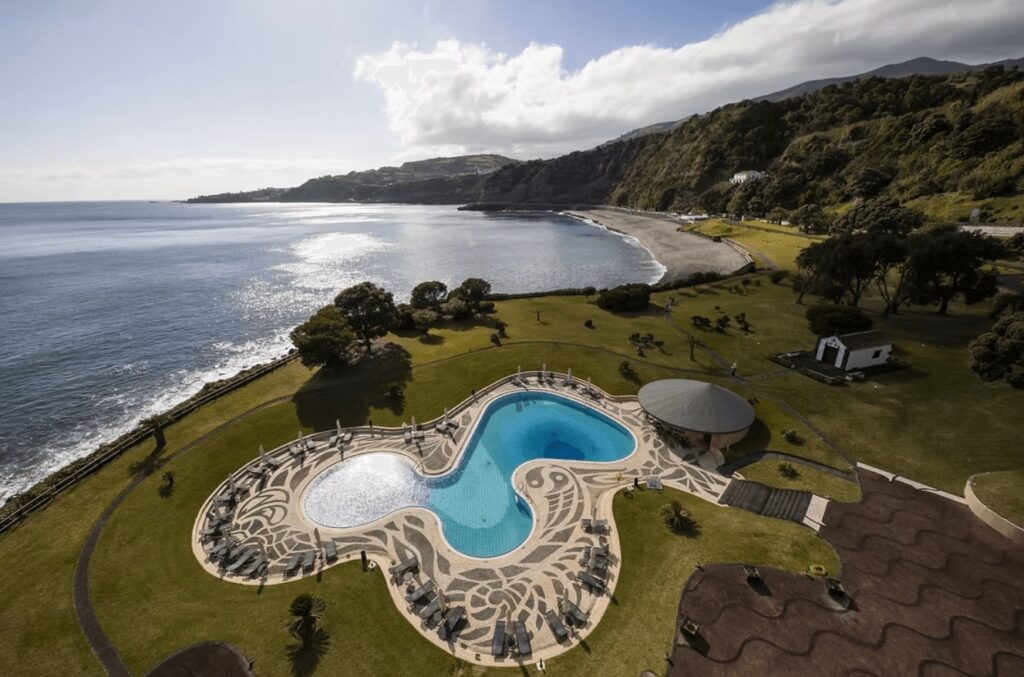
Pestana Bahia Praia Nature & Beach Resort
On the western edge of Vila Franca do Campo, this eco-friendly Azores hotel offers direct access to a gorgeous beach. In addition to its spacious suites catering to couples, dive buddies and families, there’s a swimming pool, two tennis courts and a restaurant serving Azorean cuisine.
Santa Maria
Notable for its white sandy beaches and unique chimneys, Santa Maria is the southernmost island in the Azores. It’s also the oldest island in the archipelago, with a climate that is generally hotter and drier than its neighbours.
As a dive destination, Santa Maria is renowned for the Formigas Islets and Dollabarat Seamount, which are particularly popular with experienced divers.
In the summer months, sightings of whale sharks are a highlight.
In Santa Maria, you can dive with Haliotis or Mantamaria.
Best dive sites around Santa Maria, Azores
Pedrinha Reef
This beloved marine reserve features a platform, caves and a fissure that ascends to the reef’s summit. It’s suitable for both novice and seasoned divers, offering sightings of everything from dusky groupers to devil rays.
Baixa do Ambrósio
One of the most popular dive sites in the Azores, this marine protected area is home to an incredible diversity of life. It ranges in depth from 10 to 50 metres, with large round stingrays often spotted on the seafloor. Huge groups of devil rays are also common.
Formigas Islets and Dollabarat Seamount
These two offshore dives are renowned for their exceptional visibility and large schools of fish are often present, alongside manta rays and sharks.
Baixa da Penedia
A highlight of this rocky-bottomed dive site is its cave, which is peppered with barnacles and black coral. Among the marine species regularly spotted are peacock wrasse, moray eels and octopuses.
Ambrosio
An hour’s boat ride from Vila do Porto, this incredible dive site is renowned for its huge schools of jacks and barracudas. Devil rays are also frequent visitors to the area.
Eco-friendly hotels on Santa Maria, Azores
Villa Natura
Located adjacent to the Figueiral-Prainha Nature Reserve is this three-bedroom holiday rental. It has won multiple awards for its sustainability credentials, making it one of the most eco-friendly hotels on Santa Marta Island.
Villa Natura offers direct access to Praia Formosa and several nature trails, all just a short drive from Vila do Porto.
Casita – Cantinho do Paraíso
This one-bedroom casita oozes charm and has been sustainably built in harmony with the natural surroundings. It is designed in a typical Santa Maria style, with a long chimney and mansard roof, and offers spectacular views across the island from its hilltop setting.
There’s an equally gorgeous two-bedroom villa on the property for families and groups.
Pico and Faial
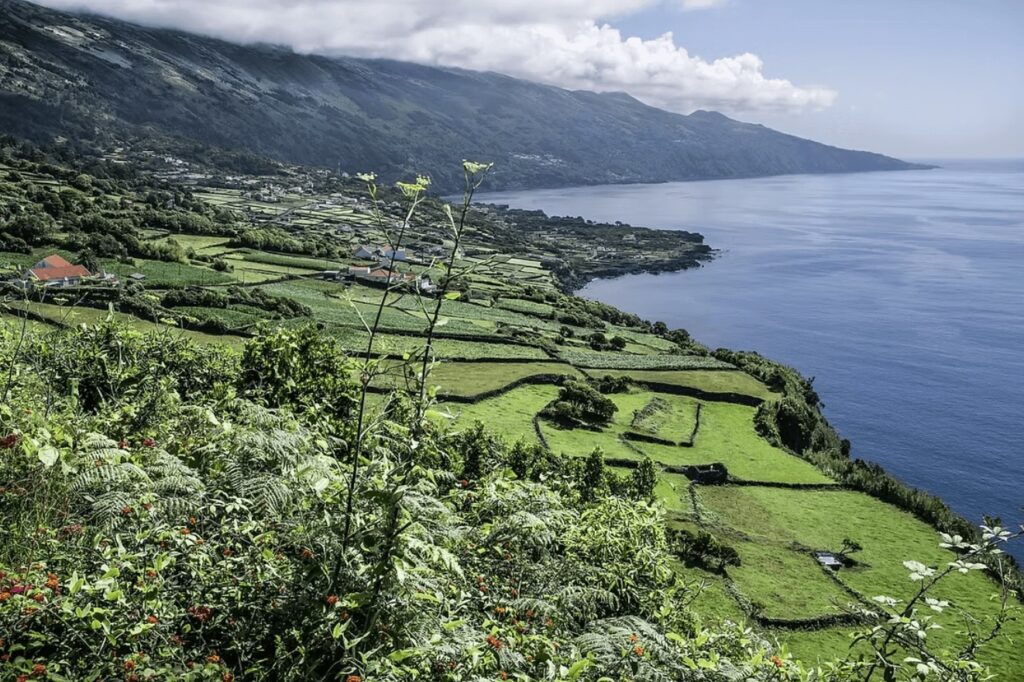
Separated from each other by a six-kilometre-long channel, Pico and Faial are located in the centre of the Azores archipelago. Together with São Jorge, they are collectively known as the “Triângulo”.
While Pico is renowned for its towering volcano, Faial is notable for its flowering blue hydrangeas, earning it the nickname “Ilha Azul”.
The underwater landscapes around the islands are nothing short of spectacular. Diving includes memorable interactions with large groups of manta rays, jackfish and tunas.
Whales also pass through the area and the shark encounters here can be incredible. The Condor Seamount is particularly notable for the presence of blue sharks, making it one of the best dive sites in the Azores.
Diving on Pico Island can be done with Twin Peaks Diving Centre while Haliotis has a dive centre of Faial.
Best dive sites around Pico and Faial, Azores
Princess Alice Bank
One of the most famous dive sites in the Azores, this deep offshore bank (between 30 and 40 metres) is usually visited as a day trip. Divers flock here to see dozens of mobula rays, alongside tunas, amberjacks and Galapagos sharks. Dolphins are sometimes spotted on the ride there and back.
Shrimp Cave
This impressive cave is filled with Narwhal shrimps, a rose-orange crustacean with longitudinal red and white stripes. Between 28 and 35 metres, it’s only suitable for experienced divers who are certified in cave diving.
Arcos do Pocinho
Located near Pocinho (on the west coast of Pico Island), this relatively shallow dive site encompasses a lava flow populated by nudibranchs. Schools of barracudas and jacks are also regularly spotted.
Condor Seamount
Located 16 kilometres from the island of Faial, this seamount is one of the best places to dive with large pelagics in the Azores. With its swirling currents and abundance of nutrients, it draws large numbers of blue sharks and shortfin mako sharks. Sperm and sei whales also pass through the area.
Baía de Entre Montes
Located just five minutes by boat from Horta, this relatively shallow dive site is populated by moray eels and hermit crabs. A wide variety of nudibranchs cling to the rocky outcrops, while flounders can often be seen on the sandy seafloor.
Eco-friendly places to stay on Pico and Faial, Azores
Alma do Pico – Nature Residence
Offering magnificent views across the ocean, this eco-friendly Pico Island hotel consists of comfortable studios, apartments and villas. When you’re not out diving, you can relax beside the swimming pool overlooking Faial Island and the towering peak of Mount Pico. Alma do Pico has been recognised as a sustainable property by Miosotis Azores.
Azul Singular
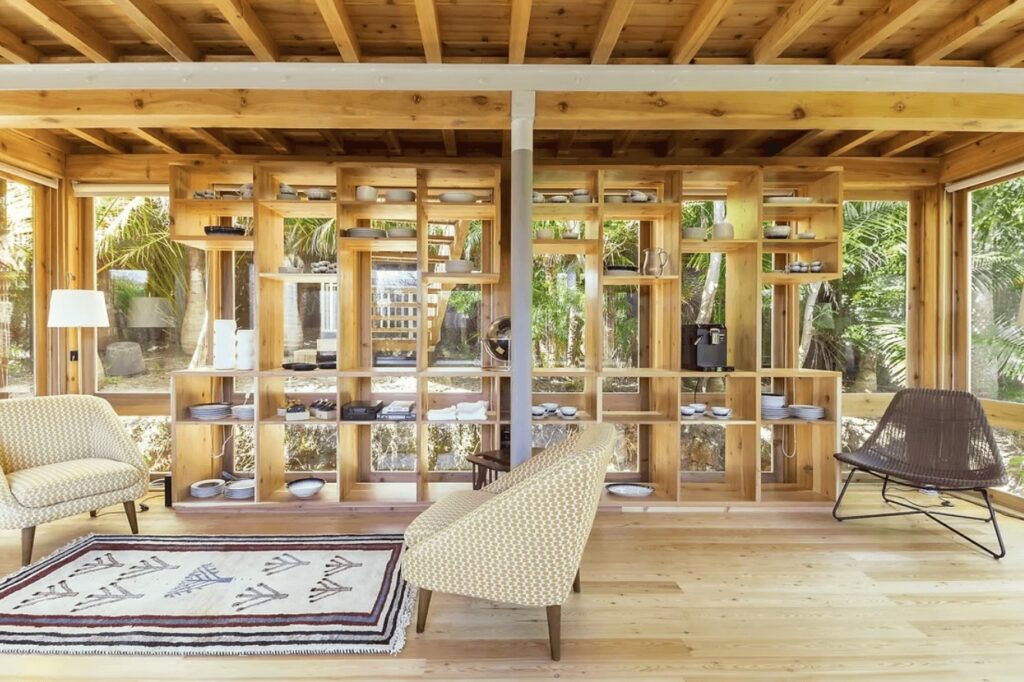
Not far from Horta, this eco-friendly Pico Island hotel was the first glamping property to be established in the Azores. All of its tents and yurts are luxuriously appointed with wood and textiles throughout. Couples, dive buddies and families are all well-catered for at this sustainable Azores hotel.
Patio Ecolodge
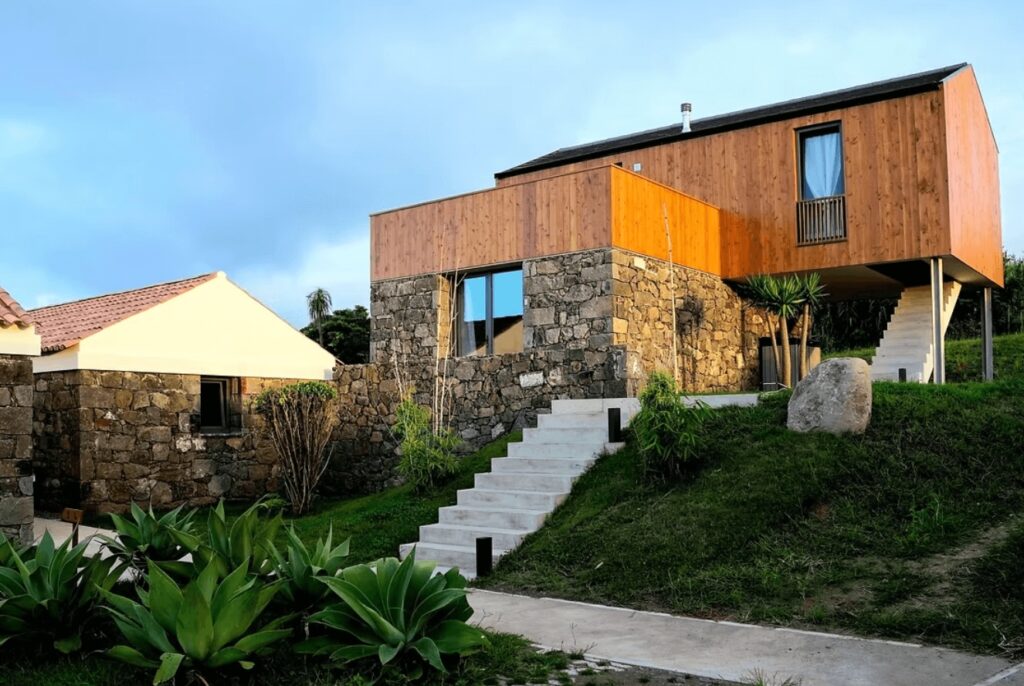
Designed to reflect the owner’s passion for the outdoor lifestyle, this Faial ecolodge consists of rooms and apartments with self-catering facilities. From the property, you can easily walk to spectacular cliffs and natural rock pools, as well as go trail riding, warm up in the sauna or enjoy the heated saltwater pool.
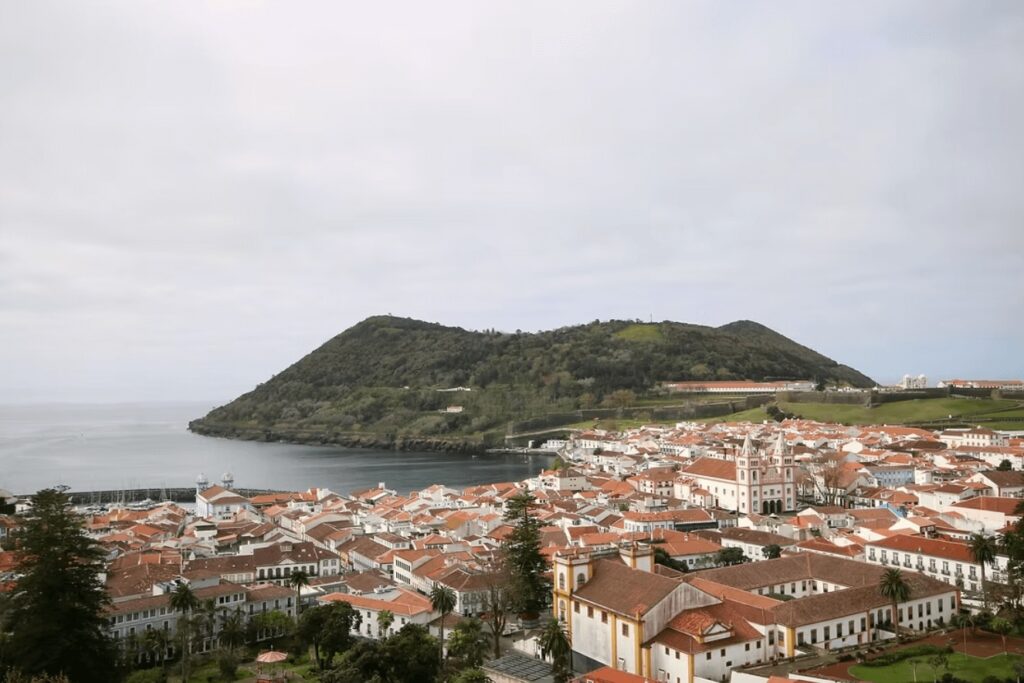
Terceira
Located in the middle of the Azores archipelago, Terceira combines magnificent coastal landscapes and volcanic terrain with the architectural beauty of Angra do Heroismo.
Founded in 1534, this historic city is now listed as a UNESCO World Heritage Site. There are impressive forts, palaces and churches to discover.
A highlight of scuba diving in Terceira is exploring the Underwater Archaeological Park in Angra’s bay, where the Lidador met its end in 1878. The rock formations surrounding the island also provide habitat for a diversity of marine life. You’ll find one of the most interesting cave dives in the Azores at Cinco Ribeiras.
Best dive sites around Terceira, Azores
Cinco Ribeiras
This sheltered dive site is ideal for all experience levels, with a rocky wall and swim-through to explore. Schools of salema porgies and narwhal shrimp can often be spotted, together with common stingrays. More experienced divers can access the site’s cave systems.
Coral Valley
Located 10 minutes by boat from Praia da Vitoria on the east coast of Terceira, this underwater valley is blanketed in white, red and brown soft corals. Barracudas, baitfish and scorpionfish can all be spotted, together with passing eagle rays.
Bat Ray Cave
Schools of bat rays are the highlight of this relatively shallow dive, which takes in a small cave on Ilhéu das Cabras. This rocky island provides a sanctuary for shearwaters, terns and sandpipers.
Underwater Archaeological Park
Located in the bay of Angra do Heroísmo, this dive explores the wreck of the Lidador, an iron-hulled steamer that was sunk here in 1878. Now resting on its side, it is populated by an abundance of small reef fish and other marine species.
In the Cemetery of Anchors, you can see more than 40 anchors dating from the 16th to the 20th centuries.
Dom João de Castro Bank
While it’s more than two hours by boat from the harbour of Praia da Vitória, this underwater volcano is one of the best dive sites in the Azores. It boasts some of the best visibility in the Azores and is home to a variety of pelagic creatures. You can expect schools of tuna wahoos and mobula rays.
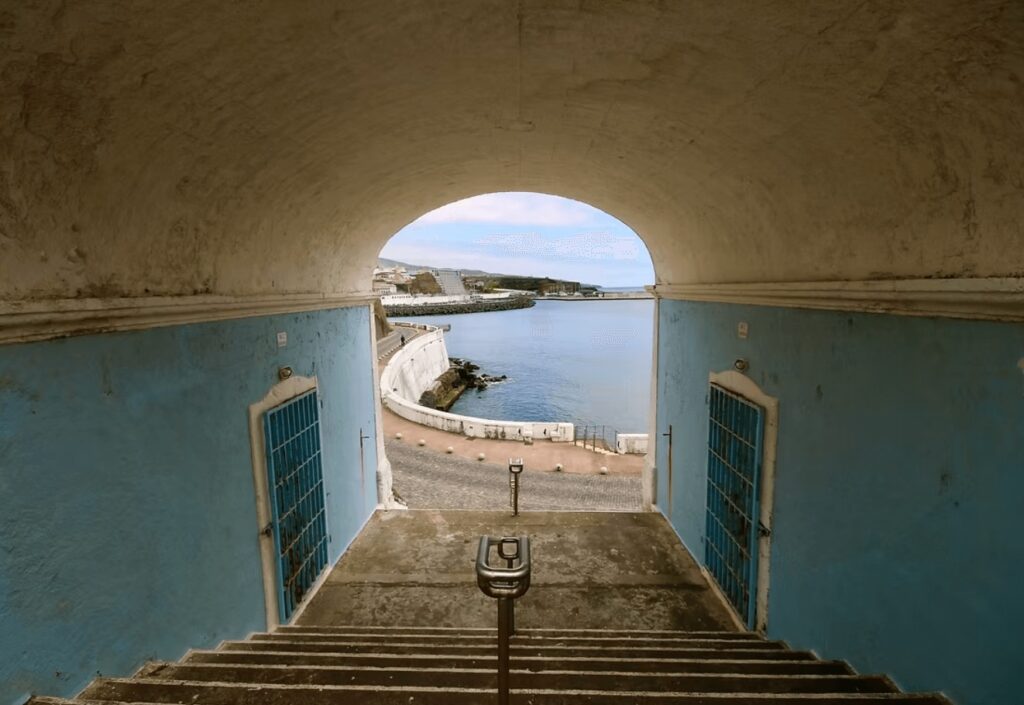
Eco-friendly hotels on Terceira, Azores
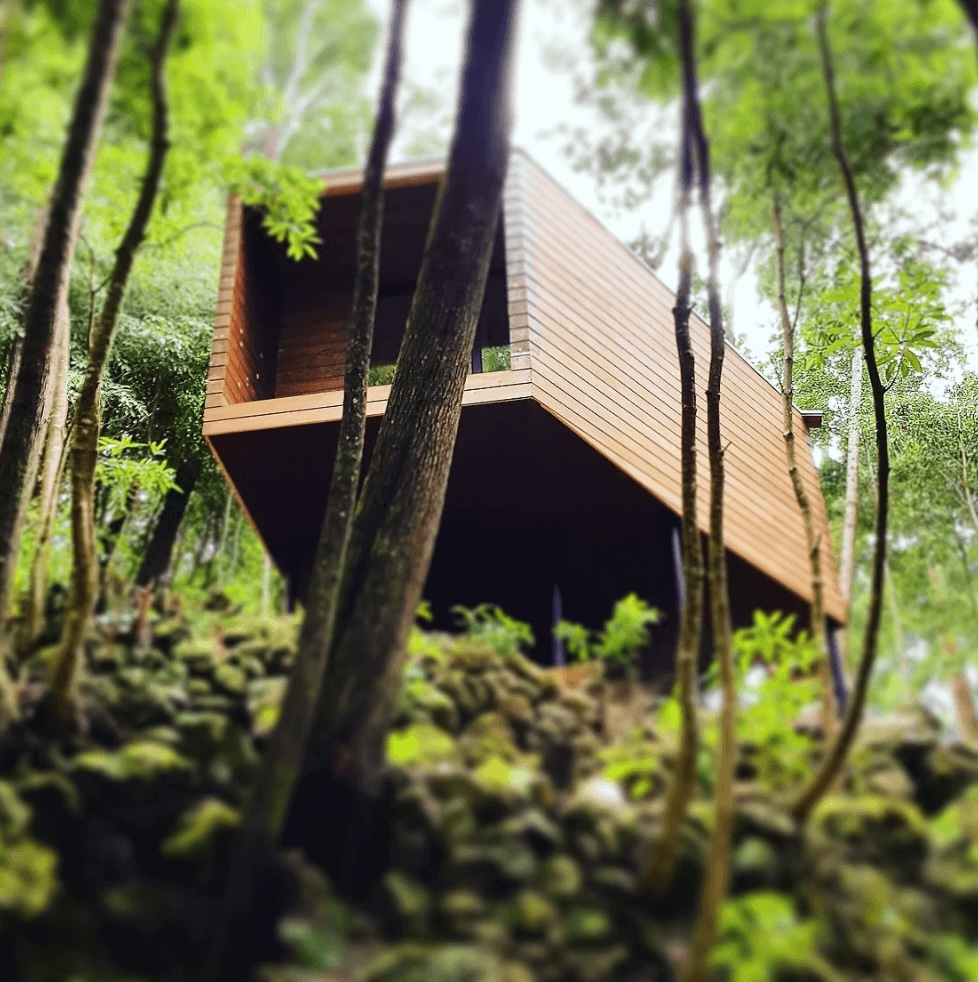
Caparica Azores Ecolodge
Surrounded by woodlands on the outskirts of Biscoitos (on the north coast of Terceira) is this eco-friendly Azores lodge. It comprises several cabins designed for couples and dive groups alike.
A delicious breakfast is included in stays. Additionally, the property prides itself on upholding sustainable and responsible tourism practices to reduce its environmental impact.
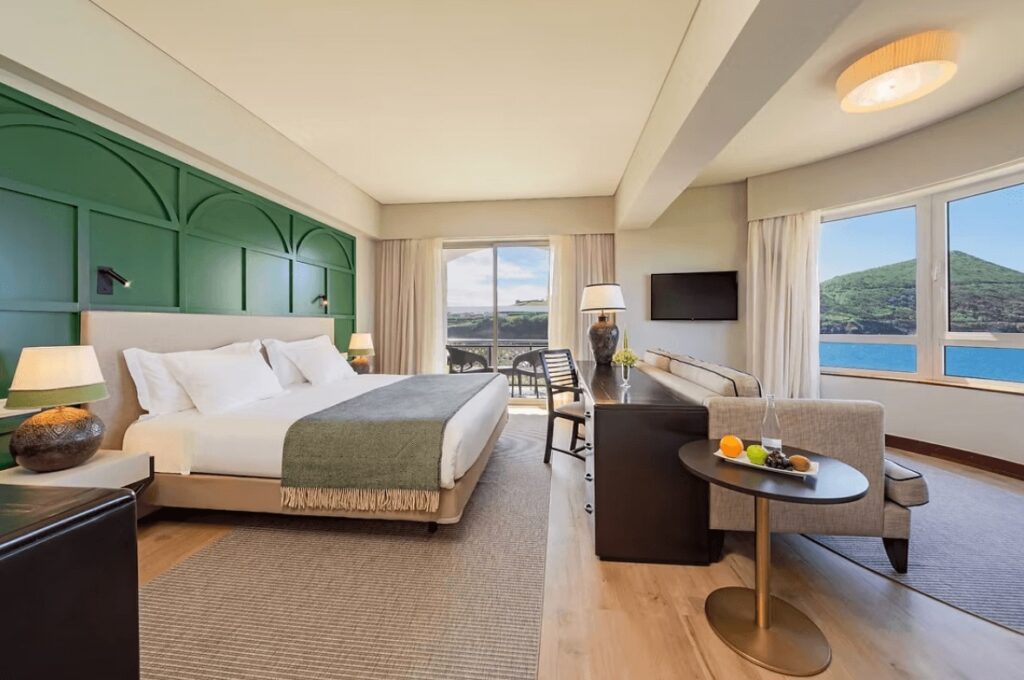
Terceira Mar Hotel
Overlooking the water in Angra do Heroismo, this resort-style hotel features ocean-facing rooms, an indoor swimming pool and a hot tub. It forms part of the Bensaude Hotels Collection, which has obtained a certification in sustainable tourism from Travelife GOLD.
Regional products are showcased at Monte Brasil Restaurant with its floor-to-ceiling windows.
Flores and Corvo
While Corvo is the smallest and northernmost island of the Azores, Flores is its breathtaking big sister. It is famed for its enchanting lakes, cliffside waterfalls and dramatic coastline. Together, they comprise the Grupo Ocidental and sit out alone in the far west of the archipelago.
Due to the relative isolation of Flores and Corvo, the marine life here has been allowed to thrive. As a result, the islands are home to some of the best dive sites in the Azores, making it well worth the adventure.
Corvo was the first island in the Azores to set up a voluntary marine reserve around Caneiro dos Meros (renowned for its dusky groupers). Meanwhile, Flores’ rugged coastline boasts everything from sheltered bays to large caves and caverns.
Diving around Flores and Corvo can be done with Longitude 31.
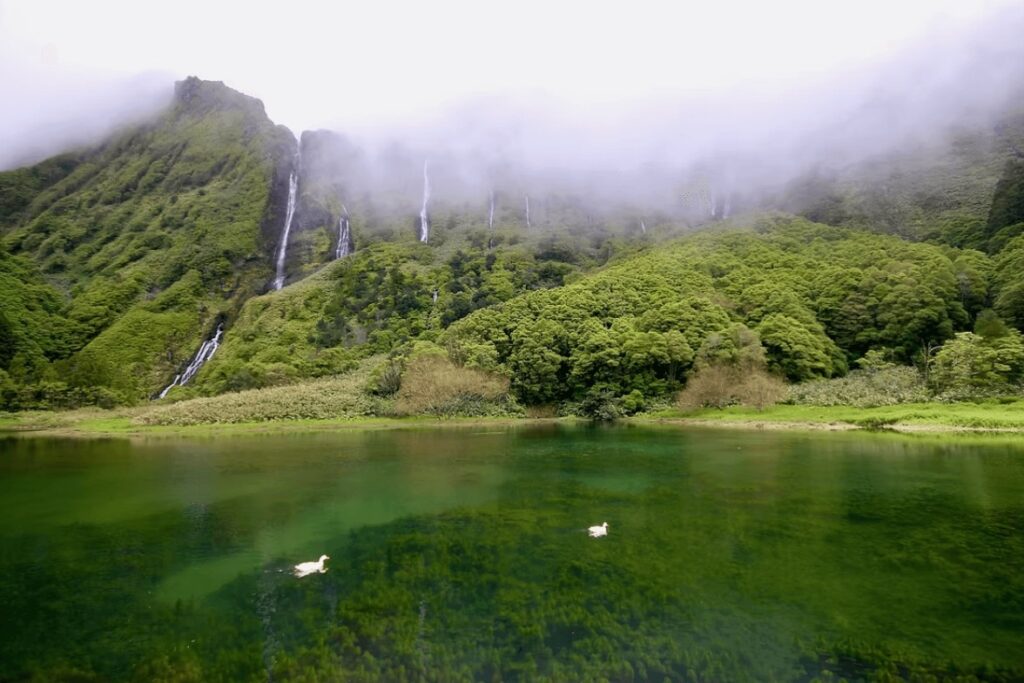
Best dive sites around Flores and Corvo
Dusky Grouper Passageway
Also known as Caneiro dos Meros, this dive site off the coast of Corvo is notable for its abundance of dusky groupers. Some weigh in at over 30 kilograms. It lies between 18 and 25 metres in depth, with the lava flows descending to a seafloor at around 40 metres.
Gamela
Not far from the Caneiro dos Mersos is this shallow platform dive. It attracts some of the abundant marine life populating the nearby reserve. Aside from visiting its two small caves, you can get up close to schools of blue jack mackerels, yellowmouth barracudas and Azores chromis.
Gruta do Galo
Translating as “Rooster Cave”, this cavern site is marked by a waterfall that cascades near its entrance. In addition to sightings of schools of white trevallies near the entrances, common stingrays are often spotted on the sandy seafloor.
Baixa do Buraco
Five minutes by boat from Vila do Corvo is this easily accessible reef, which lies between 7 and 25 metres. Large schools of blue jack mackerels and yellowmouth barracudas are regularly spotted, with the water often exceptionally clear.
Baixa do Amigo
Between 15 and 40 metres in depth is this impressive reef, located off the east coast of Flores. It’s around 15 minutes by boat from Santa Cruz and is one of the best dive sites in the Azores. Baixa do Amigo is a wonderful site for spotting pelagic species, such as yellowmouth barracudas, Almaco jacks and white trevallies.
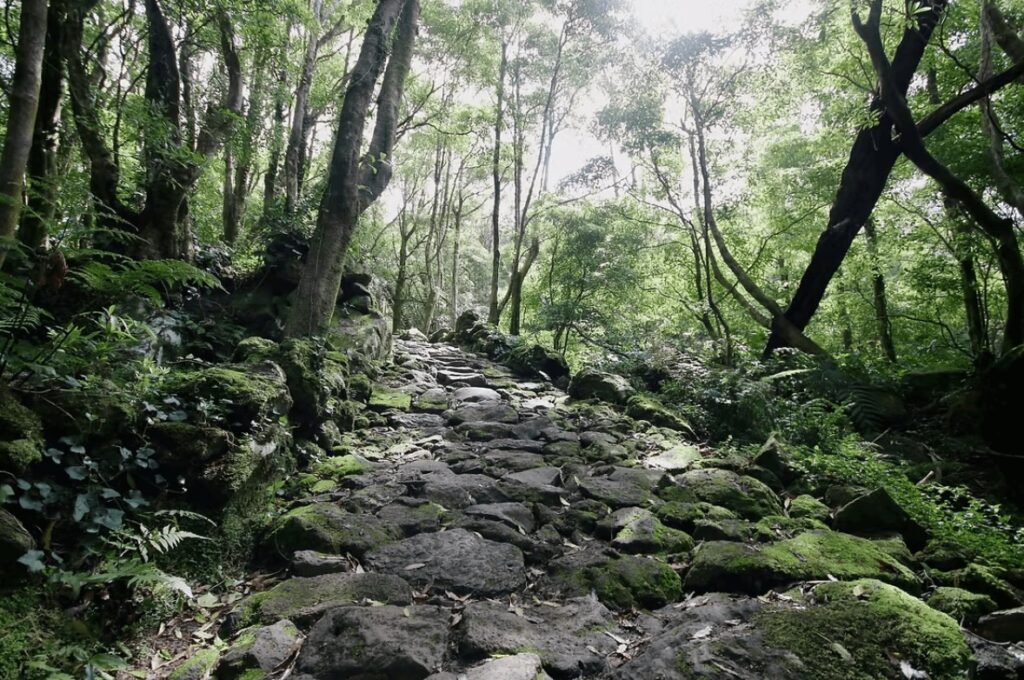
Eco-friendly hotels on Flores and Corvo, Azores
Casa do Miradouro
Offering magnificent views from its hilltop setting, this two-bedroom holiday rental on Flores is located in Santa Cruz. It features a fully-equipped kitchen, an alfresco dining area and a hot tub. Couples can opt for the Casa do Corvo – a one-bedroom rental on the same property.
Casa do Corvo
This cosy residence offers everything couples need, with a double bedroom, a private bathroom and a fully-equipped kitchen. The washing machine and dryer are an added convenience, while the coastal views are a treat.
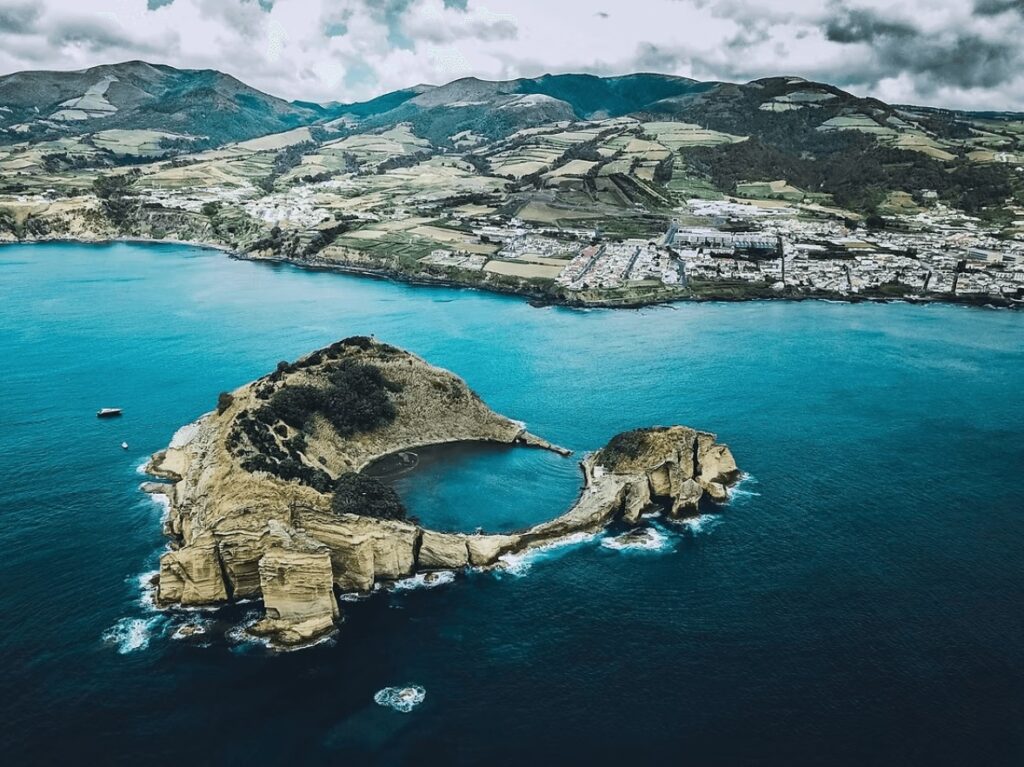
Best time to dive in the Azores
For the calmest and warmest water conditions, the best time to dive in the Azores is between June and September. During these peak summer months, the ocean temperatures in the Azores typically reach a maximum of 23°C (73°F).
However, as summer transitions into autumn, the water temperatures begin to drop. September often ushers in some of the best visibility of the year.
The whale watching season extends from April to October, with blue and fin whales most commonly spotted early in the season. Humpback whales, on the other hand, are more abundant in the waters around the Azores in October.
The air temperatures in the Azores also vary significantly throughout the year, mirroring the fluctuations of the surrounding ocean.
In the winter months, the air can be quite chilly, with temperatures dipping down to around 14°C (57°F). In contrast, during the height of summer, the thermometer can climb as high as 25°C (77°F).
Visibility in the Azores ranges from as little as 5 metres (15 feet) up to 40 metres (120 feet). This is largely due to the region’s numerous upwellings and thermoclines.
However, the offshore dive sites, which plunge to depths exceeding 2,000 metres (7,000 feet), consistently offer excellent visibility of around 35 metres (105 feet).
FAQs about diving in the Azores
Are the Azores good for scuba diving?
The Azores Islands are arguably one of the best places to dive in Europe. The archipelago’s thriving marine ecosystem is nourished by the nutrient-rich waters of the Gulf Stream.
Scuba enthusiasts can explore everything from swim-throughs and caves formed by ancient lava flows to fascinating World War II shipwrecks.
Additionally, the archipelago’s prime location in the Atlantic makes it an excellent spot for whale watching. Here, you can see resident sperm whales alongside migratory blue, fin and humpback whales.
The Azores has also established a reputation as a shark diving destination. There are fantastic opportunities to encounter blue and mako sharks, along with manta rays and whale sharks.
When to go diving in the Azores?
The best time for scuba diving in the Azores archipelago is from June to September, when the waters are at their calmest and warmest. During these summer months, ocean temperatures can peak at around 23°C (73°F).
As summer gives way to autumn, the water starts to cool down. September often brings some of the clearest visibility of the entire year.
When is whale watching season in the Azores?
The whale watching season in the Azores extends from April through October. However, the specific species you’re likely to encounter can vary depending on the time of year.
In the spring, from April through June, the Azores serve as a migratory corridor for several species of baleen whales, including blue whales, fin whales and sei whales.
As summer arrives, the Azores becomes a hub of activity for a variety of migratory dolphin species. These include the Atlantic spotted dolphin, the striped dolphin and the pilot whale.
This is also the best time of year to catch a glimpse of sperm whales, which are more abundant in the Azores’ waters during the summer months.
As autumn sets in, whale watchers are treated to the arrival of humpback whales. These can be reliably spotted in the Azores in October.
Are there whale sharks in the Azores?
Whale sharks arrive in the Azores during peak plankton blooms and are most reliably spotted from July to October. While they can be seen during coastal dives (most commonly around Pico and Santa Maria), you have a better chance of sighting them at offshore sites in pursuit of bait fish.
Do you need a wetsuit for diving in the Azores?
If you’re scuba diving in the Azores in late summer (August and September), you may be comfortable in a 5mm wetsuit. Otherwise, most dive operators suggest you wear a 7mm wetsuit or a semi-dry suit to ensure you have enough thermal protection underwater.

PLAN YOUR TRIP WITH OUR FAVOURITE RESOURCES:
Find hotels and resorts via Booking or Agoda
Book tours and experiences via Viator or GetYourGuide
Find a rental car via Discover Cars
Book flights via Kiwi or Booking
Search for buses and trains via 12Go or Omio
Get travel insurance via SafetyWing
Buy a digital eSIM with Airalo
By purchasing through our links, you’ll be supporting our website at no additional cost to you
-
Surfing and Environmental Activism: A Growing Movement
Surfing has always been more than a sport. It’s a culture shaped by natural forces – tides, winds, swells – and a lifestyle that depends on healthy ocean environments. So it’s no surprise that surfers are often engaged environmental activists, at both a local and global scale. As we’ve travelled around the world, we’ve loved…
-
Sustainable Snorkelling Tips for Ocean Advocates
You don’t need a scuba certification to fall in love with the ocean. Snorkelling is an equally magnificent way to explore coral reefs, seagrass meadows and the marine life that calls them “home”. In fact, snorkelling is often a gateway to scuba diving. Or sometimes, it’s the destination. We all snorkelled long before we ever donned…
-
How to Be a More Responsible Underwater Photographer
In recent decades, photography has become unbelievably accessible. Almost everyone carries a camera around with them everyday in the form of a smartphone. Technological improvements have also made underwater photography far more accessible, resulting in powerful images of a world that’s inaccessible to many. A single image of a healthy reef, a shark passing through…
-
Second-Hand Surf Gear: Embracing the Circular Economy
Surfing sells itself as a low-impact pursuit. All you need is a board and the ocean (and if you live where we do, a wetsuit!) What could be simpler? But behind this “at-one-with-nature” facade lies an industry built on short product cycles, seasonal “drops” and a steady turnover of gear due to new “innovations”. The…
-
How Coral Nurseries Work (And How Divers Can Join Planting Programs)
Coral reefs support an extraordinary diversity of marine life, and as divers, being able to explore them is one of life’s great privileges. But coral reefs are also among the most threatened habitats on the planet. Pollution, destructive fishing practices and climate change-induced coral bleaching are all having a devastating impact. In response, coral nurseries…
-
Are Wave Pools Sustainable? The Surf Park Environmental Debate
Nothing compares to surfing in the ocean. Full stop. For us, being at the whim of Mother Nature is a big part of surfing’s allure, and all things being equal, we’d pick the ocean over a wave pool every time. But with coastal communities under increasing pressure and surf breaks being flooded with people, are…
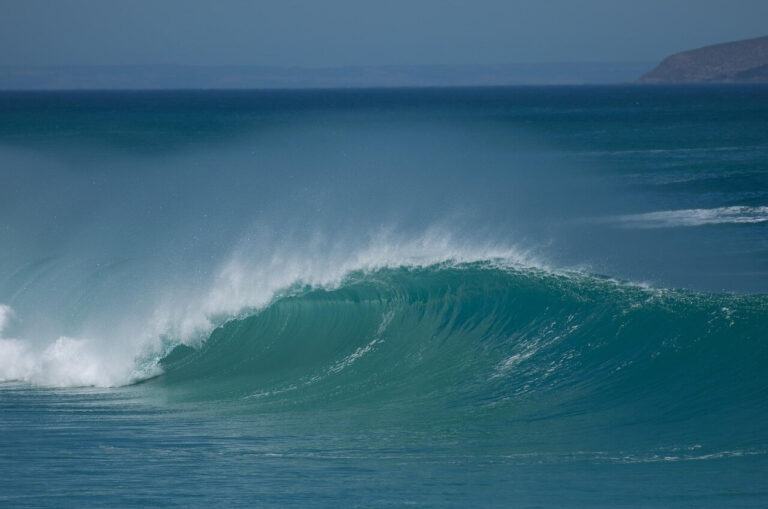

We are a team of passionate divers and surfers with decades of combined experience in the water and travelling to all corners of the globe.
After years of chasing waves and descending into the deep blue, we’ve created this resource to highlight sustainable surf camps, eco-dive resorts and conservation-focused ocean trips to help inspire your next adventure.
Eco Ocean Escapes was born out of a love of the ocean, an obsession with travel and a concern about the impacts of our adventures on the environments we explore.