Surfing in Norway: Best Surf Spots + Surfer-Friendly Places to Stay
Looking for the best surf spots in Norway? Discover everything you need to know about cold water surfing in Norway, including access to beaches and surfer-friendly places to stay.
With its (frighteningly) cold waters and challenging accessibility, surfing in Norway is not for everyone. Even though we live at the very bottom of Australia (and are used to cold-water surfing), we weren’t sure whether we’d be equipped for Norwegian surf conditions!
But those willing to brave the chilling conditions and embark on a bit of an adventure will be royally rewarded. Norway guarantees an incredible surf experience in one of the most breathtakingly beautiful countries on Earth.
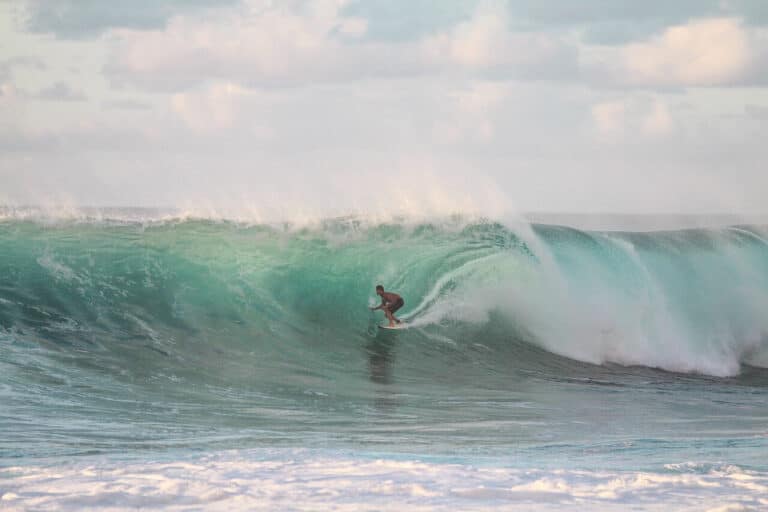
Fuelled by the powerful North Atlantic swells that curl into its fjord-carved coastline, Norway’s best surf breaks offer everything from long, peeling lefts and rights to punchy A-frames and mellow beach breaks.
While the conditions are generally in the lower-intermediate range (thanks to the tempering effects of Iceland’s positioning), there’s still plenty to keep advanced surfers entertained. Oh, and did we mention the scenery is jaw-dropping!
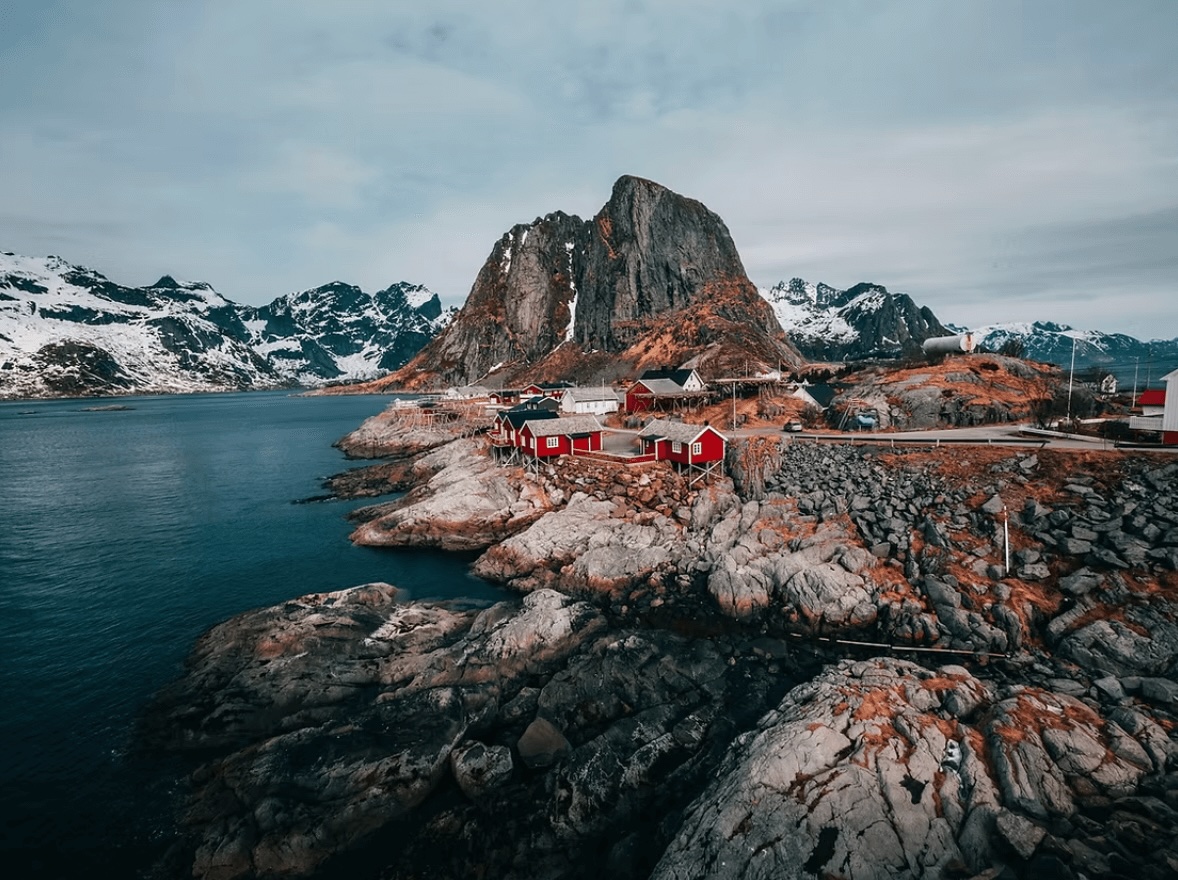
Norway boasts some of the most spectacular coastlines in Europe. Think towering cliffs, snow-capped mountains and dramatic fjords – these serve as the backdrop to your surf sessions.
Many of the best places to surf in Norway require hours-long journeys to reach. But it’s for this reason that the lineups are so enticingly empty.
That and the water is freezing! You really need to be suited up head-to-toe if you’re planning a surf trip to Norway. Be sure to bring thick boots, gloves and hooded wetsuits to withstand the icy waters.
In this article, we’ll explain everything you need to know about surfing in Norway, including the best surf spots, recommended places to stay and the ideal time to visit for epic waves.
Looking for more surf destinations in Europe? Check out our surf guides to Iceland, Ireland, Portugal and the Canary Islands.
This article contains affiliate links, which means when you make a purchase through that link, we earn a small commission. Affiliate links come at no cost to you and ensure our content remains free!
Best places to surf in Norway
Norway’s rugged western coastline has long lured adventurous surfers seeking out little-known waves and uncrowded lineups.
The entire western seaboard, stretching from the southern tip of the country up into the Arctic Circle, is dotted with surf spots. Many of Norway’s best surf spots are still waiting to be explored.
These range from sandy beach breaks to powerful point breaks backed by dramatic fjords.
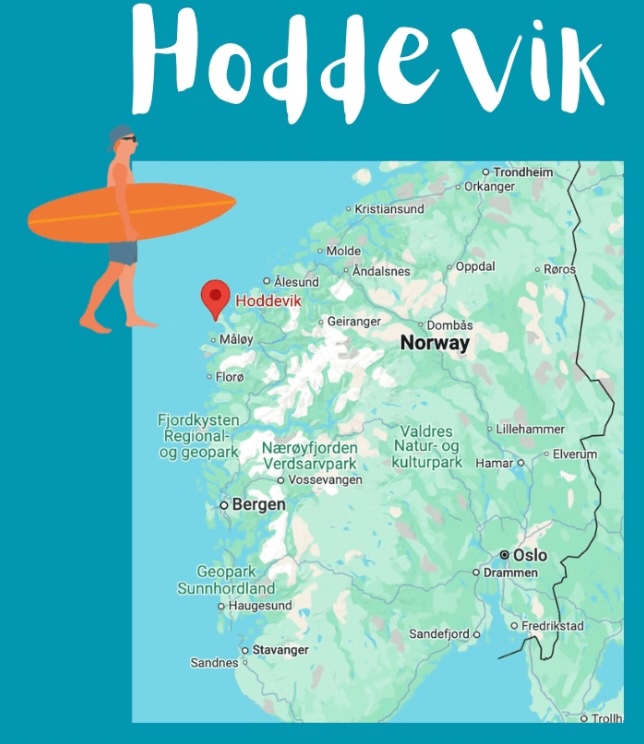
In the far south, the beaches around Jæren are renowned for their consistent beach breaks. Meanwhile, Hoddevik is the surfing jewel of the Stad Peninsula.
Further north, the Lofoten Islands have become a mecca for cold-water chargers, offering a variety of setups in isolated yet mind-bogglingly beautiful fjord environments.
Hoddevik
Best place to surf on mainland Norway
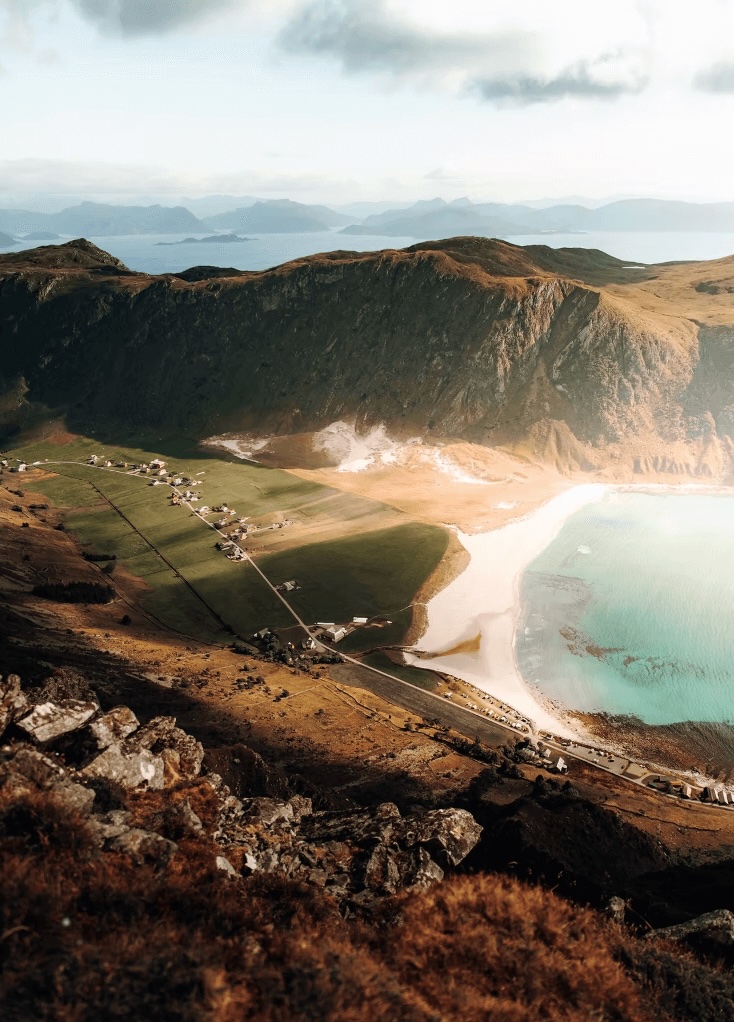
Located on the Stad Peninsula in the heart of Norway’s Fjord Country lies the surf haven of Hoddevik.
This remote and drop-dead gorgeous bay is widely regarded as the best place to surf in Norway. In our opinion, it’s the kind of place you can commune with nature while scoring fun waves.
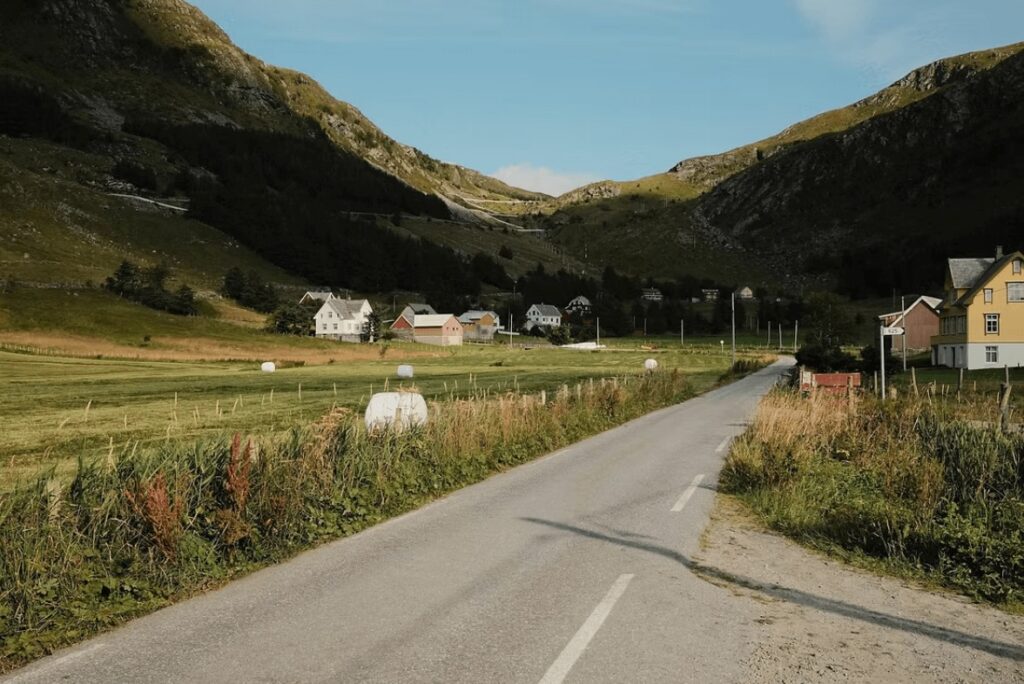
As you approach Hoddevik, you’re greeted by soaring cliffs that loom more than 100 metres above the beach. The sand itself is flanked by Nordic meadows that roll gently toward the shore.
The centrepiece of this majestic setting is the bay’s primary wave, a peeling right-hander that offers a fantastic ride when the conditions align. There’s also a fun left-hander that lures longboarders and plenty of whitewash for beginners.
Complementing the waves is Hoddevik’s outstanding surf camps and schools. Understandably, it’s a favourite haunt for frothers looking to immerse themselves in Norway’s natural beauty.
Best surf spots in Hoddevik
Hoddevik Beach
In the middle of the bay, this beach break is popular with the local surf schools and an ideal place to learn, with small A-frames and lots of whitewash. On bigger swells, it tends to close out.
Hoddevik Right
The most consistent wave in Hoddevik, this right-hander can handle bigger swells and breaks up to 100 metres. You can jump off the breakwater to the take-off point if you don’t want to make the long paddle out.
Hoddevik Left
While better protected than the right from the onshore winds, this left can still be quite soft and fickle. It needs a big southwest swell (or a northerly windswell) to work and is popular with local longboarders.
Refviksanden
Set between dramatic headlands a 1.5-hour drive from Hoddevik, this beautiful bay is the place to head if you want to surf with not another soul in sight. It delivers small but consistent peelers that work best on a higher tide.
Best places to stay and surf in Hoddevik
Lapoint Surf Camp
With dorms and doubles set across two houses, this Hoddevik surf camp is a traveller favourite. There’s a fully equipped kitchen, an outdoor barbecue and a sauna – basically everything you could want or need when you’re not out in the water.
Stad Surfing
Featuring seven cosy rooms and a glamping site, this surf camp in Hoddevika receives rave reviews for its welcoming instructors. There are beginner-friendly longboards and ultra-warm wetsuits available, as well as skateboards and SUPs. Meals can be prepared in the basement kitchen.
Lofoten
Best place to surf in Norway with dramatic scenery
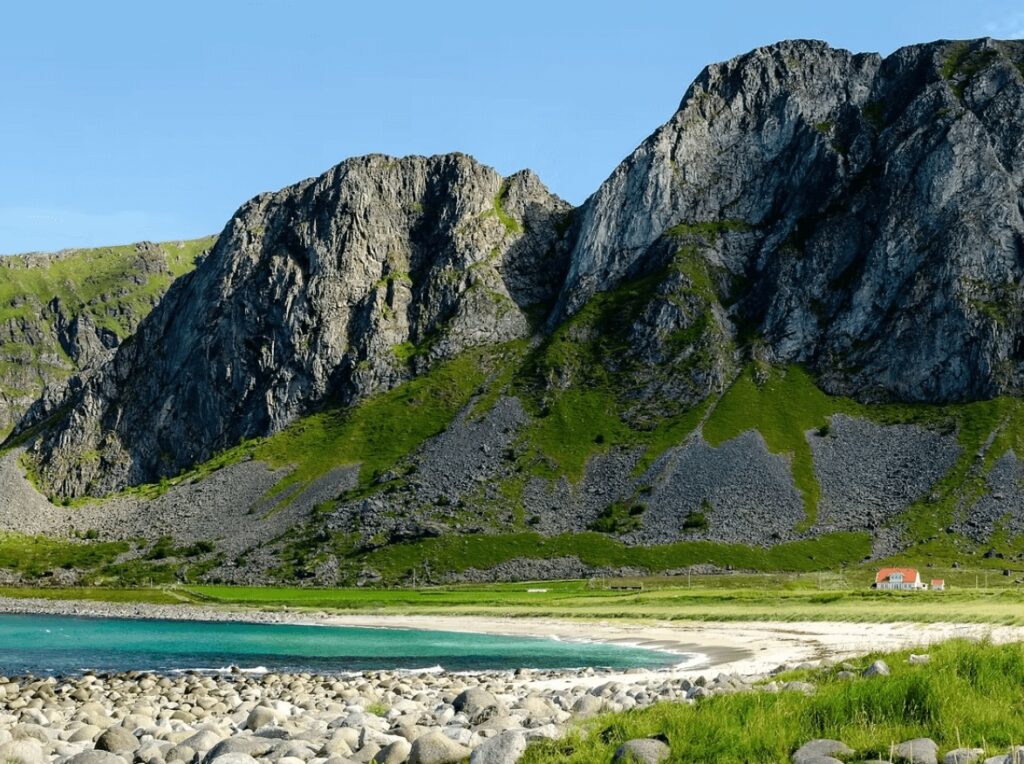
Tucked away in the far northern reaches of Norway, Lofoten is a staggeringly beautiful archipelago that delivers epic outdoor adventures of all kinds. The whole area is a joy to explore, with meandering fjords, spectacular beaches and towering mountains that drop straight into the sea.
This remote, sparsely populated region is also a surfer’s paradise. It offers an abundance of world-class waves that are (largely) still uncrowded.
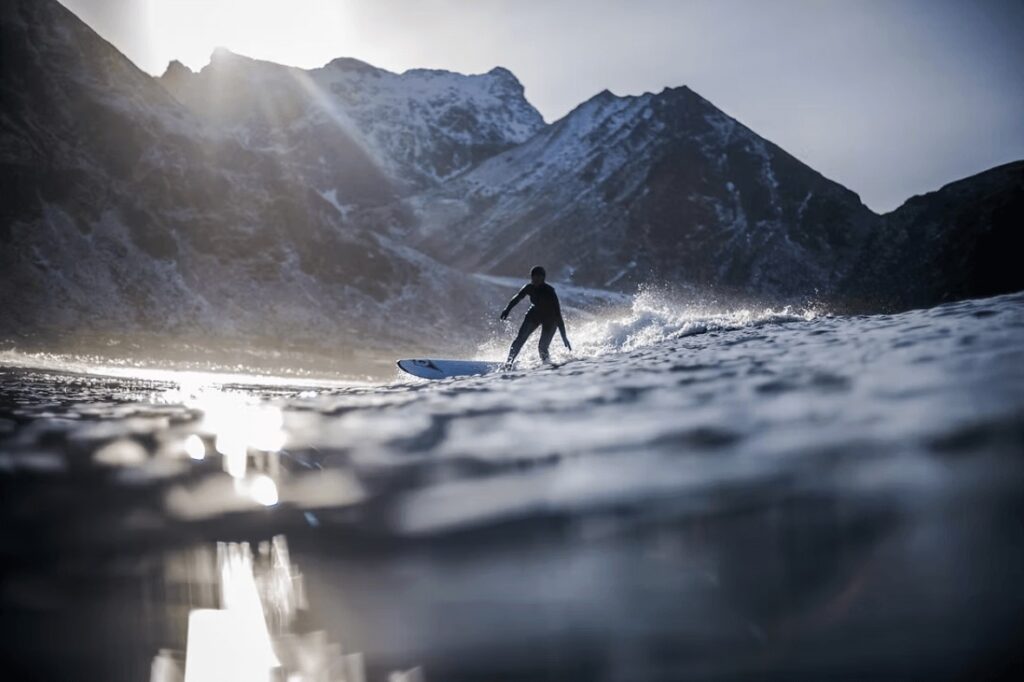
The star of the show when it comes to Lofoten surfing is undoubtedly the epic left and right-hand point breaks at Unstad, which serve up some of the best waves in Norway.
But Lofoten has plenty more to offer, including a wealth of beginner-friendly beaches perfect for those just starting out. And for northern lights surfing, there’s no better place to be!
The northern side of the peninsula is where the surf really shines. It benefits from the optimal exposure to powerful north swells and wrapping southwest groundswells in winter.
The charming coastal settlements and traditional fishing villages only add to the unforgettable experience that is Arctic surfing in Lofoten.
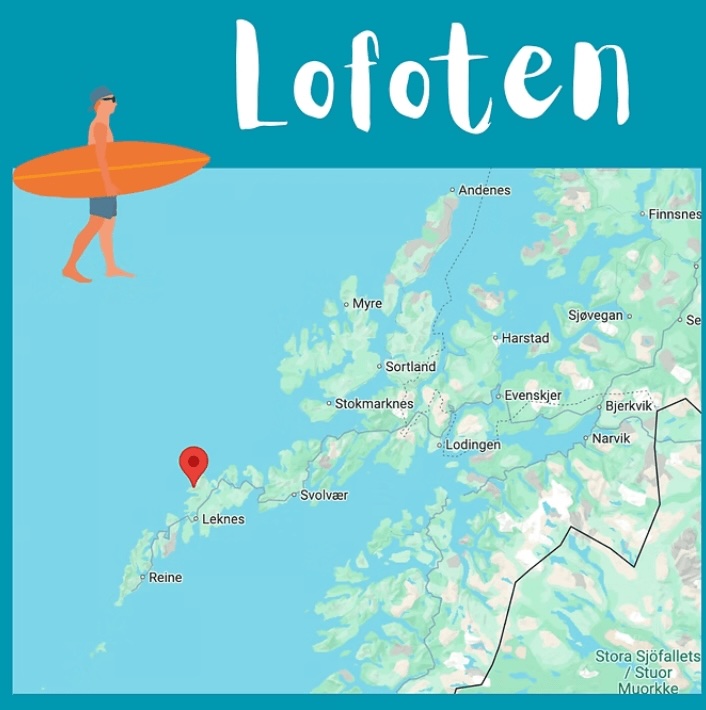
Best surf spots in Lofoten
Unstad
If you’ve seen pics of surfing in Lofoten, it was probably Unstad, which is framed by huge coastal mountains often blanketed in snow. While it’s no longer under the radar, its popularity is justified. Both pros and adventure-seekers flock here on long-period southwest swells.
Aside from the bowly left (which can go for 500 metres in the right conditions), Unstad Beach surfing includes a barrelling (sometimes sectioning) right.
Eggum
Working on a big north-northwest swell, this is one of the first surf spots you’ll come across if you’re driving from Narvik, which serves as the mainland gateway to the Lofoten Islands. It’s usually pretty mushy, but the scenery is drop-dead gorgeous so it’s definitely worth a look.
Skagsanden
This sandy-bottomed beach break is ideal for beginners and is home to a surf camp offering lessons and rentals. It’s undeniably beautiful and hugely popular with touring photographers.
Flakstad
Well protected from the winter swells, Flakstad lies just around the headland from Skagsanden. It features forgiving lefts breaking over a sandy bottom. This is the place to retreat to when the waves are too big and the winds too ferocious elsewhere.
Best places to stay and surf in Lofoten
Unstad Arctic Resort
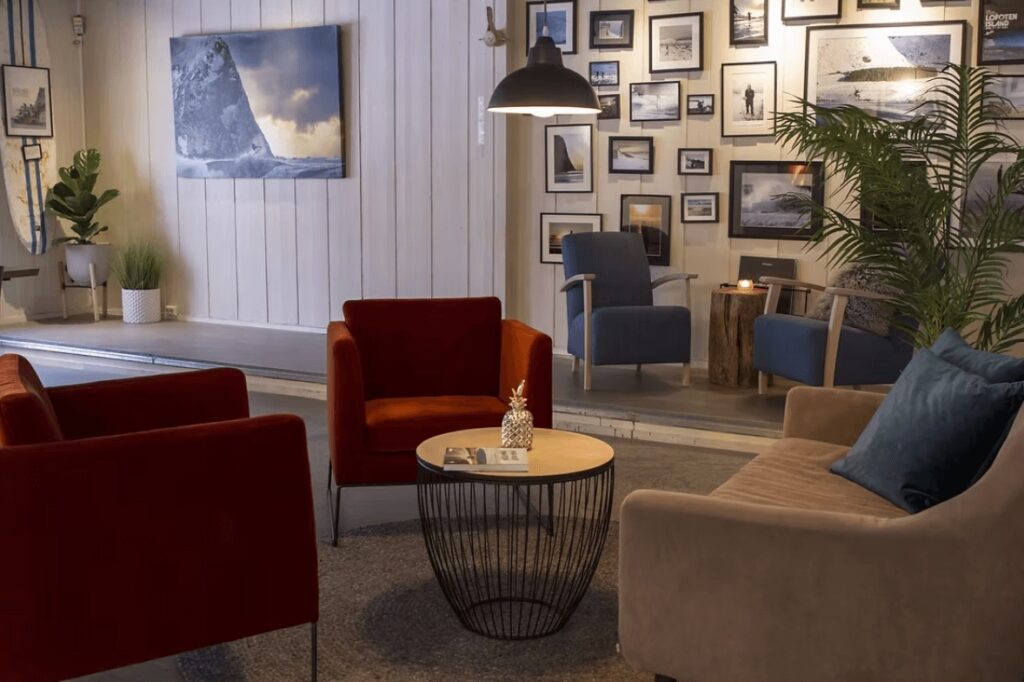
If you want to be first in the water each morning, you can’t get closer than this surf resort in Unstad. It features well-appointed bungalows and studios, as well as a communal sauna and hot tub where you can retreat to in between surfs.
Unstad Surfpacker
Located directly above the local surf shop, this affordable Unstad hostel features a private double and a dorm in a cosy converted apartment. With its shared bathroom, kitchen and lounge, it’s ideal for those surfing Norway on a budget.
Lofoten Beach Camp
Open from March to October, this is the biggest campground in Lofoten and sits directly overlooking Skagsanden. There’s no booking system for its 75 powered sites – it works on a first-come, first-served basis. Rates include access to a relaxed bistro, morning yoga classes and a beachside sauna.
Jæren
Best place to learn to surf in Norway
Encompassing the entire Stavanger Peninsula, Jæren is a traditional district in Norway’s southwest, in the county of Rogaland. This sprawling lowland area stands in stark contrast to the country’s famously rugged and mountainous terrain.
In fact, it’s the largest tract of flatland in the country.
Jæren features an uninterrupted expanse of honey-coloured dunes and sandy beaches that slope gently into the North Sea. They extend from the northern municipality of Randaberg all the way down to Hå in the south.
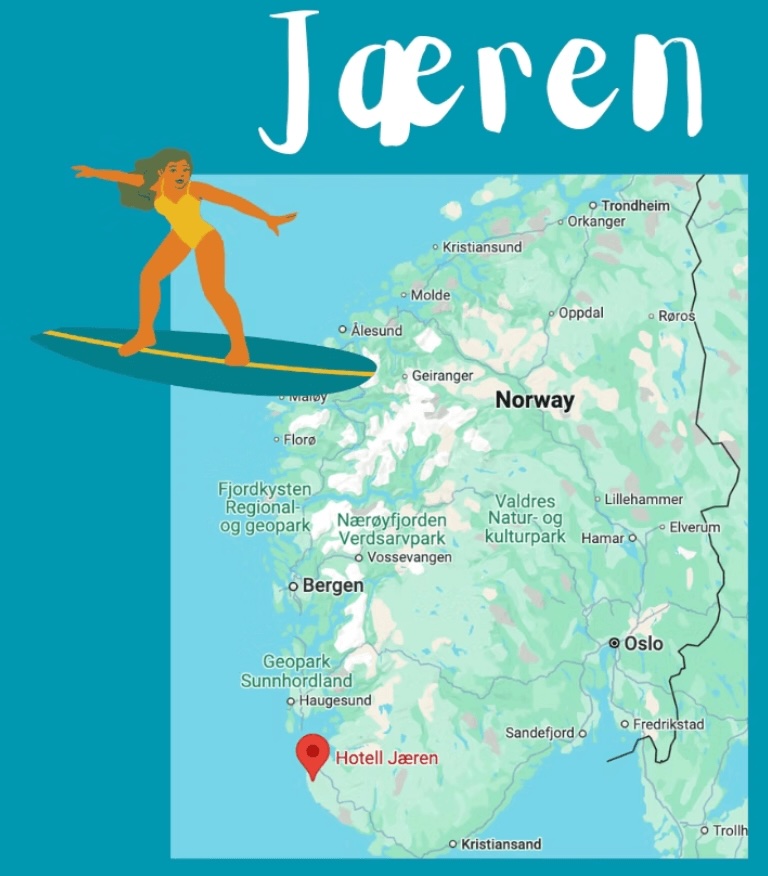
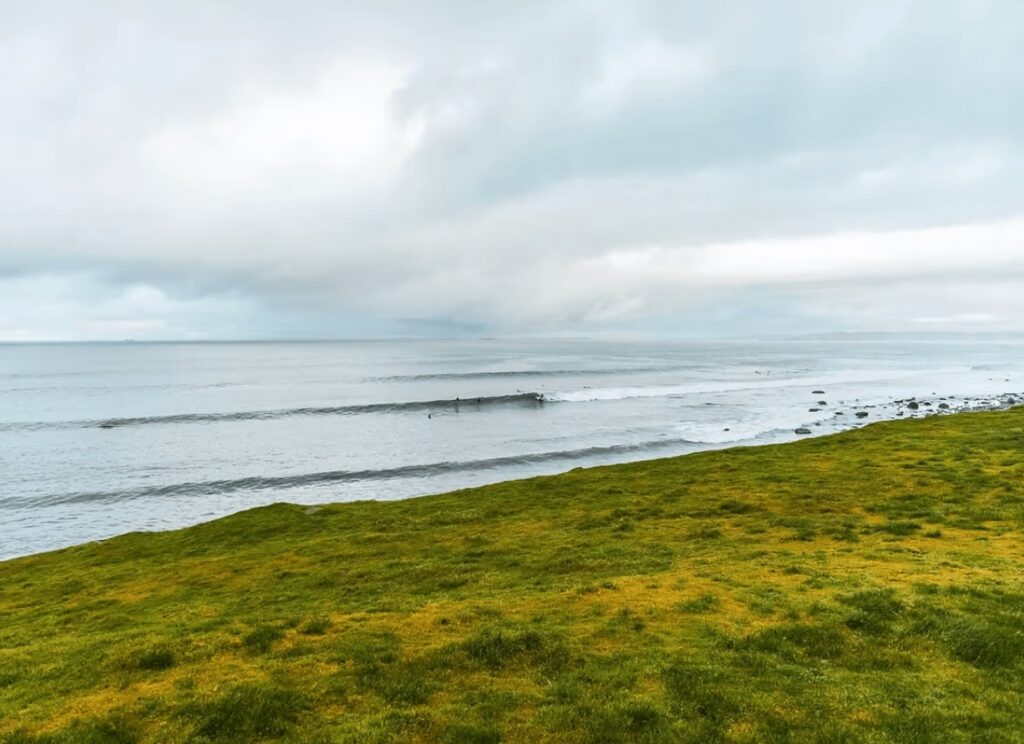
Jæren’s exposure to North Sea swells means it receives a consistent supply of waves, making it one of the best places for surfing in Norway. However, the character of the surf can vary significantly depending on the season.
In the summer and early autumn months, the conditions tend to be gentler and more suitable for beginners, with plenty of whitewash and foamy waves perfect for learning.
It’s for this reason that Jæren is considered one of the best places to learn to surf in Norway. Plus, there’s a handful of surf schools and camps to help you do just that.
In the winter months, Jæren has waves suitable for more advanced surfers, with rocky points that offer up challenging waves. This diversity of surf spots is a major draw for the region, which has even hosted international competitions like Eurosurf in 2017.
Despite its popularity among the surfing community, Jæren remains a natural protected area and many of the surf beaches are only accessible on foot. That being said, it’s also the most “developed” surf spot in Norway. So you can easily find surf supplies (such as wax) if you forget your own.
Best places to stay and surf in Jæren
Boretunet
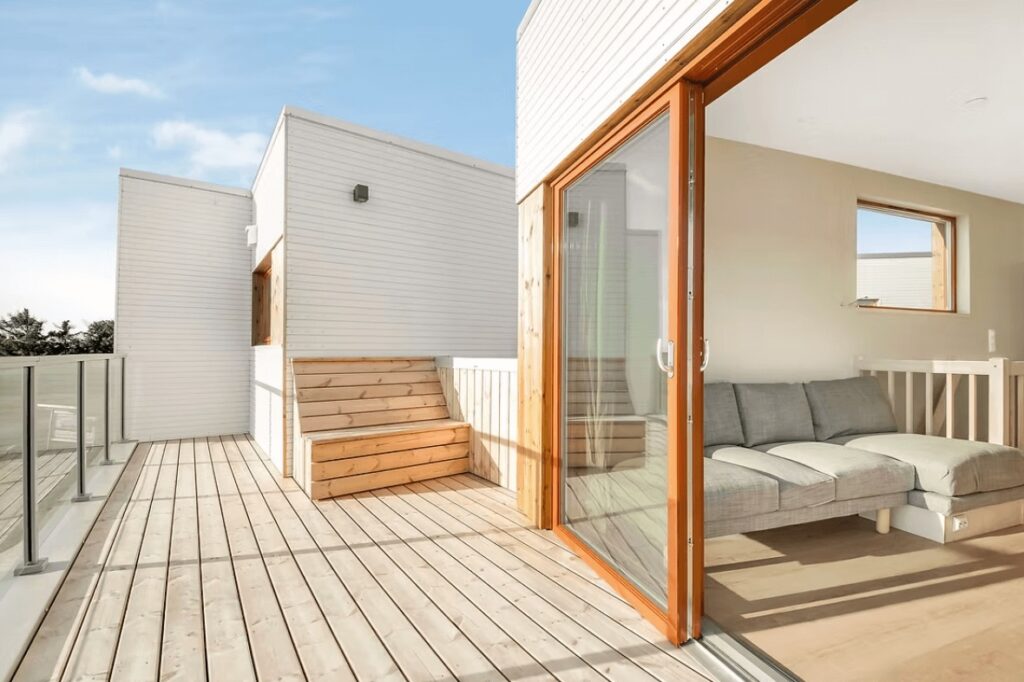
Architecturally reimagined using existing structures, this surf hotel in Jæren is within walking distance of the beach. It offers 250 beds across its collection of detached houses, apartments and cabins.
Additionally, Boretunet offers surf lessons and courses with its skilled local instructors. As such, it’s definitely one of the best places to stay in Jæren for surfing families.
Jæren Surf Camp
Nestled in the dunes behind Borestranden, this popular Norwegian surf camp offers dormitory-style rooms with shared bathrooms.
Days begin with pancakes and coffee in the communal dining space before heading out to find the best waves on offer. Its experienced surf instructors will take you anywhere from Ogna in the south to Sola in the north, giving you 50 kilometres of coastline to explore.
How to access Norway’s surf breaks
When planning a surf trip to Jæren or Hoddevik, your best option is to fly into Bergen. It’s the closest major airport to these surf spots on Norway’s west coast.
If you fly into Oslo, you’ll need to embark on an eight-hour drive to reach the west coast. That being said, the journey is spectacular (so it’s hardly a drawback) and it’s easy to rent a car in Norway.
If you’re planning a Lofoten surf trip, you can fly into Harstad/Narvik Airport on mainland Norway (and pick up a hire car there). Alternatively, you can fly directly to Svolvær Airport.
While Svolvær is located within the Lofoten archipelago, it receives far fewer flights. Also, you might end up paying more for a rental vehicle.
No matter where you’re heading, you’ll need a car to get around. Most of Norway’s best surf spots are located in remote settings and well off public transport routes.
You can browse rental cars by leading providers at Discover Cars. This user-friendly comparison site offers some of the best car rental deals in Norway.
Best time to surf in Norway
While you can usually find waves throughout the year, the best time to surf in Norway is undoubtedly during the colder months between September and March. This is when the region’s unique geography and weather patterns converge to produce powerful swells that find their way into the west coast’s fjords.
During the Norwegian surf season, North Atlantic swell systems are funnelled up through the relatively narrow gap between Iceland and the British Isles.
December and January are usually the most consistent months for surfing in Norway. During these months, waves can sometimes reach double overhead.
If you’re surfing in Norway in the wintertime, you need to be prepared as the North Atlantic waters rarely climb above 8°C (45°F). And that’s before factoring in the wind chill!
Wondering what to wear surfing in Norway? Pack at least a 5/4 full-length wetsuit (ideally a 6 or 7mm), plus hoods, boots and gloves. You’ll also need plenty of warm woollies to help you thaw out at the end of your sessions.
FAQs about surfing in Norway
Does Norway have good surf?
The North Atlantic swells create fantastic waves along Norway’s fjord-lined west coast, offering a mix of long, smooth rides and exciting A-frames.
While the surf conditions are mostly suited for lower-intermediate surfers, advanced riders can still find plenty of thrills, all set against a backdrop of breathtaking natural beauty.
Reaching the best surf spots in Norway often involves long drives and/or treks, which translates into uncrowded waves. Just remember to gear up with thick boots, gloves and a hooded wetsuit to brave the chilly water temperatures.
Can you surf near Oslo?
Oslo doesn’t offer much in the way of consistent, high-quality waves. The occasional river spots and somewhat mediocre conditions in the Oslo Fjord are the main options.
One notable exception lies just outside the city limits in the coastal town of Stavern. Here, at a break known as Saltstein, surfers can occasionally find decent swells rolling in off the Skagerrak Strait.
To really experience Norway’s surf culture and score the best waves, you have to head west to the Stavanger Peninsula or up to Hoddevik north of Bergen.
When is the surf season in Norway?
In Norway, you can usually catch a wave any time of the year. But the prime surfing season is definitely from September to March. This is when the area’s distinct geography and weather come together to create strong swells that roll into the fjords along the west coast.
During these months, the North Atlantic swell systems are channelled through the narrow space between Iceland and the British Isles. December and January are usually the most reliable months for surfing in Norway, with waves occasionally hitting double overhead.
So if you’re wondering what thickness wetsuit you need to surf in Norway, here’s our suggestion. We’d recommend at least a 5mm or a 6/7mm (plus hoodie, booties and gloves) if you’re visiting in the winter months.
Want to move away from neoprene wetsuits? Check out some eco-friendly alternatives here.

PLAN YOUR TRIP WITH OUR FAVOURITE RESOURCES:
Find hotels and resorts via Booking or Agoda
Book tours and experiences via Viator or GetYourGuide
Find a rental car via Discover Cars
Book flights via Kiwi or Booking
Search for buses and trains via 12Go or Omio
Get travel insurance via SafetyWing
Buy a digital eSIM with Airalo
By purchasing through our links, you’ll be supporting our website at no additional cost to you
-
Surfing and Environmental Activism: A Growing Movement
Surfing has always been more than a sport. It’s a culture shaped by natural forces – tides, winds, swells – and a lifestyle that depends on healthy ocean environments. So it’s no surprise that surfers are often engaged environmental activists, at both a local and global scale. As we’ve travelled around the world, we’ve loved…
-
Sustainable Snorkelling Tips for Ocean Advocates
You don’t need a scuba certification to fall in love with the ocean. Snorkelling is an equally magnificent way to explore coral reefs, seagrass meadows and the marine life that calls them “home”. In fact, snorkelling is often a gateway to scuba diving. Or sometimes, it’s the destination. We all snorkelled long before we ever donned…
-
How to Be a More Responsible Underwater Photographer
In recent decades, photography has become unbelievably accessible. Almost everyone carries a camera around with them everyday in the form of a smartphone. Technological improvements have also made underwater photography far more accessible, resulting in powerful images of a world that’s inaccessible to many. A single image of a healthy reef, a shark passing through…
-
Second-Hand Surf Gear: Embracing the Circular Economy
Surfing sells itself as a low-impact pursuit. All you need is a board and the ocean (and if you live where we do, a wetsuit!) What could be simpler? But behind this “at-one-with-nature” facade lies an industry built on short product cycles, seasonal “drops” and a steady turnover of gear due to new “innovations”. The…
-
How Coral Nurseries Work (And How Divers Can Join Planting Programs)
Coral reefs support an extraordinary diversity of marine life, and as divers, being able to explore them is one of life’s great privileges. But coral reefs are also among the most threatened habitats on the planet. Pollution, destructive fishing practices and climate change-induced coral bleaching are all having a devastating impact. In response, coral nurseries…
-
Are Wave Pools Sustainable? The Surf Park Environmental Debate
Nothing compares to surfing in the ocean. Full stop. For us, being at the whim of Mother Nature is a big part of surfing’s allure, and all things being equal, we’d pick the ocean over a wave pool every time. But with coastal communities under increasing pressure and surf breaks being flooded with people, are…

We are a team of passionate divers and surfers with decades of combined experience in the water and travelling to all corners of the globe.
After years of chasing waves and descending into the deep blue, we’ve created this resource to highlight sustainable surf camps, eco-dive resorts and conservation-focused ocean trips to help inspire your next adventure.
Eco Ocean Escapes was born out of a love of the ocean, an obsession with travel and a concern about the impacts of our adventures on the environments we explore.